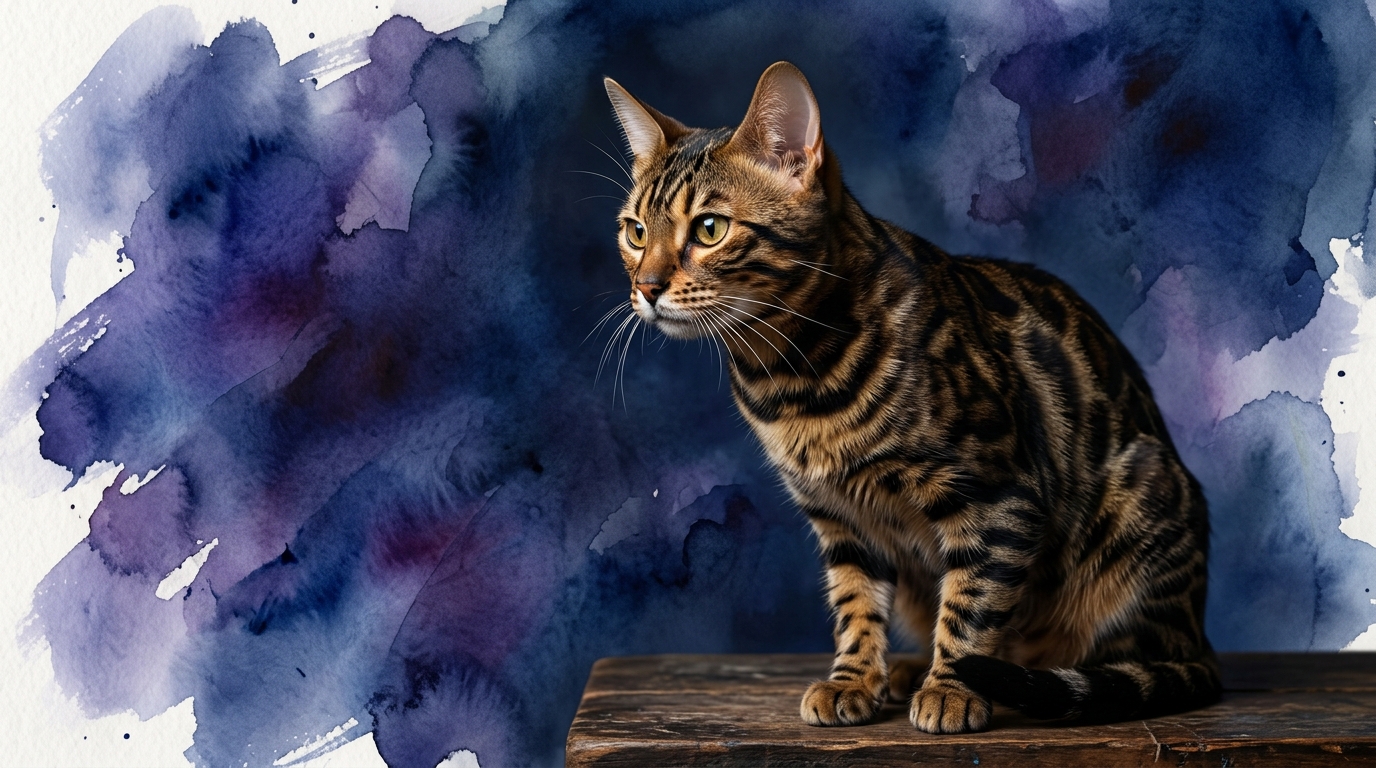
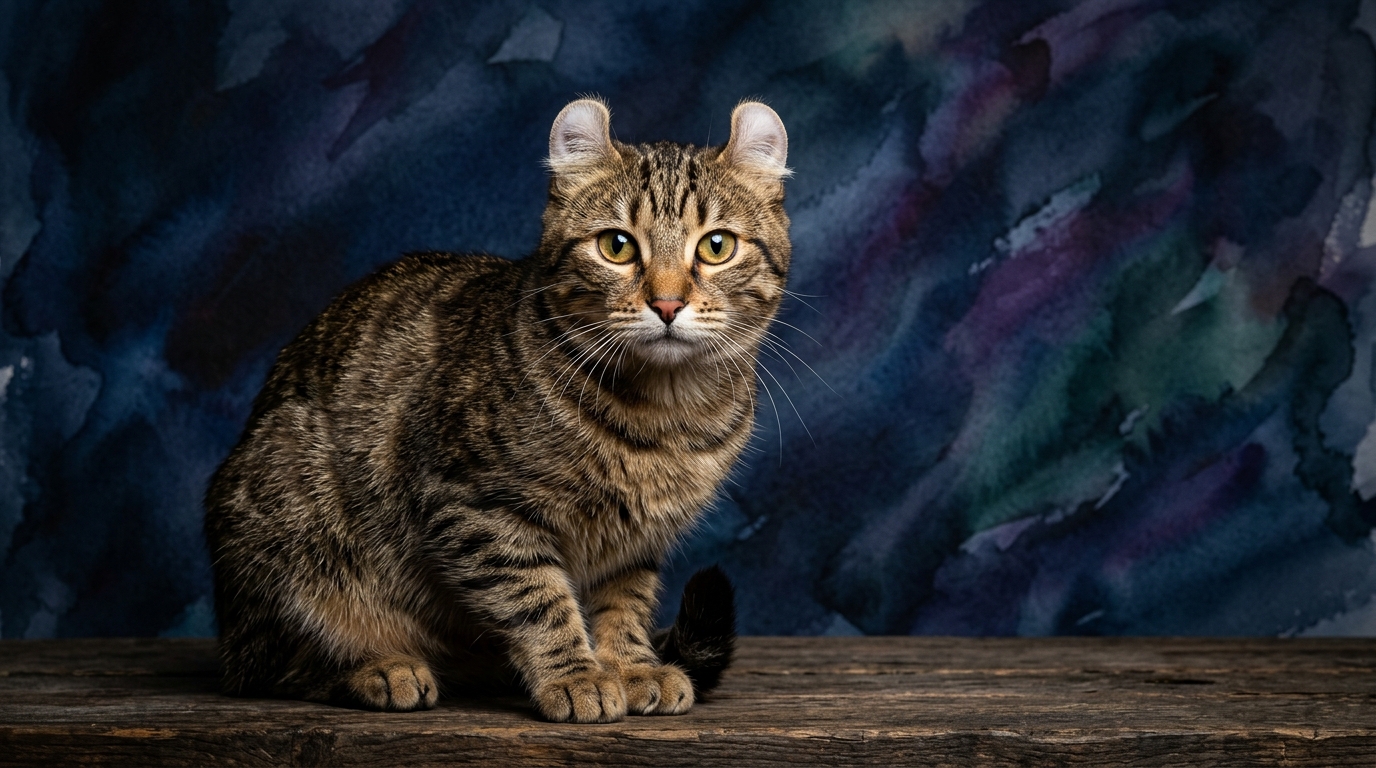
Side-by-Side Cognitive Profiles: Bengal vs. American Curl
The Cosmic Pet Pet IQ Lab provides a fascinating lens through which to examine feline cognition across five key dimensions. For the Bengal, problem Solving is rated 5/5, indicating an exceptional capacity to navigate complex environments, decipher mechanical challenges, and strategize outcomes. Their training Speed, at 4/5, suggests a rapid assimilation of commands and routines, often demonstrating an eagerness to learn. Social Intelligence, also 4/5, reflects their nuanced understanding of human cues and their propensity for interactive, reciprocal relationships. An Instinctive Drive of 5/5 highlights a powerful predatory instinct and an insatiable curiosity for exploration and investigation, while their Memory, a perfect 5/5, underpins their ability to recall intricate sequences, locations, and learned behaviors with remarkable precision.
In contrast, the American Curl presents a different cognitive blueprint. Their problem Solving capability is rated 3/5, suggesting they can tackle straightforward puzzles but may find multi-step challenges more demanding. A training Speed of 3/5 indicates they are receptive to learning but typically require more repetition and patience to solidify new behaviors. Their Social Intelligence, also 3/5, points to a loving and communicative nature, though perhaps less inclined towards the complex, strategic interactions seen in higher-scoring breeds. An Instinctive Drive of 3/5 means they possess a healthy curiosity and playfulness without the intense, driven focus of a primal hunter. Finally, their Memory, at 3/5, ensures they retain essential routines, recognize familiar faces, and remember basic commands, forming reliable bonds with their human companions.
Where the Bengal's Cognition Excels
The Bengal cat's cognitive strengths are profoundly evident in their exceptional problem-solving and memory. Owners frequently observe Bengals methodically figuring out how to open child-proofed cabinets, manipulate door handles, or even turn on faucets, a testament to their 5/5 problem Solving score. This isn't just random trial and error; it often involves a calculated approach, observing human actions and attempting to replicate them. Their perfect 5/5 Memory further enhances this, allowing them to recall the exact sequence of steps required to achieve a desired outcome, even after long periods. This makes them adept at navigating complex layouts, remembering where specific toys are hidden, or understanding elaborate household routines. Their high instinctive drive also fuels a persistent curiosity, pushing them to explore and master their environment with an unparalleled mental engagement.
Furthermore, the Bengal's 4/5 training Speed means they don't just solve puzzles independently; they are also remarkably quick to grasp formal training. They can learn an extensive repertoire of tricks, respond to complex verbal cues, and even be leash-trained with relative ease, often surprising owners with their capacity for rapid behavioral acquisition. This quick learning, combined with their sharp social intelligence, allows them to engage deeply with human interaction, understanding subtle gestures and vocal inflections to respond appropriately, making them highly interactive and communicative companions who thrive on mental challenge and engagement.
Where the American Curl's Cognitive Profile Shines
While the American Curl's raw scores might suggest a less complex cognitive profile compared to the Bengal, their unique blend of mental attributes results in a delightful and adaptable companion. Their 3/5 problem Solving, for instance, means they are content with simpler forms of enrichment and are less likely to engage in the persistent, often mischievous, dismantling of household items that higher-scoring breeds might attempt out of boredom. This translates to a more predictable and often less demanding presence in the home, where basic puzzle toys provide ample mental stimulation without requiring constant, advanced cognitive challenges from their human companions.
The American Curl's 3/5 Instinctive Drive allows them to be curious and playful without the intense, laser-focused predatory drive that can sometimes lead to excessive hunting behaviors or a need for constant, high-energy stimulation. They enjoy exploring their surroundings and engaging in play, but their moderate drive makes them highly adaptable to various living situations, including quieter homes. Their 3/5 Social Intelligence and Memory ensure they form deep, lasting bonds with their families, remembering faces and routines reliably. They offer consistent affection and enjoy being involved in family life, providing a steady, gentle companionship that many owners find incredibly rewarding without the need for constant, intricate mental engagement, making them wonderfully placid and emotionally accessible pets.
Training Dynamics: Which is Easier and Why?
Based on their cognitive profiles, the Bengal cat is generally easier to train, primarily due to their superior problem Solving (5/5), training Speed (4/5), and Memory (5/5). Bengals quickly understand cause-and-effect relationships and retain learned information with remarkable tenacity. For example, when teaching a Bengal to fetch, they rapidly grasp the concept of retrieving an object and bringing it back, often enjoying the game immensely due to their high instinctive drive. Their social intelligence also means they are highly attuned to human feedback, making them responsive to positive reinforcement and eager to please, which accelerates the training process for complex commands or even leash walking.
The American Curl, with scores of 3/5 across these dimensions, is certainly trainable but requires a more patient and consistent approach. While they are intelligent enough to learn basic commands and routines, they typically need more repetition to solidify new behaviors. For instance, house training or teaching them to come when called will be successful with an American Curl, but it might take more dedicated sessions over a longer period compared to a Bengal. Their moderate social intelligence means they respond well to affection and positive reinforcement, but their learning curve is steadier, making them an excellent choice for owners who enjoy a consistent, gentle training journey rather than a rapid acquisition of complex skills.
Owner Compatibility: Active vs. Relaxed Lifestyles
The Bengal cat is an ideal match for active owners who relish a highly engaged and mentally stimulating pet relationship. Their 5/5 problem Solving and instinctive Drive demand an environment rich with interactive toys, regular play sessions simulating hunting, and opportunities for exploration, such as catio access or supervised outdoor adventures. Owners who enjoy teaching tricks, going for walks on a leash, or providing complex puzzle feeders will find the Bengal thrives on such challenges. Their high energy and keen intellect mean they can become bored and potentially mischievous if not adequately stimulated, making them best suited for individuals or families committed to providing consistent mental and physical enrichment.
Conversely, the American Curl is perfectly suited for more relaxed owners seeking a gentle, affectionate, and consistently present companion. Their moderate cognitive scores across all dimensions mean they are content with a less demanding daily routine while still enjoying playtime and interaction. Owners who prefer quiet evenings, gentle petting sessions, and a cat that enjoys lounging nearby will appreciate the American Curl's placid nature. While they certainly enjoy toys and attention, their needs for intense mental stimulation are lower, making them adaptable to quieter homes or those with a more leisurely pace. They offer a steady, loving presence without requiring constant, high-octane engagement.
The Verdict
Choose a Bengal if you are an active owner seeking a highly interactive, intellectually demanding companion who thrives on complex problem-solving and constant mental engagement.
Opt for an American Curl if you desire a gentle, adaptable, and consistently affectionate companion who enjoys a more relaxed pace and simpler forms of interaction.
🧠 Find Your Pet's IQ Score
Our Pet IQ Lab assessment covers 25+ tests across 5 cognitive dimensions — personalized to your breed.
Take the Full IQ Test →Frequently Asked Questions
Do Bengals get along with other pets?
Bengals, with their 4/5 social intelligence and high energy, can often coexist well with other pets if properly socialized from a young age. Their playful nature means they might enjoy the company of another active animal, but introductions should always be gradual and supervised to ensure harmony.
Are American Curls vocal cats?
American Curls are generally known for their relatively quiet and gentle vocalizations, fitting their overall placid demeanor. While they will certainly communicate their needs, they are not typically as vocally demanding as some other cat breeds, aligning with their 3/5 social intelligence which prioritizes consistent, calm interaction.
What kind of enrichment do Bengals need to prevent destructive behavior?
Due to their 5/5 problem solving and instinctive drive, Bengals require extensive enrichment to prevent boredom-induced behaviors. This includes interactive puzzle feeders, regular structured play sessions simulating hunting, vertical climbing spaces, and opportunities for leash walks or secure outdoor access to satisfy their exploration needs.