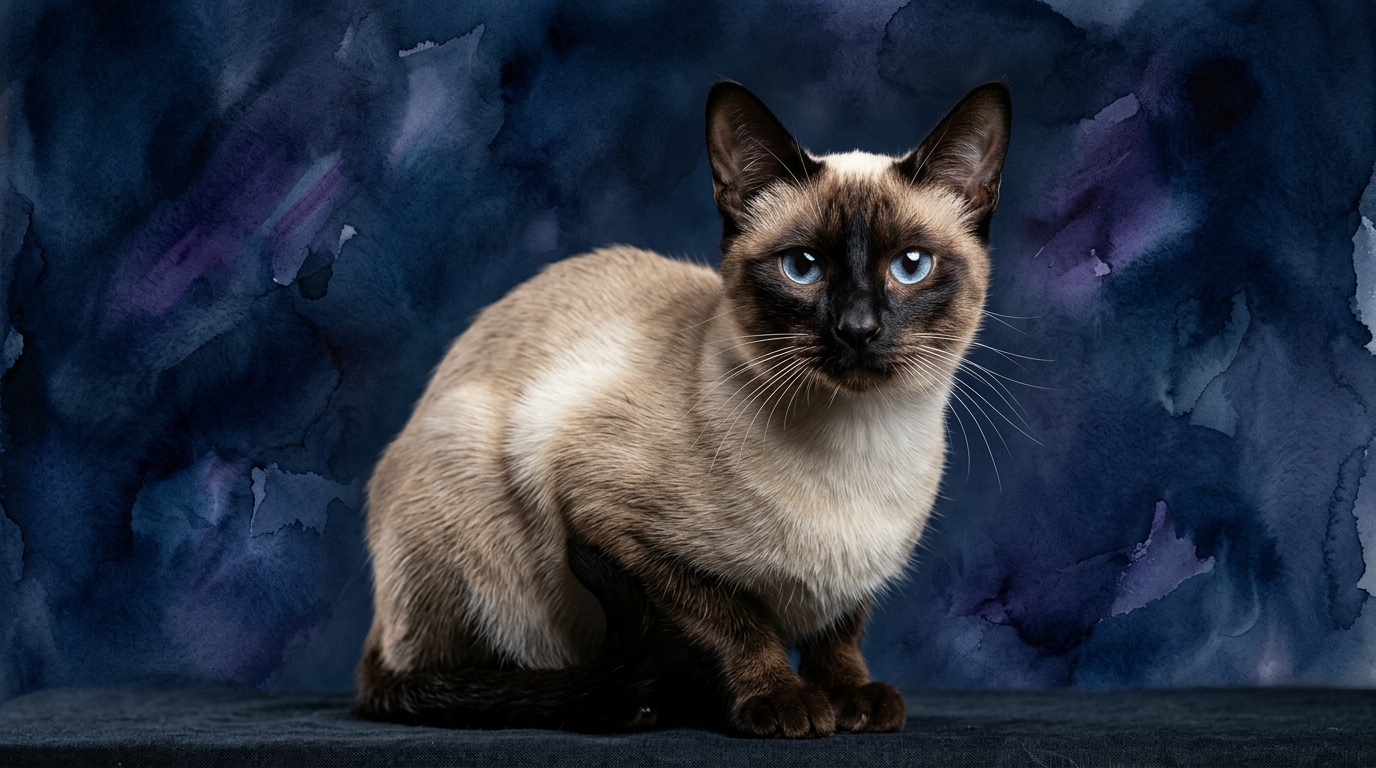
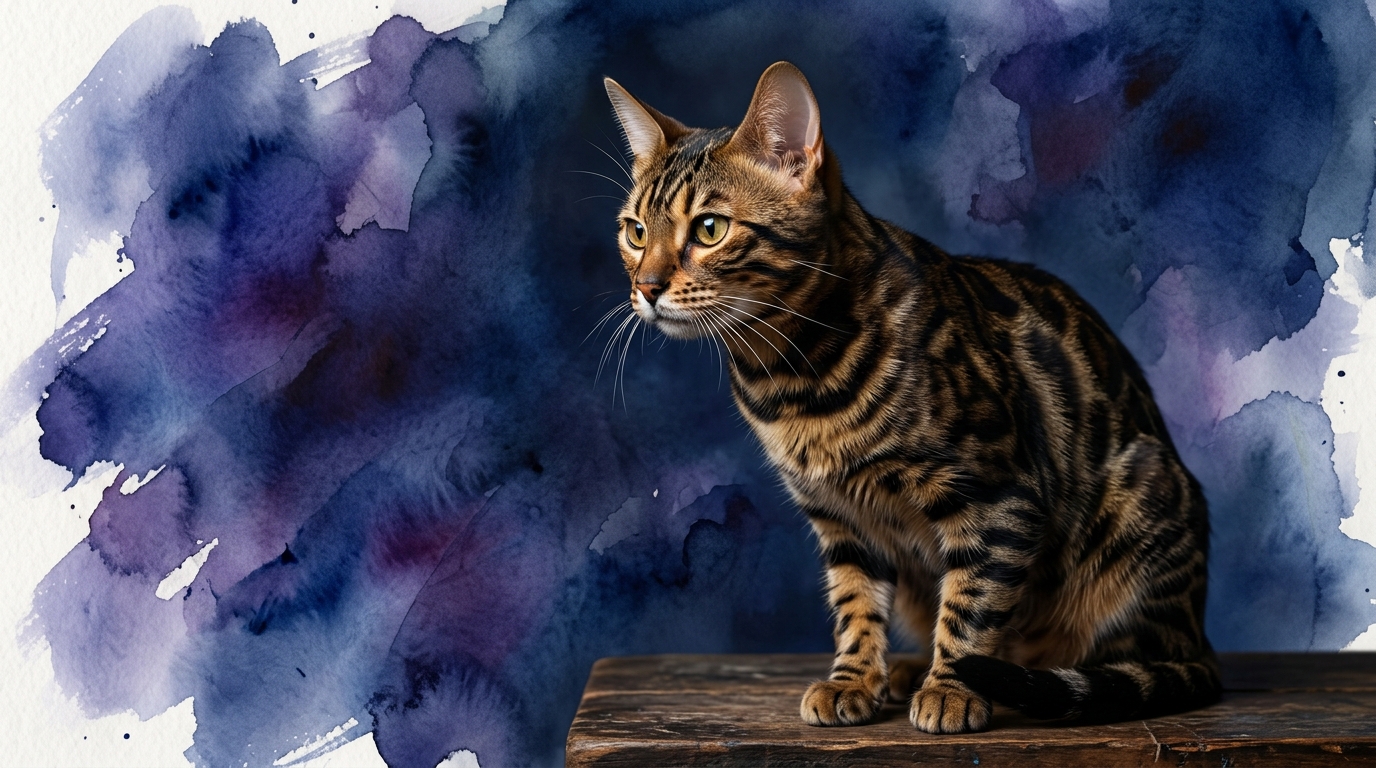
A Side-by-Side Look at Feline Cognition
The Cosmic Pet Pet IQ Lab provides a unique framework for evaluating feline intelligence across five crucial dimensions. Let's explore how the Siamese and Bengal cats compare, revealing their nuanced cognitive profiles.
**Problem Solving (Siamese: 5/5, Bengal: 5/5):** Both breeds demonstrate exceptional capacity for overcoming obstacles and figuring out complex situations. A Siamese might strategically manipulate their environment, perhaps by persistently 'asking' for a specific door to be opened or devising elaborate ways to get attention. Bengals often apply their problem-solving skills to physical challenges, such as deciphering how to open latched cabinets or navigating intricate climbing structures, driven by their innate curiosity.
**Training Speed (Siamese: 4/5, Bengal: 4/5):** Both the Siamese and Bengal are quick studies, capable of picking up new commands and routines with relative ease. Siamese cats often excel at understanding verbal cues and routines due to their social acuity, while Bengals learn rapidly when tasks engage their physical and hunting instincts, such as fetch or agility training.
**Social Intelligence (Siamese: 5/5, Bengal: 4/5):** This is a key differentiator. Siamese cats exhibit profound social awareness, keenly reading human emotions and intentions, and often engaging in complex vocal dialogues. Their high score reflects their deep desire for interaction and ability to form strong, communicative bonds. Bengals, while social and affectionate, might express their connection through more physical play and exploration alongside their humans, rather than intricate vocal exchanges.
**Instinctive Drive (Siamese: 4/5, Bengal: 5/5):** The Bengal cat's wild heritage shines through with a superior instinctive drive, manifesting as an intense desire to hunt, explore, and climb. They possess an almost insatiable curiosity and need for environmental engagement. Siamese cats also have a playful, active drive, but it is typically less intense and more readily satisfied within a home environment, often directed towards interactive play with their human companions.
**Memory (Siamese: 5/5, Bengal: 5/5):** Both breeds possess excellent long-term memory. They remember routines, favored spots, and the consequences of past actions. A Siamese might recall specific times for treats or preferred petting techniques, while a Bengal can remember intricate escape routes or the location of hidden toys, leveraging this memory for future exploration and play.
Where the Siamese Shines Cognitively
The Siamese cat's cognitive brilliance is most evident in its superior social intelligence, rated a perfect 5/5. This isn't merely about being friendly; it's about a sophisticated understanding of their human companions. Siamese cats are adept at interpreting subtle cues in tone of voice, body language, and routine, allowing them to anticipate needs and respond in kind. Their extensive vocal repertoire is a direct expression of this intelligence, as they 'talk' to communicate desires, observations, and even opinions, engaging in what often feels like genuine conversations.
This profound social cognition, coupled with their 5/5 memory, enables Siamese cats to form exceptionally deep and lasting bonds. They remember specific interactions, preferences, and even past disciplinary actions, adjusting their behavior to maintain harmony and closeness. Their problem-solving (5/5) often manifests in socially-oriented ways, such as figuring out how to gain maximum attention or 'train' their owners to respond to specific vocalizations, demonstrating a nuanced application of their mental prowess within a relational context. Their cognitive strengths make them highly responsive and emotionally attuned companions.
Where the Bengal Cat Excels Cognitively
The Bengal cat's cognitive strengths are particularly pronounced in its instinctive drive (5/5), which fuels a relentless curiosity and a highly physical approach to problem-solving. While sharing the Siamese's 5/5 problem-solving ability, Bengals tend to apply it to environmental manipulation and exploration. They are masters at figuring out how to open doors, access high shelves, or dismantle puzzle toys, driven by an innate need to investigate every corner of their world.
This powerful drive, combined with their excellent memory (5/5), means Bengals are constantly learning and adapting to their surroundings. They recall the successful methods for accessing forbidden spaces or the most rewarding routes for a game of chase, refining their strategies over time. Their physical agility and coordination are not just athletic traits; they are extensions of their cognitive processes, allowing them to execute complex plans for exploration and play. A Bengal's intelligence is often expressed through their engagement with the physical world, making them dynamic and endlessly inventive companions.
Training: A Question of Motivation and Method
Both Siamese and Bengal cats boast an impressive 4/5 training speed, indicating they are quick to learn. However, the 'why' behind their trainability, and thus the most effective methods, differs significantly due to their distinct cognitive profiles. Siamese cats, with their superior social intelligence, are often easier to train for commands that foster interaction and companionship. They respond exceptionally well to positive reinforcement tied to affection, praise, and social engagement. Teaching a Siamese to come when called or to walk on a leash can be relatively straightforward because they value the connection and attention it brings. Their motivation stems from their desire to be an integral, communicative part of the family.
Bengal cats, driven by their intense instinctive drive, are more easily trained when tasks tap into their natural curiosity, hunting instincts, and need for mental and physical stimulation. They excel at learning tricks, playing fetch, and navigating agility courses, especially when rewarded with engaging toys, food puzzles, or opportunities for vigorous play. While they appreciate human interaction, their primary motivation for learning often lies in the challenge itself and the satisfaction of a 'successful hunt' or puzzle solved. Therefore, a Siamese might learn 'sit' for a cuddle, while a Bengal learns 'fetch' for the thrill of the chase, making both trainable but requiring different approaches to achieve optimal results.
Matching Feline Cognition to Owner Lifestyles
Deciding between a Siamese and a Bengal often comes down to the kind of interaction and activity an owner is prepared to provide, directly influenced by their cognitive blueprints. For active owners who relish constant engagement and can provide ample outlets for physical and mental stimulation, the Bengal cat is an ideal match. Their 5/5 instinctive drive means they genuinely thrive on interactive play, climbing opportunities, puzzle toys, and even supervised outdoor adventures. An owner who can channel this drive into constructive activities will find a Bengal endlessly entertaining and rewarding, but unprepared owners may find their home rearranged or their belongings investigated with relentless curiosity.
Conversely, for owners who appreciate a deep, communicative bond and enjoy interactive play that doesn't necessarily demand extensive physical exertion on their part, the Siamese cat is often a better fit. While energetic and playful (4/5 instinctive drive), their activity is often intertwined with their 5/5 social intelligence. They are content with lap time, 'conversations,' and interactive games that foster connection. A Siamese will happily participate in play but is equally satisfied with being a constant, vocal companion, making them suitable for owners who seek a profound emotional connection and a less intensely demanding physical presence.
The Verdict
Choose the Siamese if you seek a deeply communicative, emotionally attuned companion who thrives on social interaction and intellectual engagement within a shared, intimate space.
Opt for the Bengal if you are an active individual or family prepared to channel a powerful instinctive drive into enriching physical and mental challenges, embracing a cat that interacts dynamically with its environment.
🧠 Find Your Pet's IQ Score
Our Pet IQ Lab assessment covers 25+ tests across 5 cognitive dimensions — personalized to your breed.
Take the Full IQ Test →Frequently Asked Questions
Do Siamese cats talk a lot because they are smarter?
Their extensive vocalizations are a direct manifestation of their superior social intelligence (5/5), allowing them to communicate complex needs and desires with their human companions. It's a sophisticated form of interaction rather than just noise, reflecting their desire for deep engagement and connection.
Can Bengal cats be taught tricks like dogs?
Absolutely. With a training speed of 4/5 and a potent instinctive drive of 5/5, Bengals are highly adept at learning complex physical tricks, agility courses, and even fetch. Their intelligence thrives on mental and physical challenges, making clicker training and reward-based methods very effective.
Which breed is better for a multi-pet household?
While both can adapt, the Siamese's 5/5 social intelligence often makes them more adaptable to integrating with other pets, especially if introduced thoughtfully, as they value companionship. Bengals, with their strong instinctive drive, might require more careful introductions, particularly with smaller prey-like pets, but can form bonds with compatible companions.