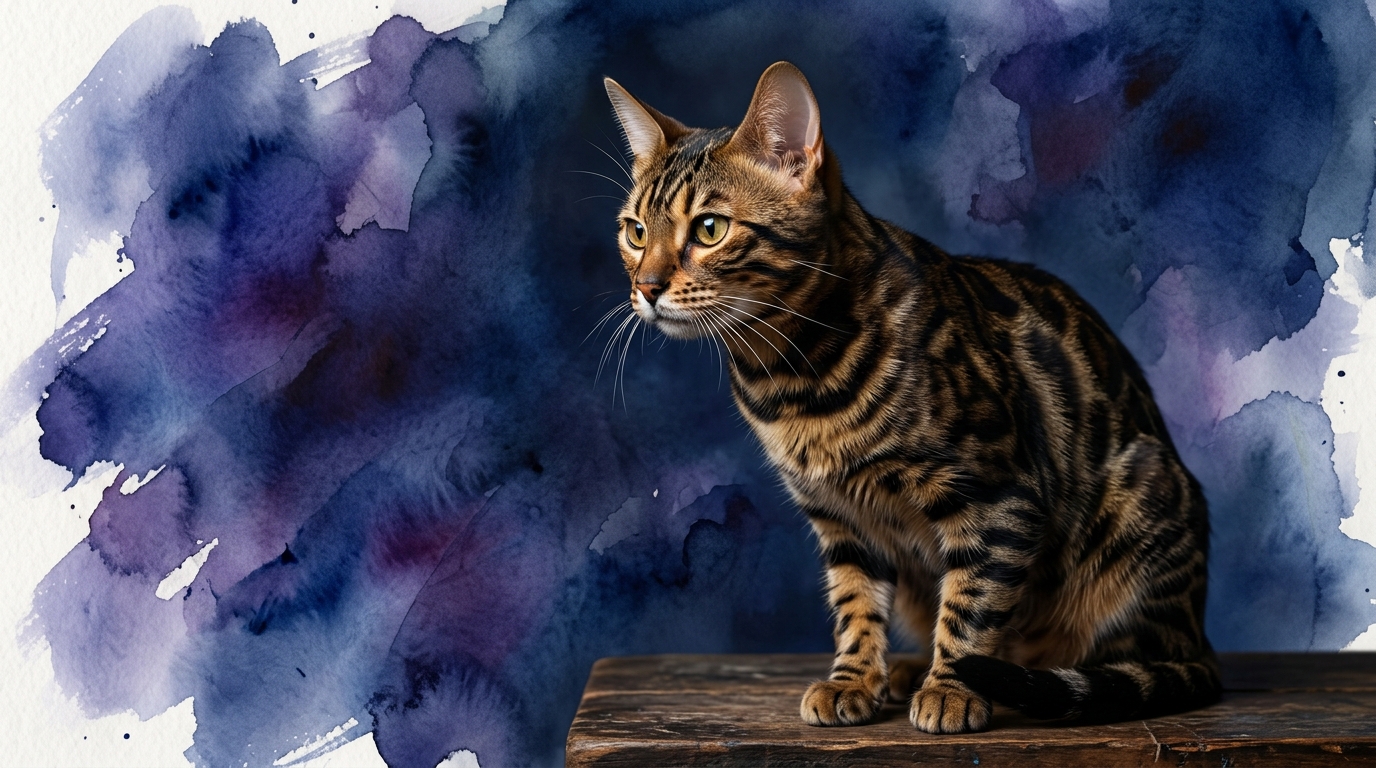
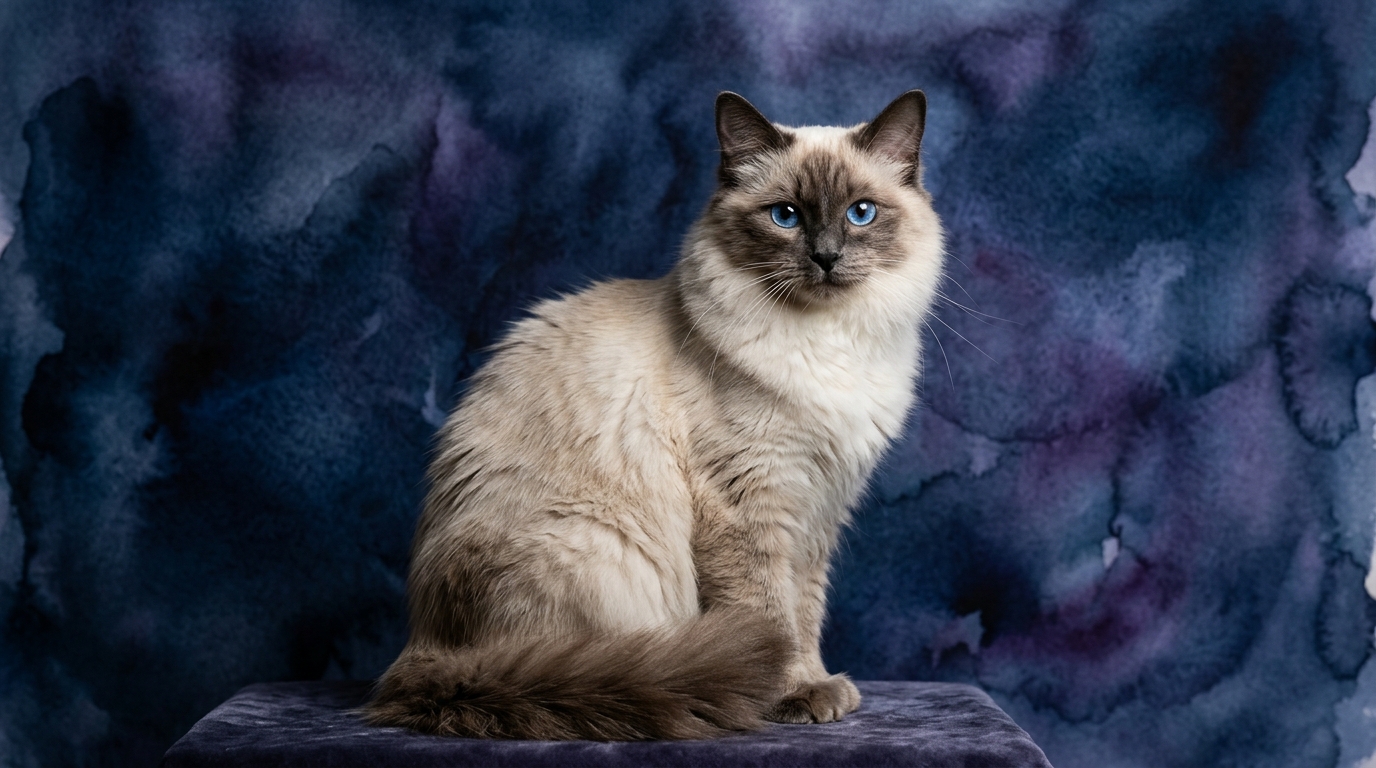
Side-by-Side IQ Profile: Bengal vs. Balinese
The Bengal cat, a product of domestic cat and Asian Leopard Cat hybridization, presents a cognitive profile heavily influenced by its ancestral instincts. Awarded a perfect 5/5 in Problem Solving, Bengals demonstrate an exceptional capacity for complex thought, often devising ingenious methods to achieve their goals, whether it's opening a tricky cabinet or navigating a multi-stage puzzle toy. Their Instinctive Drive also scores a dominant 5/5, manifesting as a powerful urge to hunt, explore, and interact with their environment in a physically and mentally stimulating manner, constantly seeking engagement.
Memory in Bengals is equally impressive at 5/5, suggesting they retain detailed information about their surroundings, past interactions, and learned sequences over extended periods, contributing to their adventurous spirit. While their Training Speed is a commendable 4/5, indicating quick learning, it's not quite as rapid as some other breeds, possibly due to a stronger independent streak or a preference for self-directed exploration. Social Intelligence, at 4/5, shows they are capable of forming strong bonds and understanding cues, but often with a more self-reliant approach compared to breeds that prioritize constant human interaction.
In contrast, the Balinese cat, a long-haired variant of the Siamese, showcases a different set of cognitive priorities, heavily leaning into social engagement and rapid learning. Their Training Speed is an exceptional 5/5, reflecting an innate eagerness and ability to quickly grasp commands, tricks, and routines, often thriving on positive reinforcement and structured interaction. This prowess is closely linked to their outstanding Social Intelligence, also a perfect 5/5, which allows them to form profound, empathetic connections with their human companions, reading moods and responding with intricate communication.
While their Problem Solving ability is a respectable 4/5, indicating competence in navigating challenges, it might be more focused on achieving social outcomes rather than purely mechanical ones, like figuring out how to get attention. Memory, at 4/5, is solid, enabling them to remember routines, past interactions, and specific human preferences, which aids in their predictable companionship. Their Instinctive Drive, however, is a moderate 3/5, suggesting a less intense predatory urge compared to the Bengal, making them generally less inclined towards constant hunting simulations and more content with intimate companionship.
Where the Bengal Wins Cognitively
The Bengal's perfect 5/5 in Problem Solving truly sets it apart, indicating a cat that doesn't just learn by rote but actively seeks to understand the *how* and *why* behind mechanisms and situations. Owners frequently report Bengals figuring out how to open child-proof latches, dismantle complex puzzle feeders, or even manipulate light switches, demonstrating a sophisticated ability to analyze situations and strategize original solutions. This isn't just simple curiosity; it's a deep cognitive drive to master their environment through intellectual engagement, often exhibiting remarkable persistence until a challenge is overcome.
Their supreme Instinctive Drive, also a 5/5, is a direct link to their wild ancestry, manifesting as an intense engagement with their surroundings that goes beyond mere play. Bengals exhibit profound focus during 'hunting' games, meticulously stalking toys, ambushing their human companions, and displaying complex predatory sequences, which is a rich cognitive exercise in strategy and execution. This strong drive means they are constantly processing environmental stimuli, looking for opportunities to engage their natural behaviors, making them keenly aware of their surroundings and potential 'prey'.
A 5/5 Memory further amplifies the Bengal's cognitive prowess, allowing them to recall detailed information over long periods, from the precise location of a hidden treat to the specific sequence of actions required to open a door or access a favorite perch. This exceptional recall means they build a comprehensive mental map of their territory and routines, learning from every experience and applying past knowledge to new situations with impressive accuracy. This memory contributes significantly to their consistent and often predictable responses to learned cues and environments, even after extended periods.
Where the Balinese Wins Cognitively
The Balinese truly shines with a 5/5 in Training Speed, making them exceptionally quick studies when it comes to formal commands and trick training, often learning complex sequences in just a few repetitions. They possess an innate ability to rapidly associate specific actions with verbal cues and rewards, displaying an eagerness to cooperate and understand human instructions. This isn't merely obedience; it's a keen cognitive agility that allows them to quickly grasp and comply with human expectations, largely driven by their desire for positive interaction and approval.
Their unparalleled 5/5 in Social Intelligence underscores the Balinese's profound capacity for interspecies communication and bonding, making them deeply empathetic companions. These cats are remarkably adept at interpreting human body language, vocal tones, and emotional states, often responding with comforting purrs, gentle nudges, or even 'conversational' meows to engage with their owners. Their social acumen means they actively seek and thrive on companionship, making them highly attuned to the nuances of their human relationships, fostering a deep, reciprocal understanding that few other breeds can match.
Which is Easier to Train and Why
For owners seeking a cat that readily learns commands and performs tricks with enthusiasm, the Balinese generally presents an easier and more fluid training experience. Their perfect 5/5 Training Speed combined with a 5/5 Social Intelligence means they are not only quick to understand new concepts but also highly motivated to please and interact with their human companions. They respond exceptionally well to positive reinforcement, often viewing training sessions as valuable bonding opportunities, which makes the process smooth, enjoyable, and highly rewarding for both cat and owner.
The Bengal, while certainly trainable with a 4/5 Training Speed, approaches learning with a more independent and problem-solving mindset, which can sometimes be perceived as stubbornness. Their 5/5 Instinctive Drive means training efforts must often tap into their predatory nature, using lure-and-reward techniques that mimic hunting scenarios, or they may lose interest. While they can learn complex behaviors, their innate drive to explore and solve problems their *own* way means an owner might need more patience, creativity, and consistency, understanding that a Bengal might learn the 'rule' but also actively try to find 'exceptions' or alternative solutions to the task.
Which Suits Active Owners vs. Relaxed Owners
Owners who enjoy an active, engaging lifestyle and are prepared to provide constant mental and physical stimulation will find a rewarding companion in the Bengal. Their 5/5 Problem Solving and 5/5 Instinctive Drive necessitate daily opportunities for complex puzzle toys, vigorous interactive play sessions that mimic hunting, and potentially leash training for supervised outdoor exploration. A Bengal thrives when challenged to use its sharp intellect and robust physical capabilities, making them an ideal match for households that appreciate a cat's active, often boisterous, participation in their environment and daily life.
Conversely, the Balinese, with its 5/5 Social Intelligence and more moderate 3/5 Instinctive Drive, is an excellent fit for owners who prioritize close companionship and quieter, more intimate interactions. While they certainly appreciate play, their needs lean more towards verbal communication, extended lap time, and being an active, loving presence in the home, often following their owners from room to room. They are perfectly content with owners who enjoy prolonged cuddle sessions, 'conversations,' and perhaps shorter, focused training sessions rather than intense, prolonged physical exertion, making them suitable for a more relaxed home environment that values emotional connection.
The Verdict
Choose the Bengal if you seek a fiercely independent, intellectually curious feline companion who thrives on complex challenges and robust interactive play, pushing the boundaries of feline cleverness.
Opt for the Balinese if your ideal cat is a highly communicative, affectionate, and rapidly trainable partner who deeply values social connection and intimate companionship, offering profound loyalty.
🧠 Find Your Pet's IQ Score
Our Pet IQ Lab assessment covers 25+ tests across 5 cognitive dimensions — personalized to your breed.
Take the Full IQ Test →Frequently Asked Questions
Are Bengals good with other pets?
Bengals, with their high instinctive drive, can coexist with other pets, but their predatory nature means supervision is crucial, especially with smaller animals like rodents or birds. Their social intelligence allows them to adapt, but careful introductions and consistent monitoring are essential for maintaining harmony in a multi-pet household.
Do Balinese cats talk a lot?
Yes, Balinese cats are renowned for their extensive vocalizations, a direct reflection of their high social intelligence and deep desire to communicate with their human companions. They use a wide range of meows, trills, and purrs to express their needs, engage in 'conversations,' and offer commentary on their surroundings, making them quite chatty.
Which breed requires more grooming?
The Balinese, with its elegant, semi-long coat, typically requires more regular grooming to prevent tangles and mats, usually needing brushing a few times a week to keep their fur pristine. Bengals, in contrast, have a short, dense, and sleek coat that is relatively low maintenance, generally needing only occasional brushing to remove loose hairs.