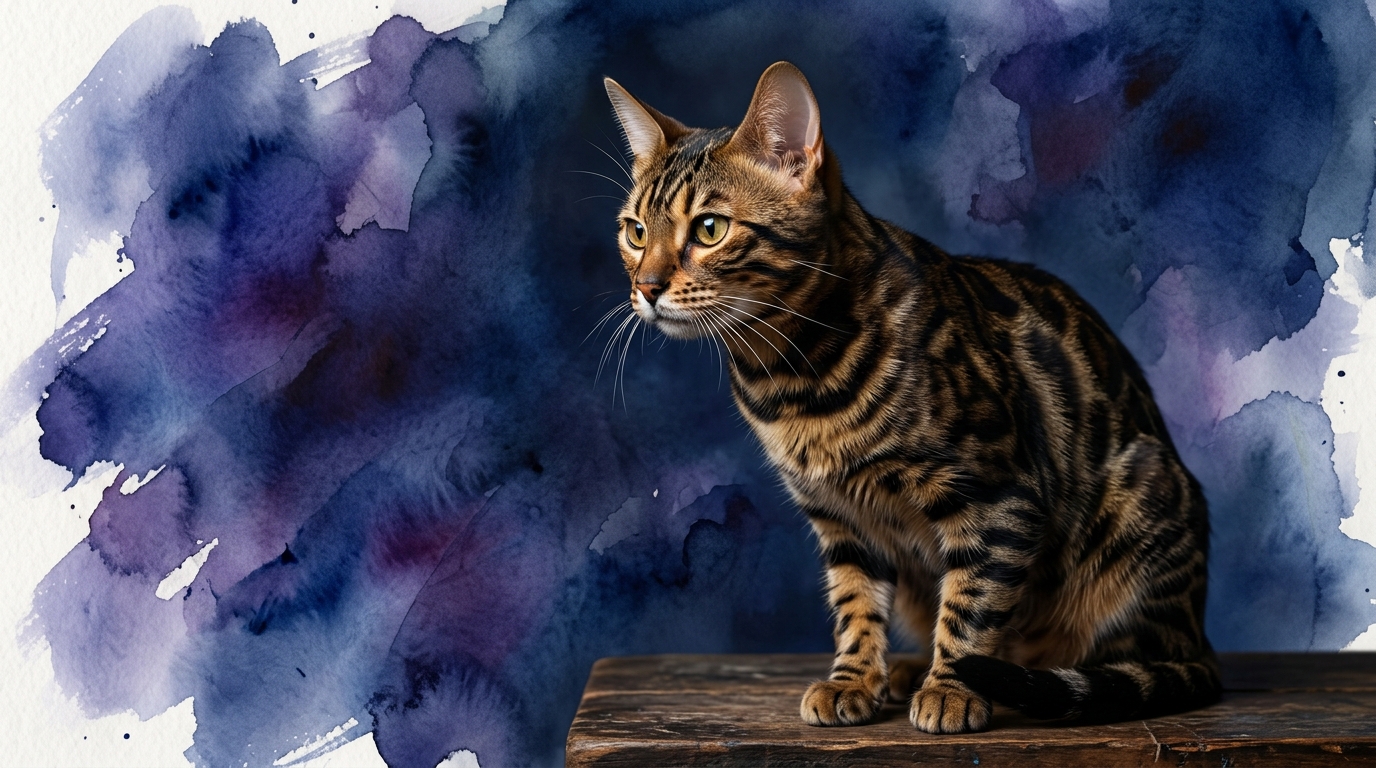
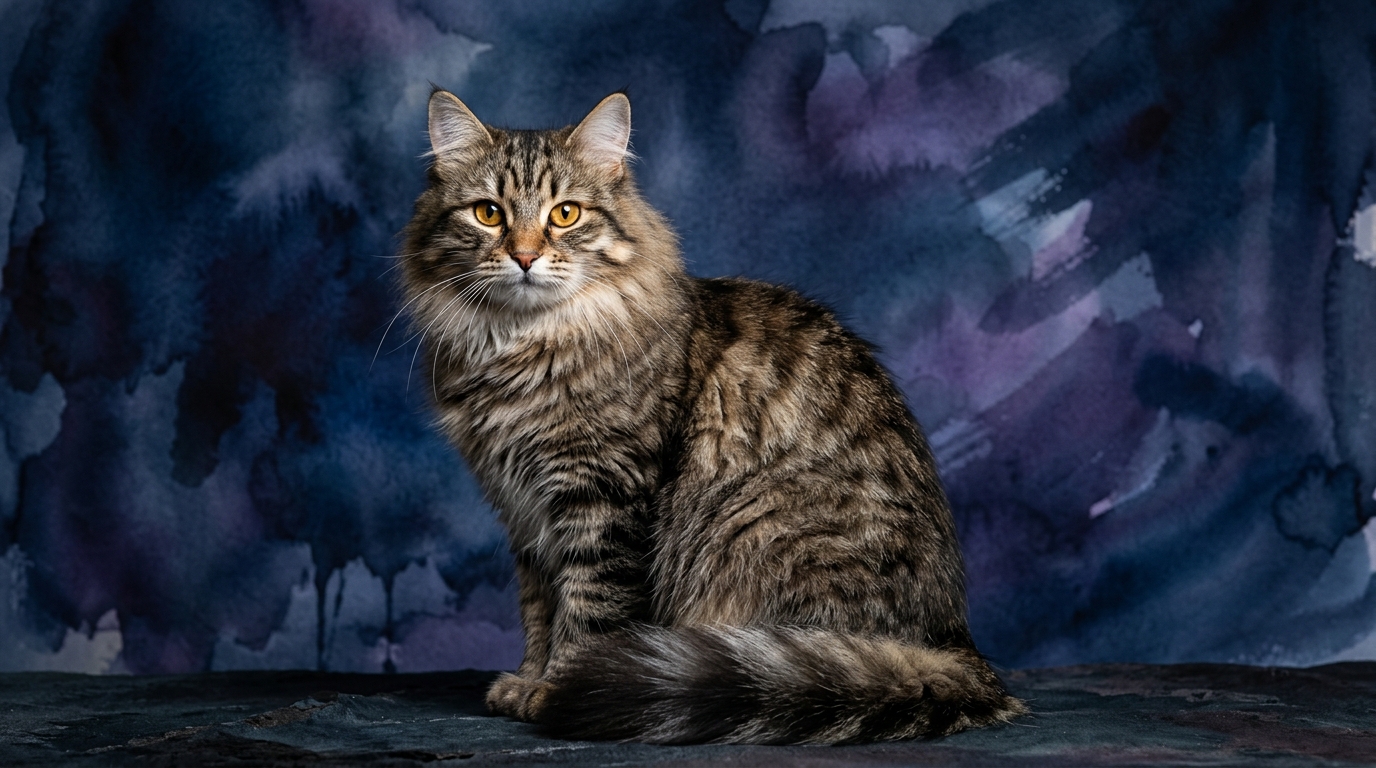
Side-by-Side IQ Profile: Bengal vs. Siberian
The Cosmic Pet Pet IQ Lab employs a five-dimensional framework to assess feline intelligence, providing a nuanced look beyond mere anecdotal observations. For the Bengal, a breed famed for its striking appearance and lively demeanor, the scores paint a picture of exceptional cognitive agility: Problem Solving 5/5, Training Speed 4/5, Social Intelligence 4/5, Instinctive Drive 5/5, and Memory 5/5. These metrics suggest a cat that is not only quick to understand but also deeply engaged with its environment and companions.
In contrast, the Siberian, a majestic native of Russia's forests, presents a more uniformly competent cognitive profile. Its scores are consistently steady across the board: Problem Solving 3/5, Training Speed 3/5, Social Intelligence 3/5, Instinctive Drive 3/5, and Memory 3/5. These ratings indicate a cat that is capable and adaptable, perhaps less inclined towards the dramatic cognitive feats of the Bengal, but nevertheless possessing a solid and reliable intellect. Understanding these foundational scores is crucial for appreciating the unique mental architecture each breed brings to a home.
Where the Bengal Excels Cognitively
The Bengal's cognitive strengths are evident across multiple dimensions, particularly in Problem Solving (5/5) and Memory (5/5). Their capacity for intricate puzzle-solving is outstanding; Bengals frequently demonstrate an ability to figure out complex toy mechanisms, open cabinets with tricky latches, or devise novel ways to access desired items. This isn't merely curiosity; it's a genuine application of analytical thought to overcome obstacles. Owners often report Bengals learning to turn on faucets or unlock doors, showcasing a clear understanding of cause and effect.
Their exceptional Memory (5/5) complements this problem-solving ability, allowing them to recall successful strategies and apply them consistently. A Bengal that learns to play fetch will not only remember the game but also the specific cues and rewards associated with it, often bringing the toy back reliably. This robust memory extends to routines and environmental details, making them highly aware of changes in their surroundings and the patterns of their human companions. Their Instinctive Drive (5/5) further fuels these cognitive pursuits, manifesting as a relentless curiosity and a drive to explore and master their environment, whether through hunting-like play or complex interactions with objects.
Where the Siberian Shows Unique Strengths
While the Siberian’s scores may not reach the peak levels of the Bengal, their cognitive profile offers a different kind of strength, especially in its consistent and balanced nature. With Problem Solving, Training Speed, Social Intelligence, Instinctive Drive, and Memory all rated at 3/5, the Siberian exhibits a reliable and adaptable intellect. This balanced approach means they are less likely to display extreme behaviors driven by singular, overpowering cognitive dimensions, fostering a more predictable and harmonious household environment.
The Siberian’s 3/5 in Social Intelligence, for instance, translates into a consistently amiable and engaging companion, without the potential for overwhelming demands that might arise from higher scores. They form strong bonds and interact affectionately, but often with a gentle independence. Their moderate Instinctive Drive (3/5) means they enjoy play and exploration but are less prone to the intense, persistent hunting simulations or boundary-pushing behaviors that can characterize breeds with higher drives. This balanced cognitive makeup contributes to their reputation as a wonderfully steady and affectionate presence, offering a practical and comforting form of companionship.
Ease of Training: Behavioral Nuances
When it comes to training, the differences between Bengals and Siberians become quite apparent due to their respective scores in Training Speed and Instinctive Drive. The Bengal, with a Training Speed of 4/5, is often a rapid learner, quickly grasping new commands and tricks. They are highly responsive to positive reinforcement and can be taught complex sequences, such as agility courses or elaborate fetch routines, in relatively short order. However, their high Instinctive Drive (5/5) and Problem Solving (5/5) mean that while they learn quickly, they also possess a strong will and an aptitude for finding loopholes. A Bengal might learn to sit on command but will also quickly learn how to 'train' their owner to provide treats or attention on demand, or to open a forbidden door if the reward is enticing enough.
The Siberian, with a Training Speed of 3/5, may require a bit more patience and repetition during initial training sessions. They are not as quick to pick up novel behaviors, but once a command is learned, they tend to retain it reliably due to their solid Memory (3/5) and less intense drive to challenge established rules. Their moderate Instinctive Drive (3/5) means they are generally less distracted by environmental stimuli and less inclined to invent their own 'games' that might contravene household rules. Training a Siberian might be a slower process, but it often results in a more consistently compliant and less 'clever' rule-bender, making them a steady and dependable student for owners who appreciate a calm learning pace.
Matching Cognitive Profiles to Lifestyles
Choosing between a Bengal and a Siberian often comes down to an owner's lifestyle and their preferred level of interactive engagement with their feline companion. The Bengal, with its high Problem Solving (5/5), Instinctive Drive (5/5), and Memory (5/5), thrives in an environment that offers constant mental stimulation and opportunities for physical activity. Owners who enjoy teaching tricks, providing puzzle toys, or engaging in vigorous play sessions will find the Bengal to be an exceptionally rewarding match. Their cognitive makeup demands an active owner who is prepared to provide consistent enrichment to prevent boredom-driven mischief. They are perfectly suited for homes where their sharp minds can be regularly challenged and their abundant energy channeled constructively.
Conversely, the Siberian, with its balanced 3/5 scores across all cognitive dimensions, is an ideal fit for owners seeking a more relaxed yet deeply affectionate companion. While they appreciate play and interaction, their cognitive needs are generally less demanding than those of a Bengal. They are content with regular, but not necessarily intense, engagement, and their solid social intelligence makes them excellent family pets who integrate smoothly into various household dynamics. A Siberian suits owners who value a steady, comforting presence and appreciate a cat that is generally content with its environment and the rhythms of its human family, without constantly seeking new cognitive puzzles to solve.
The Verdict
Choose a Bengal if you are an active owner eager to engage a feline companion with complex games, consistent training, and ample mental stimulation.
Opt for a Siberian if you seek a consistently affectionate, adaptable companion whose steady cognitive profile offers a calmer, more predictable presence in your home.
🧠 Find Your Pet's IQ Score
Our Pet IQ Lab assessment covers 25+ tests across 5 cognitive dimensions — personalized to your breed.
Take the Full IQ Test →Frequently Asked Questions
Are Bengals difficult to live with due to their high instinctive drive?
Bengals possess a high instinctive drive (5/5), which can translate into intense play behaviors and a strong curiosity. While this requires dedicated engagement and mental enrichment from owners, it is not inherently 'difficult' but rather a characteristic that thrives with appropriate outlets and consistent interaction, preventing boredom-related issues.
Does the Siberian's 3/5 IQ score mean they are less intelligent than other breeds?
A 3/5 score across cognitive dimensions for the Siberian indicates a competent and balanced intellect, not a lack of intelligence. It suggests a reliable capacity for problem-solving, learning, and social interaction without the extreme peaks seen in some breeds, making them wonderfully adaptable and predictable companions.
Can a Siberian be taught tricks like a Bengal?
Yes, Siberians can certainly be taught tricks, though their Training Speed (3/5) suggests they may take longer to master new commands compared to a Bengal (4/5). With patience and consistent positive reinforcement, a Siberian can learn a variety of behaviors and enjoy interactive play, albeit at a steadier pace.