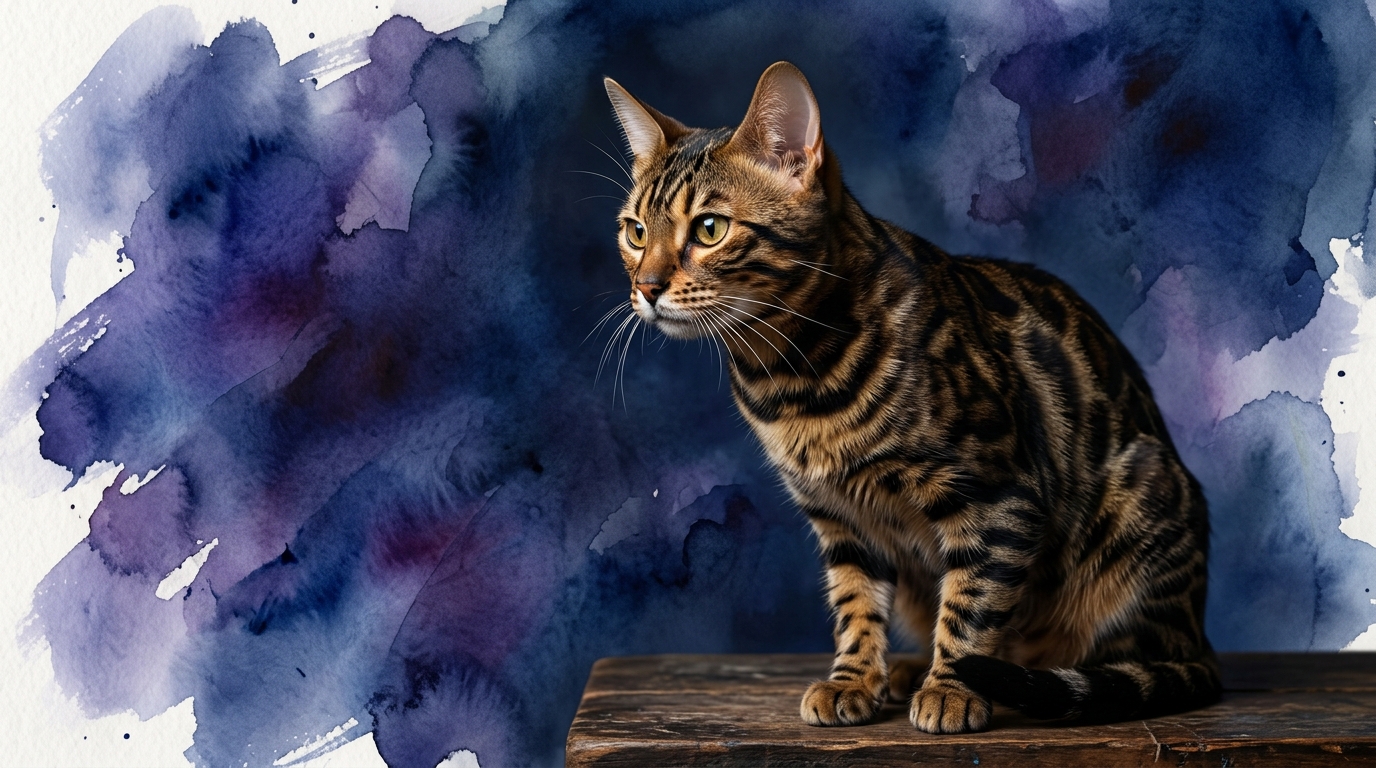
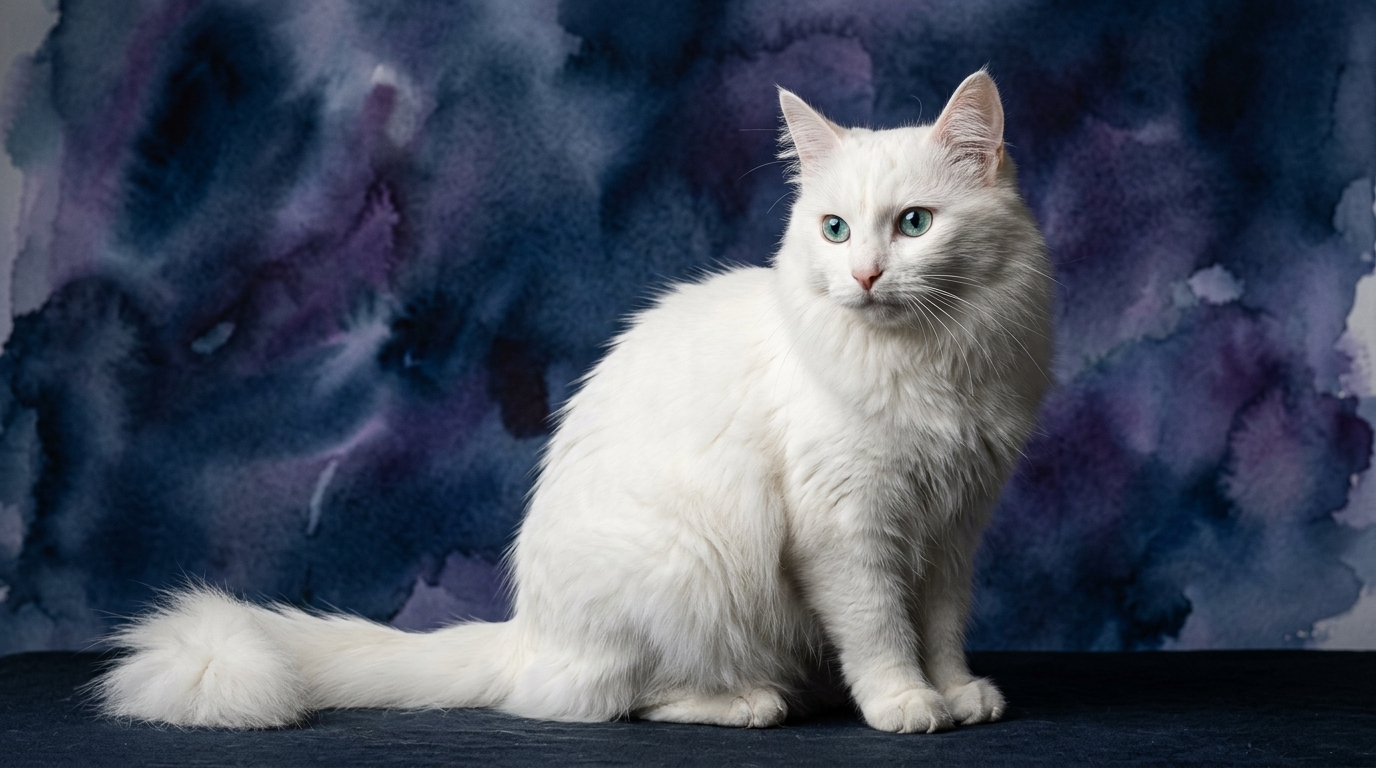
Side-by-Side IQ Profile: Bengal vs. Turkish Angora
The Cosmic Pet Pet IQ Lab employs five key dimensions to map the cognitive landscape of our feline friends, offering a granular view beyond generic notions of cleverness. Both the Bengal and the Turkish Angora present impressive overall scores, yet their individual strengths manifest in distinct ways that are crucial for prospective owners to understand.
For the Bengal, a breed renowned for its wild ancestry, the IQ profile paints a picture of intense focus and remarkable adaptability. Their Problem Solving is rated 5/5, indicating an exceptional capacity to navigate complex environments, decipher puzzles, and understand intricate cause-and-effect relationships. This isn't just about knocking a toy off a shelf; it's about systematically experimenting with objects to achieve a desired outcome, often remembering successful strategies for future use. Training Speed for the Bengal stands at 4/5, reflecting their quick grasp of new commands and routines, provided the motivation aligns with their strong intrinsic drives. Social Intelligence, at 4/5, means they are adept at reading human cues and engaging in interactive play, forming strong bonds within their chosen family. Their Instinctive Drive is a perfect 5/5, a hallmark of the breed, signifying a powerful, persistent urge to hunt, explore, and engage with their surroundings in a highly physical and mentally stimulating manner. Finally, Memory at 5/5 means a Bengal will recall specific training cues, favored play patterns, and even the location of hidden treats or toys with impressive accuracy over extended periods.
The Turkish Angora, a breed celebrated for its elegance and playful nature, shares many high-scoring cognitive traits, yet with a distinct flavor. Their Problem Solving, mirroring the Bengal, is also 5/5, demonstrating an equally strong ability to figure things out, whether it's opening cupboards or devising new ways to get attention. This problem-solving often comes with a refined grace, reflecting their agile physicality. Training Speed also scores 4/5, indicating a quick learner who can pick up tricks and routines with relative ease and enthusiasm. Their Social Intelligence is 4/5, showcasing a capacity for deep companionship and interactive play, often initiating games and seeking out human connection. Where the Angora subtly diverges is in their Instinctive Drive, which registers 4/5. While still robust and present, this drive is typically less intensely predatory or relentless than that of a Bengal, often manifesting as playful curiosity rather than an all-consuming hunting focus. Their Memory, like the Bengal's, is a perfect 5/5, allowing them to retain a vast array of learned behaviors, preferences, and environmental details.
Where the Bengal Excels Cognitively
The Bengal's primary cognitive advantage lies in its unparalleled Instinctive Drive, rated 5/5. This isn't merely about a desire to chase; it represents a profound cognitive framework geared towards persistent pursuit, complex strategizing in 'hunting' scenarios, and an intense, unwavering focus on perceived 'prey'—be it a feather wand or a puzzle feeder. This elevated drive means a Bengal's problem-solving (5/5) is often channeled through a lens of active engagement and exploration, making them exceptionally adept at tasks requiring sustained effort and physical dexterity to achieve a goal. Their cognitive processes are wired for exploration and mastery of their environment, constantly seeking out new challenges that satisfy this deep-seated urge. Coupled with their 5/5 Memory, a Bengal will not only figure out a complex puzzle once but will consistently remember the solution, applying it with precision and efficiency. This makes them particularly suited for intricate interactive toys and agility courses, where their drive fuels their intellectual engagement.
Where the Turkish Angora Holds a Unique Cognitive Edge
While the Turkish Angora shares many high scores with the Bengal, its unique cognitive strength can be found in the nuanced expression of its intelligence, particularly in how its 5/5 Problem Solving and 4/5 Instinctive Drive interact. The Angora’s slightly less intense instinctive drive, compared to the Bengal's 5/5, allows for a more diversified application of its exceptional problem-solving abilities. Instead of being solely channeled into predatory simulations, the Angora's problem-solving often leans towards social engagement and manipulating objects out of pure curiosity or for interactive play, rather than a relentless 'hunt.' This can translate into a cognitive approach that is highly adaptable and less singularly focused on one type of stimulation. Their problem-solving might involve more subtle manipulation of human interaction to achieve a goal, or a more exploratory, less 'driven' approach to novel objects, making them excellent at figuring out complex social dynamics within a household. Their innate grace and agility are physical manifestations of their cognitive processing, demonstrating superior spatial awareness and refined motor control, which they apply to navigating their world with elegance and precision.
Ease of Training: Behavioral Differences in Focus and Motivation
Both Bengals and Turkish Angoras share a Training Speed score of 4/5, suggesting both breeds are quick to learn. However, the *nature* of their trainability differs due to their distinct Instinctive Drives. A Bengal's 5/5 Instinctive Drive means they are highly motivated by rewards that tap into their predatory instincts, such as chase toys or food puzzles. This intense drive can make them exceptionally fast learners for complex tricks or agility if the training aligns with their intrinsic motivations, but it also means they require consistent mental and physical stimulation to prevent boredom or destructive behaviors. Their focus, when engaged, is absolute, but if not sufficiently challenged, they can become easily distracted by their environment or persistent in undesirable behaviors that fulfill their drive.
The Turkish Angora, with its 4/5 Instinctive Drive, is also a fast learner, but their motivation often includes a strong component of social interaction and playful curiosity. They tend to respond well to positive reinforcement methods that incorporate praise, petting, and interactive play with their human companions. While they enjoy chase games, their drive is often less singular and more amenable to varied forms of engagement, potentially making them less prone to fixating on a single 'prey' item. This means an Angora might be more consistently receptive to training sessions that are less 'game-like' and more focused on cooperative interaction, adapting readily to different training environments without the same intense need for high-octane stimulation that a Bengal often requires.
Matching Breeds to Lifestyles: Active vs. Relaxed Owners
The cognitive profiles of these two breeds offer clear guidance for matching them with owner lifestyles. The Bengal, with its 5/5 Problem Solving, 5/5 Instinctive Drive, and 5/5 Memory, is an ideal companion for active owners who relish engaging deeply with their pets. These cats thrive in environments where their intelligence and physical prowess are constantly challenged. Owners who enjoy teaching complex tricks, setting up intricate puzzle feeders, providing supervised outdoor exploration, or engaging in vigorous play sessions multiple times a day will find a Bengal to be an endlessly rewarding and mentally stimulating companion. They need owners who can consistently channel their intense cognitive energy and predatory instincts into constructive activities, rather than leaving them to devise their own, potentially mischievous, forms of entertainment.
The Turkish Angora, while equally intelligent with 5/5 Problem Solving and 5/5 Memory, and a robust 4/5 Instinctive Drive, presents a slightly more versatile fit for owners. They are certainly active and playful, but their drive is generally less demanding than the Bengal's. This makes them suitable for owners who appreciate an interactive and engaging cat but might not be able to commit to the relentless intellectual and physical demands of a Bengal. An Angora will thrive with owners who enjoy regular play sessions, provide stimulating toys, and appreciate a cat that is highly social and often seeks out companionship, yet might be content with slightly less intense or prolonged periods of active engagement. They are adaptable to both lively households and those seeking a more gracefully playful, yet still mentally sharp, feline presence.
The Verdict
Choose a Bengal if you are an active owner seeking a highly interactive, intensely driven companion who thrives on complex challenges and requires consistent mental and physical engagement.
Choose a Turkish Angora if you desire an elegant, playful, and highly intelligent cat that enjoys varied forms of interaction and adapts well to a slightly less demanding, yet still engaging, lifestyle.
🧠 Find Your Pet's IQ Score
Our Pet IQ Lab assessment covers 25+ tests across 5 cognitive dimensions — personalized to your breed.
Take the Full IQ Test →Frequently Asked Questions
Are Bengals good for first-time cat owners?
Bengals, with their intense intelligence and high energy, are often best suited for experienced cat owners who understand the commitment required for their mental and physical stimulation. Their strong drive and problem-solving skills mean they need consistent engagement to prevent boredom and potential behavioral issues.
Do Turkish Angoras need a lot of grooming due to their long coats?
Despite their beautiful long coats, Turkish Angoras typically have a single layer without an undercoat, which means they are less prone to matting and require relatively moderate grooming. Regular brushing a few times a week is usually sufficient to keep their fur healthy and prevent tangles.
Can both breeds be trained to walk on a leash?
Yes, both Bengals and Turkish Angoras can be successfully leash trained, especially if introduced to it from a young age. Their high intelligence and curiosity make them receptive to new experiences, with Bengals often reveling in outdoor exploration due to their strong instinctive drive, and Angoras enjoying controlled outdoor adventures for their playful curiosity.