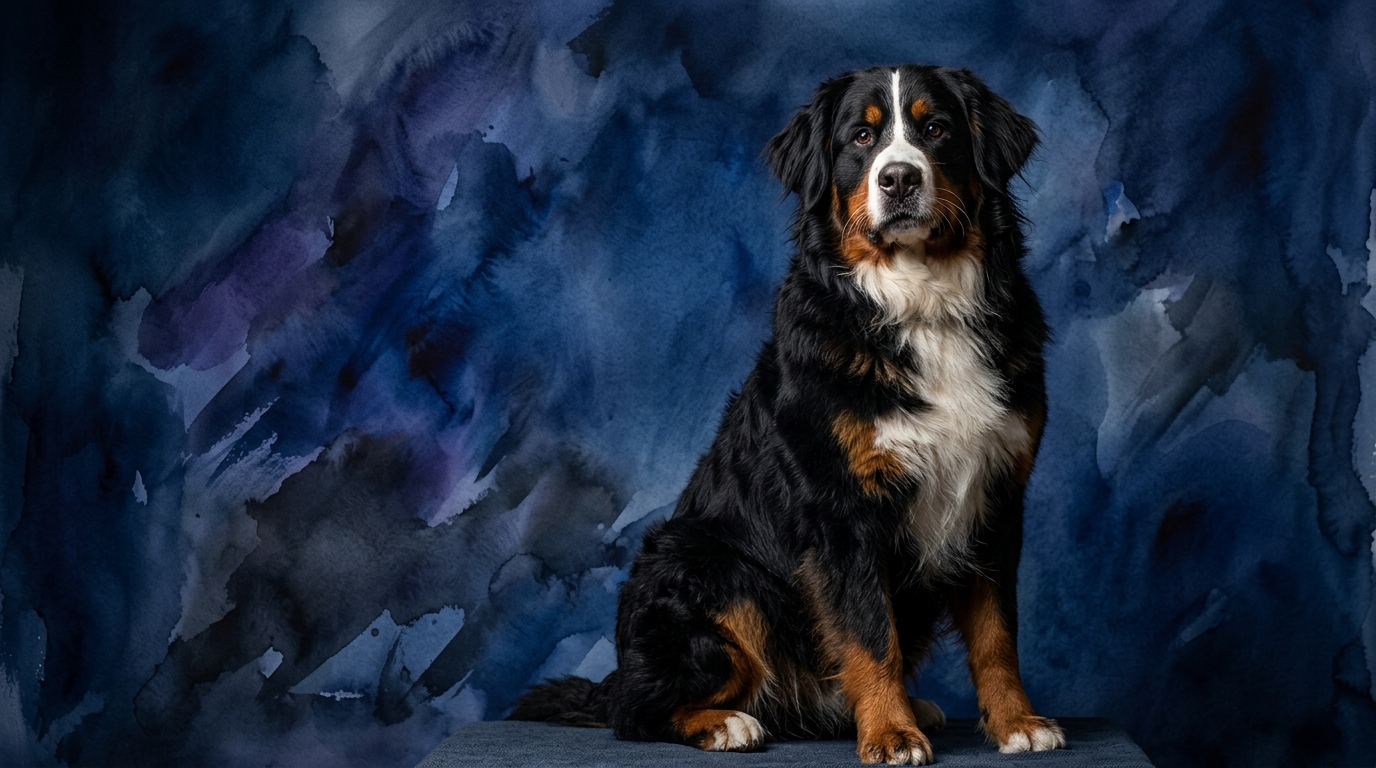

Side-by-Side IQ Profile: Bernese Mountain Dog vs. Boxer
The Bernese Mountain Dog, ranking #27 on the Coren scale, presents a balanced cognitive profile. Their Problem Solving is rated 3/5, indicating a moderate capacity for independent thought in novel situations, often relying on learned behaviors or human guidance. Training Speed scores 4/5, suggesting they grasp new commands and routines with relative ease and consistency. Social Intelligence stands at an impressive 5/5, reflecting exceptional attunement to human emotions and social cues, making them highly empathetic companions. Instinctive Drive is 4/5, manifesting as a strong natural inclination for their original working roles like cart-pulling and guarding, coupled with a desire for purposeful activity. Memory is 3/5, meaning they retain learned information adequately but may require occasional refreshers for less frequently practiced tasks.
The Boxer, positioned at #48 on the Coren scale, shares several cognitive similarities with the Bernese but with key distinctions. Their Problem Solving, also 3/5, suggests they approach new challenges with curiosity but might benefit from structured guidance rather than extensive independent reasoning. Training Speed is 3/5, indicating a moderate pace for learning new commands, often requiring more repetition and consistent motivation compared to the Bernese. Social Intelligence matches the Bernese at 5/5, highlighting their profound connection with human family members and a lively, expressive communication style. Instinctive Drive is 4/5, reflecting their heritage as agile guardians and hunters, manifesting as a strong desire for physical activity, play, and engaging with their environment. Memory is 3/5, similar to the Bernese, allowing them to recall learned tasks but benefiting from regular practice to maintain proficiency.
Where the Bernese Mountain Dog Wins Cognitively
The Bernese Mountain Dog's most pronounced cognitive advantage lies in their superior Training Speed, rated 4/5 compared to the Boxer's 3/5. This higher score means Bernese Mountain Dogs typically pick up new commands and routines more quickly and with fewer repetitions. Their capacity for faster acquisition of obedience commands contributes directly to their higher Coren rank of #27, signifying a greater ease in formal training environments.
This enhanced training speed translates into a more straightforward initial training experience for many owners, as the Bernese tends to generalize learned behaviors across different contexts with greater efficiency. While both breeds possess commendable social intelligence, the Bernese's quicker grasp of human expectations, facilitated by their training speed, often leads to a smoother integration into complex household rules and social protocols. Their instinctive drive, while similar to the Boxer's, is often channeled with slightly less exuberance, making them more amenable to focused, sustained training sessions.
Where the Boxer Wins Cognitively
While the Boxer doesn't exhibit a numerically higher score in any single cognitive dimension compared to the Bernese, their unique blend of traits creates distinct cognitive advantages, particularly in terms of engagement and adaptability in certain social contexts. Their Social Intelligence, a robust 5/5, combined with their spirited nature, allows them to excel in dynamic, interactive scenarios where joyful, expressive communication is paramount. This makes them particularly adept at engaging in energetic play and forming deep, reciprocal bonds that thrive on responsive interaction, a subtle cognitive win for owners prioritizing spirited companionship.
Furthermore, the Boxer's 3/5 Problem Solving and 4/5 Instinctive Drive often manifest as a persistent, curious approach to their environment, especially when it involves physical exploration or playful challenges. While their training speed is moderate, their unwavering enthusiasm and strong desire for interaction can make them highly motivated learners when training is framed as a fun, engaging game. This capacity for playful persistence and enthusiastic social engagement, even in the face of learning hurdles, can be a cognitive strength for owners who appreciate a dog with a vibrant, tenacious spirit that approaches life with gusto.
Which is Easier to Train and Why
Based on The Cosmic Pet Pet IQ Lab data, the Bernese Mountain Dog is generally considered easier to train than the Boxer. The Bernese boasts a Training Speed of 4/5, which indicates a quicker understanding and retention of commands and routines. This cognitive attribute means they often require fewer repetitions to master a new skill and are more likely to perform consistently, contributing to their higher Coren rank of #27.
In contrast, the Boxer's Training Speed of 3/5 suggests they will require more patience and consistent reinforcement. While Boxers are eager to please and possess high social intelligence, their energetic and sometimes playful nature can lead to a shorter attention span during training. Owners of Boxers often find success by incorporating play-based training methods and keeping sessions short, engaging, and highly rewarding to maintain their focus. The difference isn't a lack of ability in the Boxer, but rather a need for a more tailored, persistent, and often more physically interactive approach to training, where their strong instinctive drive can be harnessed.
Which Suits Active Owners vs. Relaxed Owners
When considering activity levels, both breeds have an Instinctive Drive of 4/5, but their manifestation of this drive differs, making them suitable for varying owner lifestyles. The Bernese Mountain Dog, while possessing a strong drive for purpose, often channels it into more measured activities. They appreciate regular walks, opportunities for scent work, and engaging in family activities, but are generally content with a moderate exercise routine and significant downtime relaxing with their family.
The Boxer, on the other hand, with its historical background as a hunting and guardian dog, typically exhibits a more exuberant and physically demanding expression of its 4/5 Instinctive Drive. They thrive on vigorous exercise, including running, playing fetch, and engaging in active sports. An active owner who enjoys daily jogs, extended play sessions, or dog sports like agility will find the Boxer a perfect match. A more relaxed owner might find the Boxer's energy levels challenging without consistent outlets, potentially leading to boredom and undesirable behaviors. Therefore, the Bernese generally suits more relaxed owners who enjoy companionship and moderate activity, while the Boxer is better suited for highly active individuals or families.
The Verdict
Choose the Bernese Mountain Dog if you prioritize a quicker, more straightforward training experience and desire a deeply empathetic companion content with moderate activity and ample family relaxation time. They excel as a steady, responsive presence in the home, learning new routines with relative ease.
Opt for the Boxer if you are an active owner seeking an energetic, playful partner who thrives on vigorous engagement and a lively, expressive social connection. While requiring more patience in training, their enthusiastic approach to life and tenacious spirit are deeply rewarding for those prepared to meet their needs.
🧠 Find Your Pet's IQ Score
Our Pet IQ Lab assessment covers 25+ tests across 5 cognitive dimensions — personalized to your breed.
Take the Full IQ Test →Frequently Asked Questions
Are Bernese Mountain Dogs smarter than Boxers?
Based on Coren rankings, Bernese Mountain Dogs (#27) are generally considered more adept at obedience and working intelligence than Boxers (#48). However, both breeds show identical Problem Solving (3/5), Social Intelligence (5/5), Instinctive Drive (4/5), and Memory (3/5), indicating their cognitive differences primarily lie in training speed.
How do their social intelligence scores compare?
Both Bernese Mountain Dogs and Boxers score an exceptional 5/5 in Social Intelligence. This means both breeds are highly attuned to human emotions and social cues, forming strong bonds and communicating effectively with their families, though their expression of this intelligence may differ in exuberance.
Which breed is better for a first-time dog owner?
A Bernese Mountain Dog might be slightly more manageable for a first-time owner due to their higher training speed and generally calmer demeanor, making initial training less challenging. Boxers, while loving, require a more dedicated approach to channeling their higher energy and more moderate training speed.