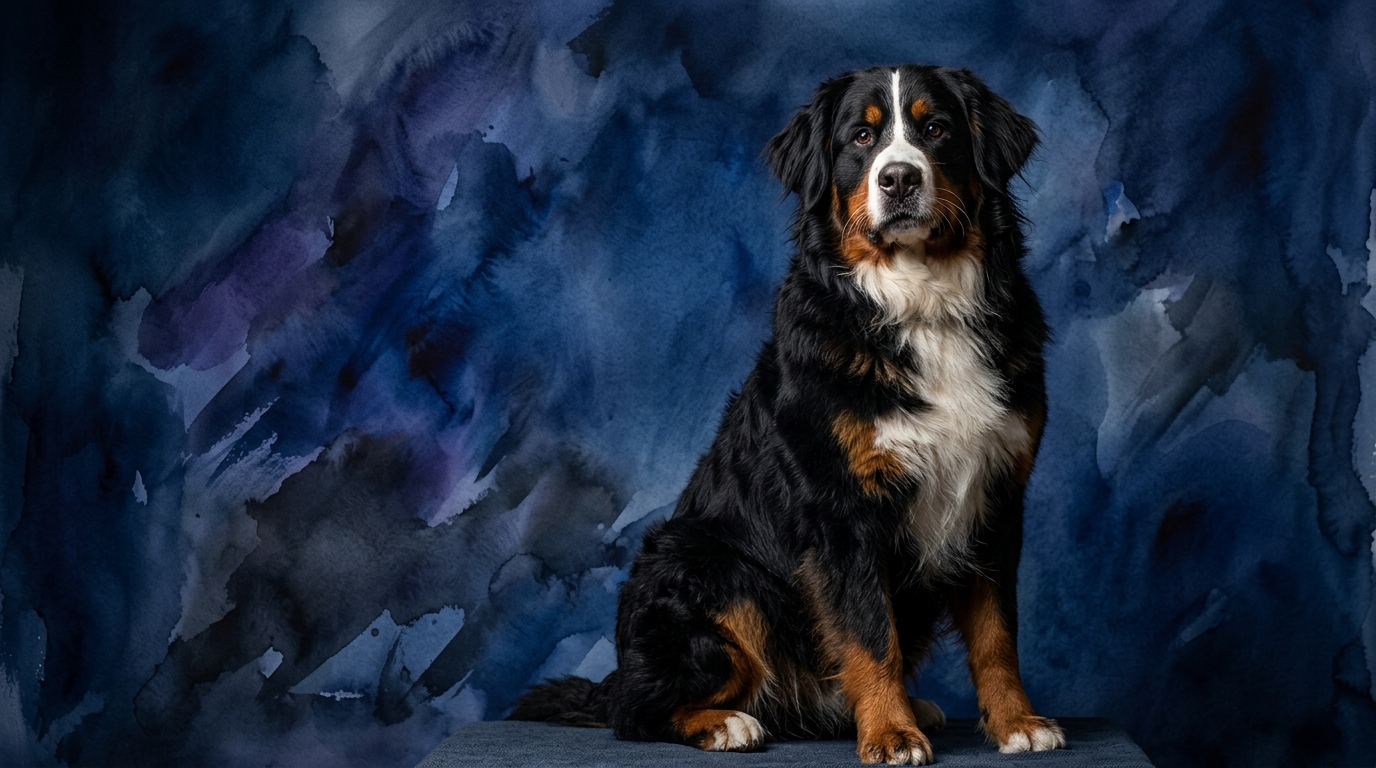
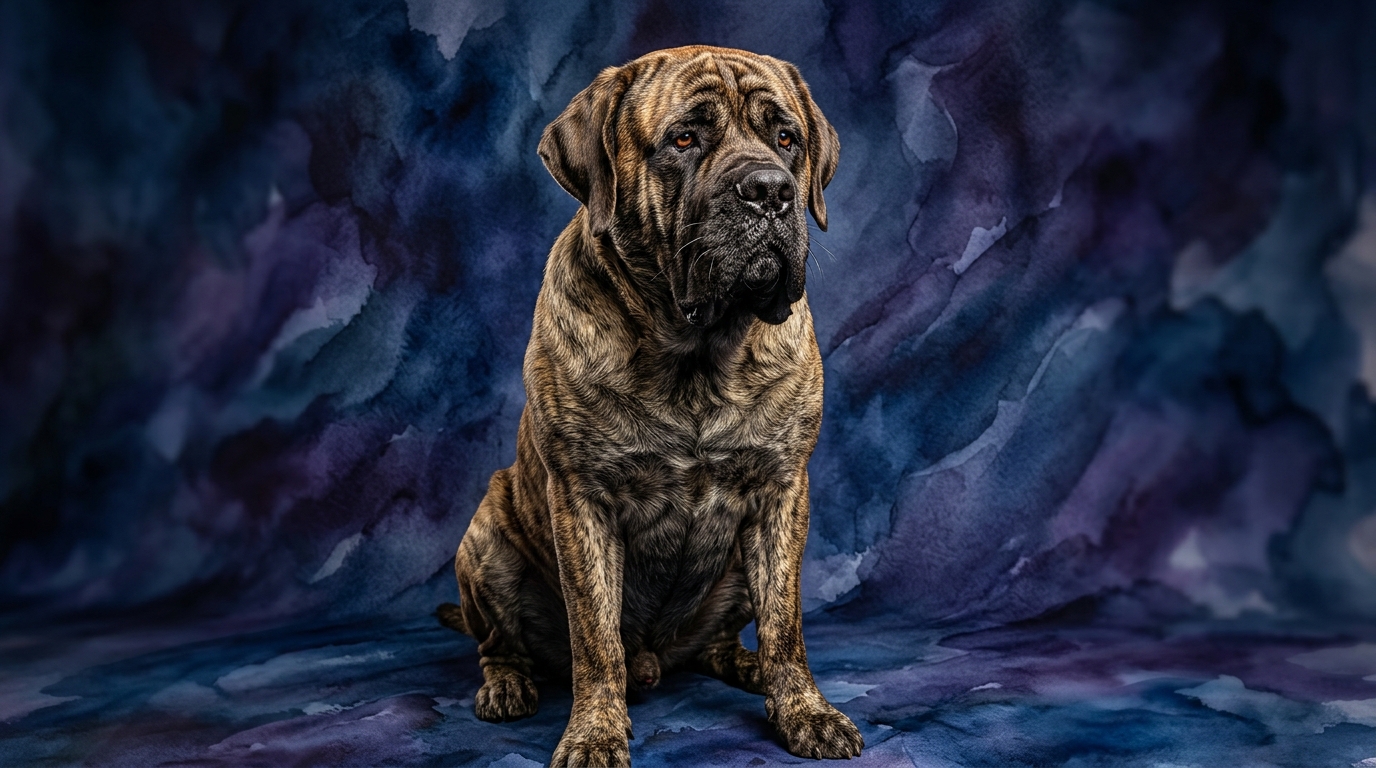
Side-by-Side Cognitive Profile: Bernese Mountain Dog vs. Mastiff
The Cosmic Pet Pet IQ Lab ranks the Bernese Mountain Dog at #27 on the Coren scale, presenting a balanced yet distinctly socially-oriented cognitive profile. Their Problem Solving is rated 3/5, indicating an ability to navigate moderate challenges but preferring structured guidance over independent strategizing. Where they truly shine is their Training Speed, a solid 4/5, reflecting a keen eagerness to grasp new commands and respond to instruction. This is bolstered by an exceptional Social Intelligence of 5/5, making them incredibly attuned to human emotions and social cues, fostering deep, intuitive bonds. Their Instinctive Drive, at 4/5, speaks to a purposeful nature, often expressed in their historical roles of herding and drafting, a drive that can be channeled into various tasks. Memory, at 3/5, is reliable for routines and learned behaviors, ensuring consistency in their responses.
In contrast, the Mastiff, with a Coren rank of #72, exhibits a more reserved and steadfast cognitive makeup. Their Problem Solving capability mirrors the Bernese at 3/5, meaning they can address straightforward issues but are not naturally inclined towards complex, novel solutions. Training Speed for the Mastiff is 3/5; they learn, but at a more deliberate pace, requiring patience and consistent reinforcement to solidify commands. Their Social Intelligence also scores 3/5, suggesting a deep loyalty to their immediate family but a more reserved, watchful demeanor towards strangers and less emphasis on overt emotional expression or broad social engagement. An Instinctive Drive of 3/5 points to a primary focus on guarding and a less intense drive for active, varied work compared to the Bernese. Their Memory, like the Bernese, registers 3/5, proving sufficient for remembering routines and familiar faces within their established environment.
Where the Bernese Mountain Dog Wins Cognitively
The Bernese Mountain Dog demonstrates clear cognitive advantages primarily in areas that foster dynamic human-animal partnership and adaptability. Their superior Social Intelligence (5/5 compared to Mastiff's 3/5) is a standout feature. This means a Bernese is inherently more empathetic, quicker to read subtle human moods, and more inclined to seek out and respond to emotional connection. This high social attunement translates directly into their remarkable capacity for roles like therapy work or as deeply integrated family members who seem to anticipate needs. Furthermore, their Training Speed (4/5 versus Mastiff's 3/5) gives them an edge in learning new commands and behaviors more rapidly. This responsiveness, coupled with their purposeful Instinctive Drive (4/5), makes them more malleable for diverse activities, from competitive obedience to carting, readily engaging with tasks that require active participation and understanding of human direction. Their cognitive profile leans towards a more interactive and emotionally resonant companionship.
Where the Mastiff Wins Cognitively
While the Bernese excels in social dynamism, the Mastiff's cognitive strengths lie in areas emphasizing steadfastness, independent judgment within their role, and a calm, self-contained presence. Their consistent Problem Solving (3/5) and Memory (3/5), combined with a more moderate Instinctive Drive (3/5), contribute to an unwavering reliability within established routines. Unlike the Bernese, whose social intelligence often drives them to seek constant interaction, the Mastiff's lower Social Intelligence (3/5) allows for a more independent internal state. This translates not to a lack of affection, but to a profound, quiet devotion that doesn't demand constant engagement. Their primary Instinctive Drive for guarding, while rated 3/5, is highly specific and deeply ingrained, allowing them to make calm, decisive judgments about their environment without needing constant human input. This makes them exceptionally reliable as watchful protectors, capable of assessing situations with a stoic self-assurance, rather than relying on human cues for every decision. Their cognitive profile fosters a profound sense of security and a serene, unwavering presence.
Which is Easier to Train and Why
The Bernese Mountain Dog generally proves easier to train due to several key cognitive factors. Their higher Training Speed (4/5) means they pick up new commands and concepts more quickly, often requiring fewer repetitions to solidify a behavior. This is significantly amplified by their exceptional Social Intelligence (5/5). Bernese Mountain Dogs are highly motivated by human approval and connection; they are keenly attuned to their owner's expressions and tone, making them eager to please and responsive to positive reinforcement. Their robust Instinctive Drive (4/5) also provides a natural inclination towards purposeful activity, which can be readily channeled into various training exercises, from basic obedience to advanced tasks like carting or agility. They thrive on collaborative effort and communication with their human counterparts, making the training process a rewarding partnership.
Conversely, training a Mastiff requires a different approach marked by greater patience and consistency. Their Training Speed (3/5) indicates a more deliberate learning pace; while they will eventually master commands, it often takes more time and repetition. Their Social Intelligence (3/5), while sufficient for forming strong family bonds, means they are less driven by the subtle nuances of human praise or the desire to "perform" for their owner. Instead, Mastiffs respond best to clear, firm, and consistent instruction, understanding the "why" behind a command rather than solely seeking approval. Their Instinctive Drive (3/5), primarily focused on guarding, does not translate to a natural eagerness for varied, active training exercises. Owners must be prepared for a more methodical training journey, where building trust and establishing clear boundaries are paramount, rather than relying on a dog's inherent desire to work for human affirmation.
Which Suits Active Owners vs. Relaxed Owners
For active owners seeking a canine companion to share adventures and engage in purposeful activities, the Bernese Mountain Dog is the more suitable choice. Their Instinctive Drive of 4/5, coupled with their high Social Intelligence (5/5), means they thrive on interaction, exploration, and having a "job" to do, whether it's hiking, carting, or participating in dog sports. They are happiest when mentally and physically stimulated, eager to accompany their owners on excursions and requiring regular, engaging exercise to prevent boredom and maintain their well-being. Their desire for connection makes them enthusiastic partners in outdoor pursuits and family activities.
In contrast, the Mastiff is an ideal fit for more relaxed owners who appreciate a calm, steadfast presence and a less demanding activity schedule. Their Instinctive Drive of 3/5, predominantly focused on watchful guarding, means they are generally content with a more sedentary lifestyle once their basic exercise needs are met. While they still require daily walks to maintain health, they are not driven by a constant need for intense physical or mental stimulation. Their lower Social Intelligence (3/5) compared to the Bernese means they are less prone to separation anxiety or constant demands for attention, often preferring to observe their surroundings from a comfortable spot. Owners who value a quiet, loyal companion content with a routine of gentle walks and ample lounging will find the Mastiff's temperament aligns perfectly with their lifestyle.
The Verdict
When seeking a companion, choose the Bernese Mountain Dog if you desire a highly engaged, socially attuned partner eager for purposeful work and quick learning, thriving on interactive family life.
Opt for the Mastiff if you prefer a steadfast, calm, and protective presence that thrives on routine, offers a more independent demeanor, and excels as a watchful guardian.
🧠 Find Your Pet's IQ Score
Our Pet IQ Lab assessment covers 25+ tests across 5 cognitive dimensions — personalized to your breed.
Take the Full IQ Test →Frequently Asked Questions
Are Bernese Mountain Dogs good therapy dogs?
Yes, their exceptional social intelligence (5/5) and natural empathy make them outstanding therapy animals, excelling at reading human emotions and providing comfort and intuitive companionship.
Do Mastiffs need a lot of exercise?
While large, Mastiffs have a moderate instinctive drive (3/5) and don't require intense exercise. Regular, moderate walks and yard time are usually sufficient to keep them healthy and content, as they are not driven by constant activity.
Which breed is better for first-time dog owners?
The Bernese Mountain Dog's higher training speed (4/5) and social intelligence (5/5) generally make them a more communicative and forgiving choice for first-time owners willing to invest in their significant exercise and social needs.