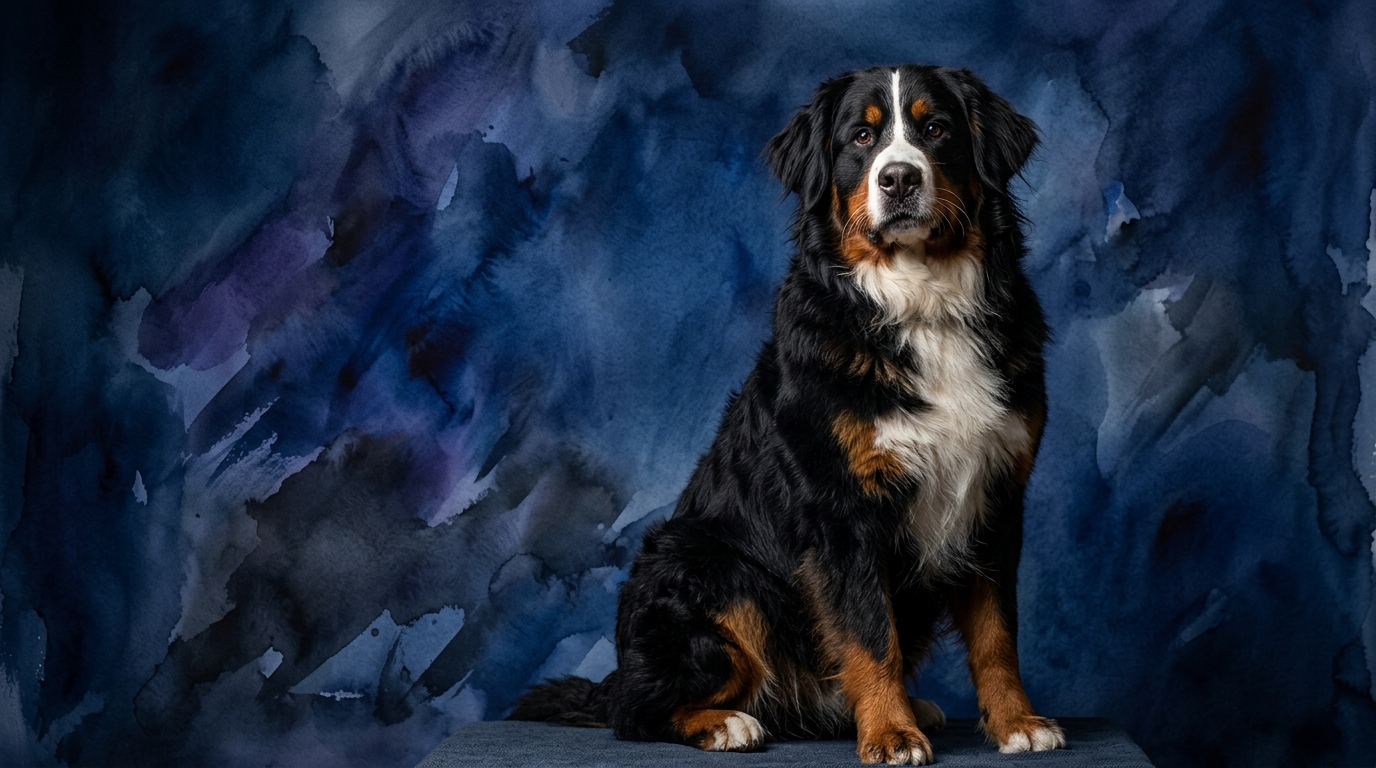

Side-by-Side IQ Profile: Bernese Mountain Dog vs. Norwich Terrier
The Bernese Mountain Dog, a robust working breed, exhibits a cognitive profile tailored for collaboration and companionship, reflected in its Coren ranking of #27. Its Problem Solving score of 3/5 indicates capacity for moderately complex environmental challenges, often relying on learned strategies or human guidance. With a Training Speed of 4/5, these dogs generally assimilate new commands efficiently, eager to understand and comply. Their Social Intelligence truly shines at 5/5, demonstrating exceptional ability to interpret human emotions, body language, and intentions, fostering deep bonds and responsive interactions. An Instinctive Drive of 4/5 suggests strong innate motivation for tasks, often expressed through pulling, guarding, or herding, requiring constructive outlets. Finally, a Memory score of 3/5 means they retain learned information adequately, but might not recall intricate details over very long periods without reinforcement.
In contrast, the Norwich Terrier, a compact terrier breed not featured in the Coren rankings, presents a cognitive makeup shaped by its independent, vermin-hunting heritage. Its Problem Solving ability, also rated at 3/5, manifests as a tenacious, self-directed approach to obstacles, favoring persistence and ingenuity in tight spaces over cooperative strategy. A Training Speed of 3/5 implies they learn at a moderate pace, often requiring more repetition and motivational variety due to their independent streak. Their Social Intelligence is rated at 3/5, suggesting they form bonds but might not be as overtly attuned to subtle human social cues, often prioritizing their own interests. An Instinctive Drive of 3/5 means they possess a moderate but distinct prey drive and a desire to explore, dig, and chase, characteristic of their terrier lineage. Their Memory, also 3/5, serves them well for recalling effective hunting strategies or favored digging spots, but may not prioritize human-centric routines as readily.
Where the Bernese Mountain Dog Wins Cognitively
The Bernese Mountain Dog distinctly excels in dimensions emphasizing collaboration and emotional attunement. Their Social Intelligence score of 5/5 is a significant cognitive advantage, allowing them to form profound connections and intuitively grasp human moods and expectations. This makes them remarkably empathetic and responsive companions, capable of nuanced communication with owners. Furthermore, their Training Speed of 4/5 indicates a natural aptitude for learning and a desire to work alongside humans, making skill acquisition smoother and more rewarding. This combination of social insight and eagerness to learn underpins their historical role as farm dogs, where understanding human direction was paramount. Their Instinctive Drive of 4/5 is often channeled into purposeful activities like carting or therapy work, reflecting a cognitive drive for utility that aligns well with human aims.
Where the Norwich Terrier Wins Cognitively
While the Norwich Terrier's scores do not numerically surpass the Bernese, its cognitive strengths lie in a different, equally valuable domain: self-reliance and tenacity. Their Problem Solving score of 3/5, interpreted through a terrier lens, speaks to a robust independent thought process. Faced with a challenge, a Norwich employs persistent, trial-and-error methods, often demonstrating cleverness born of necessity rather than guided instruction. This self-directed cognitive approach is crucial for a breed historically tasked with hunting vermin underground, where quick, independent decisions are vital. Their Instinctive Drive, also 3/5, translates into focused determination; once a Norwich identifies a goal, be it 'prey' or an interesting scent, their cognitive processing is geared towards achieving it with remarkable persistence. This focus, while sometimes challenging, is a testament to their innate problem-solving prowess within their specific environmental context.
Which is Easier to Train and Why
When considering ease of training, the Bernese Mountain Dog generally presents a more straightforward experience. Their 4/5 Training Speed combined with a stellar 5/5 Social Intelligence means they are highly motivated by pleasing human companions and quickly grasp what is expected. Their strong desire for social connection translates into attentiveness during training sessions, making them receptive to positive reinforcement and clear instructions. Behavioral differences include their innate inclination to work cooperatively, making them less prone to 'selective hearing' or independent ventures during structured learning. The Norwich Terrier, with its 3/5 Training Speed and 3/5 Social Intelligence, requires a different approach. Their independent spirit means training necessitates more patience, creativity, and a keen understanding of true motivators, typically high-value rewards or engaging games. While capable of learning, their inherent drive to explore and follow instincts can sometimes override a desire to comply, making consistency and short, engaging sessions key.
Which Suits Active Owners vs. Relaxed Owners
The choice between these breeds also hinges on an owner's lifestyle and energy levels. The Bernese Mountain Dog, despite its working heritage, adapts well to both moderately active and more relaxed households, provided it receives sufficient mental engagement and companionship. Their strong social intelligence means they thrive on being included in family activities, whether a leisurely walk or simply lounging nearby. They require consistent interaction and purpose but aren't typically driven by incessant need for high-impact physical exertion. The Norwich Terrier, while smaller, often demands a more actively engaged owner. Their terrier instincts, even at 3/5, translate into a need for purposeful activity that stimulates curious minds and allows expression of natural behaviors like digging, sniffing, and chasing. A relaxed owner might find their persistent curiosity and independent problem-solving challenging if not channeled, making them better suited to owners who enjoy consistent, interactive play and mental puzzles.
The Verdict
For those seeking a deeply connected, cooperative companion eager to learn and participate in family life, the Bernese Mountain Dog is an exceptional choice.
If you appreciate a tenacious, independent spirit with a clever, self-reliant approach to the world, and are prepared for engaging, consistent training, the Norwich Terrier could be your ideal match.
🧠 Find Your Pet's IQ Score
Our Pet IQ Lab assessment covers 25+ tests across 5 cognitive dimensions — personalized to your breed.
Take the Full IQ Test →Frequently Asked Questions
Do Bernese Mountain Dogs get bored easily if not given tasks?
While their 4/5 instinctive drive suggests a preference for purpose, Bernese Mountain Dogs are more prone to emotional distress from lack of social interaction than simple boredom. Their 5/5 social intelligence means companionship and being part of the family 'pack' is often their primary mental engagement. Providing moderate physical activity and opportunities for interaction usually satisfies their needs.
Is a Norwich Terrier difficult to live with due to its independent nature?
A Norwich Terrier's independence (3/5 social intelligence, 3/5 instinctive drive) means they thrive with owners who understand and appreciate their self-reliant character. They are not difficult, but require consistent boundaries, early socialization, and engaging outlets for their natural terrier behaviors. Their problem-solving abilities mean they can be quite resourceful if left to their own devices.
How does memory score impact daily life for these breeds?
Both breeds have a 3/5 memory score, indicating they retain information adequately for daily routines and basic commands. For the Bernese, this supports their training and social learning. For the Norwich, it's sufficient for remembering boundaries and favored exploration spots. Neither score suggests a propensity for forgetting their owners or basic training, but complex, multi-step sequences might require more frequent refreshing.