
Side-by-Side IQ Profile
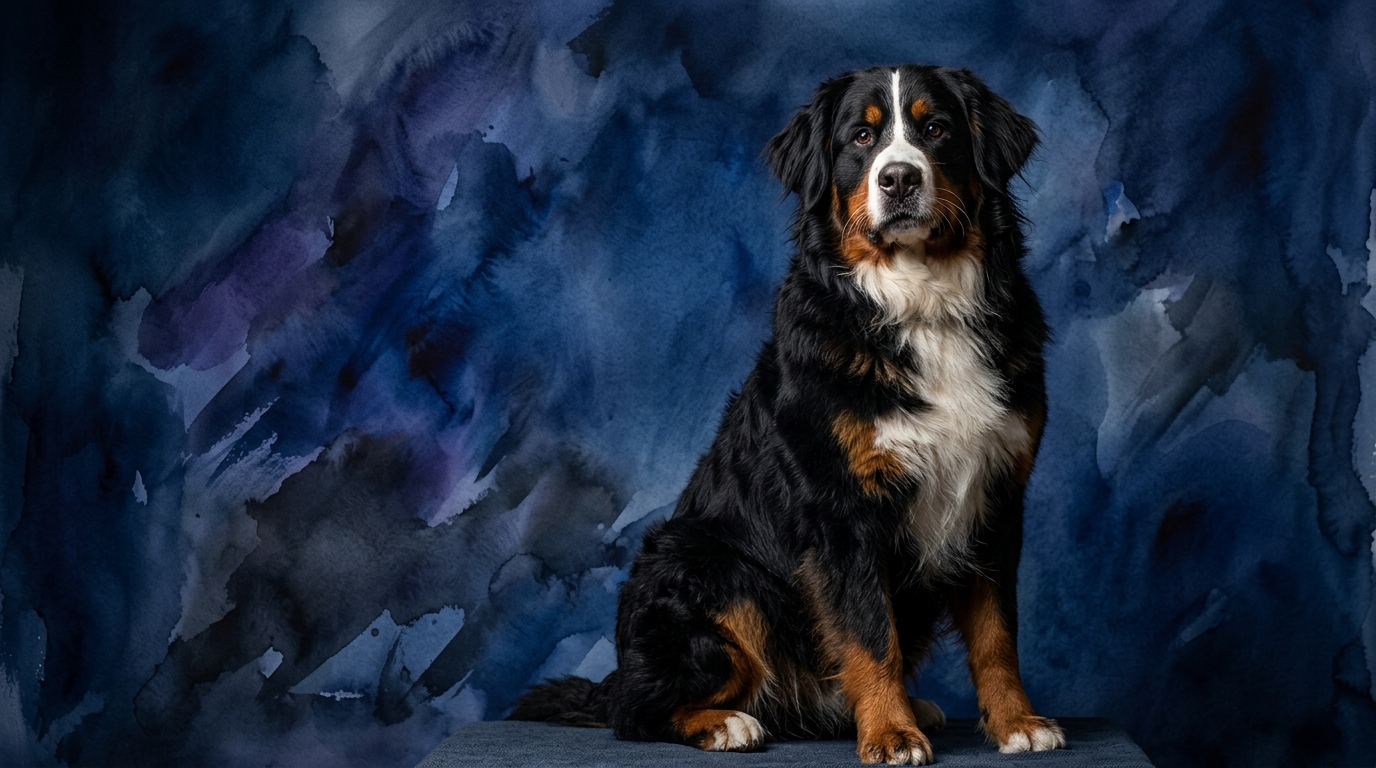
The Cosmic Pet Pet IQ Lab employs five key dimensions to evaluate canine intelligence, offering a nuanced understanding beyond simple obedience. For the Bernese Mountain Dog, a robust working breed with a Coren rank of #27, their profile highlights strengths in cooperation and responsiveness. Their Problem Solving is rated 3/5, indicating a practical, rather than deeply innovative, approach to new challenges, often relying on established patterns or owner guidance. Training Speed, at 4/5, suggests a relatively quick grasp of commands and routines, making them responsive learners eager to engage. A standout 5/5 in Social Intelligence highlights their exceptional ability to understand human cues, emotional states, and social dynamics, fostering deep bonds and cooperative behaviors. Their Instinctive Drive, at 4/5, reflects a strong inherent motivation for tasks, often expressed in pulling, guarding, or companionship, providing purpose and engagement. Memory, at 3/5, is sufficient for daily routines and learned commands but may not retain intricate sequences or past events with exceptional detail compared to some breeds.
Conversely, the Old English Sheepdog, a classic herding dog ranked #44 by Coren, presents a cognitive makeup geared towards independent judgment and pattern recognition in the field. Their Problem Solving ability matches the Bernese at 3/5, indicating a capacity to navigate obstacles but perhaps less inclination for abstract puzzle-solving without direct relevance to their environment or tasks. Training Speed is rated 3/5, meaning they learn at a moderate pace; while capable, they might require more repetition or varied approaches than a faster-learning breed, often driven by their own motivations rather than constant human approval. Social Intelligence, at 3/5, suggests they are attuned to their immediate family but may not possess the same broad social awareness or intense desire for constant human interaction as the Bernese, preferring a more independent working relationship. Instinctive Drive, also 3/5, points to a moderate inherent motivation, primarily focused on their herding roots, which can manifest as a desire to “gather” family members or objects, but perhaps less intense than other working breeds. Their Memory, however, shines at 4/5, enabling them to recall complex routes, livestock patterns, and intricate sequences of events, crucial for effective herding over varied terrains and situations.
Where Bernese Mountain Dog Wins Cognitively
The Bernese Mountain Dog truly excels in the realm of social cognition and cooperative learning. Their unparalleled 5/5 Social Intelligence means they possess an exceptional capacity to read human body language, vocal inflections, and emotional states, making them highly empathetic companions. This deep understanding translates into a profound ability to anticipate owner needs and respond appropriately, forging an almost intuitive connection. Furthermore, their 4/5 Training Speed, coupled with this social acumen, allows them to absorb new commands and behaviors with remarkable alacrity, especially when training is framed as a shared, positive interaction. They tend to be highly motivated by pleasing their human counterparts, which significantly streamlines the learning process for obedience and cooperative tasks. Their 4/5 Instinctive Drive, often directed towards companionship and working alongside their people, provides a consistent internal motivation for engagement, making them eager partners in various activities from carting to therapy work.
Where Old English Sheepdog Wins Cognitively
The Old English Sheepdog's cognitive strengths are deeply rooted in their herding heritage, particularly evident in their superior memory and independent problem-solving within their domain. With a 4/5 rating for Memory, they demonstrate an impressive capacity to recall intricate patterns, specific locations, and sequences of events, which was crucial for managing livestock across vast, varied landscapes. This robust memory allows them to learn and retain complex routines, remember specific paths, and recognize individual animals or people over time, making them reliable in predictable environments. While their Problem Solving is 3/5, similar to the Bernese, the OES often approaches challenges with a degree of independent thought, stemming from their historical need to make decisions on the spot when separated from a shepherd. This can manifest as a cleverness in navigating their environment or figuring out how to achieve a desired outcome through trial and error, sometimes without direct human intervention. Their instinctive drive, though moderate at 3/5, directs their mental energy towards organizing and maintaining order, which can be channeled into tasks that benefit from pattern recognition and spatial memory.
Which Is Easier to Train and Why
When comparing ease of training, the Bernese Mountain Dog generally presents a more straightforward experience due to their higher scores in Training Speed (4/5) and Social Intelligence (5/5). The Bernese's eagerness to please and profound understanding of human social cues mean they are often highly motivated by positive reinforcement and respond quickly to instruction. They thrive on cooperative interaction and view training as a bonding activity, making them receptive to learning new commands and behaviors with relatively fewer repetitions. Their strong desire for connection means they are typically very attentive to their handler, reducing distractions during training sessions. In contrast, the Old English Sheepdog, with a 3/5 Training Speed and 3/5 Social Intelligence, may require more patience and creative approaches. While capable learners, they can be more independent and less overtly driven by human approval, sometimes showing a “what's in it for me?” attitude. Their herding instincts might lead them to be more interested in their environment or “gathering” activities than strictly focusing on a trainer, necessitating a more engaging and consistent training regimen to maintain their attention and solidify learned behaviors. Their strong memory helps once a behavior is learned, but the initial acquisition phase might be slower.
Which Suits Active Owners vs. Relaxed Owners
The choice between these two breeds also hinges on an owner's lifestyle regarding activity levels and desired interaction. The Bernese Mountain Dog, with its 4/5 Instinctive Drive and 5/5 Social Intelligence, is an excellent match for owners who desire an engaged, cooperative partner for moderate activity. They thrive on being involved in family life, participating in walks, hikes, and even dog sports like carting or obedience. Their social nature means they genuinely enjoy interactive play and training sessions, making them suitable for active owners who want a dog to be a constant, willing participant in their ventures. While they appreciate a relaxed evening, they are not content to be mere couch potatoes; their drive requires purposeful outlets. The Old English Sheepdog, conversely, with its 3/5 Instinctive Drive and 3/5 Social Intelligence, can suit a slightly different type of owner. While they historically worked hard, their drive is often less about constant physical exertion and more about mental engagement, particularly in tasks involving pattern recognition or “herding” family members. They need regular exercise to maintain physical health, but their social needs are often met with less intense, more predictable interactions. They can be content with a relaxed home environment once their exercise needs are met, appreciating routine and a stable pack. Owners who appreciate a dog with a strong sense of routine and a more independent streak, and who are prepared for grooming, might find the OES a fitting companion.
The Verdict
Choose the Bernese Mountain Dog if you seek a highly socially intelligent, cooperative, and eager-to-please companion who thrives on shared activities and forms deep, intuitive bonds with their human family, making training a joyful, responsive experience.
Opt for the Old English Sheepdog if you appreciate a dog with exceptional memory for routines and patterns, a more independent problem-solving approach in familiar environments, and a loyal presence that enjoys structured activity and a stable, predictable home life.
🧠 Find Your Pet's IQ Score
Our Pet IQ Lab assessment covers 25+ tests across 5 cognitive dimensions — personalized to your breed.
Take the Full IQ Test →Frequently Asked Questions
Do Bernese Mountain Dogs need a lot of mental stimulation?
Yes, Bernese Mountain Dogs benefit significantly from mental stimulation due to their high social intelligence and training speed. Engaging them in training, puzzle toys, and interactive play helps satisfy their cognitive needs and strengthens their bond with their owners. Without sufficient engagement, they might become bored or seek attention through less desirable behaviors.
Is an Old English Sheepdog a good choice for first-time dog owners?
An Old English Sheepdog can be a good choice for first-time owners who are prepared for their grooming needs, moderate training speed, and independent streak. They require consistent, patient training and socialization, but their strong memory helps them retain learned behaviors over time, making them rewarding companions for dedicated individuals.
How do their instinctive drives manifest in daily life?
The Bernese Mountain Dog's 4/5 instinctive drive often manifests as a desire to be involved in family activities, a natural inclination to “work” alongside their owners, and sometimes a protective nature. The Old English Sheepdog's 3/5 instinctive drive typically shows up as a “herding” tendency, trying to gather family members or objects, and an enjoyment of routines and predictability in their environment.