Side-by-Side Cognitive Profiles
Delving into the specific cognitive dimensions for both breeds reveals their distinct mental architectures, shaped by their ancestry and purpose. Our framework assesses problem-solving, training speed, social intelligence, instinctive drive, and memory, providing a nuanced view of their intellectual capabilities.
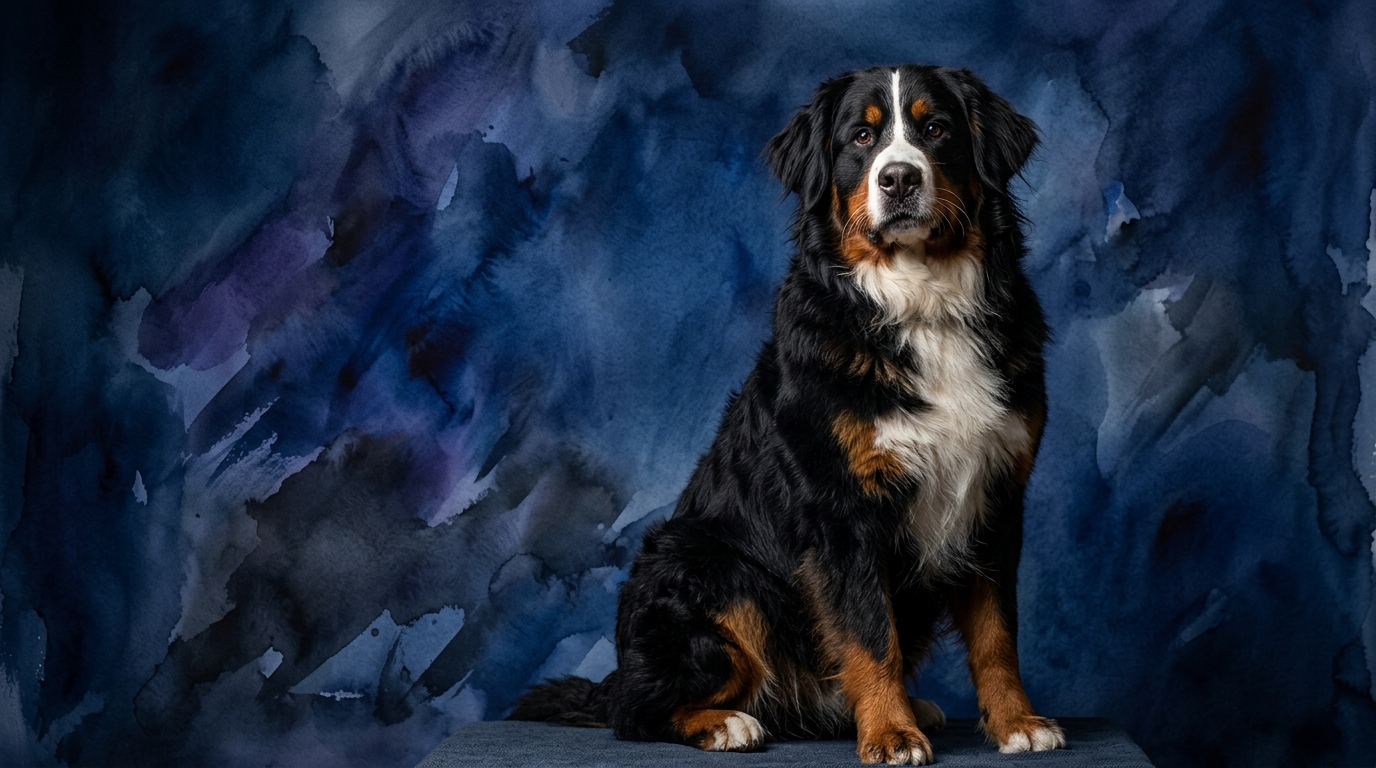
The Bernese Mountain Dog, a robust working breed, ranks #27 on the Coren intelligence scale. Their problem-solving ability is rated 3/5, indicating competence in navigating moderately complex tasks, often excelling with routine challenges rather than inventing novel solutions. Training speed for the Bernese is an impressive 4/5, reflecting their quick grasp of new commands and a willingness to learn through positive reinforcement. Their social intelligence stands out at 5/5, showcasing an exceptional attunement to human emotions and social cues, fostering deeply empathetic and cooperative companionship. An instinctive drive of 4/5 points to their strong inherent desire for partnership and a natural inclination towards working alongside humans, often displaying protective instincts for their family. Finally, their memory is rated 3/5, meaning they adequately retain learned information and experiences, remembering commands and past interactions without an exceptionally sharp recall.
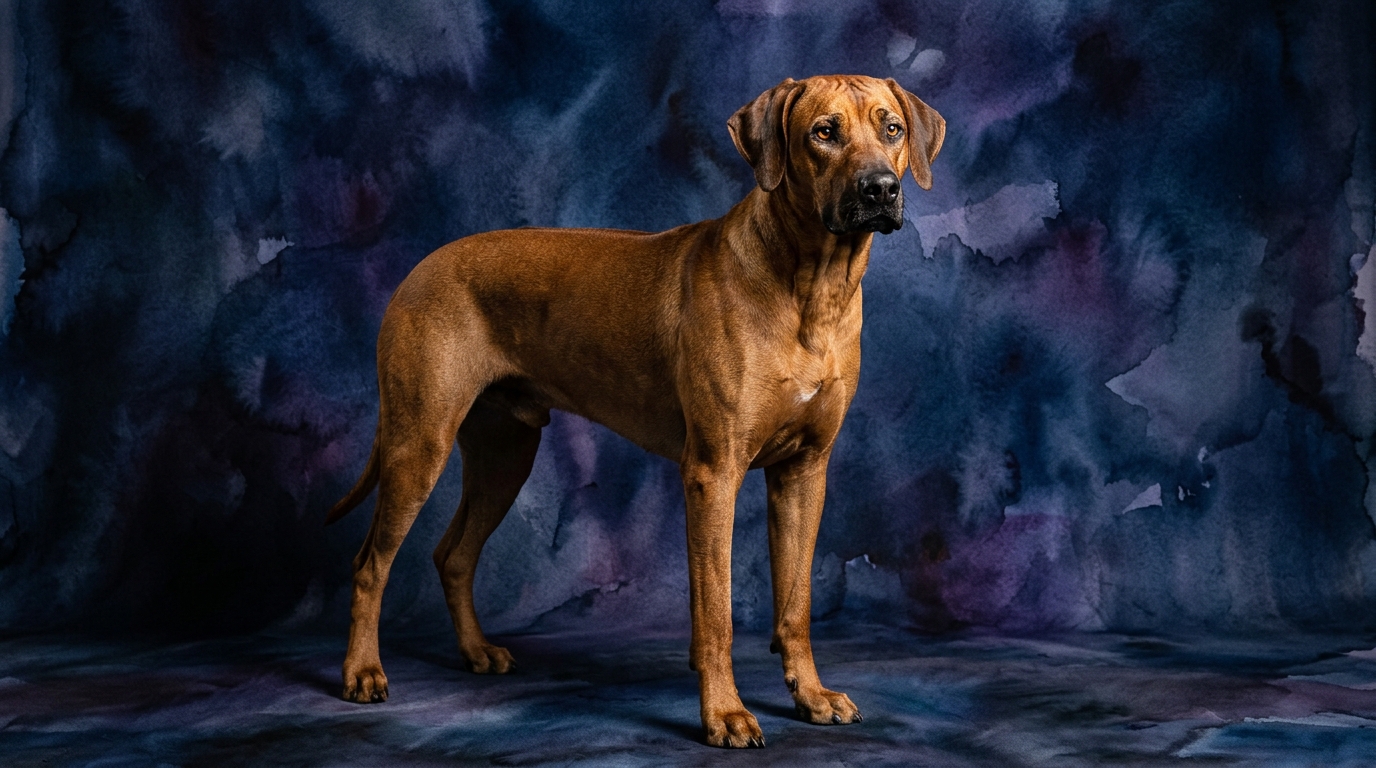
In contrast, the Rhodesian Ridgeback, a dignified hound breed, holds a Coren rank of #52. Their problem-solving ability matches the Bernese at 3/5; they handle moderate challenges, but their solutions are frequently driven by their independent nature rather than seeking immediate human direction. Training speed is 3/5, indicating they learn at a steady pace, yet their independent streak necessitates consistent, engaging training methods to maintain focus. Their social intelligence is 3/5; they form strong bonds with their immediate family but can be reserved or discerning with strangers, relying on their own judgment in social situations. An instinctive drive of 3/5 reflects their heritage as hunters, possessing a strong prey drive and a capacity for independent thought, often acting on their own initiative. Like the Bernese, their memory is 3/5, providing a solid capacity for retaining training and experiences, though their self-reliant character might sometimes make it seem like they 'forget' commands if not sufficiently motivated.
Where the Bernese Mountain Dog Excels Cognitively
The Bernese Mountain Dog truly shines in its capacity for social cognition, rated 5/5 compared to the Ridgeback's 3/5. They are exceptionally perceptive of human emotions, often anticipating needs or reacting to subtle shifts in mood. This manifests as a deep desire to please and work cooperatively, making them highly responsive to their family's social cues. They are not just present; they are actively engaged in the human social sphere, seeking connection and harmony within their pack. This high social drive translates into an inherent willingness to engage in shared activities and a pronounced comfort in varied social settings, provided they are well-socialized.
Their elevated social intelligence directly contributes to their quicker training speed, rated 4/5 against the Ridgeback's 3/5. Bernese Mountain Dogs generally exhibit a greater eagerness to learn and comply with commands, driven by their strong bond with their handlers. They process new information readily when presented in a positive and consistent manner, making them relatively straightforward to teach. Their compliance stems from a desire for social approval and collaboration, leading to more efficient acquisition of new skills and behaviors. This responsiveness makes them receptive to a wide range of training disciplines, from basic obedience to more complex tasks.
While both breeds possess inherent drives, the Bernese Mountain Dog's instinctive drive, at 4/5, leans heavily towards partnership and utility within a human family structure. Their history as farm dogs involved pulling carts and guarding livestock, tasks requiring close cooperation with people. This translates into a natural inclination to be 'with' their humans, participating in daily life and accepting direction. Their protective instincts are often rooted in their bond with their family, rather than an independent hunting drive, making them more inclined to follow human leadership in perceived threats.
Where the Rhodesian Ridgeback Excels Cognitively
While both breeds score 3/5 in problem-solving, the Rhodesian Ridgeback's approach is distinctly more independent. Faced with a challenge, a Ridgeback is more likely to assess the situation and devise a solution based on its own judgment and past experiences, rather than immediately deferring to human input. Their historical role required them to make swift decisions in potentially dangerous situations, often without direct human command. This cognitive independence means they can be resourceful in navigating their environment, finding ways around obstacles or achieving goals using their own ingenuity. This isn't about speed of solution, but rather the internal locus of control in decision-making.
The Ridgeback's lower social intelligence score (3/5) isn't a deficit in overall awareness, but rather a reflection of their discerning nature. They possess a heightened situational awareness, especially regarding their environment and unfamiliar individuals. They are less driven by a universal desire to please and more by a need to evaluate circumstances for safety and utility. This manifests as a thoughtful, often reserved, approach to new people or situations, allowing them to process information independently before engaging. Their social discretion means they form deep bonds with their chosen few but are not easily swayed or overly solicitous with strangers, a trait valuable for a guardian.
The Ridgeback's instinctive drive, while rated 3/5, is characterized by a strong sense of self-reliance and intense focus when pursuing a goal. Their heritage as lion hunters meant they needed to track, corner, and hold large game, requiring immense concentration and stamina. This drive translates into a breed that can sustain focus on a task, especially one involving tracking, scent work, or physical challenges. While they may not seek human partnership in the same way as a Bernese, their internal drive allows them to maintain singular attention on a perceived objective, making them formidable in activities that tap into this inherent focus.
Training Dynamics: Which is Easier to Train?
The Bernese Mountain Dog generally presents as the easier breed to train due to its higher social intelligence (5/5) and faster training speed (4/5). Their innate desire to cooperate and strong bond with their human family translates into a greater willingness to respond to commands and learn new behaviors. They thrive on positive reinforcement and social interaction, making training sessions engaging and productive. Their compliance is often driven by a desire to please and maintain harmony within their 'pack'.
The Rhodesian Ridgeback, with a training speed of 3/5 and social intelligence of 3/5, requires a more nuanced approach. Their independent nature, stemming from their history of making autonomous decisions in the field, means they may question commands or require stronger motivation. While capable of learning, their training demands consistency, clear boundaries, and methods that appeal to their problem-solving abilities and strong prey drive without resorting to harshness. They are less inherently driven to please and more motivated by what serves their own perceived interests, making early and consistent socialization and training crucial to channel their self-reliant tendencies.
Matching Breeds to Lifestyles: Active vs. Relaxed Owners
While they enjoy outdoor activities and thrive on companionship, Bernese Mountain Dogs are generally better suited for owners who appreciate a more relaxed pace. Their substantial size means they need regular, moderate exercise to maintain health, but they are not typically high-energy endurance athletes. They are content with daily walks, family outings, and structured playtime. Their strong social intelligence means they thrive on being included in family activities, even if those activities are quiet evenings at home. They fit well with owners who want a devoted companion for gentle adventures and ample cuddle time.
The Rhodesian Ridgeback is undeniably suited for active owners. Their historical role as endurance hunters has endowed them with significant stamina, speed, and a need for substantial physical and mental stimulation. They excel in activities like long-distance running, hiking, agility, and scent work. Owners who can provide daily vigorous exercise, coupled with engaging mental challenges, will find a happy and well-adjusted Ridgeback. Their independent nature and strong drives mean that insufficient activity can lead to boredom and potentially destructive behaviors. They need an owner who is committed to channeling their physical prowess and keen intellect.
The Verdict
Choose the Bernese Mountain Dog if you seek a highly cooperative, socially attuned companion who thrives on close family interaction and is generally more amenable to training. They are ideal for owners who prefer a moderate activity level and value a dog deeply integrated into the social fabric of the home.
Opt for the Rhodesian Ridgeback if you are an active individual or family prepared to provide consistent, vigorous exercise and mental challenges to a discerning, independent, and self-reliant dog. They are best for those who appreciate a loyal, protective companion capable of making its own judgments and thriving with clear leadership.
🧠 Find Your Pet's IQ Score
Our Pet IQ Lab assessment covers 25+ tests across 5 cognitive dimensions — personalized to your breed.
Take the Full IQ Test →Frequently Asked Questions
Is a Bernese Mountain Dog or Rhodesian Ridgeback better with children?
Bernese Mountain Dogs, with their high social intelligence and gentle nature, often exhibit a natural affinity for children, showing patience and a desire to be part of family activities. Rhodesian Ridgebacks can be protective and devoted to their family, including children, but their independent streak means they require careful socialization and supervision, especially with very young children.
Do Bernese Mountain Dogs or Rhodesian Ridgebacks require more grooming?
Bernese Mountain Dogs, with their thick double coat, require regular grooming, including daily brushing to prevent mats and manage shedding, especially seasonally. Rhodesian Ridgebacks have a short, dense coat that is much lower maintenance, requiring only occasional brushing to remove loose hair and maintain coat health.
Which breed is more prone to separation anxiety?
Bernese Mountain Dogs, due to their strong social intelligence and deep bond with their families, can be more prone to separation anxiety if left alone for extended periods without proper training and gradual acclimatization. Rhodesian Ridgebacks, while forming strong bonds, tend to be more self-reliant and less prone to severe separation anxiety, though any dog can develop it if not properly managed.