
A Side-by-Side Look at Their Cognitive Profiles
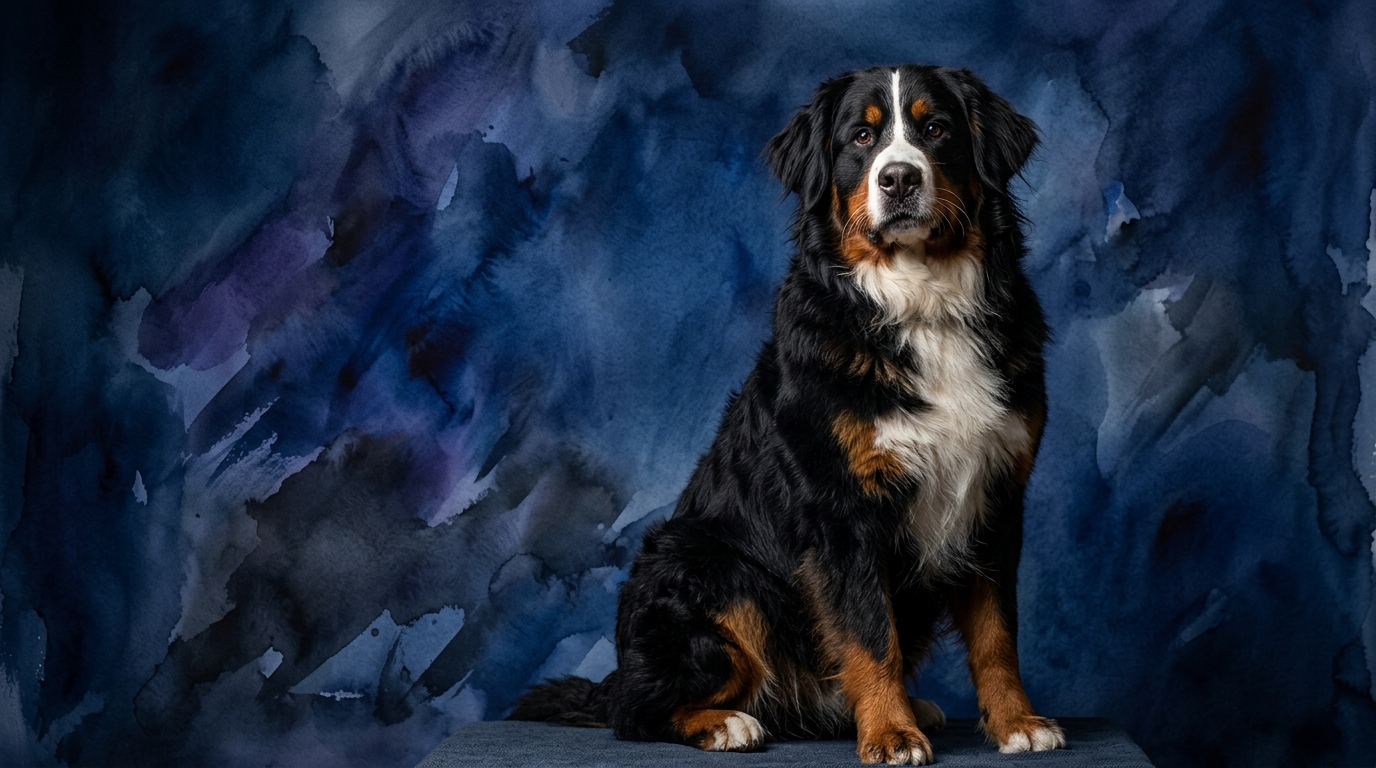
The Cosmic Pet Pet IQ Lab employs a multi-dimensional framework to assess canine intelligence, moving beyond simple obedience to encompass a broader range of cognitive functions. For the Bernese Mountain Dog, a breed historically engaged in demanding farm work and cart pulling, we observe a Coren ranking of #27, placing them among breeds with a notable capacity for understanding and executing commands. Their cognitive scores paint a picture of a cooperative and perceptive companion: a Problem Solving score of 3/5 indicates an average aptitude for independent thought when faced with novel challenges; a Training Speed of 4/5 highlights their readiness to absorb new information and cues efficiently; a Social Intelligence of 5/5 underscores their profound ability to interpret human emotions and intentions; an Instinctive Drive of 4/5 reflects a strong intrinsic motivation for purpose-driven tasks; and a Memory score of 3/5 suggests a solid, but not exceptional, recall of experiences and learned behaviors.
In contrast, the Russian Toy, a companion breed developed for aristocracy, lacks a specific Coren ranking, which is not uncommon for breeds primarily valued for their companionship rather than complex working roles. Their cognitive profile, while different, is equally compelling in its own right: a Problem Solving score of 3/5 aligns with the Bernese, suggesting a similar baseline capacity for navigating new situations; a Training Speed of 3/5 indicates they learn at a steady, moderate pace; a Social Intelligence of 3/5 points to an adequate, though less expansive, understanding of social dynamics compared to the Bernese; an Instinctive Drive of 3/5 implies a lower inherent need for highly structured tasks or intense physical exertion; and a Memory score of 3/5 matches the Bernese, indicating a comparable capacity for retaining information. This detailed breakdown allows us to appreciate the nuanced strengths each breed brings to a household.
Where the Bernese Mountain Dog Excels Cognitively
The Bernese Mountain Dog's cognitive strengths are deeply rooted in their heritage as a working breed, making them particularly adept in areas requiring cooperative engagement and emotional attunement. Their exceptional Social Intelligence score of 5/5 is a standout feature, signifying a remarkable capacity to read and respond to human cues, moods, and intentions. This translates into a dog that often anticipates needs, offers comfort, and integrates seamlessly into family dynamics, making them highly perceptive companions in complex social settings. They don't just follow commands; they often grasp the underlying purpose of an interaction, fostering a profound bond built on mutual understanding.
Furthermore, the Bernese's Training Speed of 4/5, combined with their 4/5 Instinctive Drive, positions them as eager and capable learners. This drive isn't just about physical activity; it's an inherent desire to engage in meaningful tasks and to work alongside their human partners. This cognitive synergy means they typically pick up new commands and routines with relative ease, particularly when training is framed as a collaborative effort. Their aptitude for tasks requiring sequential steps or problem-solving within a structured context, such as agility or obedience trials, is a direct reflection of these combined cognitive advantages. They thrive when given a 'job,' even if that job is simply being a well-mannered family member, demonstrating a cognitive architecture built for purpose and partnership.
Where the Russian Toy Shines Cognitively
While the Russian Toy’s cognitive scores are generally more moderate compared to the Bernese, their strengths lie in a different sphere, optimized for close companionship and adaptability within a human-centric environment. Their Problem Solving score of 3/5, identical to the Bernese, indicates a solid capacity for navigating their immediate surroundings and figuring out solutions to everyday challenges, albeit often on a smaller scale. This might manifest as cleverly finding hidden treats or figuring out how to get attention, demonstrating a practical intelligence geared towards their domestic life. They are often quick to adapt to new living arrangements or routines, making them versatile little companions.
The Russian Toy’s Social Intelligence of 3/5, while not as high as the Bernese, is perfectly adequate for forming deep, focused bonds with their primary caregivers. This often results in a dog that is acutely aware of their preferred person's presence and desires, forming a strong, almost symbiotic relationship. Their lower Instinctive Drive (3/5) can be a cognitive advantage for owners seeking a less demanding companion; they are generally content with less structured 'work' and find satisfaction in simply being close and engaged in daily household activities. This cognitive profile allows them to excel as attentive, devoted lap companions, requiring less intense mental stimulation than a working breed, yet still offering a responsive and engaging presence.
Ease of Training: Bernese Mountain Dog vs. Russian Toy
When it comes to ease of training, the Bernese Mountain Dog generally presents a more straightforward experience for most owners, largely due to their superior Training Speed (4/5) and Social Intelligence (5/5). Berners are often eager to please and highly attuned to their human's body language and vocal cues, making them receptive students. Their strong instinctive drive (4/5) means they respond well to positive reinforcement that provides a sense of purpose or reward, quickly understanding what is expected of them and often enjoying the learning process itself. This combination allows them to grasp complex commands and routines with efficiency, building upon previous lessons rapidly.
The Russian Toy, with a Training Speed of 3/5 and Social Intelligence of 3/5, requires a different approach and often more patience. While capable of learning, they may take longer to solidify new commands and might be less inherently motivated by the 'work' aspect of training. Their focus might be more easily diverted, or they might be more inclined to offer attention only when they perceive a direct, immediate benefit to themselves. Consistency, short positive-reinforcement sessions, and making training feel like a fun game are crucial for the Russian Toy. Their smaller size also influences training; while they can learn impressive tricks, formal obedience might require more perseverance due to their sometimes independent spirit and less inherent drive to perform for a 'job'.
Matching Breeds to Lifestyles: Active vs. Relaxed Owners
For owners with an active lifestyle and a desire for a canine partner in their adventures, the Bernese Mountain Dog is often an excellent fit. Their 4/5 Instinctive Drive signifies a need for regular engagement, both physical and mental. They thrive on activities like hiking, carting, or even just long, purposeful walks, and they genuinely enjoy participating in family outings. Their high social intelligence means they are often happiest when included in human activities, making them ideal companions for those who want a dog to be an integral part of their active daily life. They benefit from consistent mental challenges, such as learning new tricks or puzzle toys, to keep their perceptive minds engaged, preventing boredom which can sometimes lead to less desirable behaviors.
Conversely, the Russian Toy's cognitive profile and physical attributes lend themselves well to more relaxed owners or those with smaller living spaces. Their 3/5 Instinctive Drive means they require less intensive physical exercise and mental stimulation compared to a working breed. While they still enjoy walks and playtime, their needs are typically met with shorter, more frequent bursts of activity. Their social intelligence, while moderate, is perfectly suited for forming a deep, focused bond with a single person or a small family, making them content to be lap companions or to follow their owner around the house. They are excellent choices for individuals who desire a devoted, less physically demanding companion that can adapt readily to a quieter, indoor-centric lifestyle.
The Verdict
Choose the Bernese Mountain Dog if you seek a highly cooperative, emotionally perceptive companion eager for purposeful engagement and active participation in family life.
Opt for the Russian Toy if you desire a devoted, adaptable companion who thrives on close personal connection and fits seamlessly into a more relaxed, indoor-focused lifestyle.
🧠 Find Your Pet's IQ Score
Our Pet IQ Lab assessment covers 25+ tests across 5 cognitive dimensions — personalized to your breed.
Take the Full IQ Test →Frequently Asked Questions
Do Bernese Mountain Dogs require extensive mental stimulation?
Yes, their high social intelligence and instinctive drive mean Bernese Mountain Dogs benefit significantly from regular mental challenges. Activities like puzzle toys, training new commands, or engaging in 'jobs' like carrying a backpack can keep their minds sharp and prevent boredom.
Are Russian Toys difficult to house train due to their size?
While their small size means small accidents are less noticeable, Russian Toys are not inherently more difficult to house train than other breeds. Consistent routine, frequent outdoor access, and positive reinforcement are key to successful house training for this breed.
Can a Russian Toy participate in dog sports despite its size?
Absolutely! Despite their diminutive stature, Russian Toys can excel in various dog sports like agility, obedience, and rally. Their problem-solving abilities and eagerness for interaction, even with moderate training speed, make them capable and enthusiastic participants with patient guidance.