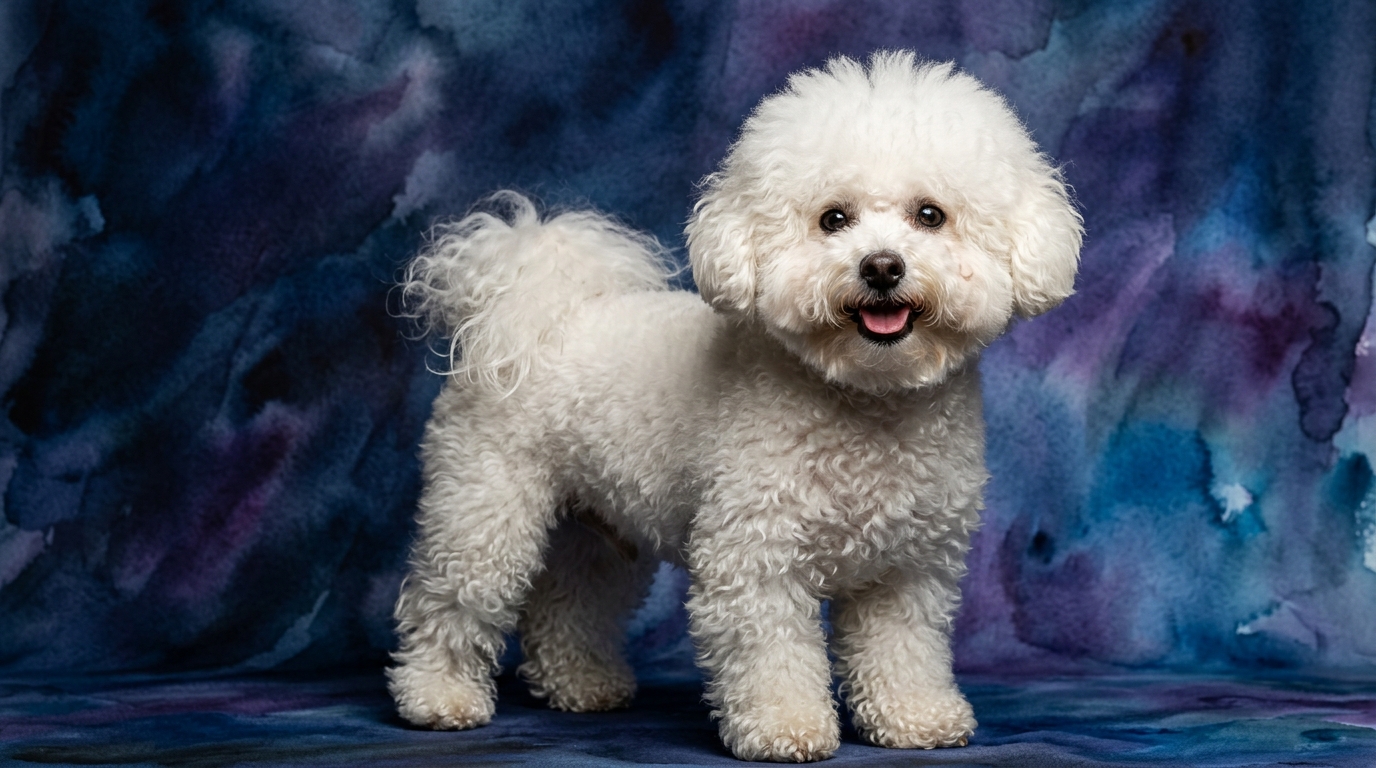
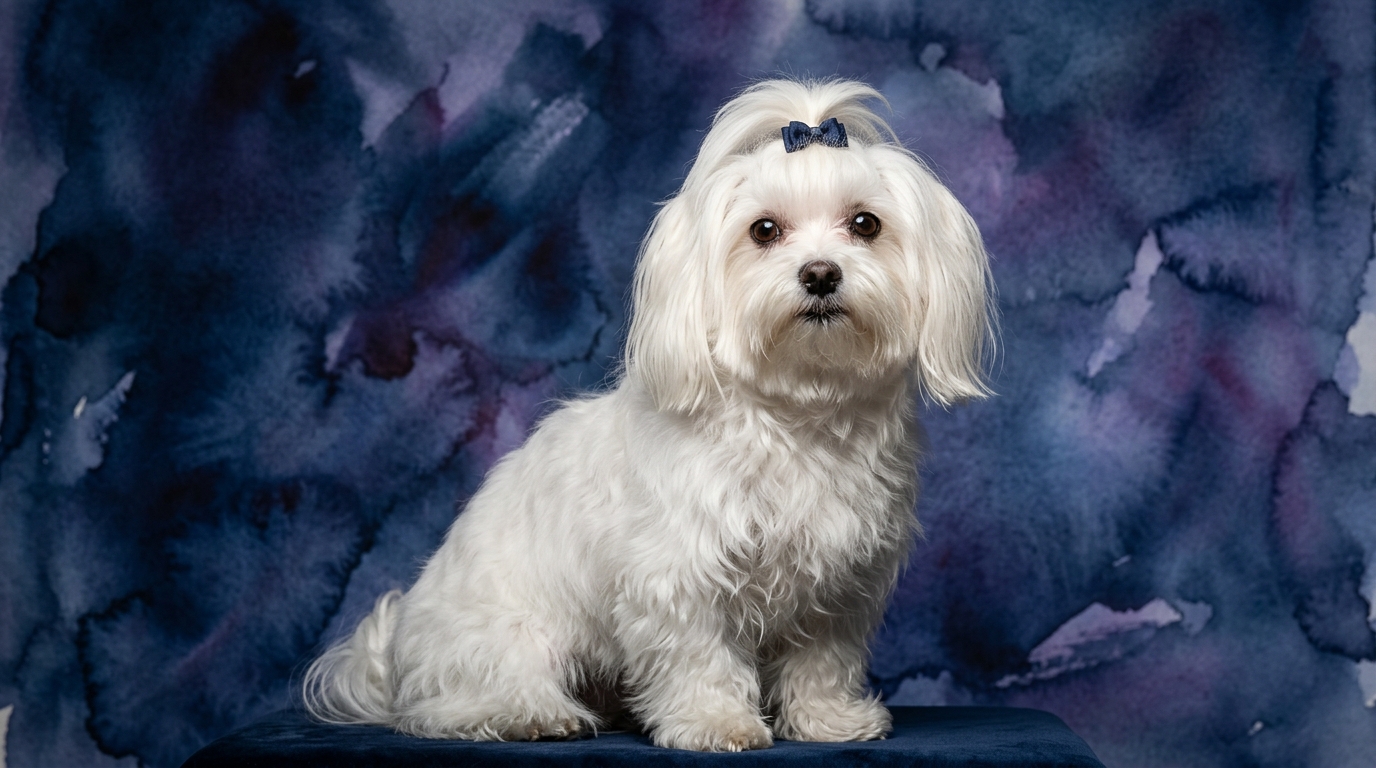
Side-by-Side IQ Profile: Bichon Frisé vs. Maltese
At The Cosmic Pet Pet IQ Lab, we evaluate canine intelligence across five key dimensions, offering a granular view into each breed's cognitive architecture. For the Bichon Frisé, a delightful member of the Non-Sporting group with a Coren ranking of #45, its profile includes a Problem Solving score of 3/5, indicating a moderate capacity for navigating novel challenges and strategizing to achieve goals. Training Speed, rated at 3/5, suggests they pick up new commands at an average pace, requiring consistent but not overly repetitive instruction. Their Social Intelligence truly shines at 5/5, reflecting an exceptional ability to understand and respond to human cues, emotions, and social dynamics. An Instinctive Drive of 2/5 means their innate predatory or working instincts are minimal, making them less prone to chasing or digging behaviors. Finally, their Memory, at 3/5, signifies an average retention of learned information and experiences.
The Maltese, a classic Toy breed with a Coren ranking of #59, presents an intriguing mirror image in its cognitive scores. Like the Bichon Frisé, the Maltese also registers a Problem Solving score of 3/5, showing a similar moderate aptitude for overcoming intellectual hurdles. Their Training Speed is also 3/5, implying an equivalent pace in acquiring new behaviors and commands when teaching sessions are structured and engaging. Where the Maltese truly excels, mirroring the Bichon, is in Social Intelligence, earning a perfect 5/5; this underscores their profound sensitivity to human interactions and emotional states. With an Instinctive Drive of 2/5, the Maltese likewise exhibits minimal natural urges for activities rooted in traditional canine work, preferring companionship over hunting or herding. Their Memory also stands at 3/5, reflecting a comparable ability to recall past events and learned lessons. The striking similarity in these specific metrics compels us to delve deeper into how these identical cognitive capacities might manifest distinctively across the two breeds, influenced by their historical roles and subtle behavioral tendencies.
Where Bichon Frisé Wins Cognitively
While the raw IQ scores for Problem Solving, Training Speed, and Memory are identical for both breeds, the Bichon Frisé, ranking #45 in Coren's broader assessment of working intelligence compared to the Maltese's #59, hints at a slightly broader application of their cognitive abilities. This marginal difference in Coren's ranking, which measures a dog's capacity for understanding and obeying commands, suggests that the Bichon may exhibit a subtle edge in its general adaptability to structured learning and varied environmental engagement. Their 3/5 problem-solving skill, coupled with their Non-Sporting group designation, often translates into a keenness for exploring new environments and engaging with a wider array of toys or puzzles, demonstrating their intellect in a more overtly playful and curious manner.
The Bichon's 3/5 memory and 3/5 training speed, while not superior in score, might be leveraged in a slightly more versatile way due to their historical role as adaptable companions rather than purely lap dogs. This can manifest as a slightly quicker generalization of learned commands to different contexts or a greater enthusiasm for mastering a diverse repertoire of tricks. Their 5/5 social intelligence is often expressed through an effusive, joyful demeanor that makes them highly receptive to human interaction and learning, allowing their moderate problem-solving and memory skills to be consistently activated through engaging play and positive reinforcement.
Where Maltese Wins Cognitively
The Maltese, despite sharing identical IQ lab scores with the Bichon, carves out its own distinct cognitive strengths, primarily through the refined application of its 5/5 social intelligence. As a quintessential Toy breed, bred over centuries purely for companionship, the Maltese often leverages its problem-solving (3/5) and memory (3/5) skills with a profound focus on human-dog social dynamics. This means their moderate problem-solving might be exceptionally tuned to interpreting subtle human cues, navigating complex household social structures, or 'solving' the problem of eliciting comfort and attention from their owners with exquisite precision. Their historical purpose has likely honed their cognitive resources towards understanding the nuances of human emotion and predicting behavior.
The Maltese's 3/5 memory, when coupled with their exceptional social intelligence, can result in an uncanny ability to remember specific routines, preferred comforts, and even the emotional states of their primary caregivers. This isn't about a raw memory advantage, but rather a specialized memory for social patterns and attachment figures. Their 3/5 training speed, within this context, suggests that while they learn at an average pace, their motivation is deeply tied to the bond with their human, making social reinforcement incredibly effective for their learning process. The Maltese's cognitive strength lies in their intuitive understanding of intimacy and their ability to navigate and enrich close human relationships with remarkable perceptiveness.
Which Is Easier to Train and Why
When assessing ease of training, both Bichons and Malteses share a 3/5 Training Speed score, indicating they are moderately receptive to learning new commands and behaviors. Their identical 5/5 Social Intelligence is a significant advantage for both, meaning they are eager to please their human companions and respond well to positive reinforcement methods. Since they both have a low Instinctive Drive (2/5), neither breed is typically distracted by strong urges to hunt, herd, or roam, allowing them to focus more readily on training tasks.
However, the Coren ranking provides a slight differentiator in practical training scenarios. The Bichon Frisé, ranked #45, suggests a marginally higher aptitude for understanding and obeying commands consistently compared to the Maltese at #59. This doesn't imply the Bichon learns faster, but rather that they might exhibit a slightly greater willingness to engage in formal obedience training and generalize commands across different situations. A Bichon's sometimes more exuberant nature, while charming, might require a bit more patience to channel into structured learning, whereas a Maltese, being typically calmer, might be easier to manage in a quiet training environment. Ultimately, both respond best to positive, reward-based training that leverages their strong desire for human connection.
Which Makes a Better Family Pet for Active Owners vs. Relaxed Owners
For active owners seeking a canine companion, both Bichon Frisé and Maltese can integrate well, though with distinct nuances. Neither breed possesses a high Instinctive Drive (2/5), so they aren't naturally inclined towards endurance activities like long-distance running or intense sporting. However, their 5/5 Social Intelligence means they thrive on interaction and being included in family activities. A Bichon Frisé, with its slightly more robust build and often spirited playfulness, may tolerate and even enjoy more varied short excursions, such as brisk walks, trips to the park, or engaging in playful games in the yard. Their moderate problem-solving and memory can be stimulated with interactive toys and short training sessions that keep them mentally engaged during downtime.
For relaxed owners who prefer a calmer lifestyle, both breeds are excellent choices, but the Maltese might have a subtle edge as the quintessential lap dog. Its historical role as a companion often means it's inherently content with less strenuous activity, thriving on close physical proximity and quiet interaction. The Maltese's keen social intelligence allows it to be incredibly attuned to its owner's mood, making it a comforting presence. While Bichons are also wonderful for relaxed owners, their sometimes more outwardly boisterous personality might require a bit more structured play to channel their energy. Both dogs benefit from consistent mental stimulation that utilizes their social intelligence, whether through gentle play, puzzle toys, or simply being involved in daily household routines.
The Verdict
Choose the Bichon Frisé if you appreciate a slightly more adaptable companion with an effusive personality, eager for varied forms of interactive play and consistent, positive training that leverages their moderate problem-solving and memory.
Opt for the Maltese if your lifestyle is geared towards a serene, intimate companionship, appreciating a dog whose profound social intelligence and focused cognitive skills are exceptionally tuned to understanding and comforting its human family.
🧠 Find Your Pet's IQ Score
Our Pet IQ Lab assessment covers 25+ tests across 5 cognitive dimensions — personalized to your breed.
Take the Full IQ Test →Frequently Asked Questions
Are Bichons or Malteses more prone to separation anxiety?
Both Bichons and Malteses have a 5/5 Social Intelligence score, indicating a deep bond with their owners. This strong attachment can make both breeds susceptible to separation anxiety if not properly socialized and trained to tolerate alone time from a young age. Consistent routine and positive reinforcement are key.
Do Bichons or Malteses respond better to positive reinforcement?
With a 5/5 Social Intelligence and 2/5 Instinctive Drive, both breeds respond exceptionally well to positive reinforcement. They thrive on human praise, treats, and affection, which strengthens their bond and encourages desired behaviors. Punishment-based methods are largely ineffective and can damage their trusting nature.
Is one breed better at learning tricks?
Both Bichons and Malteses have 3/5 scores in Problem Solving, Training Speed, and Memory, meaning they are capable of learning a good range of tricks. While the Bichon's slightly higher Coren rank might suggest a marginal edge in structured obedience, both breeds will enjoy learning tricks that involve interaction and reward, making consistency and motivation from the owner the most significant factor.