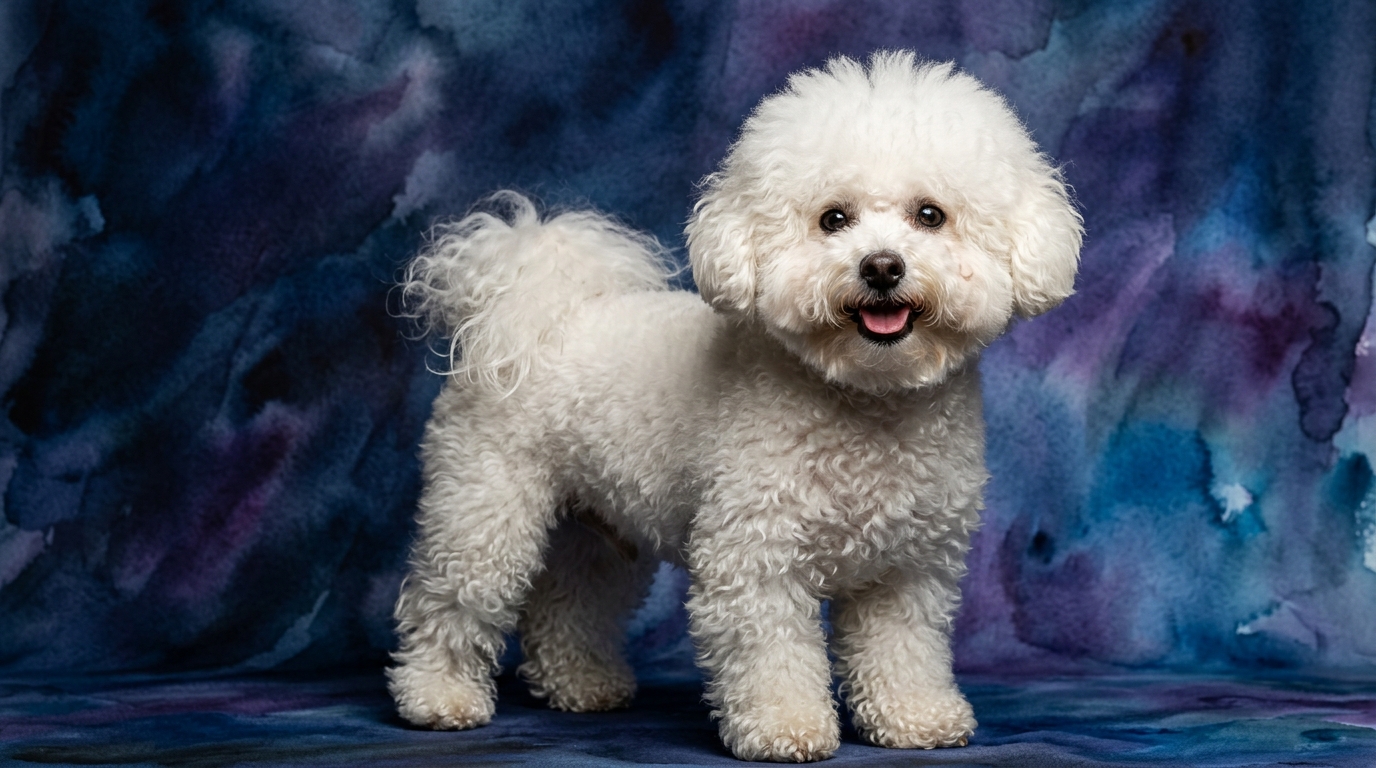
Bichon Frisé at a glance
| IQ Rank / Score | #45 |
|---|---|
| Trainability | ★★★☆☆ (3/5) |
| Social Intelligence | ★★★★★ (5/5) |
| Lifespan | 12-16 years |
| Shedding | Low to moderate |
| Exercise Needs | Moderate (30-45 min/day) |
| Origin | Mediterranean |
The Bichon Frisé: A History of Performance and Wit
Originating from the Mediterranean, these small, spirited dogs have a rich history that has shaped their cognitive abilities. Far from being just pampered pets, their past roles have cultivated specific strengths in problem-solving, social interaction, and remarkable memory.
Our intelligence profile for the Bichon Frisé highlights key areas: Problem Solving (3/5), Training Speed (3/5), Social Intelligence (5/5), Instinctive Drive (2/5), and Memory (3/5). These scores paint a picture of a dog that thrives on engagement and connection, possessing a nuanced understanding of their human companions.
The primary intelligence angle for the Bichon Frisé is their exceptional performance intelligence, a trait honed over centuries. In 19th-century Europe, these dogs were celebrated circus performers, learning elaborate trick sequences that demanded long memory chains and precise execution.
More Than Just a Pretty Face: The Bichon's Cognitive Strengths
One of the most fascinating chapters in Bichon history profoundly impacted their trainability. Bichon Frisés were abandoned by French nobility during the Revolution and survived by performing with traveling circus troupes — a period that sharpened their trainability significantly. This era cemented their capacity for learning complex, multi-step behaviors, which is a testament to their adaptable minds.
Their Social Intelligence rating of 5/5 speaks volumes about their empathic nature and ability to read human cues. This isn't just about being friendly; it's about a deep, intuitive understanding that makes them incredibly responsive and attuned to their owners' emotions and intentions. This strong social drive can significantly influence their learning and willingness to engage in training.
The memory score of 3/5, combined with their history as performers, indicates an impressive capacity for retaining learned behaviors over time. While not at the very top tier, this memory is more than sufficient for mastering extensive repertoires of tricks and commands, making them delightful partners for interactive games and dog sports.
Decoding Stanley Coren's Rankings: A Specific Look at Obedience
Stanley Coren’s obedience ranking places the Bichon Frisé at #45 out of 138 breeds, indicating that they are considered above average in terms of understanding new commands with fewer repetitions and obeying them on the first attempt a good percentage of the time. This ranking specifically measures 'working and obedience intelligence,' which focuses on how quickly a dog learns and performs known commands.
It's crucial to understand that Coren's ranking is not an exhaustive measure of all forms of canine intelligence. A #45 ranking suggests that while they are certainly capable learners, Bichons may require slightly more consistency and patience in initial training compared to breeds in the top tiers, but their strong social drive often makes them eager participants. This obedience aptitude directly correlates with their historical role as performers, where following cues precisely was paramount.
Unpacking Bichon Trainability: Performance and Engagement
The Bichon's Problem Solving score of 3/5 indicates they are capable of figuring out moderate challenges, especially when a human is involved in the process. They aren't always independent problem-solvers in the way some working breeds are, but they excel when problem-solving involves interaction and reward from their person. This makes them excellent candidates for puzzle toys and interactive games that leverage their social intelligence.
Their Training Speed, also rated 3/5, aligns with their obedience ranking. They are generally responsive and enjoy the process of learning, particularly when it's engaging and positive. Their historical background as circus dogs underscores this; complex routines are learned through consistent, positive reinforcement over time, rather than immediate, spontaneous comprehension of entirely new tasks.
Owners who understand the Bichon's performance intelligence and social drives can unlock incredible potential. They are not merely fluffy companions; they are active participants who thrive on mental stimulation that incorporates their unique blend of social awareness and an aptitude for sequential learning.
3 At-Home Tests to Measure Your Bichon Frisé's IQ
These tests are adapted from peer-reviewed ethology research. No equipment is needed beyond items you have at home. Run each test 5–10 times for reliable results.
The Myth: "Bichons are basic lap dogs with no meaningful cognitive ability."
✅ This myth dramatically undervalues the Bichon Frisé's specific cognitive strengths. Historically, Bichons were adept circus performers, learning intricate routines that required remarkable memory and specific cognitive agility, proving their intelligence extends far beyond mere companionship.
Bichon Frisé vs. Similar Breeds
🧠 What's Your Dog's IQ Score?
Our full Pet IQ Lab assessment includes 12+ tests across 5 cognitive dimensions, calibrated for Bichon Frisés specifically.
Take the Full IQ Test →Frequently Asked Questions
How smart is a Bichon Frisé?
Our Pet IQ Lab framework scores cognition across five dimensions (max 25). The Bichon Frisé totals 16/25 — high for a domestic dog. The full article breaks down each dimension with at-home tests.
Are Bichon Frisés easy to train?
Bichon Frisés can learn most cues, but expect to repeat lessons and keep sessions short. They score 3/5 on Training Speed in our breed profile.
Are Bichon Frisés good with children and other pets?
Yes — their Social Intelligence rates 5/5 in our Pet IQ Lab framework. With early socialization and supervised play, most Bichon Frisés integrate well into families with respectful children and other pets.
Do Bichon Frisés need a lot of mental stimulation?
Bichon Frisés benefit from 10-15 minutes of focused enrichment a day: food puzzles, short training drills, or novel toys rotated weekly.
How much exercise does a Bichon Frisé need?
Bichon Frisés do well with 20-40 minutes of daily walks and play plus a few short training moments.
How good is a Bichon Frisé's memory?
Bichon Frisés score 3/5 on memory. They remember high-value associations well; less-used cues fade without refresher sessions.
What is the typical lifespan of a Bichon Frisé?
Bichon Frisés commonly live 12-16 years when kept at a healthy weight.
The Bichon Frisé is a captivating blend of charm and cleverness, whose unique intelligence profile is deeply rooted in a history of performance and close companionship. Understanding their specific cognitive strengths allows us to appreciate them not just as fluffy friends, but as truly engaging and trainable partners.