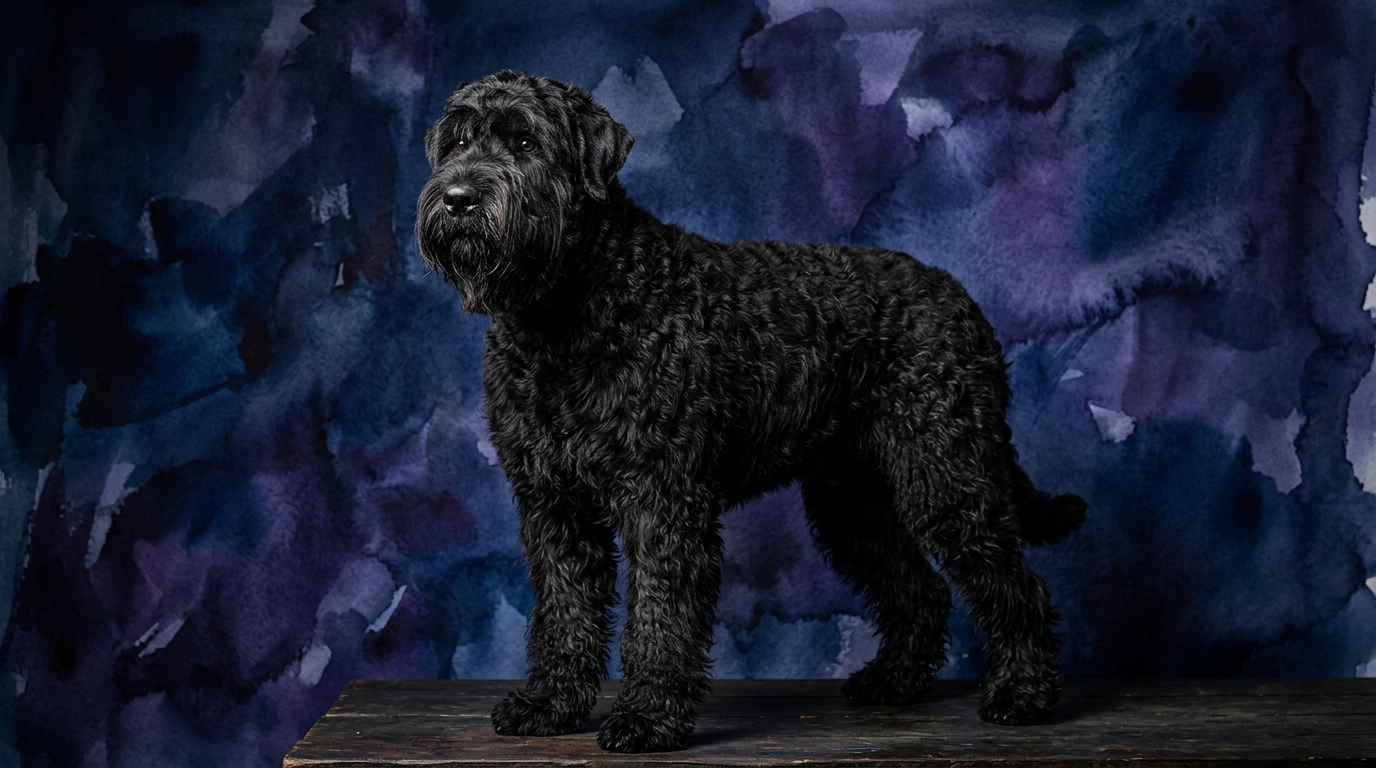

Side-by-Side IQ Profile: Identical Scores, Distinct Applications
Despite their vastly different appearances and original purposes, both the Black Russian Terrier and the English Toy Spaniel are rated 3/5 across five key intelligence dimensions: Problem Solving, Training Speed, Social Intelligence, Instinctive Drive, and Memory. This parity in scores doesn't mean their cognitive processes are identical, but rather that their intellectual capacities are moderate and applied in ways specific to their breed type.
For the Black Russian Terrier, a '3' in Problem Solving often manifests in their ability to assess and manage perceived threats, strategically navigating environments to protect their family or property. They might figure out how to bypass an obstacle to reach a designated area or understand complex multi-step tasks related to guarding. The English Toy Spaniel, with the same '3,' applies this capacity differently; they might excel at figuring out how to gain attention, manipulate a puzzle toy for a treat, or cleverly position themselves for optimal comfort and companionship. Their problem-solving is often geared towards social dynamics and personal comfort within a domestic setting.
A '3' for the Black Russian Terrier indicates a moderate pace of learning new commands and routines. They are capable of absorbing complex instructions but may require consistent, firm guidance due to their independent streak and strong will. Their learning is often motivated by a clear purpose or task. The English Toy Spaniel also learns at a moderate pace; however, their motivation might stem more from a desire to please their beloved owner and receive positive reinforcement in the form of affection or treats. They can be sensitive to harsh corrections, potentially slowing their learning if not approached with gentle encouragement.
The Black Russian Terrier's '3' in Social Intelligence focuses on understanding group dynamics, recognizing friend from foe, and interpreting human cues related to protection or command. They are highly attuned to their family's emotional states and potential external threats, displaying a discerning wariness towards strangers. For the English Toy Spaniel, a '3' means a profound sensitivity to human emotions and social situations, often anticipating their owner's moods and reacting with comforting presence. They are masters of charming interaction, using their social understanding to foster close bonds and ensure their place within the family unit.
Here, the '3' for the Black Russian Terrier is heavily weighted by their powerful protective and territorial instincts, stemming from their heritage as military dogs. This manifests as a strong drive to guard, patrol, and be vigilant, with a natural inclination towards self-appointed duties. The English Toy Spaniel's '3' in Instinctive Drive is primarily centered on companionship and closeness. While they might retain a vestigial hunting instinct for small prey, their predominant drive is to be an affectionate, devoted companion, seeking physical proximity and emotional connection with their human family.
Both breeds score a '3' in Memory, but what they prioritize remembering differs. The Black Russian Terrier demonstrates a solid memory for commands, routines, boundaries, and the people/animals they consider part of their 'pack' versus those they don't. They remember training sequences and past experiences that inform their protective behaviors. The English Toy Spaniel's memory also serves them well for routines, house rules, and the location of favored toys or treats. Crucially, they remember positive and negative social interactions, influencing their future engagement with individuals and reinforcing behaviors that lead to comfort and affection.
Where the Black Russian Terrier Wins Cognitively
The Black Russian Terrier's cognitive strengths truly shine in scenarios demanding unwavering commitment to a perceived duty and strategic assessment of external factors. Their problem-solving, while rated 3/5, is often applied to robust, real-world tasks involving security or navigating challenging environments. For instance, a BRT might more effectively learn and execute a complex perimeter patrol, discerning subtle environmental changes or unusual sounds that indicate a potential intruder, thanks to their inherent vigilance and powerful build. Their memory is particularly robust for establishing territory, recognizing individuals, and recalling past experiences that inform their protective behaviors. This specific application of their intelligence, rooted deeply in their working heritage, gives them a distinct edge in tasks requiring independent judgment within a protective or guarding context, where their physical prowess complements their mental acuity in assessing and responding to situations.
Where the English Toy Spaniel Wins Cognitively
Conversely, the English Toy Spaniel, despite registering identical raw scores, excels in the nuanced realm of social interaction and emotional attunement. Their problem-solving, also a 3/5, is masterfully applied to understanding human behavior, often figuring out the quickest route to a lap, a treat, or a comforting interaction through charming persistence. Their social intelligence allows them to read micro-expressions, subtle shifts in tone, and body language with remarkable precision, enabling them to offer comfort or solicit attention with exquisite timing. This breed's memory is particularly keen for recalling positive social cues, routines that lead to favorable outcomes (like a favorite person's arrival), and the schedule for cuddles and play. They possess an innate ability to integrate themselves seamlessly into a family's emotional fabric, a cognitive advantage that fosters profound companionship and makes them exceptionally responsive to their owner's emotional landscape.
Which is Easier to Train and Why
Neither the Black Russian Terrier nor the English Toy Spaniel is inherently 'easier' to train, given their identical 3/5 Training Speed. However, the *approach* required for each differs significantly due to their fundamental breed characteristics and motivations. The Black Russian Terrier, a powerful working breed, demands a confident, consistent, and experienced handler. Their independence and strong will mean training must be engaging, purposeful, and establish clear leadership; they respect fairness and clarity but may test boundaries if not guided firmly and with patience. Training a BRT involves channeling their inherent drive for purpose and protection into structured commands, requiring a handler who can maintain authority without resorting to harshness.
In contrast, the English Toy Spaniel, a sensitive toy breed, thrives on positive reinforcement, gentle encouragement, and a strong emotional bond. They can be easily discouraged by harsh corrections and might become withdrawn or anxious, potentially slowing their learning. Their training often focuses on house manners, recall, and basic obedience, motivated primarily by praise, affection, and treats, making them responsive to a handler who prioritizes gentle communication and rewards. While both learn at a moderate pace, the BRT's training necessitates a more assertive, task-oriented dynamic, whereas the ETS benefits immensely from a patient, affection-driven methodology.
Which Suits Active Owners vs. Relaxed Owners
The Black Russian Terrier is unequivocally suited for active owners. Their '3' in instinctive drive translates to a profound need for significant physical exercise and mental engagement. They thrive with structured walks, demanding training sessions, and opportunities to 'work,' whether it's advanced obedience, protection work, or even just long, challenging hikes. Owners who lead an active lifestyle, enjoy outdoor adventures, and are prepared to dedicate substantial time to consistent training and vigorous exercise will find the BRT a fulfilling and engaged companion. A relaxed owner might struggle considerably to meet the substantial physical and mental demands of this large, powerful breed, potentially leading to boredom, destructive behaviors, or frustration for both dog and owner.
Conversely, the English Toy Spaniel is an ideal match for relaxed owners. While they certainly enjoy moderate play and daily, leisurely walks, their overall energy requirements are far lower than the BRT's. Their '3' in instinctive drive is predominantly geared towards companionship and closeness, making them perfectly content with lounging on the sofa, short strolls around the neighborhood, and plenty of lap time. They are perfectly happy to be a quiet, affectionate presence in a calm household, preferring the comfort of their human family to strenuous activity. Owners who prefer a less physically demanding dog, enjoy indoor activities, and prioritize cuddles and close companionship will find the English Toy Spaniel a perfect, devoted fit.
The Verdict
Choose the Black Russian Terrier if you are an experienced dog owner seeking a powerful, protective companion for an active lifestyle, capable of providing consistent, firm leadership and structured mental and physical challenges.
Choose the English Toy Spaniel if you desire a gentle, affectionate, and charming lap companion for a relaxed household, valuing emotional connection and a less demanding physical presence.
🧠 Find Your Pet's IQ Score
Our Pet IQ Lab assessment covers 25+ tests across 5 cognitive dimensions — personalized to your breed.
Take the Full IQ Test →Frequently Asked Questions
Do Black Russian Terriers bark a lot?
Black Russian Terriers are not typically excessive barkers, but they are vigilant and will bark to alert their family to perceived threats or unusual activity, fulfilling their protective instincts. Their barks are usually deep and authoritative.
Are English Toy Spaniels good with children?
English Toy Spaniels can be good with older, respectful children who understand how to interact gently with a small, delicate dog. They are less suitable for very young children who might be too boisterous or rough without supervision.
What is the biggest difference in temperament between these two breeds?
The biggest difference lies in their primary motivation: Black Russian Terriers are driven by protection and purpose, exhibiting a reserved watchfulness, while English Toy Spaniels are driven by companionship and affection, displaying a gentle, eager-to-please nature.