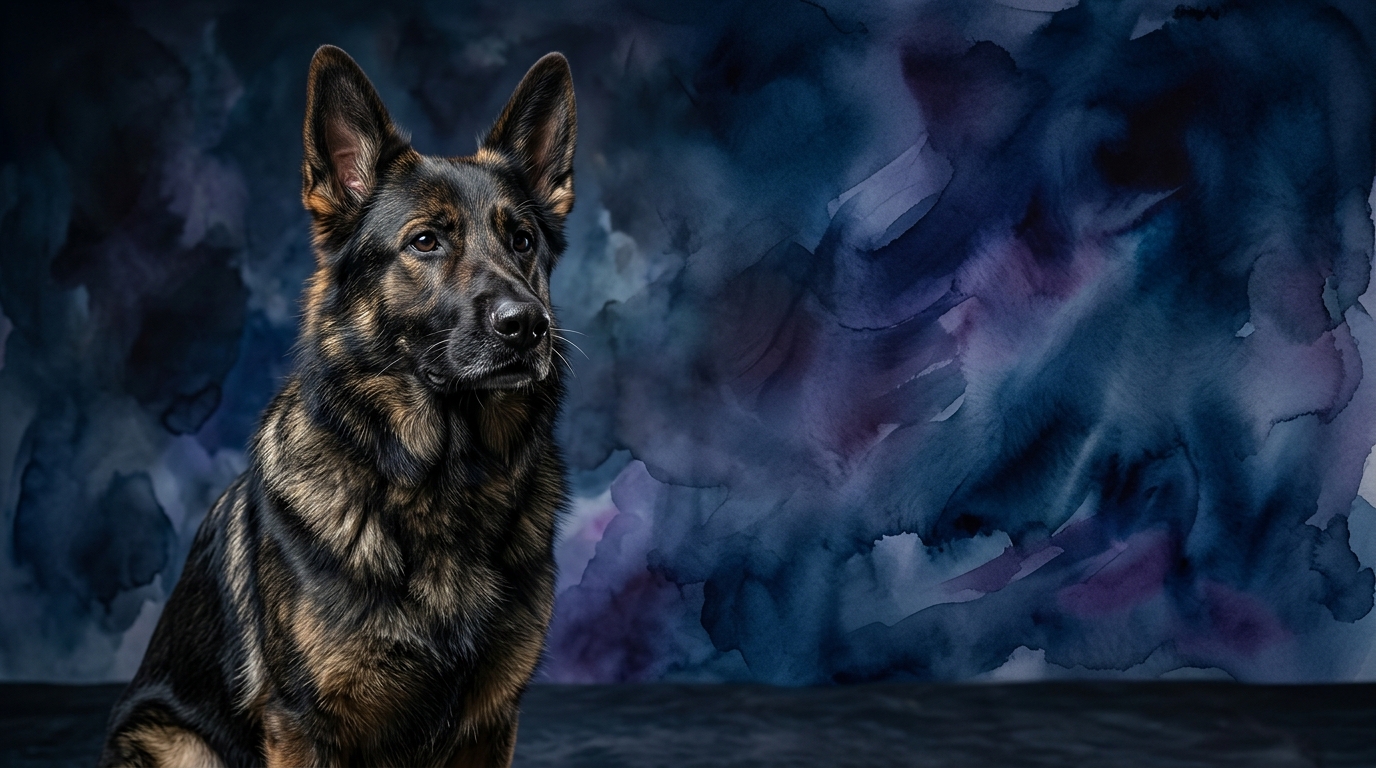
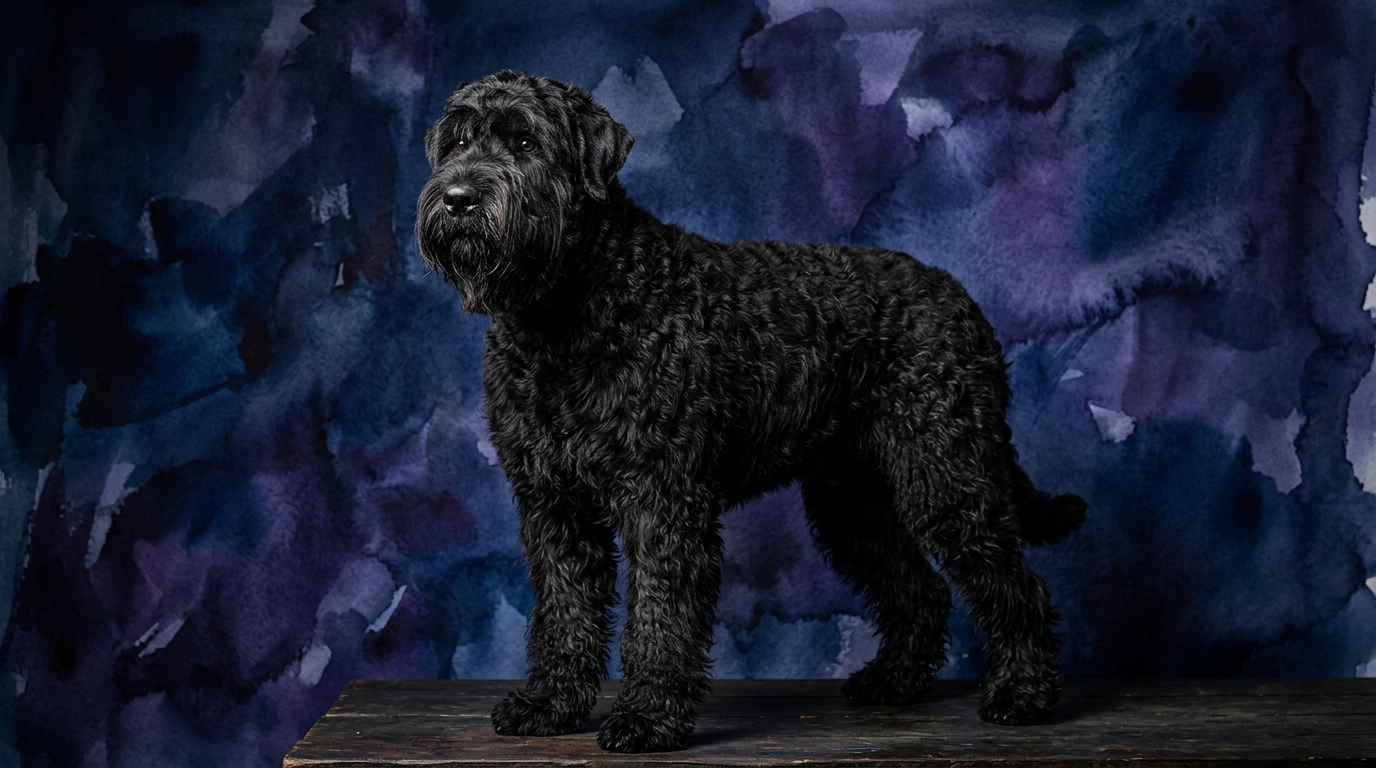
Side-by-Side Cognitive Profile: German Shepherd vs. Black Russian Terrier
At The Cosmic Pet Pet IQ Lab, we assess canine intelligence across five critical dimensions. For the German Shepherd, a Herding breed, we observe a consistent 5/5 across all metrics, while the Working group Black Russian Terrier shows a uniform 3/5. Let's delve into what these scores specifically mean for each breed's cognitive landscape.
**Problem Solving:** The German Shepherd excels in navigating complex scenarios, demonstrating a remarkable capacity to analyze new situations and devise effective solutions. This manifests in their ability to quickly learn intricate tasks, adapt to environmental changes, and even strategize during problem-solving games, often requiring minimal human intervention once a goal is understood. In contrast, the Black Russian Terrier shows a solid, practical approach to problem-solving. While they can learn to overcome challenges, their method tends to be more direct and less innovative than the German Shepherd's. They often rely on learned patterns and persistence rather than spontaneous, multi-step solutions, preferring clear guidance in novel situations.
**Training Speed:** German Shepherds absorb new commands and routines with exceptional swiftness. Their eagerness to engage and inherent drive to work alongside their human companions mean they often grasp concepts in very few repetitions, making them highly receptive students in various disciplines from obedience to advanced protection work. Black Russian Terriers learn at a steady pace, requiring more repetition and consistent reinforcement than a German Shepherd. Their initial learning curve might be longer, but once a command is ingrained, it tends to be deeply embedded. Patience and clear, structured training methods are key to unlocking their learning potential.
**Social Intelligence:** The German Shepherd displays a profound understanding of human social cues and intentions, making them exceptionally attuned companions. They read body language, vocal inflections, and emotional states with precision, allowing them to anticipate needs, offer comfort, or respond appropriately in dynamic social settings, whether with family or in public roles. Black Russian Terriers possess a functional social intelligence, primarily focused on their immediate family unit. They are discerning and can differentiate between familiar and unfamiliar individuals, often displaying a reserved demeanor towards strangers. While they understand their family's dynamics, their social radar is less expansive or subtle compared to the German Shepherd, favoring a more direct, protective interaction style.
**Instinctive Drive:** German Shepherds possess a powerful and multifaceted instinctive drive, encompassing herding, protection, and prey drive, all of which are readily channeled into working tasks. This intrinsic motivation fuels their relentless pursuit of goals, whether it's tracking a scent, guarding property, or performing complex search and rescue operations, making them highly task-oriented. The Black Russian Terrier exhibits a strong, focused instinctive drive, primarily geared towards protection and guarding. While they have a significant drive, it is less diversified than the German Shepherd's, concentrating on their primary function as a formidable guardian. This drive needs careful management to ensure it is directed appropriately, preventing over-zealous protection.
**Memory:** German Shepherds demonstrate an outstanding capacity for memory, retaining a vast array of commands, experiences, and social interactions over long periods. They recall intricate sequences of actions, remember specific individuals or locations, and can revisit past training with minimal refreshers, building a rich, cumulative knowledge base. Black Russian Terriers have a reliable memory for learned commands and established routines. They remember their training well and recognize familiar people and places. However, their recall of isolated events or complex, multi-layered past experiences might not be as detailed or spontaneously accessed as the German Shepherd's, benefiting from consistent reinforcement of learned behaviors.
Where the German Shepherd Excels Cognitively
The German Shepherd's cognitive profile paints a picture of exceptional adaptability and intellectual nimbleness. Their problem-solving prowess allows them to not just follow commands, but to genuinely understand the objective and find novel ways to achieve it, even when faced with unexpected obstacles. This is evident in their success in complex roles like guide dogs, where they must constantly assess environmental safety and make independent decisions to protect their handler. Their rapid training acquisition isn't just about speed; it's about a deep conceptual understanding that allows for quick generalization of learned behaviors to new contexts. A German Shepherd can learn a retrieve command for a ball and quickly apply that concept to retrieving a dropped key, showcasing a flexible application of knowledge. Furthermore, their acute social intelligence enables them to act as empathetic companions, reading subtle shifts in human mood and responding with appropriate comfort or engagement, a nuanced interaction often observed in therapy or emotional support roles. The strong, versatile instinctive drive of the German Shepherd means they possess a natural inclination for a wide array of tasks, from tracking to herding, which they approach with unwavering focus and determination. Finally, their superior memory underpins all these abilities, allowing them to build an extensive repertoire of skills and experiences, making them reliable partners over their entire lives, capable of recalling even infrequently used commands with precision.
Where the Black Russian Terrier Excels Cognitively
While the Black Russian Terrier's IQ scores may appear lower in direct comparison, their cognitive strengths are perfectly aligned with their intended purpose: formidable protection and steadfast guardianship. Their problem-solving (3/5) is highly effective within their defined roles; they are not easily distracted by irrelevant stimuli and approach perceived threats with a direct, unwavering resolve. This focused mental processing means they are less prone to overthinking or hesitation when a clear protective action is required. Their training speed (3/5), though not instantaneous, results in deeply ingrained, reliable responses once learned. This deliberate learning style ensures that critical commands, especially those pertaining to security and boundaries, become second nature and are executed with consistent precision, even under pressure. The Black Russian Terrier's social intelligence (3/5) is geared towards discerning friend from foe, exhibiting a profound loyalty to their inner circle while maintaining a watchful, reserved stance towards outsiders. This discernment is a cognitive advantage for a guardian, as it prevents indiscriminate friendliness and reinforces their protective duties. Their instinctive drive (3/5) is intensely focused on protection, manifesting as a formidable presence and an unwavering commitment to their family and territory. This singular drive means less diffusion of energy across multiple tasks, allowing them to channel their cognitive resources primarily into vigilance and defense. Their memory (3/5) is robust for routines and critical safety parameters, ensuring they consistently remember their boundaries, their training, and the individuals they are sworn to protect, forming a reliable mental framework for their guardian role.
Training Dynamics: German Shepherd vs. Black Russian Terrier
Based on The Cosmic Pet Pet IQ Lab's assessment, the German Shepherd is unequivocally easier to train. Their 5/5 score in Training Speed directly translates to a quicker grasp of new concepts and commands, often requiring fewer repetitions. This efficiency stems from their inherent eagerness to please, coupled with exceptional problem-solving abilities and a high social intelligence that makes them highly receptive to human instruction and motivation. A German Shepherd will often anticipate what is asked of them, offering behaviors before a full cue is given, demonstrating a proactive learning style. In contrast, the Black Russian Terrier, with a 3/5 Training Speed score, demands more patience and consistency. They learn effectively, but at a more deliberate pace. Their cognitive style often requires clearer, more repetitive instruction to solidify new behaviors. While they are loyal and willing, their less expansive social intelligence means they may not always be as finely attuned to subtle human cues, necessitating more explicit communication during training sessions. Furthermore, their strong, specific instinctive drive for protection means that training must be carefully managed to channel this energy constructively, rather than letting it override other learned behaviors.
Owner Suitability: Active vs. Relaxed Lifestyles
The German Shepherd, with its 5/5 scores across the board, thrives with active, engaged owners who can provide consistent mental and physical stimulation. Their high problem-solving capacity and versatile instinctive drives mean they require daily challenges beyond simple walks, such as obedience training, agility, scent work, or complex puzzle toys. Owners who enjoy teaching new tricks, participating in dog sports, or engaging in extensive outdoor activities will find a German Shepherd an ideal partner. Their social intelligence also means they benefit from varied social exposures and structured interactions. Conversely, the Black Russian Terrier, while still requiring regular exercise, might suit an owner who values a more predictable routine and a strong, unwavering guardian presence. Their focused instinctive drive for protection means they excel in a home where they have a clear role, often as a devoted family protector. While they need mental engagement, it might be less about novel problem-solving and more about reinforcing established boundaries and obedience. A 'relaxed owner' in this context isn't passive, but one who might prefer a dog whose primary cognitive engagement is rooted in vigilance and family loyalty, rather than constant learning of new, complex tasks or sports, though they can certainly participate in those with dedicated effort.
The Verdict
Choose a German Shepherd if you seek a highly adaptable, multi-talented canine partner eager for diverse mental challenges, advanced training, and empathetic social interaction, thriving in an active, task-oriented household.
Opt for a Black Russian Terrier if your priority is a steadfast, dedicated guardian with a robust, focused protective instinct, who thrives on clear routines and strong family bonds, and whose loyalty is unwavering once earned.
🧠 Find Your Pet's IQ Score
Our Pet IQ Lab assessment covers 25+ tests across 5 cognitive dimensions — personalized to your breed.
Take the Full IQ Test →Frequently Asked Questions
Is the German Shepherd suitable for first-time dog owners?
While German Shepherds are highly trainable, their intense cognitive demands and strong drives mean they are best suited for owners who are prepared for significant commitment. First-time owners with a strong dedication to consistent training and socialization can succeed, but it requires diligent effort.
Do Black Russian Terriers require professional training due to their protective nature?
Black Russian Terriers greatly benefit from professional guidance, especially during their formative years, to properly channel their protective instincts. Early socialization and consistent obedience training are crucial to ensure they become well-adjusted family members and effective, controlled guardians.
How do the breeds' exercise needs relate to their cognitive profiles?
The German Shepherd's high cognitive scores necessitate both physical and mental exercise to prevent boredom and destructive behaviors, often thriving on complex activities. The Black Russian Terrier also requires regular exercise, but their cognitive engagement often centers on patrolling and guarding, meaning structured walks combined with mental tasks reinforcing their protective role are key.