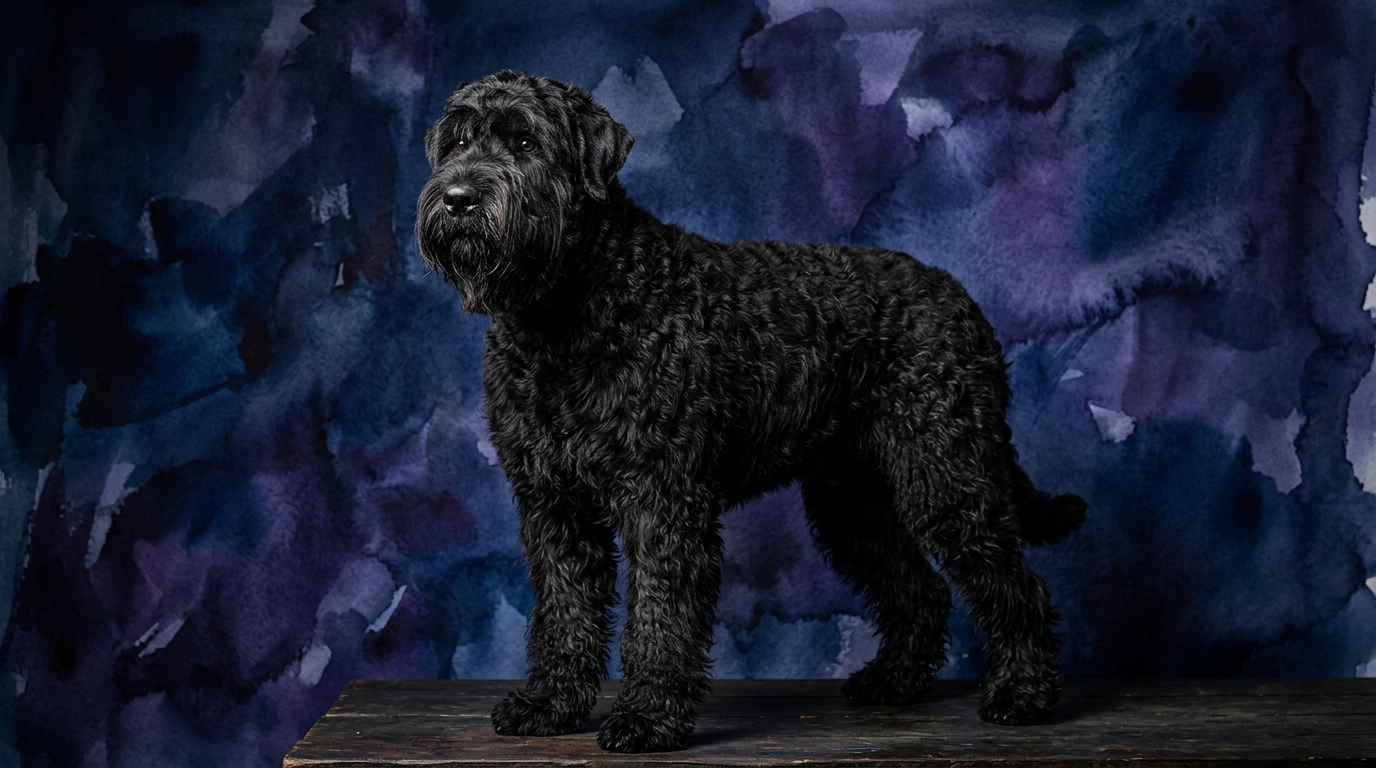
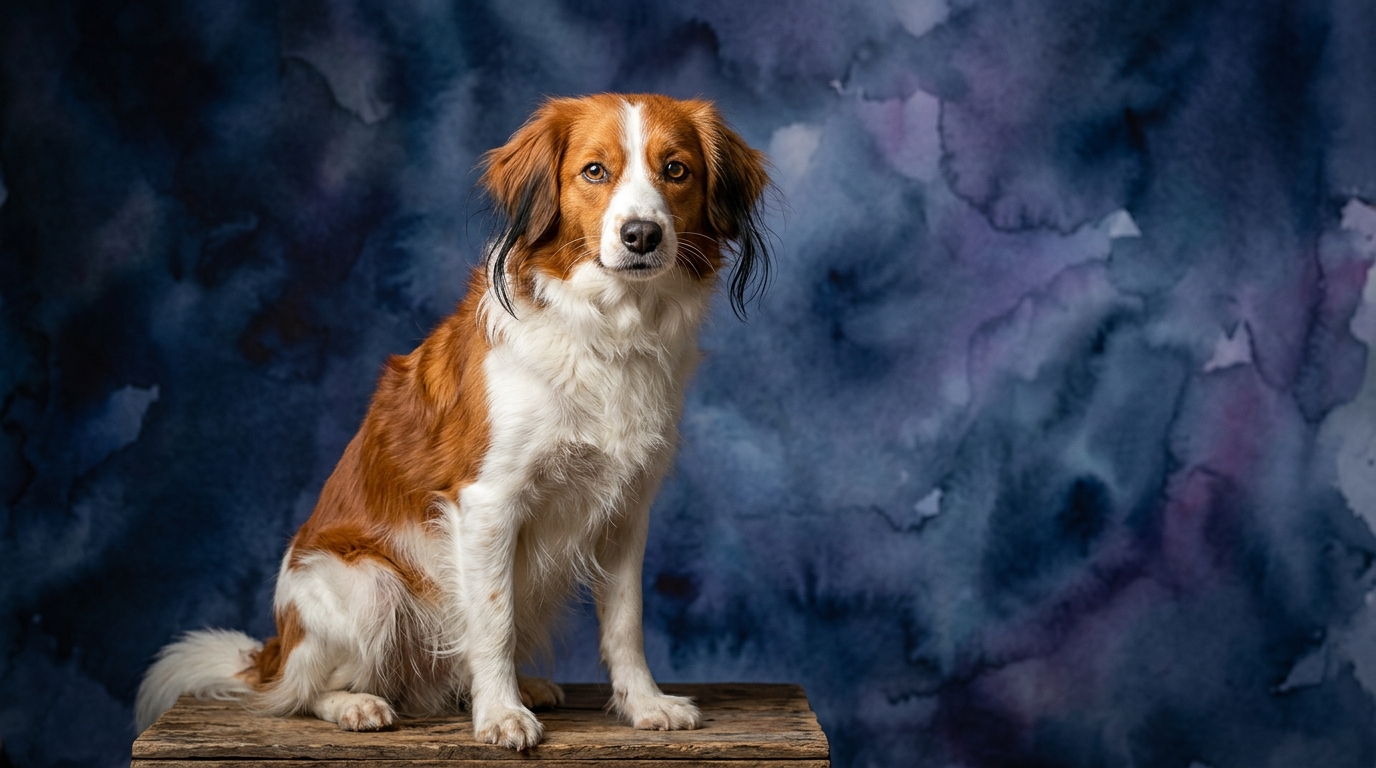
Side-by-Side IQ Profile: Unpacking Identical Scores
At first glance, the Black Russian Terrier and the Kooikerhondje appear to be cognitive twins according to The Cosmic Pet Pet IQ Lab. Both breeds score a consistent 3 out of 5 across Problem Solving, Training Speed, Social Intelligence, Instinctive Drive, and Memory. Yet, these identical numerical ratings mask distinct expressions of their cognitive abilities, deeply rooted in their breed histories and intended purposes. Understanding these nuances requires looking beyond the raw numbers to how each breed applies its inherent capacities.
For the Black Russian Terrier, a breed forged for military service, its Problem Solving at 3/5 often manifests as a resourceful approach to physical obstacles or strategic assessment in guarding scenarios, utilizing its strength and determination. Its Training Speed, also 3/5, indicates a steady learning curve that thrives on clear, consistent instruction and purpose-driven tasks, rather than frivolous repetition. Social Intelligence, rated 3/5, translates to an accurate interpretation of cues within its trusted human and canine family unit, often accompanied by a discerning reservation towards strangers. The 3/5 for Instinctive Drive is heavily weighted towards protection and guardianship, channeling its natural assertiveness into watchful vigilance. Finally, a Memory score of 3/5 allows it to retain complex sequences of commands, environmental layouts, and specific individuals, crucial for its protective and working roles.
The Kooikerhondje, on the other hand, a Dutch sporting dog historically employed to lure ducks, expresses its 3/5 Problem Solving as cleverness and adaptability in navigating complex environments or devising subtle strategies, often requiring keen observation and quick adjustments. Its Training Speed, also 3/5, reflects an efficient learning process that responds particularly well to positive reinforcement and gentle guidance, showcasing a strong willingness to engage when motivated. Social Intelligence at 3/5 means it is highly attuned to human emotions and intentions, forming deep, sensitive bonds and often reacting to subtle shifts in its social environment. The Kooiker’s 3/5 Instinctive Drive is characterized by a pronounced prey drive, natural curiosity, and an urge to explore or 'work' its surroundings, particularly in scent-related tasks. Its Memory score of 3/5 supports its historical function by enabling it to recall learned tasks, intricate routes, and specific interactions consistently, vital for its decoy work.
Where the Black Russian Terrier Wins Cognitively
While the numerical scores are identical, the Black Russian Terrier’s cognitive strengths shine in areas demanding robust decision-making, resilience, and strategic application of force. Its 3/5 Problem Solving, when channeled into a working context, equips it to independently assess and manage threats, making tactical choices in complex, high-pressure situations that might deter a less physically imposing breed. This isn't about intellectual acrobatics, but rather a grounded, practical intelligence applied to security and defense, where persistence and physical presence are key components of a solution.
Furthermore, the BRT's 3/5 Social Intelligence, while appearing reserved to outsiders, allows for a profound understanding of its inner circle's needs and boundaries. This deep-seated pack orientation means it excels at discerning friend from perceived foe, offering unwavering loyalty and protection based on its accurate social assessments. Its 3/5 Instinctive Drive for guardianship, combined with its memory for specific individuals and routines, gives it an edge in roles requiring consistent, long-term vigilance and the ability to act decisively when its perceived 'pack' is threatened, showcasing a powerful, self-assured cognitive application.
Where the Kooikerhondje Wins Cognitively
The Kooikerhondje, with its identical 3/5 scores, demonstrates a distinct cognitive edge in areas requiring finesse, agility of thought, and sensitive responsiveness. Its 3/5 Problem Solving is particularly adept at tasks demanding subtle manipulation, quick changes in strategy, and precise observation. Imagine a Kooiker figuring out how to retrieve a toy from a tricky spot or navigating an agility course with fluid precision – this is where its cleverness truly shines, prioritizing mental dexterity and adaptability over brute force. Their problem-solving isn't just about overcoming, but about outsmarting or elegantly maneuvering.
The Kooiker's 3/5 Social Intelligence makes it exceptionally perceptive to human cues, often anticipating a handler's next move or emotional state. This sensitivity fosters a highly collaborative working relationship, making it particularly effective in team-oriented activities like dog sports where subtle communication is paramount. Paired with its 3/5 Memory, the Kooiker excels at remembering complex sequences of commands, patterns, and environmental details, which is crucial for intricate tasks like scent discrimination or navigating elaborate agility courses. Its instinctive drive, while rooted in hunting, translates into a curious and highly engaged approach to learning and exploration, making it a keen, responsive partner in activities that stimulate its natural curiosity and observational skills.
Which is Easier to Train and Why
Both the Black Russian Terrier and the Kooikerhondje possess a 3/5 Training Speed, indicating they learn at a steady, moderate pace. However, the 'ease' of training is less about raw learning speed and more about the handler's approach and understanding of each breed's temperament and intrinsic motivations. The Black Russian Terrier, with its powerful presence and protective instincts, requires a confident, consistent, and experienced handler. Training must be firm, fair, and based on mutual respect, channeling its strong will and guarding drives into constructive behaviors. Without clear leadership, a BRT might assert its own decisions, making training challenging for a novice. They respond best to training that provides a sense of purpose and structure, rather than endless drills.
The Kooikerhondje, while also possessing a 3/5 Training Speed, presents a different training dynamic. They are generally eager to please and highly sensitive, making them responsive to positive reinforcement, praise, and reward-based methods. Harsh corrections or inconsistent handling can easily cause a Kooiker to become withdrawn or 'shut down,' hindering progress. Their keen observational skills mean they pick up on subtle cues, both intentional and unintentional, from their handler. While they learn steadily, their strong prey drive can be a significant distraction, requiring careful management and focus exercises. For an owner who prefers a gentle, encouraging approach and can provide varied, engaging training sessions, the Kooiker might feel 'easier' due to its biddable nature, provided its sensitivity is respected.
Which Suits Active Owners vs. Relaxed Owners
Neither the Black Russian Terrier nor the Kooikerhondje are suitable for truly 'relaxed' or sedentary owners; both breeds demand significant engagement. The Black Russian Terrier, originating as a military working dog, requires substantial daily physical exercise and even more mental stimulation. Long, brisk walks, structured play, and 'jobs' that engage its protective and problem-solving abilities are essential. An owner who cannot provide consistent leadership, extensive training, and ample opportunities for physical and mental exertion will likely find a BRT challenging. They thrive with active owners who enjoy outdoor adventures, advanced obedience, protection sports, or a structured working environment, valuing a dog that needs to be an active participant in life.
The Kooikerhondje, while perhaps less physically demanding than a BRT in terms of sheer brute force, is by no means a couch potato. As a sporting dog, it possesses considerable energy and a need for daily activity that stimulates both its body and mind. This includes regular walks, engaging play sessions, and opportunities for activities like agility, scent work, or fetch. They excel with active owners who appreciate their cleverness and can provide outlets for their natural curiosity and prey drive. While they might adapt to a slightly less rigorous exercise schedule than a BRT *if* mental stimulation is consistently high, they are still best suited for owners who enjoy an active lifestyle and want a canine partner for outdoor pursuits and engaging training, rather than a purely ornamental companion.
The Verdict
Choose the Black Russian Terrier if you are an experienced owner seeking a protective, loyal, and physically robust companion for active, structured environments, capable of complex tasks and thriving under firm, consistent leadership.
Choose the Kooikerhondje if you are an owner seeking a clever, sensitive, and agile companion for activities like dog sports, scent work, or a family that enjoys regular outdoor adventures, valuing a biddable but independent spirit.
🧠 Find Your Pet's IQ Score
Our Pet IQ Lab assessment covers 25+ tests across 5 cognitive dimensions — personalized to your breed.
Take the Full IQ Test →Frequently Asked Questions
Do identical IQ scores mean these breeds will behave identically?
No, identical scores indicate similar *potential* across cognitive dimensions, but their application differs greatly. Each breed's historical role and inherent temperament shape *how* that intelligence is expressed in real-world behavior and problem-solving.
Can a Black Russian Terrier or Kooikerhondje live happily in an apartment?
A Black Russian Terrier is generally too large and requires too much space and outdoor activity for most apartments. A Kooikerhondje *might* tolerate apartment living if its significant exercise and mental stimulation needs are met daily, but a house with a yard is often preferred.
Are these breeds good with children and other pets?
Both breeds, with proper socialization and training, can be good with children and other pets. The Black Russian Terrier's protective nature requires careful management around strangers and other animals. The Kooikerhondje's sensitivity and prey drive mean interactions should be supervised, especially with smaller pets.