
Side-by-Side Cognitive Profiles: Bloodhound vs. Brittany
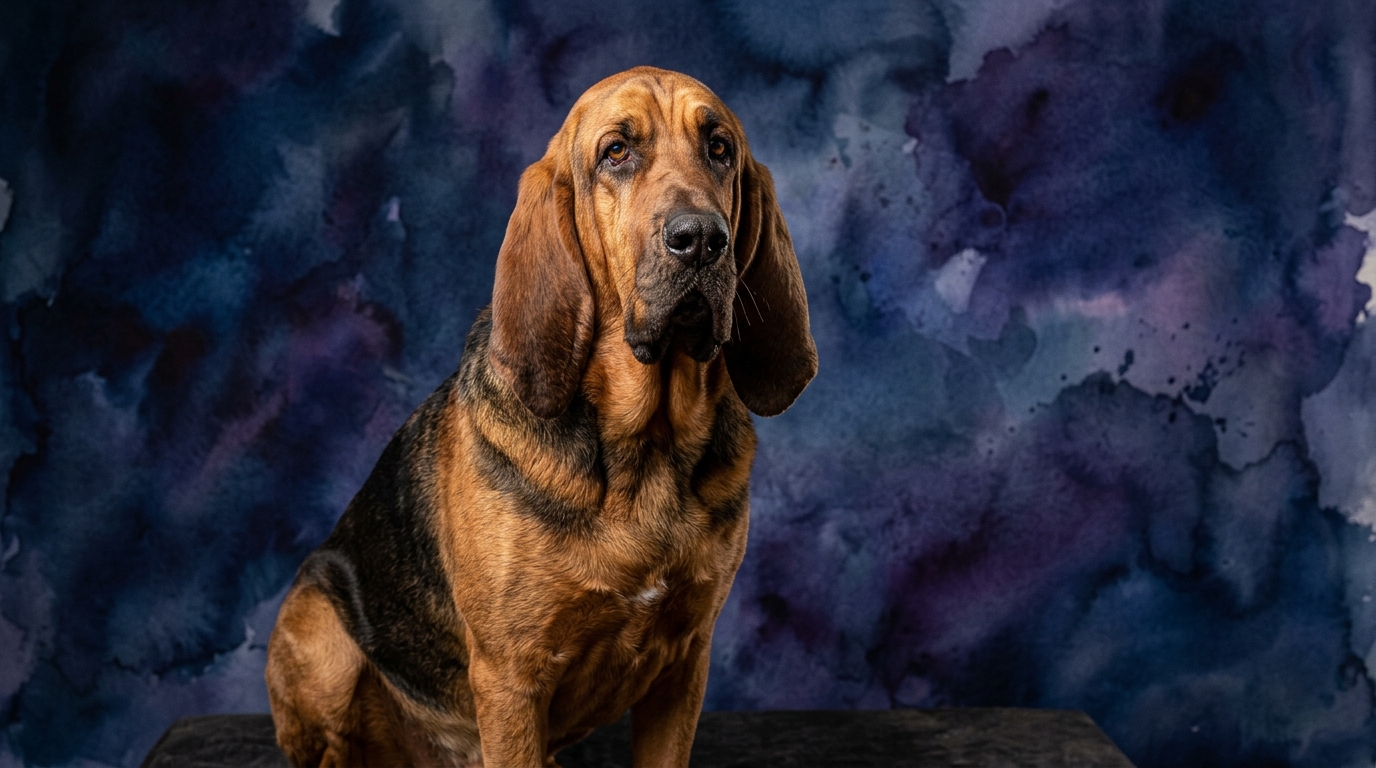
The Bloodhound's cognitive makeup is overwhelmingly geared towards its singular purpose: trailing. Their Problem Solving is rated 5/5, reflecting an unparalleled ability to untangle complex scent puzzles and persist through distractions. However, their Training Speed is a modest 1/5; their independent nature means they often prioritize their olfactory mission over human directives. Social Intelligence stands at 2/5, indicating a dog more concerned with its scent world than human social cues. Instinctive Drive is a perfect 5/5, fueled by an insatiable need to follow a scent trail, making them highly task-oriented. Lastly, their Memory is a stellar 5/5, allowing them to recall and process intricate scent information for extended periods.
In contrast, the Brittany presents a more balanced, cooperative cognitive profile, honed for partnership in the field. Their Problem Solving is 4/5, demonstrating keen intelligence in navigating hunting scenarios and adapting to changing conditions. Training Speed is a strong 4/5, signifying an eager and responsive learner who quickly grasps commands and routines. Social Intelligence is rated 3/5, positioning them as attentive and generally people-oriented dogs who value interaction and excel in cooperative tasks. Their Instinctive Drive is 3/5, robust enough for sustained hunting activity but typically more balanced and manageable. Finally, like the Bloodhound, their Memory is 5/5, essential for recalling game locations, training cues, and intricate field patterns.
Where the Bloodhound's Cognition Shines Brightest
The Bloodhound's cognitive superiority lies in its specialized application of problem-solving, instinctive drive, and memory, all coalescing around its olfactory prowess. Their 5/5 Problem Solving isn't about simple tasks; it's about independently deciphering a scent trail that might be hours or days old, fragmented, or overlaid with countless other odors. This involves complex cognitive mapping and persistent hypothesis testing in real-time, sifting through data points to reconstruct an invisible narrative. Their perfect 5/5 Instinctive Drive fuels this relentless pursuit, providing an almost inexhaustible internal motivation to complete the task. Furthermore, their 5/5 Memory contributes significantly, allowing them to not only follow a current scent but also to store and recall a vast library of scent profiles, identifying and differentiating targets with astonishing accuracy over time and distance.
The Brittany's Distinct Cognitive Advantages
The Brittany's cognitive strengths are rooted in adaptability, responsiveness, and a keen desire for partnership, areas where their Training Speed and Social Intelligence significantly outperform the Bloodhound. Their 4/5 Training Speed means they process and internalize new commands and behaviors with remarkable efficiency, making them quick studies in obedience, agility, or advanced field work. This rapid learning curve is a direct cognitive advantage for owners seeking a versatile companion capable of mastering a diverse repertoire of tasks. Coupled with their 3/5 Social Intelligence, Brittanys are attuned to human communication, eager to engage, and motivated by positive interaction and approval from their handler. This cognitive wiring makes them highly cooperative partners, capable of reading subtle body language and vocal tones, showcasing a valuable form of cognitive flexibility and social awareness tailored for collaborative endeavors.
Navigating Trainability: Bloodhound vs. Brittany
The stark contrast in Training Speed (Bloodhound 1/5 vs. Brittany 4/5) and Social Intelligence (Bloodhound 2/5 vs. Brittany 3/5) fundamentally dictates their trainability. A Brittany's higher Training Speed means they typically learn basic and advanced commands much faster, requiring fewer repetitions and less intense motivation. Their moderate Social Intelligence translates into a greater willingness to work *with* a human, finding satisfaction in pleasing their owner and responding readily to cues. This makes them generally easier to train for a wide array of activities, from household manners to competitive dog sports, because their cognitive framework is predisposed to cooperative learning.
Conversely, the Bloodhound's low Training Speed is a reflection of their independent cognitive processing; they are thinkers first and followers second, especially when their powerful scent drive is engaged. Their lower Social Intelligence means they are less inherently motivated by human approval or social cues. Training a Bloodhound often feels less like teaching and more like negotiation, requiring immense patience, consistency, and a deep understanding of their innate motivations. While they *can* be trained, it's often a slower, more deliberate process, focusing on channeling their instinctive drives rather than suppressing them, demanding an owner who appreciates and respects their unique cognitive autonomy.
Lifestyle Match: Active Pursuits vs. Patient Companionship
For active owners seeking a versatile, engaged partner for outdoor adventures and structured activities, the Brittany is often the more suitable cognitive match. Their balanced Instinctive Drive (3/5) ensures they have ample energy for long hikes, field work, or dog sports, but it's typically manageable enough to allow for relaxed home life. Their high Training Speed and moderate Social Intelligence make them excellent candidates for agility, obedience, flyball, or advanced hunting trials, as they thrive on learning and working alongside their human. They are cognitively wired to be responsive and adaptable companions, eager to participate in a variety of family activities.
The Bloodhound, with its intense 5/5 Instinctive Drive and 1/5 Training Speed, requires a different kind of "active" owner—one who is active in facilitating and channeling their scent-driven cognition. This isn't necessarily about high-octane sports but about providing regular, dedicated opportunities for scent work, whether formal tracking, mantrailing, or extensive sniffing walks. Their independent problem-solving nature means they can be challenging for relaxed owners who desire a highly compliant, low-maintenance companion. Owners must be prepared for a dog whose cognitive world is often externalized through its nose, leading it to follow intriguing scents with single-minded determination, demanding patient management and a deep appreciation for their unique, often stubborn, cognitive focus.
The Verdict
Opt for a Bloodhound if you are captivated by a dog with unparalleled scent-tracking abilities, possess immense patience for independent thinkers, and are prepared to channel their powerful instinctive drive into dedicated scent work.
Select a Brittany if you desire a highly trainable, cooperative, and versatile companion for active family life, dog sports, or hunting, valuing their eagerness to please and adaptability.
🧠 Find Your Pet's IQ Score
Our Pet IQ Lab assessment covers 25+ tests across 5 cognitive dimensions — personalized to your breed.
Take the Full IQ Test →Frequently Asked Questions
Are Bloodhounds difficult to live with due to their low training speed?
While Bloodhounds may take longer to grasp conventional commands due to their independent problem-solving and lower social intelligence, "difficult" is subjective. Their strong instinctive drive for scent work needs an outlet, and owners must be prepared for a dog whose primary motivation is often its nose, requiring consistent management and specialized training approaches. With understanding and appropriate engagement, they can be wonderful, albeit distinct, companions.
Do Brittanys make good family dogs given their hunting instincts?
Yes, Brittanys generally excel as family dogs due to their moderate social intelligence and balanced instinctive drive. They are typically eager to please, enjoy interaction, and their trainability means they can adapt well to various household routines and activities. Their energy needs consistent exercise, but they are often affectionate and form strong bonds with all family members, making them versatile companions.
How does memory differ between these two breeds, even with the same score?
Both breeds score 5/5 in memory, but its application differs significantly. For the Bloodhound, memory is primarily for intricate scent recall and mapping complex trails over time and distance. For the Brittany, memory is crucial for recalling diverse training cues, field patterns, and game locations, supporting their versatile cooperative work. While equally strong, their memory serves distinct cognitive functions aligned with their breed purposes.