Side-by-Side IQ Profile: A Tale of Two Minds
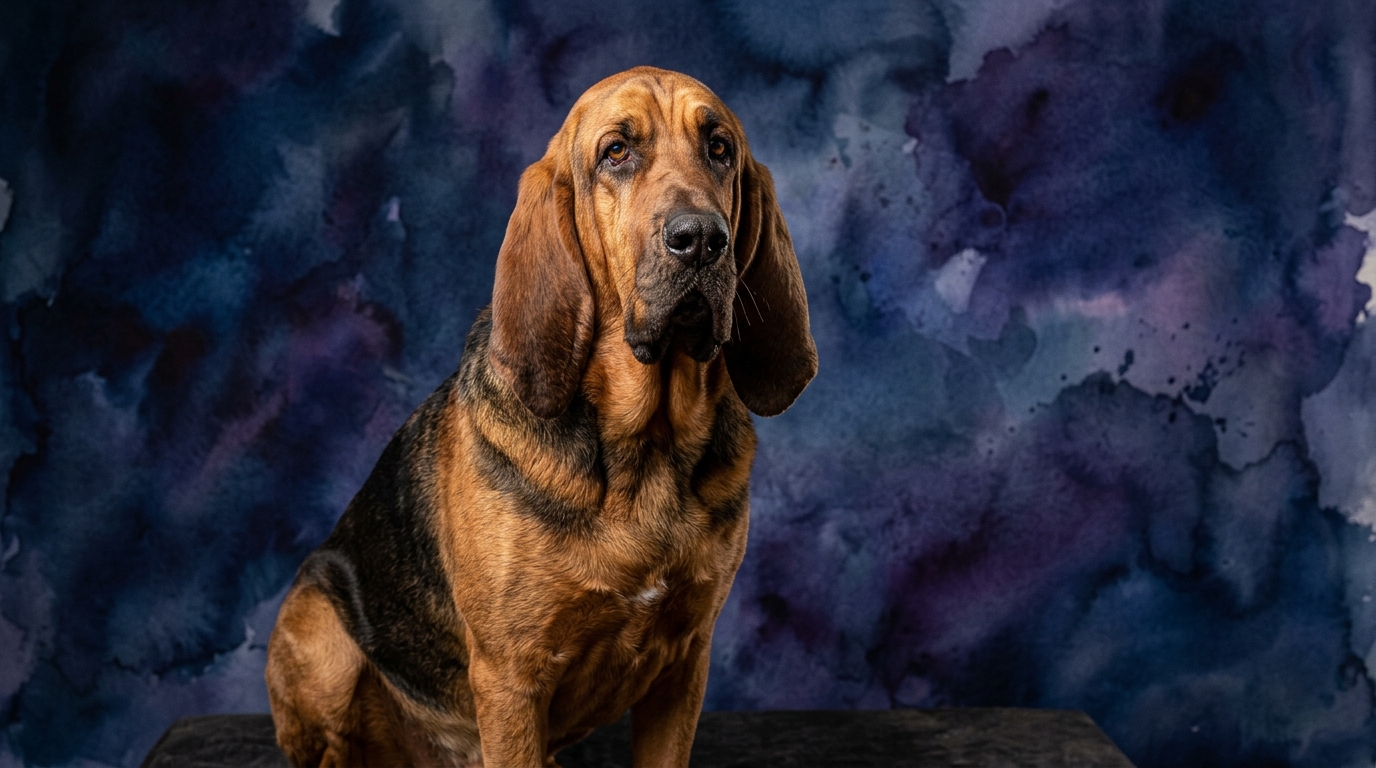
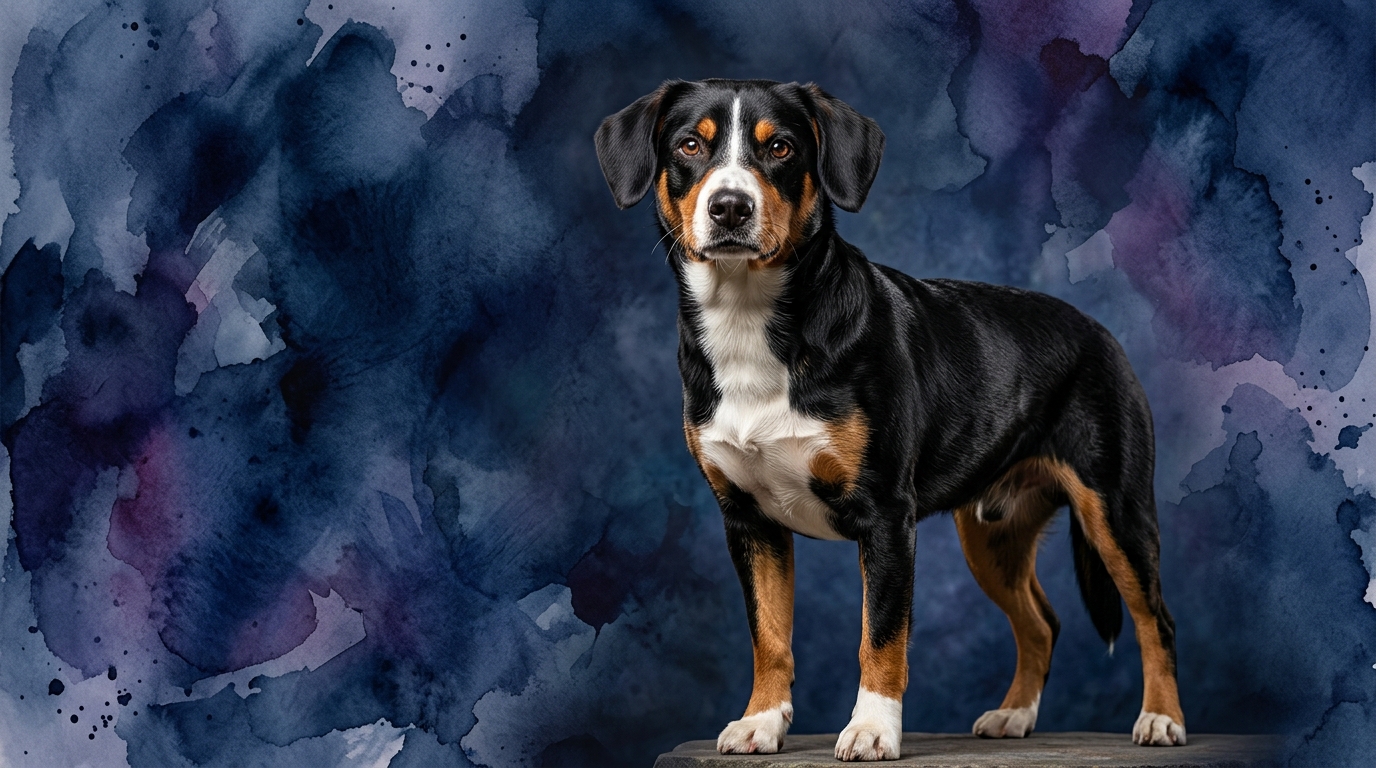
The Cosmic Pet Pet IQ Lab employs five key dimensions to assess canine intelligence, revealing the unique cognitive architecture of each breed. For the Bloodhound, its profile reflects a highly specialized intellect, while the Entlebucher Mountain Dog presents a more balanced, all-around cognitive toolkit.
**Bloodhound IQ Profile:** Problem Solving: 5/5, Training Speed: 1/5, Social Intelligence: 2/5, Instinctive Drive: 5/5, Memory: 5/5. The Bloodhound excels in complex scent puzzle-solving, meticulously following intricate trails, deciphering environmental variables, and navigating obstacles to locate a target. This demands sustained cognitive effort and strategic thinking. Their singular scent focus makes conventional obedience challenging; redirecting attention from a trail requires immense patience and high motivation, as intrinsic drive often overshadows external commands. While generally amiable, their social intelligence is secondary to their primary drive, making them independent and less attuned to subtle human social cues, prioritizing their olfactory world. Their instinctive drive is overwhelmingly centered on scent tracking; an insatiable, powerful urge defining their existence and guiding most cognitive processes. Their memory is exceptional for scent and spatial navigation in tracking, recalling complex scent patterns and routes over extended periods, crucial for their work.
**Entlebucher Mountain Dog IQ Profile:** Problem Solving: 3/5, Training Speed: 3/5, Social Intelligence: 3/5, Instinctive Drive: 3/5, Memory: 3/5. The Entlebucher demonstrates moderate problem-solving, often applied to practical tasks like managing livestock or navigating farm environments. Their solutions are direct, less abstract than a Bloodhound's intricate scent-path decoding. They possess a respectable training speed, generally eager to please and responsive to clear instruction; their cooperative nature makes them moderately receptive to learning new commands. Entlebuchers exhibit moderate social intelligence, attentive to family and capable of strong bonds, aware of their social environment, adapting behavior, though reserved with strangers. Their instinctive drive is balanced, encompassing herding, protective instincts, and companionship, being adaptable and less singularly focused than the Bloodhound's scent obsession. They have a solid, functional memory, retaining learned commands, routines, and familiar territory layouts, supporting their roles in herding and companionship.
Where the Bloodhound Wins Cognitively
The Bloodhound's cognitive superiority is profound within its specialized domain. Its Problem Solving score of 5/5 highlights an unparalleled ability to unravel intricate scent puzzles, meticulously analyzing particles, differentiating trails, and accounting for environmental factors to construct a coherent mental map. This complex process demands sustained focus and analytical prowess. Their Instinctive Drive, also a perfect 5/5, fuels this problem-solving engine, ensuring unwavering commitment to the task despite distractions. Coupled with an exceptional 5/5 Memory, Bloodhounds recall specific scent signatures and environmental cues over vast distances and prolonged periods. This combination of highly specialized problem-solving, relentless drive, and superior memory creates a cognitive profile uniquely suited for arduous and intricate tracking work, demonstrating a depth of specific intelligence few other breeds can match.
Where the Entlebucher Mountain Dog Wins Cognitively
While the Bloodhound excels in the depth of a narrow field, the Entlebucher Mountain Dog’s cognitive strengths lie in its balanced versatility and adaptability. Its consistent 3/5 scores across Problem Solving, Training Speed, Social Intelligence, Instinctive Drive, and Memory signify a well-rounded and practical cognitive toolkit. Where the Bloodhound is driven by a singular, overwhelming instinct, the Entlebucher’s 3/5 Instinctive Drive is more pliable, allowing seamless transitions between herding, guarding, and companionship without being consumed by one pursuit. This balanced drive contributes directly to its 3/5 Training Speed, making them receptive learners capable of understanding and executing diverse commands. Their 3/5 Social Intelligence ensures they are more attuned to human interactions, fostering deeper family integration. The Entlebucher’s cognitive profile is geared towards practical, multi-faceted engagement, adeptly navigating diverse scenarios and responding effectively to a broader range of stimuli.
Which is Easier to Train and Why
Regarding ease of training, the Entlebucher Mountain Dog emerges as the more cooperative pupil. Their Training Speed score of 3/5 reflects a moderate eagerness to engage with handlers and a readiness to learn. This breed's balanced Instinctive Drive (3/5) means their attention is not perpetually hijacked by a single, powerful urge. While they possess a herding drive, it's generally manageable and channelable through training. They respond well to positive reinforcement and clear, consistent direction, offering a rewarding experience for owners. In contrast, the Bloodhound’s Training Speed is a challenging 1/5. Their formidable Instinctive Drive (5/5) and Problem Solving (5/5) are almost exclusively directed towards scent work. When a Bloodhound's nose is engaged, handler commands often become secondary. This profound focus makes traditional obedience difficult; it's a prioritization of their olfactory world over human directives. Training a Bloodhound demands immense patience, understanding of their drives, and often requires incorporating scent-based games to maintain engagement.
Which Suits Active Owners vs. Relaxed Owners
The suitability for active versus relaxed owners depends significantly on the *type* of activity preferred. An active owner dedicated to highly specialized, mentally demanding work like scent sports or tracking would find the Bloodhound a profoundly rewarding, albeit challenging, partner. Its 5/5 Instinctive Drive and Problem Solving demand an outlet satisfying its deep-seated need to track and unravel complex olfactory puzzles; this is not a dog for casual strolls. A more relaxed owner, or one seeking versatile companionship, would find the Bloodhound's singular focus overwhelming. The Entlebucher Mountain Dog, with its balanced 3/5 scores, suits a wider range of active owners. They appreciate regular physical exercise like hiking or dog sports, alongside mental engagement through training and companionship. Their adaptable Instinctive Drive allows them to transition between different activities, enjoying a broader spectrum of owner interests beyond just scent work.
The Verdict
Choose the Bloodhound if you are a dedicated enthusiast of scent work, prepared to channel an unparalleled tracking drive into complex problem-solving activities, and possess immense patience for training a singularly focused intellect.
Opt for the Entlebucher Mountain Dog if you seek a versatile, trainable companion for a variety of activities, appreciate a balanced cognitive profile, and desire a socially aware partner eager to engage in diverse family life.
🧠 Find Your Pet's IQ Score
Our Pet IQ Lab assessment covers 25+ tests across 5 cognitive dimensions — personalized to your breed.
Take the Full IQ Test →Frequently Asked Questions
Is a Bloodhound difficult to live with due to its low training speed?
A Bloodhound's low training speed stems from its intense focus on scent, making conventional obedience challenging. Living with one requires understanding its powerful instincts, providing ample opportunities for tracking, and accepting that its primary drive will always be paramount, which can be demanding for a typical household.
How does the Entlebucher's herding drive manifest in a non-farm home?
In a non-farm environment, an Entlebucher's herding drive might manifest as an inclination to "gather" family members, especially children, or to chase moving objects like bicycles or joggers. Early socialization and consistent training are crucial to channel this instinct into appropriate outlets, such as dog sports or specific games, preventing unwanted behaviors.
Which breed is better for a first-time dog owner?
Given its more balanced temperament, moderate training speed, and adaptable cognitive profile, the Entlebucher Mountain Dog would generally be a more suitable choice for a first-time dog owner. The Bloodhound's intense, specialized drives and challenging training requirements often necessitate an experienced hand.