Side-by-Side IQ Profile
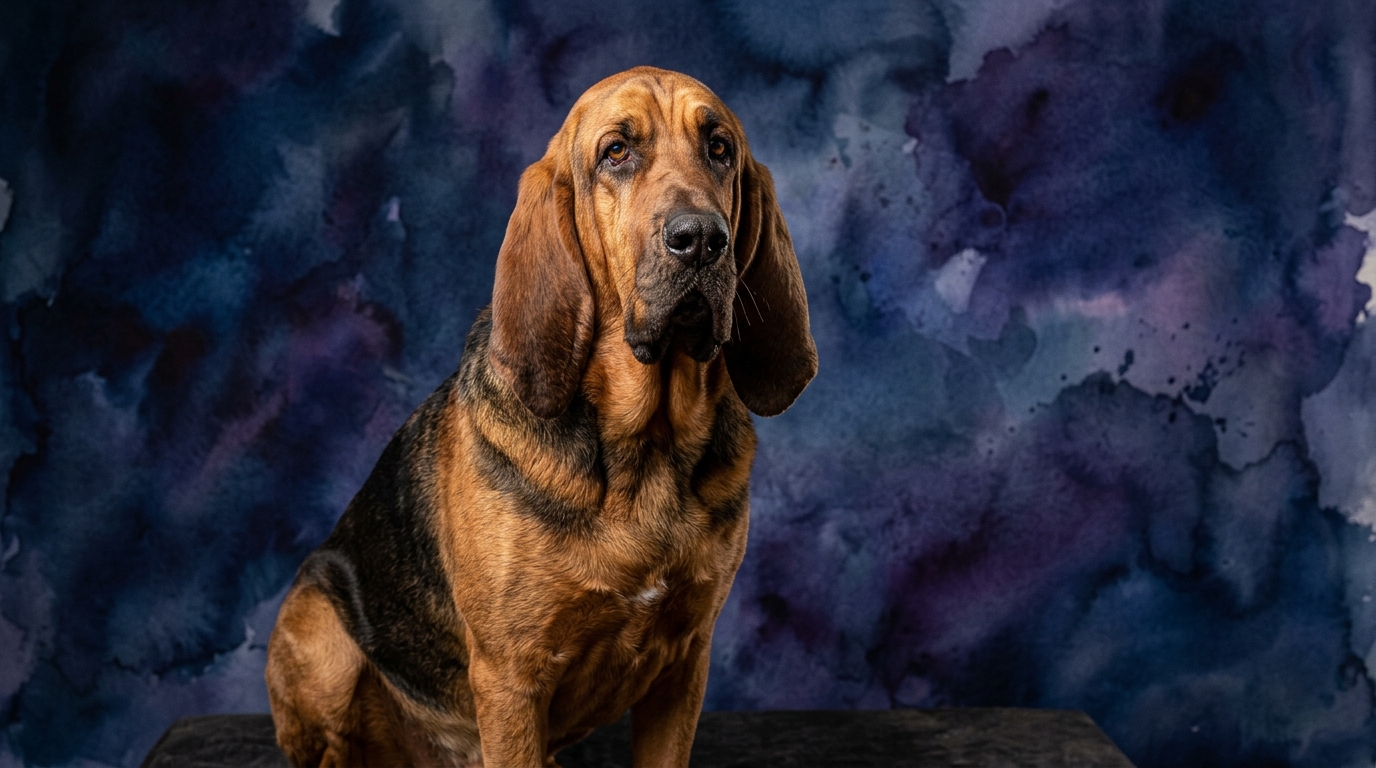
The Bloodhound’s cognitive profile, as measured by The Cosmic Pet Pet IQ Lab, paints a picture of extreme specialization. Their Problem Solving is rated a perfect 5/5, reflecting an unparalleled ability to unravel intricate scent puzzles over vast distances and time. Training Speed, however, stands at a challenging 1/5, indicating a strong independent streak and a slower grasp of conventional commands. Social Intelligence is modest at 2/5; while amiable, their primary focus isn't human interaction. Instinctive Drive is an overwhelming 5/5, a relentless compulsion to follow a scent trail. Finally, their Memory is also 5/5, demonstrating an astonishing capacity to recall scent patterns and associated environmental cues.
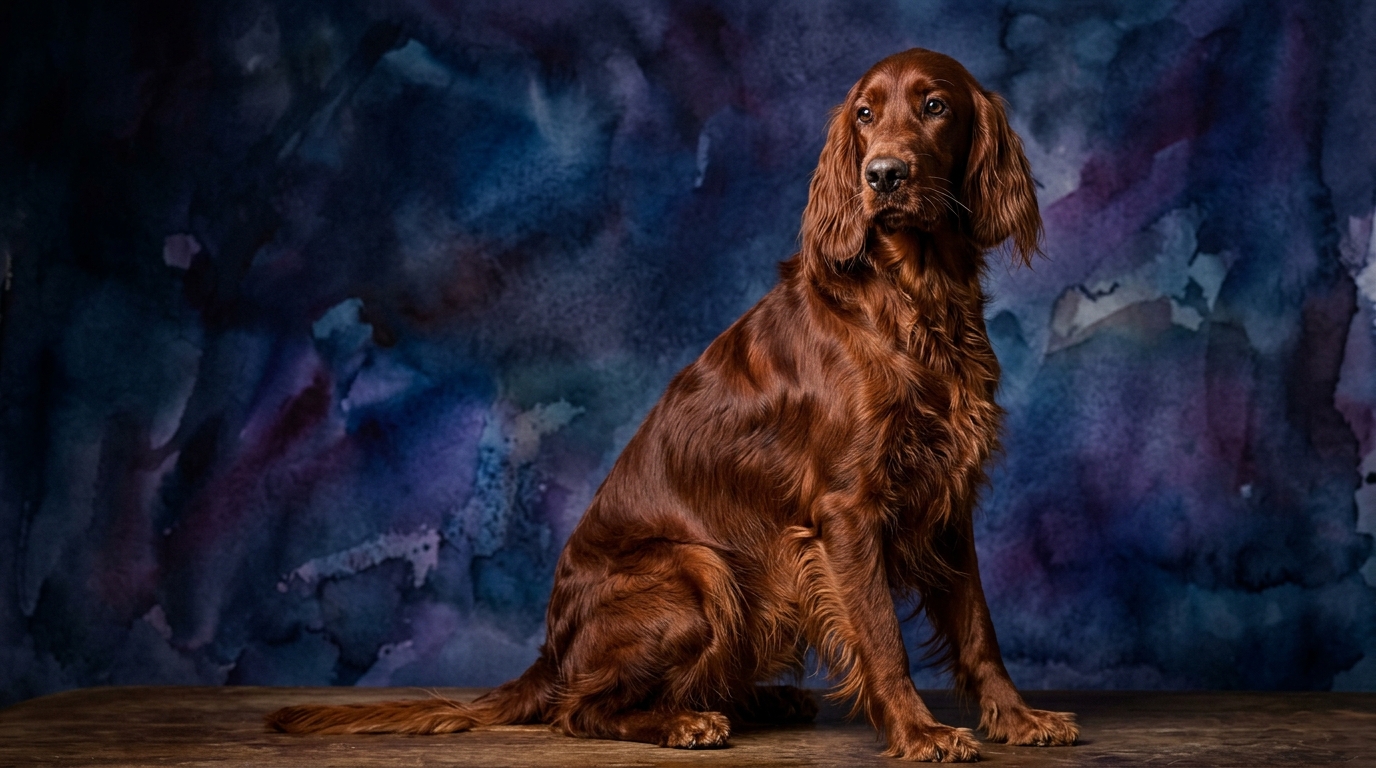
In contrast, the Irish Setter presents a more rounded and adaptable cognitive blueprint. Their Problem Solving registers a strong 4/5, showcasing capability in diverse tasks, particularly those involving retrieving and navigating. Training Speed is a commendable 4/5, reflecting a quick grasp of new concepts and an eagerness to please. Social Intelligence is rated 3/5, indicating a good understanding of human emotions and social dynamics, making them engaging companions. Instinctive Drive is a balanced 3/5, present for hunting and retrieving but not all-consuming. Their Memory score of 4/5 signifies good retention of learned commands, routines, and familiar environments.
Where Bloodhound Wins Cognitively
Bloodhounds exhibit unparalleled cognitive superiority in highly specific domains. Their Problem Solving score of 5/5 is intricately linked to their extraordinary olfactory capabilities, allowing them to meticulously deconstruct and follow scent trails that are hours or even days old—a feat almost unmatched in the canine world. This isn't just basic sniffing; it's a complex cognitive process involving pattern recognition, memory recall (5/5), and an unwavering focus (Instinctive Drive 5/5) to reconstruct events based on molecular evidence. Their memory functions as a vast database of scent profiles and environmental cues, enabling them to differentiate between countless individual odors and retain the 'story' of a trail. This specialized intellect makes them indispensable in search and rescue or law enforcement, where their unique brain wiring allows them to process information no human or machine can replicate. Their persistence in following a trail, even when logic dictates it should be gone, showcases a problem-solving strategy built on relentless dedication to their primary sensory input.
Where Irish Setter Wins Cognitively
The Irish Setter's cognitive strengths lie in their balanced and responsive intellect, particularly evident in their Training Speed (4/5) and Social Intelligence (3/5). Unlike the Bloodhound's singular focus, the Irish Setter possesses a more generalized problem-solving ability (4/5) that makes them adaptable to diverse tasks beyond their innate hunting instincts. Their quicker training speed means they form associations between commands and actions more readily, making them highly receptive to obedience, agility, and various dog sports. This responsiveness stems from their higher social intelligence, as they are more attuned to human cues and eager to cooperate, seeing interaction as a rewarding part of their cognitive engagement. Their moderate instinctive drive (3/5) allows them to engage with their environment and tasks without becoming singularly fixated, enabling them to switch between activities and adapt to new learning situations with greater ease. They excel in environments where biddability and a willingness to work alongside humans are paramount, leveraging their balanced memory (4/5) for a wide array of learned behaviors.
Which Is Easier to Train and Why
The Irish Setter is demonstrably easier to train than the Bloodhound, a conclusion clearly supported by their respective Training Speed scores: 4/5 for the Setter versus a stark 1/5 for the Bloodhound. This disparity stems from fundamental differences in their cognitive makeup and motivations. Irish Setters, with their higher social intelligence and balanced instinctive drive, are inherently more inclined to engage with their human trainers, viewing cooperative learning as a positive interaction. They are responsive to verbal commands and body language, quickly forming associations between actions and rewards, making them excellent candidates for traditional obedience, competitive dog sports, and complex trick training. Their desire to please and their attention to their handler's cues make the training process a collaborative effort. In contrast, the Bloodhound's extreme instinctive drive (5/5) and formidable problem-solving skills are almost exclusively directed towards scent work. When a Bloodhound is on a scent, external commands often become secondary or even irrelevant; their brain is singularly focused on the olfactory puzzle. Their independent nature means they are less motivated by human approval and more by the intrinsic reward of solving a scent mystery, leading to a perceived stubbornness in conventional training scenarios. While capable of learning, their learning curve for non-scent-related tasks is significantly steeper, requiring immense patience and creative, highly motivating techniques to capture their attention away from their primary sensory world.
Which Suits Active Owners vs. Relaxed Owners
Both breeds benefit from active engagement, but the type of activity suited to each differs significantly, aligning with either active or moderately active owners. The Bloodhound, with its unparalleled instinctive drive (5/5) and specific problem-solving prowess, demands an owner who is not just active, but dedicated to channeling that drive into appropriate outlets, primarily scent work. This means an owner prepared for extensive tracking exercises, long, focused walks where the dog can follow scents, or participation in mantrailing or search and rescue. Their physical needs are for endurance and mental stimulation through their nose, not necessarily high-speed agility or endless fetch. A relaxed owner might find themselves overwhelmed by the Bloodhound's singular focus and persistence, which can manifest as an unstoppable force if not properly directed. The Irish Setter, conversely, suits a broader range of active owners. Their moderate instinctive drive (3/5) and balanced problem-solving (4/5) mean they enjoy activities like long hikes, running, retrieving games, and dog sports such as agility or flyball. They thrive on physical exercise combined with mental challenges that involve human interaction. While they need regular activity, their needs are less specialized than the Bloodhound's, making them adaptable to owners who enjoy varied outdoor pursuits but aren't necessarily committed to intense, specialized scent work. A truly relaxed owner might struggle with the Setter's energy levels, but an owner who enjoys daily vigorous walks, playtime, and consistent training would find a joyful companion.
The Verdict
Choose a Bloodhound if you are a dedicated, patient owner passionate about canine scent work, prepared to provide extensive, specialized mental and physical stimulation focused on their extraordinary olfactory and tracking capabilities.
Opt for an Irish Setter if you seek a responsive, sociable companion for diverse activities, valuing biddability, quicker training, and a balanced intellect that thrives on interactive play and a variety of outdoor adventures.
🧠 Find Your Pet's IQ Score
Our Pet IQ Lab assessment covers 25+ tests across 5 cognitive dimensions — personalized to your breed.
Take the Full IQ Test →Frequently Asked Questions
Are Bloodhounds difficult to live with due to their independent nature?
Bloodhounds are not inherently difficult, but their independent, scent-driven minds require an owner who understands their intrinsic motivations. They thrive with consistent boundaries and ample opportunities to engage their nose, which can prevent them from following tempting scents into trouble.
Do Irish Setters require a lot of grooming because of their coat?
Yes, Irish Setters possess a beautiful, flowing coat that necessitates regular grooming to prevent tangles and mats. Daily brushing is often recommended, along with occasional professional grooming, to maintain their coat's health and appearance.
Can Bloodhounds be good family pets despite their work drive?
Absolutely, Bloodhounds can be devoted and gentle family pets, often displaying a calm demeanor indoors after their mental and physical needs are met. Their gentle nature makes them generally good with children, though their size and occasional clumsiness should be considered.