
Side-by-Side IQ Profile: Bloodhound vs. Irish Water Spaniel
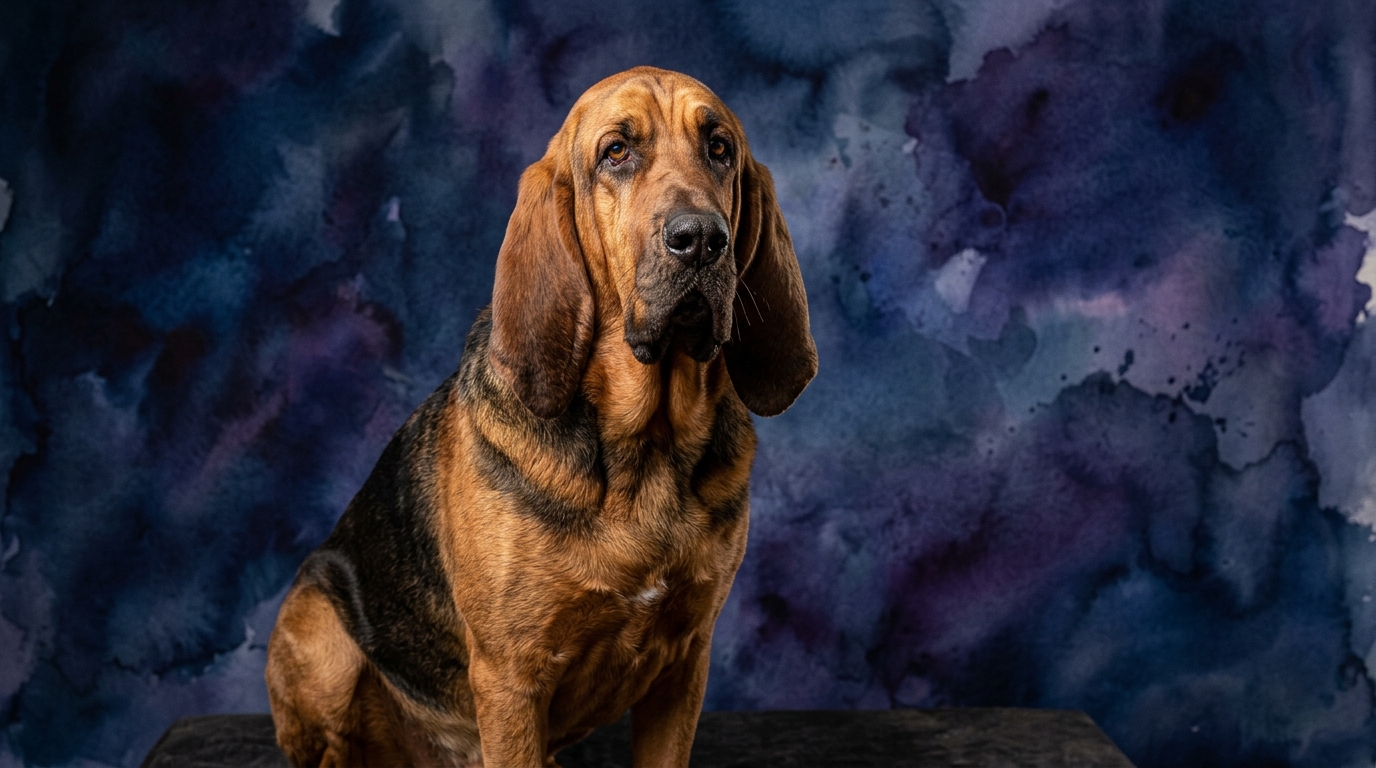
Our Pet IQ Lab evaluates canine cognition across five critical dimensions, revealing the nuanced mental architecture of each breed. For the Bloodhound, a venerable Hound with a Coren ranking of #74, its profile is dominated by an unparalleled sensory focus. Its Problem Solving ability scores a perfect 5/5, demonstrating an extraordinary capacity to unravel complex scent puzzles with relentless determination, often over vast distances and time. However, its Training Speed registers a challenging 1/5, reflecting an independent nature where its primary drive often overshadows handler directives. Social Intelligence stands at 2/5, indicating a dog more attuned to its olfactory world than to intricate human social cues. Instinctive Drive, specifically its tracking impulse, is an undeniable 5/5, defining its very essence. Finally, its Memory, particularly for scent trails, is an astonishing 5/5, allowing it to recall and follow paths long after they've been laid.
In contrast, the Irish Water Spaniel, a lively Sporting breed ranked #24 by Coren, presents a more balanced and biddable cognitive profile. Its Problem Solving scores a respectable 4/5, suggesting a capable mind adept at navigating its environment and retrieving tasks, though perhaps less singularly focused than the Bloodhound. Training Speed is a commendable 4/5, indicating a breed that grasps commands and routines with relative ease, eager to engage with its handler. Social Intelligence comes in at 3/5, positioning it as a more interactive and companion-oriented dog, responsive to human interaction and family dynamics. Instinctive Drive, predominantly for retrieving and water work, is a solid 3/5, present and functional but not overwhelming to the exclusion of other faculties. Its Memory for learned behaviors and routines is rated 4/5, reflecting a reliable capacity for recall and habit formation.
Where the Bloodhound Excels Cognitively
The Bloodhound's cognitive superiority lies squarely in its specialized sensory processing and an unmatched tenacity in pursuit of a goal. Its 5/5 Problem Solving score isn't about solving abstract puzzles; it's about deconstructing a scent trail with microscopic precision, differentiating individual odors within a complex environment, and following that specific thread against all odds. This isn't just sniffing; it's a sophisticated form of analytical reasoning applied to olfactory data, requiring immense focus and discrimination.
Complementing this is its 5/5 Memory, which is intrinsically linked to its scent work. A Bloodhound can recall and adhere to a specific trail, even one hours or days old, demonstrating an extraordinary long-term memory for sensory information. This memory isn't just about remembering a path; it's about recalling the specific scent signature of an individual and persistently matching it against new environmental inputs, a feat of cognitive endurance unparalleled in the canine world.
Where the Irish Water Spaniel Shines Cognitively
The Irish Water Spaniel’s cognitive strengths are rooted in its adaptability and willingness to collaborate. Its 4/5 Training Speed is a significant advantage, showcasing a dog that readily forms associations between commands and actions, making it a responsive and pleasant partner in various activities. This quick learning ability stems from a desire to engage and a capacity to understand and anticipate human expectations, rather than being solely driven by an internal instinct.
Furthermore, its 3/5 Social Intelligence, compared to the Bloodhound's 2/5, highlights a more robust understanding of social cues and a greater inclination towards cooperative interaction. This means the Irish Water Spaniel is generally more attuned to its handler's mood, body language, and verbal communication, fostering a more fluid and reciprocal relationship. This social awareness contributes significantly to its trainability and its role as an integrated family member.
Trainability: Bloodhound vs. Irish Water Spaniel
When it comes to ease of training, the Irish Water Spaniel distinctly holds the advantage. Its 4/5 Training Speed reflects a breed that absorbs new commands and routines with enthusiasm and relative swiftness. This is largely due to its inherent biddability and a desire to work alongside its human companion, making positive reinforcement highly effective. An Irish Water Spaniel typically enjoys the process of learning and performing tasks, which translates into a more straightforward training experience for its owner.
The Bloodhound, with its 1/5 Training Speed, presents a far greater challenge. This isn't due to a lack of cognitive capacity, but rather its overwhelming 5/5 Instinctive Drive for scent work. When a Bloodhound catches a compelling scent, its focus becomes singular and intense, often rendering it temporarily deaf to handler commands. Training a Bloodhound requires immense patience, consistency, and an understanding that its primary motivation is its nose, not necessarily pleasing its human. Owners must learn to work with, rather than against, this powerful drive, often integrating scent games into training to maintain engagement.
Suitability for Active vs. Relaxed Owners
For active owners seeking a dedicated, specialized working partner, the Bloodhound presents a unique opportunity, but it is certainly not for the relaxed owner. Owners must be prepared for extensive, consistent engagement centered around its profound scent drive. This means long, purposeful walks where the dog can follow trails, participation in tracking sports, or even actual search and rescue work. A Bloodhound needs an owner who understands and respects its independent, single-minded nature and can provide outlets for its extraordinary cognitive talents, otherwise, its powerful instincts can lead to frustration for both dog and owner.
The Irish Water Spaniel, with its balanced IQ profile, thrives with active owners who enjoy engaging their dogs in various activities, particularly those involving water and retrieving. Its higher Social Intelligence and Training Speed make it a more interactive and versatile companion for hiking, swimming, competitive obedience, or agility. While it needs significant physical and mental stimulation, it is generally more adaptable to a family environment and varied activities than the highly specialized Bloodhound, making it a good fit for owners who want a capable and engaging partner in their active lifestyle.
The Verdict
Choose a Bloodhound if you are a patient, dedicated owner fascinated by the world of scent, prepared to channel an unparalleled instinctive drive into purposeful tracking activities.
Opt for an Irish Water Spaniel if you seek an active, biddable, and socially intelligent companion eager to learn and participate in a wide range of activities, especially those involving water.
🧠 Find Your Pet's IQ Score
Our Pet IQ Lab assessment covers 25+ tests across 5 cognitive dimensions — personalized to your breed.
Take the Full IQ Test →Frequently Asked Questions
Are Bloodhounds suitable for first-time dog owners?
Bloodhounds are generally not recommended for first-time owners due to their strong independent nature and intense scent drive. They require consistent, experienced handling and a deep understanding of their unique cognitive and behavioral needs to thrive.
Do Irish Water Spaniels require a lot of grooming?
Yes, Irish Water Spaniels possess a distinctive curly, water-repellent coat that requires regular grooming to prevent matting and maintain its health. Weekly brushing and occasional professional trims are typically necessary.
What kind of mental exercise do Bloodhounds need beyond tracking?
While tracking is paramount, Bloodhounds also benefit from scent-based puzzle toys, hide-and-seek games with treats, and structured 'find it' exercises indoors. These activities engage their primary cognitive strength and help satisfy their innate curiosity.