
Side-by-Side IQ Profile: A Tale of Two Minds
At The Cosmic Pet Pet IQ Lab, we analyze canine intelligence across five critical dimensions: problem solving, training speed, social intelligence, instinctive drive, and memory. For the Bloodhound, a breed renowned for its olfactory prowess, these dimensions paint a picture of a specialized mind. They demonstrate exceptional problem-solving abilities (5/5), particularly when tracking complex scent trails, and possess an unparalleled instinctive drive (5/5) to pursue these tasks relentlessly. Their memory (5/5) is equally formidable, allowing them to recall intricate scent patterns and past experiences with remarkable precision. However, their single-minded focus translates to a slower training speed (1/5), as their independent nature often prioritizes their primary instinct over human directives, and their social intelligence (2/5) is moderate, often secondary to their work.
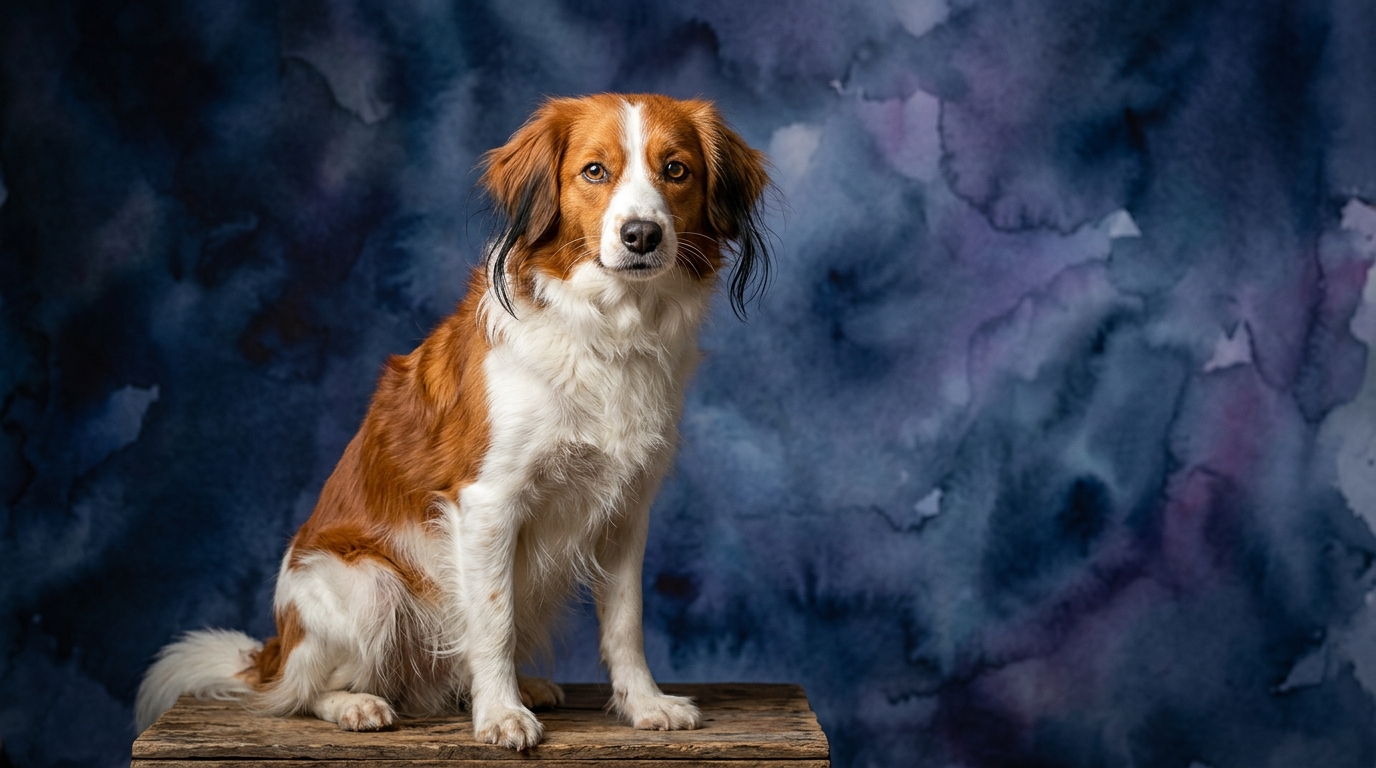
The Kooikerhondje, in contrast, presents a more uniformly distributed cognitive profile, reflecting its background as a versatile working companion. Their problem-solving capacity (3/5) is solid, allowing them to navigate various challenges, while their training speed (3/5) indicates a willingness to learn and respond to commands at a respectable pace. Social intelligence (3/5) is also well-developed, enabling them to form strong bonds and understand human cues, fitting their role as active participants in family life. Their instinctive drive (3/5), while present, is balanced, manifesting in a desire for engaging tasks rather than an overwhelming singular pursuit. Similarly, their memory (3/5) is reliable, enabling them to retain learned behaviors and social interactions effectively without the extreme specialization of the Bloodhound.
Where the Bloodhound Excels Cognitively
The Bloodhound's cognitive strengths are deeply rooted in its sensory world, particularly its profound sense of smell. Their problem-solving (5/5) isn't about opening latches or solving puzzles in the conventional sense, but about meticulously deconstructing a scent puzzle across varied terrains and conditions, often over significant distances and time. This involves an intricate processing of olfactory data, filtering out distractions, and inferring the trajectory of a specific odor. Their instinctive drive (5/5) is the engine behind this, a non-negotiable urge to follow a trail once engaged, demonstrating an unwavering focus that few other breeds possess. This isn't mere persistence; it's a deep-seated behavioral program that dictates their life's purpose.
Furthermore, the Bloodhound's exceptional memory (5/5) plays a crucial role in their tracking success. They don't just follow a fresh scent; they can recall and differentiate between numerous past scent memories, using this information to inform their current pursuit. This means they can remember specific scent profiles, the nuances of different environments, and even the "age" of a scent, making them unparalleled experts in their field. Their ability to retain such complex, sensory-based information for extended periods underscores a unique form of cognitive retention, distinct from the recall of obedience commands or social cues.
Where the Kooikerhondje Excels Cognitively
The Kooikerhondje's cognitive advantages lie in its adaptability and balanced social engagement. Their training speed (3/5) is a significant asset, indicating a brain that processes new commands and associates actions with outcomes relatively quickly. This means they are more receptive to learning diverse behaviors, from basic obedience to complex tricks or agility courses, making them highly versatile companions. Unlike the Bloodhound's singular focus, the Kooikerhondje's mind is primed for cooperative learning, eager to engage with their human counterparts in structured activities.
Their social intelligence (3/5) is another area where Kooikerhondjes shine. They possess a good capacity for understanding human emotions, body language, and intentions, fostering a strong, reciprocal bond. This allows them to integrate smoothly into family dynamics, responding appropriately to social cues and demonstrating an empathetic connection. While not as specialized in a single area as the Bloodhound, the Kooikerhondje's balanced cognitive profile, particularly its trainability and social aptitude, makes it a highly agreeable and responsive partner in a wider array of domestic and sporting contexts.
Which is Easier to Train and Why?
When considering ease of training, the Kooikerhondje generally presents a more straightforward experience due to its balanced cognitive profile. With a training speed of 3/5 and social intelligence also at 3/5, they are typically more inclined to pay attention to human instruction and respond to positive reinforcement. Their moderate instinctive drive (3/5) means their natural urges are less likely to override training sessions, allowing for a more focused and productive learning environment. A Kooikerhondje often enjoys the process of learning and working alongside its owner, viewing it as a cooperative activity.
The Bloodhound, by contrast, presents a significant challenge in traditional obedience training, scoring only 1/5 for training speed. This isn't due to a lack of capacity to learn, but rather their overwhelming instinctive drive (5/5) and problem-solving (5/5) focus, which are almost entirely dedicated to scent work. Once a Bloodhound catches a scent, their brain enters a highly specialized mode where external commands often become secondary. Their memory (5/5) is excellent, but it's primarily for scent patterns, not necessarily for recalling "sit" when a compelling odor is present. Training a Bloodhound effectively requires understanding their intrinsic motivations and integrating scent-based activities into their learning, rather than expecting broad obedience in distracting environments.
Which Suits Active Owners vs. Relaxed Owners?
The Bloodhound, with its profound instinctive drive (5/5) and exceptional problem-solving (5/5) related to scent, is unequivocally suited for highly active owners who are prepared to engage in specialized, demanding activities. These dogs require consistent outlets for their tracking abilities, whether through formal scent work, tracking sports, or extensive, purposeful walks where they can follow interesting odors. Their moderate social intelligence (2/5) means they might not be as constantly seeking human interaction as other breeds, preferring to engage their noses. Owners must be committed to providing mental and physical stimulation that taps into their unique cognitive strengths, or face a frustrated and potentially destructive companion. A relaxed owner who prefers short, casual strolls would find it challenging to meet a Bloodhound's intrinsic needs.
The Kooikerhondje, with its balanced instinctive drive (3/5) and good social intelligence (3/5), offers more flexibility for owners who enjoy activity but also appreciate periods of relaxation. They thrive with owners who can provide regular exercise, engage in interactive play, and participate in dog sports like agility or obedience, where their training speed (3/5) and problem-solving (3/5) can shine. Their social nature means they enjoy being involved in family activities and appreciate companionship. While not suited for entirely sedentary lifestyles, a Kooikerhondje's needs align well with active families or individuals who seek a responsive, engaging partner for daily adventures, balanced with downtime indoors. They are adaptable to various active lifestyles without the singular, intense focus required by a Bloodhound.
The Verdict: When to Choose Each
The Verdict
Choose a Bloodhound if you are a dedicated, active owner passionate about specialized scent work, prepared to channel their immense problem-solving and instinctive drive into purposeful tracking activities. You must embrace their independent, focused nature and understand that traditional obedience will always be secondary to their nose.
Opt for a Kooikerhondje if you seek a versatile, engaging companion for an active lifestyle, valuing a dog with balanced cognitive abilities, good trainability, and a strong desire for cooperative social interaction. They thrive with owners who enjoy varied activities and appreciate a responsive, family-oriented partner.
🧠 Find Your Pet's IQ Score
Our Pet IQ Lab assessment covers 25+ tests across 5 cognitive dimensions — personalized to your breed.
Take the Full IQ Test →Frequently Asked Questions
Do Bloodhounds make good family pets despite their low social intelligence score?
While their social intelligence (2/5) is moderate, Bloodhounds can be affectionate and gentle family members, especially with children, though they may not constantly seek interaction. Their primary focus remains their nose, so owners should understand their need for independent scent work rather than constant social engagement.
Is a Kooikerhondje suitable for first-time dog owners?
Yes, a Kooikerhondje can be suitable for first-time dog owners due to their balanced cognitive profile, good training speed (3/5), and social intelligence (3/5). They are generally eager to please and responsive to consistent training, making the learning process more rewarding for a novice.
How does the Bloodhound's memory of 5/5 specifically benefit its tracking work?
The Bloodhound's exceptional memory (5/5) allows it to recall and differentiate between countless scent profiles, track over varied terrains and conditions, and even remember the age and trajectory of a specific odor. This cognitive retention enables them to follow complex, long-duration trails that would be impossible for less specialized breeds.