
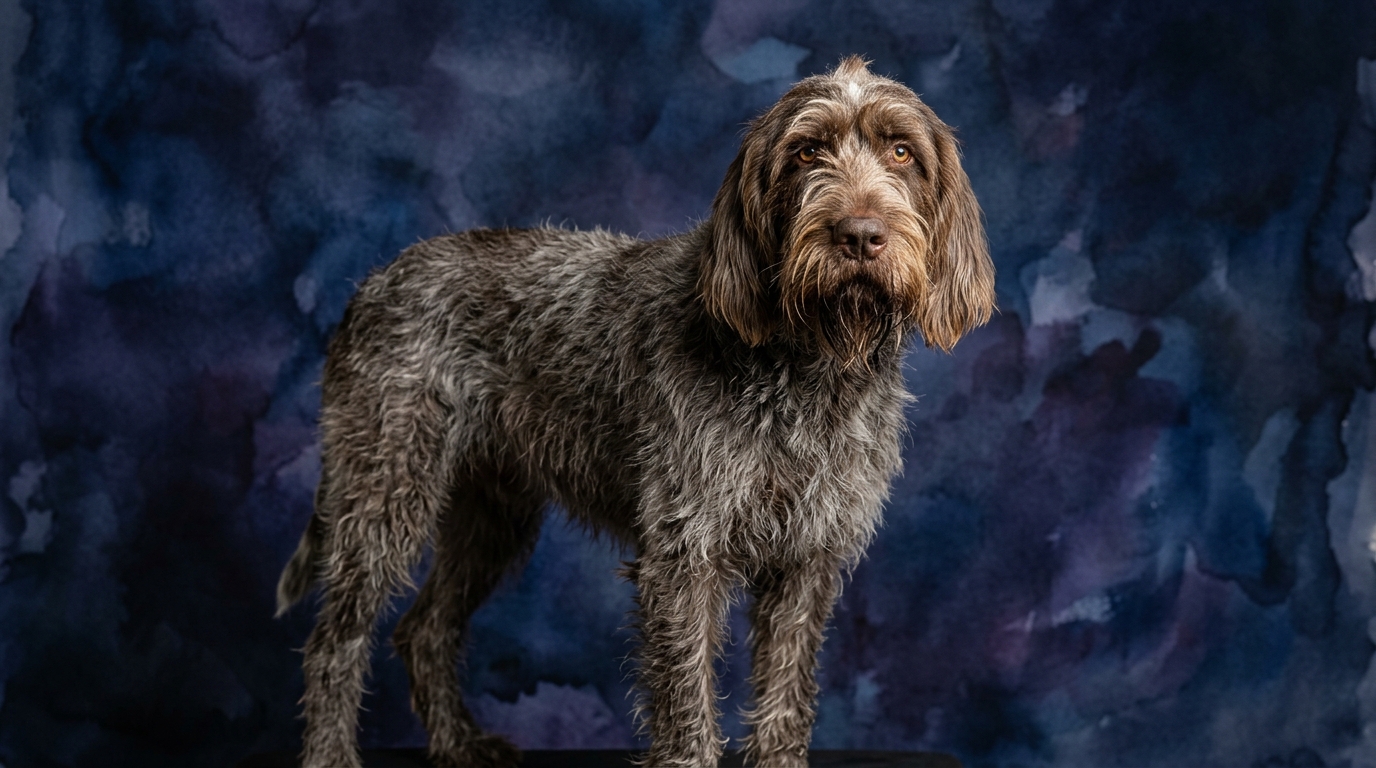
Side-by-Side Cognitive Profiles
In The Cosmic Pet Pet IQ Lab, we dissect canine cognition across five key dimensions, revealing the unique mental architectures of different breeds. The Bloodhound, a venerable scent hound, presents a highly specialized profile. Its Problem Solving is rated 5/5, a testament to its unparalleled ability to unravel complex scent trails. Instinctive Drive also scores a perfect 5/5, reflecting an overwhelming, single-minded focus on tracking. Memory, particularly related to scent, is equally impressive at 5/5. However, this intense specialization comes with tradeoffs: Training Speed is a challenging 1/5, and Social Intelligence registers a modest 2/5, indicating an independent nature less attuned to conventional human-centric interactions. The Bloodhound's Coren rank of #74 further highlights its unique position, where its specific genius doesn't always translate to high obedience scores.
The Spinone Italiano, a robust sporting dog, showcases a more balanced and generalized cognitive framework. Across all five dimensions – Problem Solving, Training Speed, Social Intelligence, Instinctive Drive, and Memory – it consistently scores 3/5. While not reaching the extreme peaks of the Bloodhound in any single area, this consistent performance underscores its versatility and adaptability. As a breed not specifically Coren-ranked, its balanced scores reflect a dog that is capable, cooperative, and generally amenable to a wide range of tasks and social environments. Where the Bloodhound is a specialist, the Spinone Italiano is a capable all-rounder, designed for collaborative work in varied settings rather than singular, intense pursuit.
Where the Bloodhound Excels Cognitively
The Bloodhound's cognitive strengths are deeply rooted in its olfactory prowess, manifesting as an extraordinary Problem Solving ability (5/5) that is almost exclusively dedicated to scent work. This isn't about solving abstract puzzles; it's about meticulously deconstructing a complex tapestry of scent molecules, discerning individual trails, and navigating through environmental distractions with an unwavering, analytical focus. Their genius lies in interpreting an invisible world, linking fragmented scent data into a coherent narrative.
Complementing this is an unparalleled Instinctive Drive (5/5). This isn't merely high energy; it's an overwhelming, intrinsic compulsion to follow a scent trail to its conclusion, often overriding all other stimuli or commands. This singular focus, while challenging for training, is the very engine of their tracking capability. Furthermore, their Memory (5/5) is phenomenal within this context. Bloodhounds can recall specific scent profiles over extended periods and distances, effectively remembering a 'scent library' of individuals and their recent movements. This specialized memory allows them to pick up old trails or differentiate between multiple scent sources with remarkable accuracy, a cognitive feat unmatched by most breeds.
Where the Spinone Italiano Excels Cognitively
The Spinone Italiano's cognitive advantages stem from its balanced profile, offering a more adaptable and cooperative intellect. Their Training Speed (3/5), significantly higher than the Bloodhound's 1/5, indicates a greater willingness and capacity to learn and retain commands. This responsiveness makes them far more amenable to conventional training protocols and a broader range of activities beyond their primary working instincts. They are typically keen to engage with their handlers and derive satisfaction from working alongside them.
Their Social Intelligence (3/5) also surpasses the Bloodhound's 2/5, meaning Spinones are generally more adept at reading human cues, understanding social dynamics within a family unit, and integrating smoothly into diverse environments. They are less likely to become singularly absorbed in their own pursuits and more inclined to seek interaction and companionship. Furthermore, while the Bloodhound's Problem Solving is hyper-specialized, the Spinone's 3/5 in this area suggests a more generalized, practical approach to novel situations. They might be more inclined to figure out how to open a cabinet or retrieve a toy from an awkward spot through varied attempts, demonstrating a broader, less instinct-driven form of practical problem-solving that is highly valued in a family companion.
Training: Bloodhound vs. Spinone Italiano
When it comes to trainability, the differences between these two breeds are stark and rooted in their fundamental cognitive architectures. The Spinone Italiano, with its 3/5 Training Speed and 3/5 Social Intelligence, is generally considered much easier to train for standard obedience and household manners. They possess a natural desire to please their owners and are responsive to positive reinforcement, making them willing participants in learning sessions. Their more balanced instinctive drive means they can focus on a handler's instructions without being overwhelmingly distracted by environmental stimuli.
In contrast, the Bloodhound's 1/5 Training Speed and 2/5 Social Intelligence present significant challenges. Their overwhelming Instinctive Drive (5/5) means that once a scent is caught, their world narrows to that single pursuit, making it incredibly difficult to redirect their attention. Conventional obedience commands often pale in comparison to the allure of a trail. Training a Bloodhound requires immense patience, creativity, and a deep understanding of their scent-driven nature. Sessions must be short, engaging, and often leverage their tracking instinct rather than attempting to suppress it. Their independence means they don't inherently look to their handler for constant guidance or approval in the same way a Spinone does, making consistent compliance a long-term project.
Matching Lifestyles: Active vs. Relaxed Owners
Choosing between a Bloodhound and a Spinone Italiano also means aligning with distinctly different lifestyle needs. The Bloodhound is unequivocally suited for highly active owners who are prepared to engage with their specific, intense form of activity. This isn't about casual jogs; it's about providing purposeful outlets for their unparalleled scenting abilities, whether through dedicated tracking sports, search and rescue work, or extensive, focused scent walks. Owners must understand that a Bloodhound needs to 'work' its nose regularly and profoundly, and this often means an independent dog on a leash, following a trail, rather than a social companion during a hike. They are not for the relaxed owner seeking a low-maintenance companion.
The Spinone Italiano, while an active sporting dog, offers more versatility for owners. Their 3/5 Instinctive Drive means they require regular, vigorous exercise – long walks, hikes, or participation in dog sports like agility, field trials, or even dock diving. However, their balanced social intelligence allows them to transition more easily between intense activity and relaxed family time indoors. They enjoy being part of family activities and are generally content to settle down after their exercise needs are met. This makes them a better fit for active owners who desire a cooperative, integrated companion for a variety of outdoor pursuits, rather than a singular-minded working partner.
The Verdict
Choose the Bloodhound if you are a dedicated, active owner seeking an unparalleled tracking partner, prepared to accommodate an independent, scent-obsessed dog whose life revolves around its nose.
Opt for the Spinone Italiano if you are an active owner desiring a versatile, cooperative, and socially integrated companion for varied outdoor activities and a balanced family life.
🧠 Find Your Pet's IQ Score
Our Pet IQ Lab assessment covers 25+ tests across 5 cognitive dimensions — personalized to your breed.
Take the Full IQ Test →Frequently Asked Questions
Does a Bloodhound's low training speed mean it cannot learn anything?
Not at all. A Bloodhound's 1/5 training speed indicates difficulty with conventional obedience, primarily due to their overwhelming scent drive. They excel at learning complex scent-related tasks and can be taught commands, but it requires immense patience, specialized methods, and an understanding of their independent nature.
How does the Spinone Italiano's 'balanced' IQ profile translate to everyday life?
The Spinone's consistent 3/5 scores across all cognitive dimensions mean they are generally adaptable, cooperative, and capable. They are responsive to training, integrate well into family dynamics, and can engage in a variety of activities without extreme behavioral tendencies, making them a versatile and pleasant companion.
Can a Bloodhound be a good family pet despite its lower social intelligence score?
Yes, a Bloodhound can be a good family pet, especially if their unique needs are understood and met. Their 2/5 social intelligence suggests they are more independent and less outwardly demonstrative than some breeds, but they are generally gentle and tolerant, particularly with children, provided they receive adequate mental and physical stimulation for their intense scent drive.