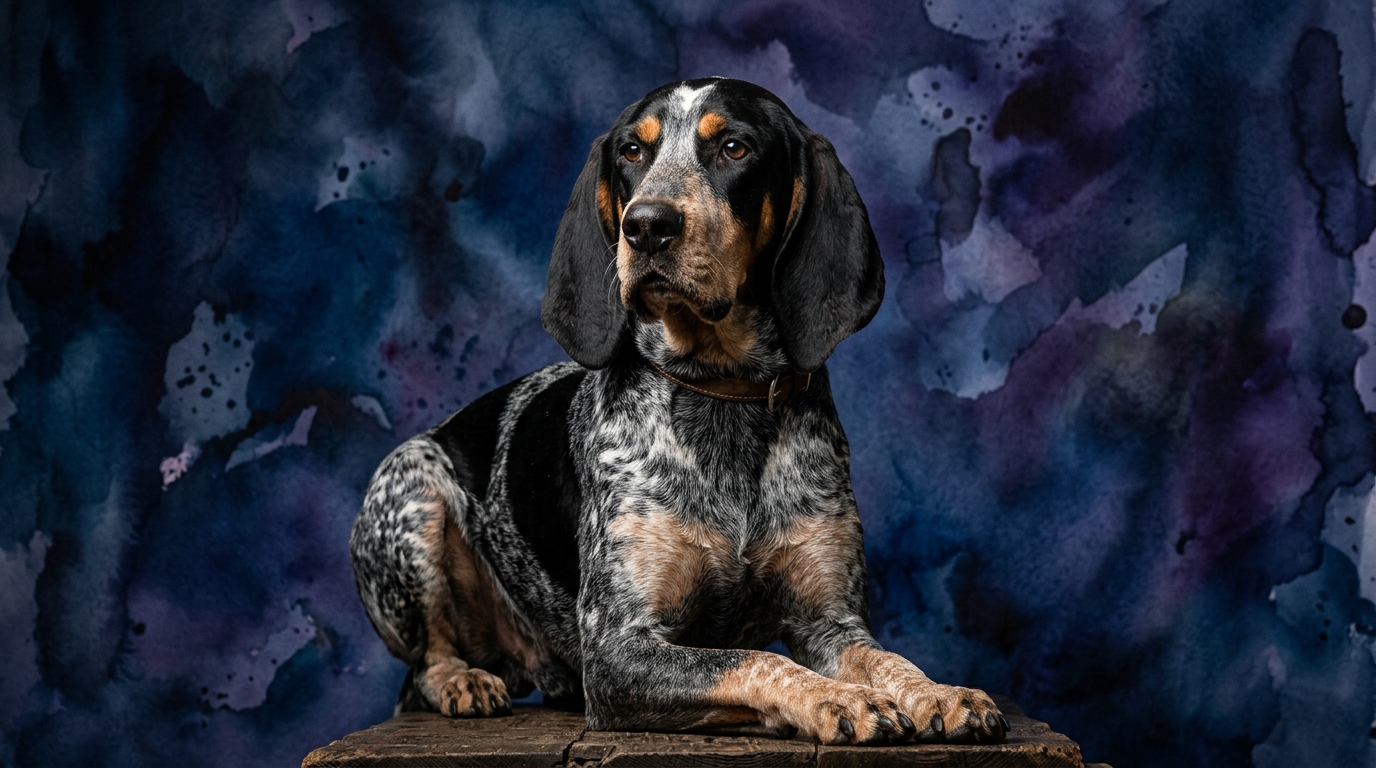
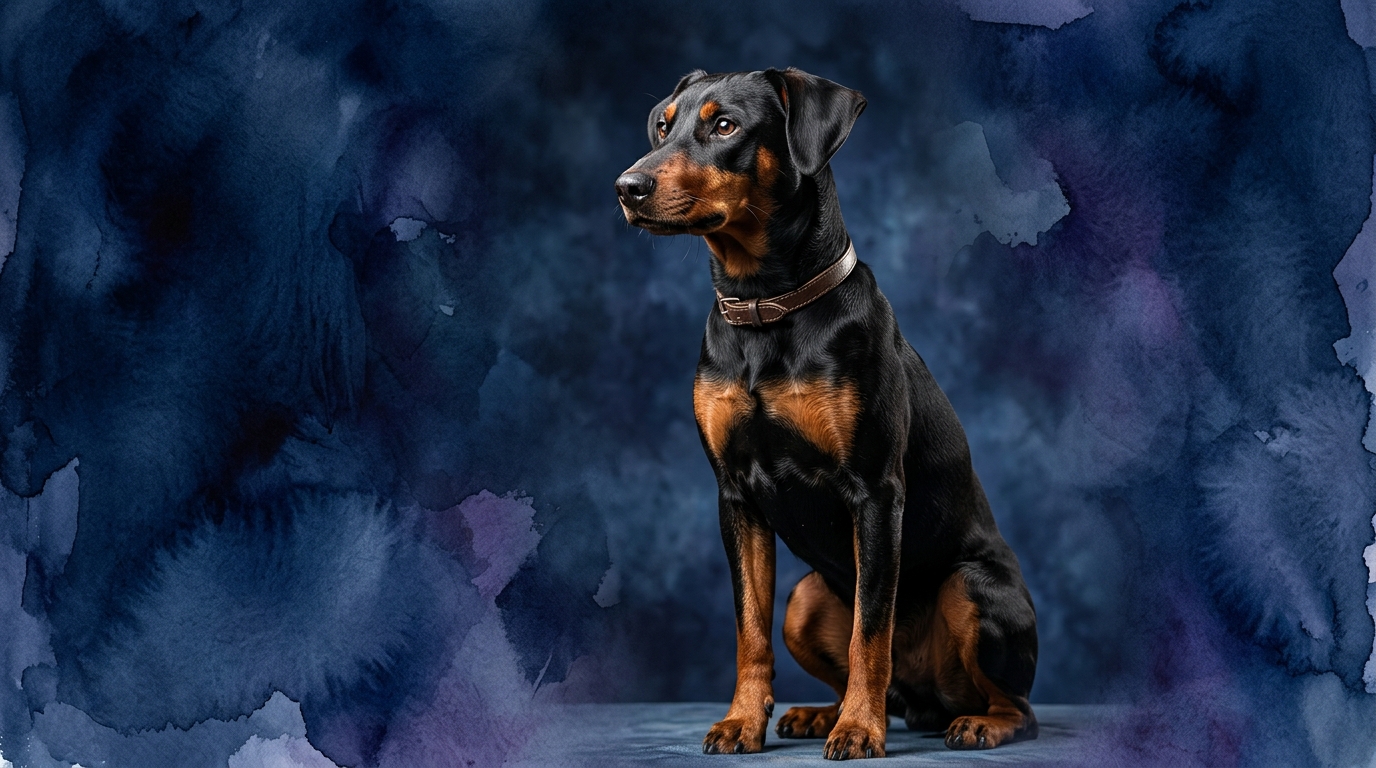
Side-by-Side IQ Profile: Bluetick Coonhound vs. German Pinscher
Despite sharing a 3/5 rating across all five IQ dimensions, the Bluetick Coonhound and German Pinscher exhibit these cognitive traits through lenses shaped by their distinct ancestral purposes and breed-specific behaviors.
For the **Bluetick Coonhound (Hound Group)**, a score of 3/5 in each category translates as follows:
**Problem Solving (3/5):** A Bluetick's problem-solving ability often manifests as methodical persistence in tracking game. They excel at figuring out complex scent trails, navigating varied terrain, and overcoming obstacles to reach their quarry, driven by a deep instinct rather than abstract reasoning. Their solutions are typically practical and directly related to their primary drive, demonstrating a focused, sequential approach to environmental challenges.
**Training Speed (3/5):** While capable of learning, the Bluetick's training speed is tempered by their independent nature and powerful olfactory distractions. They can grasp commands, but their focus can be fleeting when a compelling scent is present. Consistency and high-value rewards are crucial to solidify learned behaviors, as they are not inherently driven by a desire to please for its own sake, often prioritizing their nose over human directives.
**Social Intelligence (3/5):** Blueticks typically form strong bonds with their immediate family, displaying loyalty and affection. Their social intelligence allows them to understand household dynamics and react appropriately to familiar people and animals. However, their focus on their scent work can sometimes override subtle social cues in novel or highly stimulating environments, making them less attuned to nuanced human emotional shifts outside their core pack.
**Instinctive Drive (3/5):** This dimension is perhaps where the Bluetick's score of 3/5 feels most potent. Their instinctive drive is overwhelmingly geared towards scenting, trailing, and baying. This strong, inherent motivation dictates much of their cognitive processing, making them incredibly focused and tenacious when on a trail, sometimes to the exclusion of other stimuli or commands, embodying the essence of a working hound.
**Memory (3/5):** Blueticks possess a functional memory, particularly for established routines, familiar environments, and successful hunting strategies. They can recall complex scent patterns and routes over time, which is vital for their tracking work. However, their memory for specific commands or abstract concepts might require more repetition than breeds with a higher training speed score, especially if not regularly reinforced.
For the **German Pinscher (Working Group)**, a score of 3/5 in each category presents a different cognitive profile:
**Problem Solving (3/5):** The German Pinscher's problem-solving skills often center around their environment and family protection. They might cleverly figure out how to access forbidden areas, outwit small prey, or determine how to alert their owners to perceived threats. Their solutions are often quick and resourceful, driven by their vigilance and protective instincts, demonstrating adaptability in various household scenarios.
**Training Speed (3/5):** German Pinschers are generally eager to learn and can pick up commands with reasonable speed, especially when training is engaging and consistent. Their working dog heritage means they respond well to structure and have a desire to participate in activities with their people. However, a strong-willed streak can emerge if they perceive inconsistencies or a lack of clear leadership, potentially slowing the learning process.
**Social Intelligence (3/5):** German Pinschers are highly observant of their human family's moods and intentions, often acting as a sensitive barometer of the household atmosphere. They are typically devoted and protective, capable of discerning friend from perceived foe. Their social intelligence helps them integrate deeply into family life, though they can be reserved or wary with strangers, carefully assessing new interactions.
**Instinctive Drive (3/5):** The German Pinscher's instinctive drive is a blend of vermin hunting, territorial defense, and companionship. They possess a strong prey drive for small animals and an innate desire to guard their home and family. This drive fuels their alertness and protective behaviors, making them watchful and reactive to changes in their environment, always on guard.
**Memory (3/5):** German Pinschers demonstrate good memory for training cues, routines, and the individuals they encounter. They can recall specific people, places, and learned behaviors effectively. Their memory contributes to their reliability in established routines and their ability to differentiate between welcomed visitors and potential threats over time, aiding their protective role.
Where Bluetick Coonhound Wins Cognitively
Despite both breeds scoring 3/5 in problem-solving, the Bluetick Coonhound exhibits a specialized cognitive advantage in sustained, independent environmental navigation driven by scent. Their mind is exceptionally structured for sequential processing of olfactory information, allowing them to dissect and follow intricate scent trails that would overwhelm other breeds. This isn't just about smelling; it's about forming a complex mental map based on ephemeral data, making sophisticated deductions about direction, age, and type of scent over long periods. For instance, a Bluetick can methodically work through a cold trail, ignoring fresher, less relevant scents, demonstrating a singular focus in their problem-solving. Their 3/5 instinctive drive is almost entirely dedicated to this pursuit, translating into a cognitive endurance for single-minded tasks over vast distances, where a German Pinscher's problem-solving might be quicker but less sustained on a singular, abstract, external cue.
Where German Pinscher Wins Cognitively
Conversely, the German Pinscher's cognitive strengths, while also rated 3/5, lean towards rapid assessment and reactive decision-making within a human-centric environment. Their social intelligence (3/5) is finely tuned to human cues and household dynamics, enabling them to quickly interpret their owner's moods and intentions and respond accordingly. This translates into a quicker cognitive response for protection or alert behaviors, as their problem-solving is often applied to immediate, perceived threats or changes in their territory. For example, a German Pinscher might rapidly assess a novel sound or approaching stranger, integrating social cues with their environmental awareness to decide whether to bark or remain calm. Their 3/5 instinctive drive, focused on vigilance and guarding, allows for a more agile cognitive shift between tasks and a faster reaction time to novel stimuli compared to the Bluetick's more linear, scent-focused processing.
Which is Easier to Train and Why
Evaluating 'easier to train' when both breeds score 3/5 in training speed requires looking beyond mere score to their underlying motivations and behavioral tendencies. The German Pinscher, with its working dog background and natural desire to be involved with its family, often presents as more biddable in traditional obedience settings. Their social intelligence and eagerness to respond to their owner’s cues mean they can learn new commands relatively quickly, provided the training is engaging and consistent. They thrive on clear structure and positive reinforcement. However, their inherent strong will and independent thinking necessitate a firm, fair, and experienced handler to prevent them from making their own rules or developing selective hearing. The Bluetick Coonhound, while equally capable of learning, approaches training with a different cognitive priority. Their profound instinctive drive for scent work means that even a well-learned command can be instantly overridden by a compelling smell, making consistent focus a significant challenge. Training a Bluetick requires immense patience, creativity to make training more rewarding than a fresh scent, and an understanding that their primary cognitive focus is often outside human direction. Recall, in particular, can be a lifelong challenge for a Bluetick, as their nose dictates their path, whereas a German Pinscher, once trained, is generally more reliable in responding to commands even with distractions, due to their greater inherent desire for human interaction and approval.
Which Suits Active Owners vs. Relaxed Owners
Neither the Bluetick Coonhound nor the German Pinscher is truly suited for a relaxed owner, as both possess a 3/5 instinctive drive that demands significant outlets. However, the *type* of activity they require differs profoundly. The Bluetick Coonhound is an ideal match for an active owner who embraces long, exploratory outdoor adventures. Their cognitive satisfaction comes from engaging their olfactory senses on extended hikes, tracking exercises, or participating in scent work trials. They thrive on having a 'job' that allows them to follow their nose for hours, making them excellent companions for hunters, hikers, or those interested in canine scent sports. A relaxed owner would quickly find a Bluetick's unfulfilled scent drive leading to restless behaviors, incessant vocalizations, or attempts to escape and follow a trail. The German Pinscher also requires an active owner, but their needs are more centered on structured engagement and mental stimulation alongside vigorous physical exertion. They excel in activities like agility, obedience, flyball, or long, brisk walks combined with interactive play and puzzle toys. Their desire for companionship and vigilance means they thrive when involved in family activities and given clear roles that challenge their quick minds. A relaxed owner might find a German Pinscher becoming bored, leading to destructive chewing, excessive barking, or territorial issues, as their cognitive energy isn't channeled productively.
The Verdict
Choose the Bluetick Coonhound if you are an active, patient individual passionate about scent work, hunting, or long-distance outdoor exploration, prepared to manage their profound independent drive.
Opt for the German Pinscher if you seek a vigilant, energetic, and intelligent companion for structured activities and family involvement, provided you can offer consistent training and leadership.
🧠 Find Your Pet's IQ Score
Our Pet IQ Lab assessment covers 25+ tests across 5 cognitive dimensions — personalized to your breed.
Take the Full IQ Test →Frequently Asked Questions
Do Bluetick Coonhounds and German Pinschers have the same intelligence?
While both breeds are rated 3/5 across The Cosmic Pet's IQ dimensions, their intelligence manifests differently. Blueticks excel in sustained scent-based problem-solving, while German Pinschers demonstrate quicker, more reactive problem-solving rooted in vigilance and family dynamics.
Which breed is better for a first-time dog owner?
Neither breed is typically recommended for first-time owners due to their strong drives and independent natures. However, a German Pinscher might be slightly more manageable for a dedicated novice willing to commit to consistent training, given their desire to work with their handler and engage in structured activities.
How do their problem-solving skills differ despite the same score?
A Bluetick's 3/5 problem-solving is often a methodical, persistent effort to decipher complex scent trails over vast areas, driven by their olfactory senses. A German Pinscher's 3/5 problem-solving is typically quicker, focused on immediate environmental assessment, territorial defense, or finding ways to engage with their family through observation.