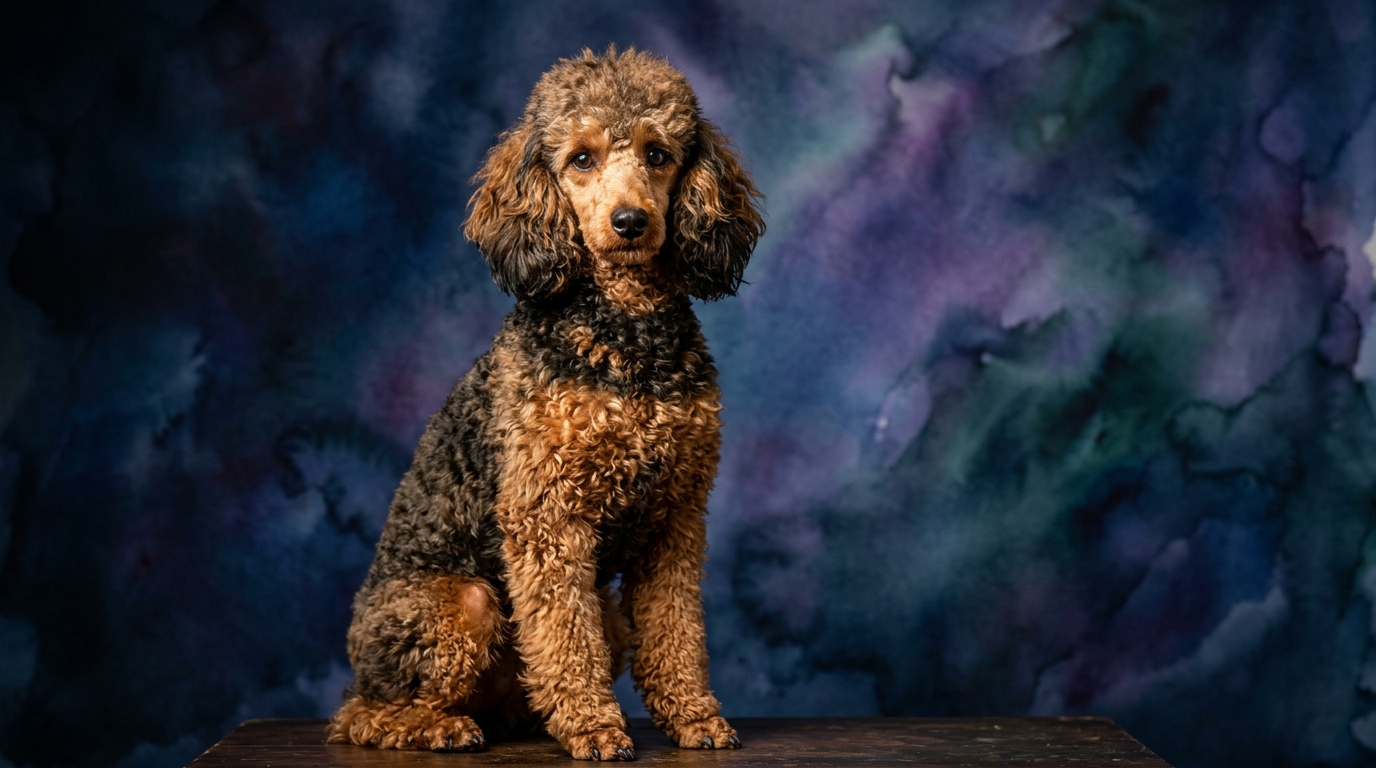
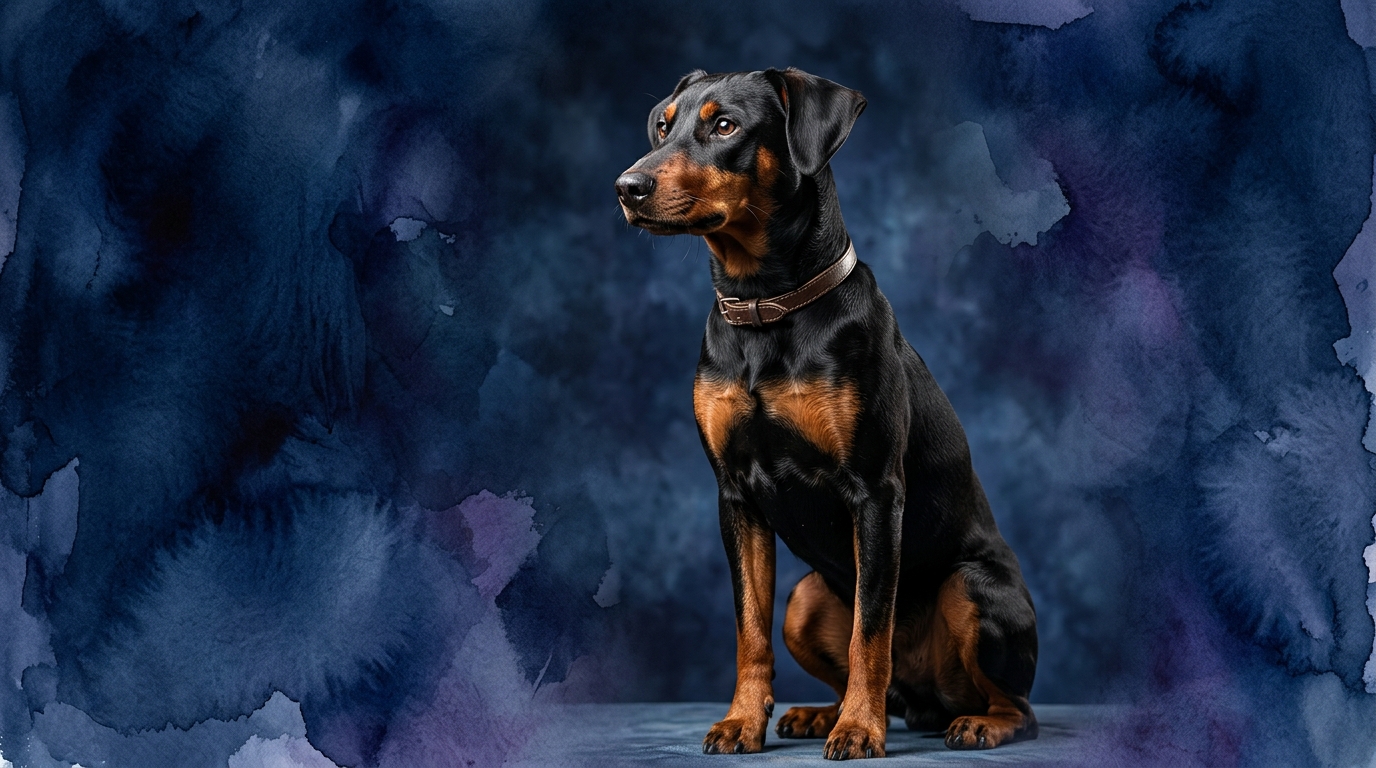
Side-by-Side IQ Profile: Poodle (Standard) vs. German Pinscher
The Cosmic Pet Pet IQ Lab employs a five-dimensional framework to assess canine intelligence, providing a nuanced understanding of how breeds perceive and interact with their environment. For the Poodle (Standard), a breed within the Non-Sporting Group and holding a Coren rank of #2, its cognitive profile is exceptionally well-rounded. Its Problem Solving ability is rated at 5/5, indicating a remarkable capacity for intricate thought and strategic action to overcome obstacles. Training Speed also stands at 5/5, reflecting an almost immediate grasp of new commands and routines. Social Intelligence, essential for harmonious human-canine bonds, is likewise 5/5, demonstrating an acute awareness of human emotions and social cues. Instinctive Drive, though strong, is a balanced 4/5, often channeled into cooperative activities rather than independent pursuits. Finally, Memory is an impressive 5/5, enabling enduring retention of learned behaviors and experiences.
In contrast, the German Pinscher, a member of the Working Group and not Coren-ranked, presents a different but equally valid set of cognitive strengths. Its Problem Solving score is 3/5, suggesting a practical approach to challenges, capable of navigating direct problems but less inclined towards abstract or multi-step solutions without clear, immediate incentives. Training Speed is also 3/5, meaning it learns at a moderate pace, requiring consistent reinforcement rather than instant assimilation. Social Intelligence scores 3/5, indicating a good understanding of basic social dynamics within its family unit, but perhaps less nuanced in interpreting complex human emotional states compared to its Poodle counterpart. Instinctive Drive is rated 3/5, encompassing a moderate prey drive and protective instincts that are typically focused and manageable within a structured environment. Memory, at 3/5, allows for good retention of established routines and frequently practiced commands, though less frequently used skills might require more frequent refreshers over time.
Where the Poodle (Standard) Wins Cognitively
The Poodle (Standard) exhibits clear cognitive advantages in areas demanding sophisticated mental processing and rapid learning. Its 5/5 Problem Solving capability means it excels at tasks requiring deductive reasoning, such as figuring out how to open complex latches, navigating intricate agility courses, or even understanding multi-step commands. This breed doesn't just react; it strategizes. The perfect 5/5 in Training Speed is a testament to its cognitive efficiency, allowing it to acquire new skills with minimal repetition. This translates into a dog that can master a vast repertoire of commands and tricks, making it a star in obedience trials, service work, or performing arts. Its 5/5 Social Intelligence allows it to deeply empathize with human emotions and intentions, making it an exceptionally intuitive companion. They often anticipate needs and react appropriately to subtle shifts in mood, fostering a profound connection. Coupled with a 5/5 Memory, the Poodle retains these complex learnings and social observations for extended periods, building upon past experiences to inform future actions. This cognitive profile makes the Poodle (Standard) particularly adept at roles requiring continuous learning, adaptability, and close human partnership, from therapy work to competitive dog sports.
Where the German Pinscher Wins Cognitively
While the German Pinscher's cognitive scores are generally moderate, they reflect a distinct set of strengths rooted in its working heritage. Its 3/5 Problem Solving ability is practical and grounded, allowing it to efficiently handle real-world challenges like navigating new terrains or identifying potential threats, rather than abstract puzzles. This translates to a dog that is self-sufficient and capable of making sound, immediate decisions in its environment. The 3/5 Instinctive Drive, though not as high as some dedicated working breeds, signifies a balanced blend of vigilance and self-reliance. This breed possesses an innate awareness of its surroundings and a natural protective instinct for its home and family, without being overly reactive. This drive is often channeled into its role as a watchful companion and guardian. Its moderate Social Intelligence means it forms strong, loyal bonds with its immediate family, demonstrating a focused devotion. While it may not interpret every nuance of human emotion, it understands and values its place within the family structure. The German Pinscher's strengths lie in its independent thought, practical application of intelligence, and unwavering loyalty, making it a robust and reliable companion for those who appreciate a dog with a confident and purposeful demeanor.
Which is Easier to Train and Why
Based on their cognitive profiles, the Poodle (Standard) is demonstrably easier to train than the German Pinscher. The Poodle's 5/5 Training Speed means it grasps new commands and behaviors with remarkable alacrity, often requiring only a few repetitions to solidify a concept. This rapid acquisition is bolstered by its 5/5 Social Intelligence, which makes it highly attuned to human cues and eager to cooperate, often seeking to please its handler. This eagerness translates into a dog that actively participates in training sessions, making the process smooth and rewarding. Furthermore, its 5/5 Memory ensures that once a behavior is learned, it is retained effectively over time, reducing the need for constant refreshers. For example, a Poodle will quickly associate a verbal command with an action and perform it reliably, even after a break from training.
In contrast, the German Pinscher, with a 3/5 Training Speed, requires more patience, consistency, and a clear, motivating approach. Its moderate social intelligence and a more independent streak mean it might not always prioritize pleasing its handler above its own inclinations. This isn't a lack of ability, but rather a difference in motivation and learning style. Training a German Pinscher often involves more repetition and finding high-value rewards to maintain its engagement. For instance, while a Poodle might perform a trick for praise alone, a German Pinscher might need a tasty treat or a favorite toy as incentive. Its 3/5 Memory means that skills need to be practiced regularly to remain sharp, and less frequently used commands might fade without consistent reinforcement. Successful training with a German Pinscher relies on establishing clear boundaries, consistent expectations, and making training a positive and engaging experience to counter its independent nature.
Which Suits Active Owners vs. Relaxed Owners
The Poodle (Standard) is an excellent match for active owners who enjoy engaging deeply with their canine companions through various mentally and physically stimulating activities. Owners who thrive on teaching complex tricks, participating in dog sports like agility, obedience, or rally, or even considering service or therapy work, will find the Poodle's 5/5 Problem Solving, 5/5 Training Speed, and 4/5 Instinctive Drive to be incredibly rewarding. This breed flourishes when its intellect is consistently challenged and its desire for cooperative work is fulfilled. A Poodle will eagerly join its owner for long hikes, retrieve endlessly, and then settle in for a challenging puzzle toy session, making it ideal for individuals or families with a dynamic lifestyle who can commit to extensive mental and physical engagement. Their need for continuous engagement means they are not suited for owners seeking a purely decorative or low-maintenance companion.
The German Pinscher, while certainly not a couch potato, is better suited for owners who appreciate a confident, self-assured companion and can provide structured outlets for its moderate energy and instinctive drives. Owners who enjoy consistent daily walks, moderate play sessions, and foundational obedience training will find a German Pinscher to be a fulfilling partner. Its 3/5 Instinctive Drive and 3/5 Problem Solving indicate a dog that benefits from clear boundaries and purposeful activities, but doesn't necessarily demand the same level of intense, continuous cooperative work as a Poodle. They are well-suited for owners who are firm, consistent, and appreciate a dog with a strong personality and protective tendencies, but who might not be looking for a dog to compete at the highest levels of dog sports. A German Pinscher can adapt to a more relaxed home environment, provided its basic needs for exercise, mental engagement, and consistent leadership are met, making it suitable for owners who seek a loyal and vigilant companion without the demand for constant, complex mental gymnastics.
The Verdict: When to Choose Each Breed
Choosing between a Poodle (Standard) and a German Pinscher ultimately depends on an owner's lifestyle, training philosophy, and desired canine partnership.
Opt for the Poodle (Standard) if you are an owner eager to engage in advanced training, dog sports, or roles requiring profound cognitive flexibility and social attunement. This breed thrives with owners who can provide consistent mental stimulation and appreciate a highly cooperative, intuitive companion.
Select the German Pinscher if you value an independent, confident, and vigilant companion, and are prepared to offer consistent, firm training with clear boundaries. This breed suits owners who appreciate its practical intelligence and protective nature, and can provide structured activity without demanding constant, complex mental engagement.
The Verdict
Choose the Poodle (Standard) if you seek a highly trainable, socially astute companion for advanced activities like dog sports, service work, or complex obedience, and appreciate a partner eager for deep, cooperative engagement.
Choose the German Pinscher if you desire a confident, independent, and vigilant companion, are committed to consistent, structured training, and appreciate a dog with practical intelligence and a protective yet manageable drive.
🧠 Find Your Pet's IQ Score
Our Pet IQ Lab assessment covers 25+ tests across 5 cognitive dimensions — personalized to your breed.
Take the Full IQ Test →Frequently Asked Questions
Is the Poodle (Standard) suitable for first-time dog owners?
Yes, their exceptional social intelligence and rapid training speed make them highly adaptable and responsive, which can significantly ease the learning curve for new dog owners, especially those committed to consistent positive reinforcement.
Do German Pinschers require extensive grooming?
German Pinschers have a short, smooth coat that requires minimal grooming, typically just weekly brushing to remove loose hair and maintain coat health, making them a relatively low-maintenance option in terms of coat care.
Which breed is generally more vocal?
Both breeds can be vocal, but German Pinschers, with their inherent vigilance and protective instincts, may be more prone to barking as an alert, while Poodles might vocalize more in response to excitement or to communicate their needs.