Side-by-Side IQ Profile: Boerboel vs. Chesapeake Bay Retriever
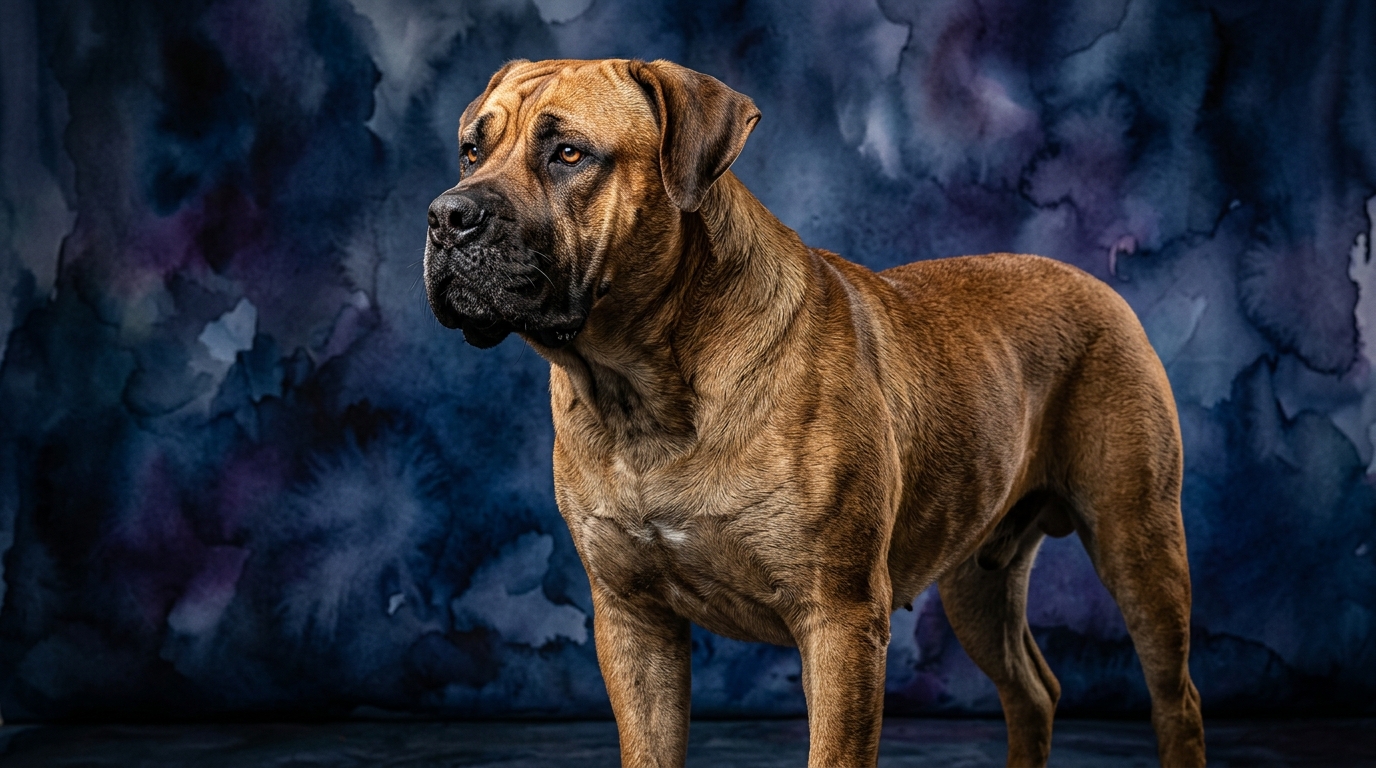
The Boerboel, a formidable South African mastiff-type, exhibits a balanced yet deliberate cognitive profile, with consistent scores of 3 out of 5 across all five IQ dimensions. Its Problem Solving (3/5) is less about quick tricks and more about independent, situational assessment, particularly in its historical role of guarding homesteads and livestock. This breed processes environmental cues to identify potential threats, often making autonomous decisions without constant human direction. Training Speed (3/5) reflects a dog that learns reliably but requires consistent, fair, and patient guidance; they are not inherently eager to please in the same way some other breeds are, preferring to understand the 'why' behind a command. Their Social Intelligence (3/5) is highly discerning, focused on evaluating intentions and safety; they are not typically gregarious with strangers but form profound, protective bonds with their immediate family, reading their cues acutely. Instinctive Drive (3/5) is profoundly tied to protection and territoriality, a deep-seated impulse to patrol and defend, rather than a high prey drive for small game. Finally, Memory (3/5) indicates a dog that retains learned behaviors and associations effectively over time, particularly routines and boundaries, but might not recall an obscure command after a long hiatus as readily as some breeds. This profile paints a picture of a thoughtful, self-assured guardian whose intelligence is rooted in vigilance and independent judgment.
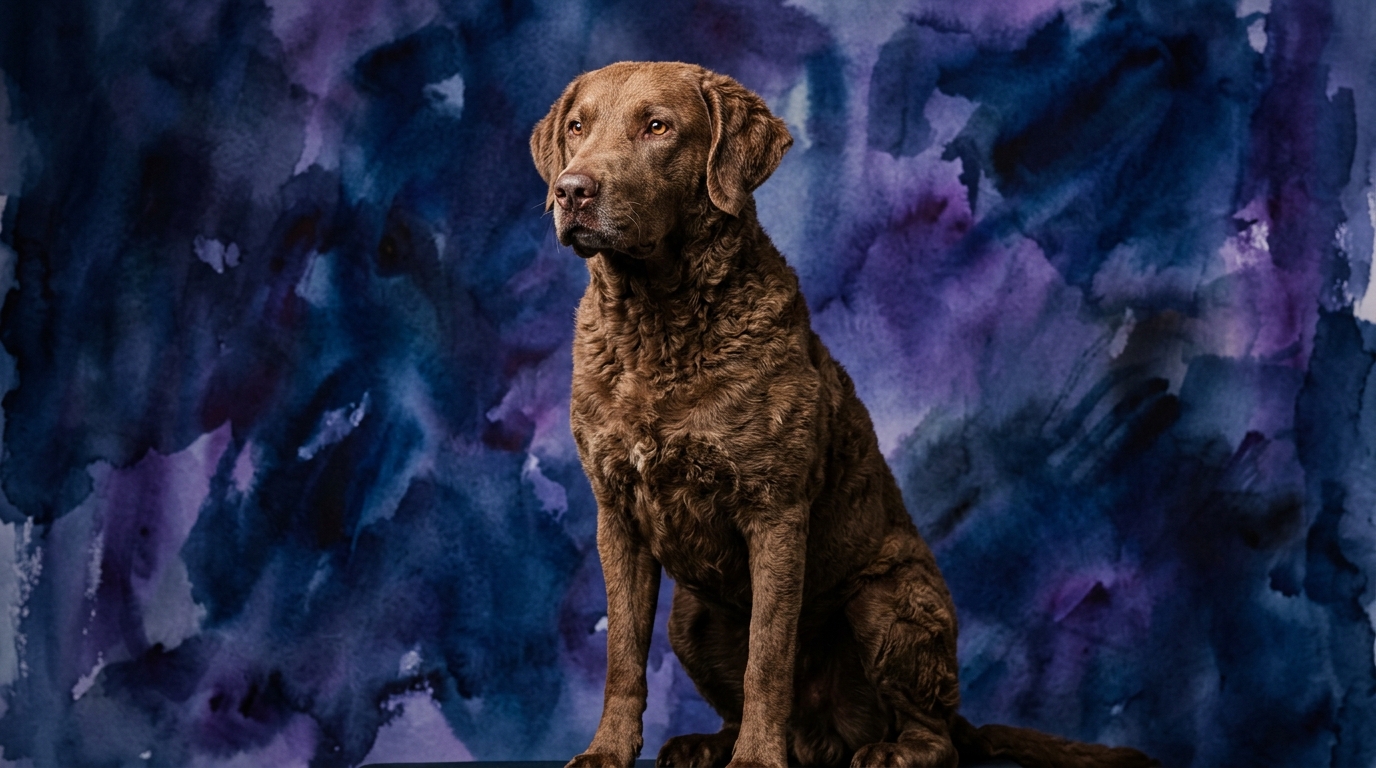
The Chesapeake Bay Retriever, or 'Chessie,' presents a cognitive profile built for purpose, excelling particularly in areas crucial for its demanding retrieving work. With a Problem Solving score of 4/5, the Chessie demonstrates a superior capacity to navigate complex scenarios, such as locating fallen game in challenging terrain or figuring out how to retrieve an item from an unusual spot. Their Training Speed (4/5) is a significant advantage, indicating a quick grasp of new commands and concepts, making them highly responsive to structured training. This rapid learning, coupled with their strong desire to work alongside their handler, makes them adept at mastering intricate sequences and tasks. Their Social Intelligence (3/5) mirrors the Boerboel in its level, suggesting a capacity to understand human emotions and social structures, though their primary focus often remains on their working partnership rather than broad social engagement. Instinctive Drive (3/5) for the Chessie is channeled intensely into retrieving, possessing a tenacious drive to find and bring back game, often in the harshest conditions, rather than a generalized predatory instinct. Their exceptional Memory (4/5) is a cornerstone of their retrieving prowess, allowing them to mark multiple falls, remember complex routes, and retain a vast repertoire of commands and signals even after long periods. This combination of cognitive strengths makes the Chessie a highly capable and dedicated working companion, always ready for the next task.
Where the Boerboel Wins Cognitively
While the Chesapeake Bay Retriever generally scores higher in several metrics, the Boerboel’s cognitive strengths shine uniquely in specific contexts. Its Problem Solving (3/5), though numerically lower, is geared towards independent decision-making in guardian roles. A Boerboel excels at autonomously assessing subtle environmental changes or unfamiliar presences, determining the appropriate level of response without constant human instruction. This isn't about solving a puzzle for a treat, but about processing complex threat assessments in real-time. Similarly, its Social Intelligence (3/5) manifests as a deep, discerning understanding of its immediate human family and their intentions, coupled with a keen ability to evaluate strangers. This dog isn't easily fooled or swayed; it forms profound bonds and acts as a vigilant protector, reading social cues not for generalized friendliness, but for potential shifts in safety. This particular blend of independent judgment and discerning social awareness makes the Boerboel uniquely adept at its historical purpose, where self-reliance and protective discernment are paramount.
Where the Chesapeake Bay Retriever Wins Cognitively
The Chesapeake Bay Retriever truly distinguishes itself with its higher cognitive scores, particularly in Problem Solving (4/5), Training Speed (4/5), and Memory (4/5). Its superior problem-solving ability allows it to navigate intricate retrieving scenarios, such as remembering where multiple birds fell in dense cover or finding a way through challenging obstacles to reach its objective. This breed thrives on mental challenges and exhibits remarkable ingenuity when faced with a task. The Chessie’s accelerated Training Speed (4/5) means it can absorb and execute complex commands with impressive rapidity, making it a dream for handlers who engage in advanced obedience, field trials, or other structured activities. This quick learning is reinforced by its exceptional Memory (4/5), enabling it to retain a vast array of commands, hand signals, and past experiences, ensuring reliable performance even in high-pressure situations or after extended breaks from specific tasks. This robust cognitive toolkit makes the Chessie an incredibly efficient and capable working partner, always eager to learn and apply its intellect.
Which is Easier to Train and Why
Comparing the training ease between these two breeds highlights their distinct cognitive architectures. The Chesapeake Bay Retriever, with its Training Speed of 4/5 and Memory of 4/5, is generally considered easier to train in the traditional sense of command-based obedience. Chessies possess an inherent eagerness to please their handler and a strong work ethic, combined with a quick uptake of new information. They thrive on clear direction and structured tasks, rapidly forming associations between commands and actions, and retaining those lessons consistently. In contrast, the Boerboel, with its Training Speed of 3/5 and Memory of 3/5, presents a different training dynamic. While capable of learning and retaining commands, they are often more independent thinkers. A Boerboel requires a handler who understands how to motivate a dog that values self-reliance and may question the necessity of a command if it doesn't immediately perceive its purpose. Their training demands patience, unwavering consistency, and a strong, fair leadership style that respects their discerning nature, rather than relying on an innate desire to simply comply. The Chessie's natural drive for partnership and task completion makes the training journey more straightforward for many owners, while the Boerboel demands a more nuanced, relationship-focused approach.
Which Suits Active Owners vs. Owners Seeking Specific Engagements
Both the Boerboel and the Chesapeake Bay Retriever require engaged owners, but the type of engagement differs significantly. The Chesapeake Bay Retriever is an ideal match for highly active owners who thrive on structured outdoor activities, dog sports, and a consistent work schedule for their canine companion. Their robust instinctive drive, combined with superior problem-solving and training speed, means they excel in activities like advanced obedience, agility, hunting, and dock diving, requiring substantial physical exertion and intricate mental challenges daily. They need a job and an outlet for their boundless energy and focus. Conversely, the Boerboel suits owners seeking a profound, watchful companionship and a dog that integrates deeply into family life as a protector. While they still require regular exercise and mental stimulation, their needs are less about high-intensity, structured sports and more about patrolling their territory, engaging in thoughtful walks, and participating in family activities. Owners must be prepared for their powerful presence and independent nature, providing consistent leadership and socialization rather than constant high-impact physical demands. They need an owner who appreciates their discerning social intelligence and independent problem-solving in a guardian role, offering a different kind of active engagement focused on management, vigilance, and companionship.
The Verdict
Choose a Boerboel if you seek a self-reliant, discerning guardian with a strong protective instinct and are prepared to offer consistent, patient leadership to a thoughtful, independent companion. They thrive with owners who appreciate their unique blend of vigilance and deep family loyalty.
Opt for a Chesapeake Bay Retriever if you are an active individual or family seeking an intensely driven, highly trainable partner for structured activities, outdoor adventures, and complex working tasks. They excel with handlers who can channel their exceptional cognitive abilities and boundless energy into purposeful engagement.
🧠 Find Your Pet's IQ Score
Our Pet IQ Lab assessment covers 25+ tests across 5 cognitive dimensions — personalized to your breed.
Take the Full IQ Test →Frequently Asked Questions
Is a Boerboel difficult to train due to its independence?
A Boerboel's independent problem-solving and discerning nature mean training requires patience, consistency, and a clear, confident handler. They are not inherently difficult but respond best to understanding the 'why' behind commands, rather than simply obeying.
How does the Chesapeake Bay Retriever's memory impact its daily life?
The Chessie's exceptional memory (4/5) significantly aids in recalling a vast array of commands, remembering complex routes, and retaining past experiences, making them highly reliable in working scenarios and quick to pick up new routines.
Which breed is better for a family with children?
Both breeds can be good family dogs with proper socialization and training, but their approaches differ. A Boerboel is a protective guardian forming deep bonds, while a Chesapeake Bay Retriever is a high-energy working dog that thrives on engagement, requiring consistent management around children.