
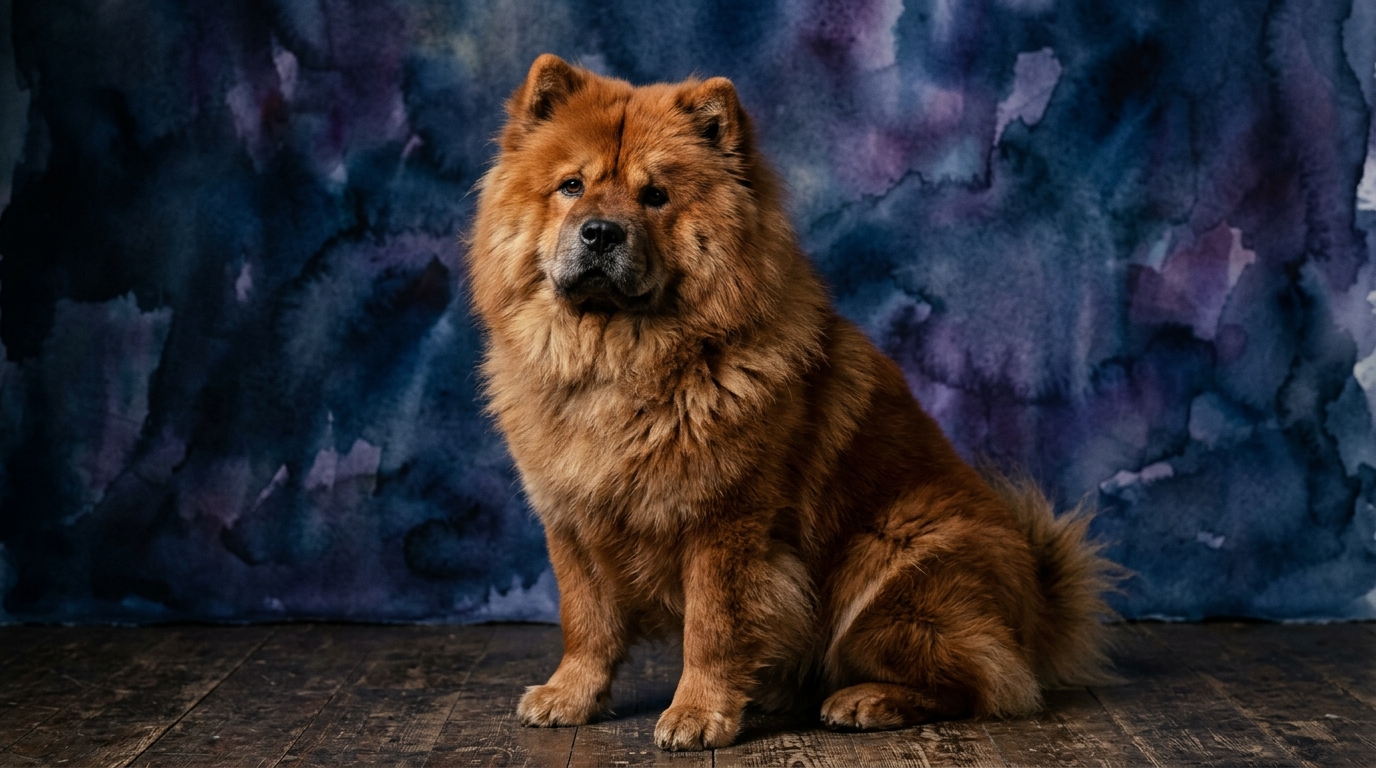
Side-by-Side IQ Profile: Boerboel vs. Chow Chow
At The Cosmic Pet Pet IQ Lab, we assess canine intelligence across five key dimensions: Problem Solving, Training Speed, Social Intelligence, Instinctive Drive, and Memory. Interestingly, both the formidable Boerboel and the regal Chow Chow register a consistent 3/5 across all these categories, suggesting a mid-range baseline capacity for learning and adaptation. However, these identical numerical scores belie profound differences in how these abilities manifest, largely shaped by their distinct historical roles and inherent temperaments.
The Boerboel, a South African mastiff type, was specifically bred as a farm guardian, needing to be versatile and responsive in protecting livestock and family. Their Problem Solving at 3/5 is often practical and situational, focused on threat assessment and devising direct solutions to perceived dangers, rather than abstract puzzles. Training Speed, also 3/5, reflects their capacity to learn commands efficiently, provided there's a clear, respected leader and consistent motivation. Their Social Intelligence at 3/5 enables them to read family dynamics and human intent well, though they are reserved with strangers. Instinctive Drive, a robust 3/5, is heavily weighted towards protection and territoriality, making them inherently vigilant. Memory, rated 3/5, ensures they retain learned behaviors, routines, and the identities of family and perceived threats over time.
In contrast, the ancient Chow Chow, originating from China, served varied roles from guardian to hunting dog and companion, fostering a more self-reliant disposition. Their Problem Solving at 3/5 often leans towards independent decision-making; they can figure things out but might prioritize their own comfort or agenda over human directives. Training Speed, also 3/5, indicates they learn at a moderate pace, but their independent spirit means compliance isn't always guaranteed, requiring patient, consistent motivation. Social Intelligence, 3/5, is characterized by deep loyalty to their inner circle but a profound aloofness towards outsiders, expressing affection subtly rather than overtly. Their Instinctive Drive, 3/5, encompasses a strong guarding tendency and a historical hunting/herding background, contributing to their self-sufficient nature. Memory, also 3/5, allows them to recall commands and relationships, though their selective attention may make it seem otherwise at times.
It's also noteworthy that the Chow Chow holds a Coren rank of #76, placing them towards the lower end of obedience and working intelligence as measured by Stanley Coren's methodology, which primarily assesses a dog's ability to learn and respond to commands. The Boerboel remains unranked by Coren, a common situation for newer or less widely distributed breeds. This distinction is crucial: while our IQ Lab scores reflect inherent cognitive capacity across a broader spectrum, Coren's ranking specifically highlights a breed's eagerness and speed to obey human directives, an area where the independent Chow Chow traditionally presents challenges.
Where the Boerboel Wins Cognitively
The Boerboel's cognitive strengths shine particularly in scenarios demanding cooperative problem-solving and acute situational awareness linked to protection. Their 3/5 problem-solving score is often expressed through practical applications; for instance, they might more readily assess a sudden noise as a potential intrusion and react appropriately, demonstrating a quicker cognitive link between stimulus and protective action. This differs from a Chow Chow's more internal assessment.
Their 3/5 training speed, combined with their inherent desire to work alongside a respected human, means they are generally more adept at understanding and applying complex sequences of commands for practical tasks. A Boerboel might more effectively learn to 'check' the perimeter or 'stay' in a specific location during an unfamiliar situation, interpreting these commands within the larger context of their guarding role. Their social intelligence also enables them to better anticipate human needs within a cooperative framework.
Furthermore, a Boerboel's social intelligence, while still 3/5, often translates into clearer, more direct communication of their intentions and needs to their human family. They are generally more transparent in their emotional state and more responsive to direct human intervention in social situations, making their cognitive processes more overtly aligned with human expectations for interaction and control.
Where the Chow Chow Wins Cognitively
The Chow Chow's cognitive advantages often lie in their profound independence and self-sufficiency. Their 3/5 problem-solving manifests as a capacity to devise their own solutions to situations, often without seeking human input or validation. For example, if a gate is ajar, a Chow Chow might quietly explore an escape route rather than alerting their owner, showcasing a self-directed cognitive process focused on personal outcome.
While their 3/5 training speed can be frustrating for obedience, this same independence allows for superior patience and sustained focus on self-chosen tasks. A Chow Chow might meticulously guard a specific spot for extended periods or patiently observe their surroundings with unwavering concentration, demonstrating a cognitive endurance that is less about human direction and more about intrinsic motivation. Their memory, at 3/5, often serves their own routines and preferences with remarkable consistency.
Their 3/5 social intelligence, though aloof, grants them a unique discernment. They are acutely aware of their environment and the subtle shifts in human behavior, often forming deep, quiet bonds with their chosen few. This means they might instinctively understand a family member's mood or presence without needing overt interaction, offering a form of companionship that values subtle recognition over boisterous engagement, a cognitive strength in understated connection.
Which is Easier to Train and Why
When considering ease of training, the Boerboel generally presents a more straightforward path for owners, despite both breeds scoring 3/5 in training speed. Boerboels, by nature of their working heritage, possess a strong desire to please a respected leader and operate within a structured hierarchy. Their protective instincts can be effectively channeled into focused training exercises, making them receptive to learning commands that enhance their role as a guardian. They typically respond well to consistent, firm, but fair positive reinforcement, viewing training as a cooperative venture.
The Chow Chow, conversely, poses a greater challenge in training, largely due to their inherent independence and less pronounced desire to perform for human approval. While they are certainly capable of learning, their 3/5 training speed is often hindered by their selective willingness to comply. A Chow Chow might fully understand a command but choose not to execute it if they don't perceive it as beneficial or if it conflicts with their current preference. This requires an owner to cultivate immense patience, employ highly motivating rewards, and understand that consistency must be paired with respect for their dog's self-possessed nature. Their Coren rank of #76 directly reflects this challenge in traditional obedience.
Real behavioral differences underscore this distinction. A Boerboel is more likely to engage in enthusiastic repetitions, eager for the next instruction from their owner, driven by their social intelligence and instinctive drive to protect. A Chow Chow, however, might perform a command once perfectly, then decide that was sufficient, or simply walk away if bored, showcasing their independent problem-solving and aloof social intelligence. Training a Chow Chow is often about convincing them, not simply instructing them, a cognitive negotiation rather than a direct command.
Which Suits Active Owners vs. Relaxed Owners
For owners with an active lifestyle and a desire for a highly engaged companion, the Boerboel is the more suitable choice. Their 3/5 instinctive drive, combined with their physical prowess, necessitates regular, structured exercise and mental stimulation. This isn't just about physical activity; Boerboels thrive on having a 'job,' whether it's obedience training, protection work, or participating in dog sports. An active owner who provides consistent leadership and integrates their dog into daily activities will find the Boerboel's cognitive abilities, particularly their problem-solving and memory, flourish when given purpose and direction. They need an owner who is cognitively 'active' in guiding them.
The Chow Chow, with their more reserved temperament, often suits a relaxed owner, but this 'relaxed' refers more to the pace of daily life rather than a lack of engagement. While they enjoy moderate walks, they are not high-energy athletes requiring hours of intense physical exertion. Their cognitive needs are met through quiet companionship, independent exploration of their immediate environment, and predictable routines. A relaxed owner for a Chow Chow is primarily one who possesses immense patience, respects their independent nature, and understands that their social intelligence thrives on quiet devotion rather than constant interaction. They need an owner who is cognitively 'relaxed' in their expectations, allowing the Chow Chow space to be themselves.
Ultimately, matching a dog's cognitive profile to an owner's lifestyle is key. The Boerboel's 3/5 problem-solving and training speed are best utilized by an owner who provides challenges and structure, allowing them to think and work. The Chow Chow's identical scores, however, are best nurtured by an owner who appreciates their self-sufficiency and offers a calm environment where their independent thoughts and actions are respected, without demanding constant active participation.
The Verdict
Choose a Boerboel if you seek a vigilant, cooperative guardian who thrives on structured training, physical activity, and a clear leadership role within the family. Their cognitive strengths are best leveraged by owners prepared to provide consistent guidance and integrate them deeply into their daily lives.
Opt for a Chow Chow if you appreciate an independent, dignified companion who offers quiet loyalty and requires an owner with immense patience and a deep respect for their self-sufficient nature. Their unique intelligence flourishes with calm, consistent handling and an understanding that they often prefer to make their own choices.
🧠 Find Your Pet's IQ Score
Our Pet IQ Lab assessment covers 25+ tests across 5 cognitive dimensions — personalized to your breed.
Take the Full IQ Test →Frequently Asked Questions
Do Boerboels and Chow Chows learn new commands at the same rate?
While both breeds score 3/5 in training speed, Boerboels generally assimilate commands more readily when motivated by their bond with a respected owner. Chow Chows learn just as quickly but often require more persuasive incentives and may choose to comply only when they perceive value in the action.
How does their social intelligence differ with strangers?
Boerboels, with their protective instincts, are typically wary of strangers but can be accepting once introduced by their owner, often assessing new people for threat potential. Chow Chows are inherently aloof with outsiders, preferring to keep their distance and showing little interest in interaction beyond their immediate family.
Can a Chow Chow be as protective as a Boerboel?
Both breeds possess strong guarding instincts, scoring 3/5 in instinctive drive, but they manifest differently. A Boerboel's protection is often more active and direct, involving physical presence and deterrence, while a Chow Chow's guarding tends to be more subtle, relying on their imposing presence and reserved demeanor to deter perceived threats.