
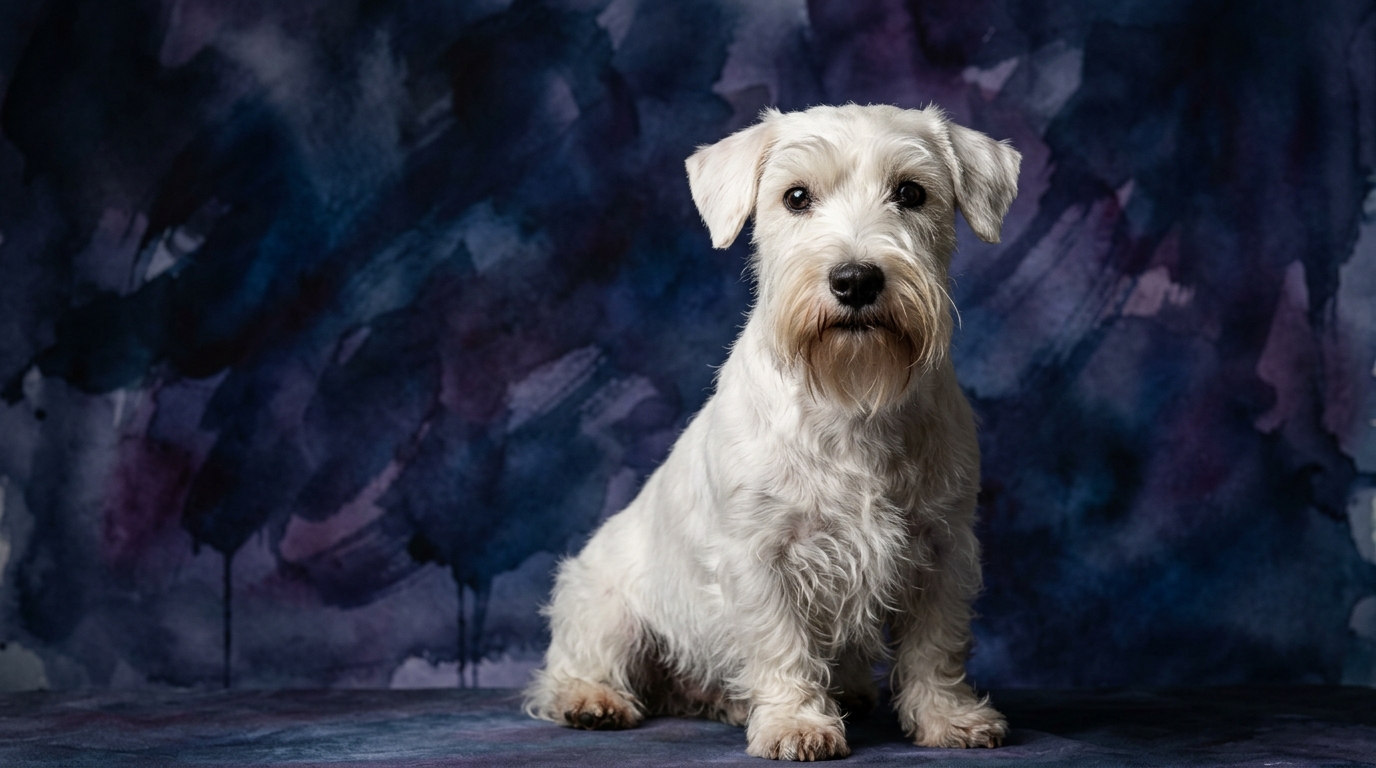
Side-by-Side IQ Profile: Boerboel vs. Sealyham Terrier
Originating from South Africa, the Boerboel, a large working dog, was developed to guard farms. Its 3/5 problem-solving manifests in its ability to independently assess potential threats, evaluate situations involving strangers or other animals, and decide on appropriate protective actions. Training speed at 3/5 suggests they learn new commands and routines effectively with consistent, confident leadership, often driven by a desire to please their primary family unit. Social intelligence, also 3/5, focuses on their discerning nature; they form deep bonds with their family but are reserved and watchful with outsiders, reading intentions carefully. Their 3/5 instinctive drive is overwhelmingly protective, coupled with a strong territorial sense. Memory at 3/5 means they retain training, recall past interactions with individuals, and remember routines and boundaries over time.
Hailing from Wales, the Sealyham Terrier, a smaller terrier, was bred for hunting vermin in challenging terrain. Its 3/5 problem-solving capability is expressed through tenacious pursuit, finding ingenious ways to navigate obstacles like rocks or burrows, and persistent digging to reach quarry. A 3/5 training speed indicates they can pick up commands, but their independent terrier spirit often means they require engaging, reward-based methods to maintain focus and overcome their inherent stubbornness. Social intelligence, at 3/5, reflects their bold and sometimes feisty interactions, capable of forming strong bonds with their human companions while maintaining a certain self-assured independence, often showing a keen awareness of their surroundings and potential “targets.” Their 3/5 instinctive drive is primarily a strong prey drive, expressed through digging, tracking, and an eagerness to pursue small animals. Memory at 3/5 enables them to remember the location of interesting scents, favored digging spots, and past training cues, even if they sometimes choose to “forget” a command in favor of a more pressing terrier pursuit.
Where the Boerboel Excels Cognitively
The Boerboel's cognitive strengths lie particularly in its capacity for complex situational assessment and nuanced social discernment. With its 3/5 problem-solving and social intelligence, a Boerboel excels at evaluating ambiguous human interactions, distinguishing between a friendly visitor and a potential intruder based on subtle cues. Their working background means they can process multiple sensory inputs to make independent judgments about safety and security, often without direct command. This breed demonstrates a sustained focus on guardianship, requiring an understanding of territory, family members, and external threats. Their memory (3/5) supports this by allowing them to recall specific individuals and past events, contributing to their reliable protective instincts and consistent behavior within established boundaries.
Where the Sealyham Terrier Excels Cognitively
The Sealyham Terrier's distinct cognitive advantages stem from its independent hunting heritage, emphasizing tenacity and autonomous task completion. Its 3/5 problem-solving shines in situations requiring persistent, self-directed effort to achieve a goal, such as finding a hidden toy or navigating a complex environment to reach a perceived “prey.” This breed displays remarkable ingenuity in overcoming physical obstacles, often outsmarting barriers through sheer determination rather than waiting for human direction. Their instinctive drive (3/5) fuels a focused, relentless pursuit, and their memory (3/5) plays a role in recalling patterns, scents, and successful strategies for their terrier-specific endeavors, making them adept at remembering where to search for the most exciting “treasures” or how to bypass a familiar barrier.
Training Approaches: Which is Easier and Why?
Despite both breeds scoring 3/5 in training speed, their approaches to learning and cooperation differ significantly based on their intrinsic motivations. The Boerboel, as a working guardian, typically responds well to firm, consistent leadership and a clear understanding of expectations. Their desire to be a valued member of the family unit and their inherent respect for a confident handler means they often strive to comply, making them generally receptive to structured training. Their social intelligence (3/5) helps them understand their role within the family hierarchy, which aids in obedience. In contrast, the Sealyham Terrier's independent hunting spirit means training can be more challenging. While they are capable of learning at a 3/5 pace, their strong instinctive drive (3/5) and tendency towards self-directed problem-solving mean they might prioritize an interesting scent or a potential “hunt” over a command. Training a Sealyham requires creativity, high-value rewards, and patience to overcome their independent streak, often turning training into a game to capture their focus rather than relying solely on their desire to please.
Matching Breeds to Owner Lifestyles
The choice between a Boerboel and a Sealyham Terrier also depends heavily on an owner's lifestyle. The Boerboel, while not requiring constant high-impact exercise, thrives with an owner who can provide consistent mental stimulation and structured daily routines. Their 3/5 instinctive drive for protection means they need purposeful activities, regular training, and clear boundaries to channel their energy. Owners who are active in the sense of being present, providing strong leadership, and engaging in consistent, moderate walks or yard time would suit a Boerboel. They are not dogs for extremely relaxed, hands-off owners, as their intelligence and protective nature require active management and socialization.
The Sealyham Terrier, despite its smaller size, is a robust and energetic dog that benefits from an owner who can provide outlets for its 3/5 instinctive drive and problem-solving skills. They are well-suited for active owners who enjoy engaging in games, earthdog trials, or long walks where their keen senses can be utilized. Their need for mental engagement to prevent boredom and destructive behaviors (like excessive digging) means a relaxed owner who doesn't provide consistent interaction or opportunities for exploration might find them challenging. While they enjoy downtime with their family, their terrier nature requires an owner who can keep up with their curious, tenacious spirit.
The Verdict
Opt for a Boerboel if you seek a loyal, discerning guardian who thrives under confident leadership and consistent routine, valuing a dog that applies its intelligence to family protection and situational awareness.
Select a Sealyham Terrier if you appreciate a spirited, tenacious companion with an independent streak, who will engage its problem-solving and instinctive drives in playful exploration and persistent endeavors.
🧠 Find Your Pet's IQ Score
Our Pet IQ Lab assessment covers 25+ tests across 5 cognitive dimensions — personalized to your breed.
Take the Full IQ Test →Frequently Asked Questions
Do Boerboels and Sealyham Terriers express their social intelligence similarly?
No, despite both scoring 3/5, their social intelligence differs. Boerboels apply theirs to discerning interactions and forming deep family bonds, being reserved with strangers. Sealyham Terriers display theirs through bold, sometimes independent interactions, often with a focus on their immediate environment and playful engagement with their trusted circle.
Given their identical problem-solving scores, how can I differentiate their cognitive abilities?
Their problem-solving (3/5) manifests differently due to their breed purposes. A Boerboel's problem-solving focuses on assessing threats and making protective decisions, while a Sealyham Terrier's involves tenacious, independent strategies for hunting and navigating obstacles.
Which breed is more adaptable to different living environments based on their intelligence profile?
Both breeds, with their 3/5 cognitive scores, can adapt, but with caveats. The Boerboel's protective instincts require space and clear boundaries, making them better suited for secure homes. The Sealyham Terrier's tenacity and prey drive mean they can thrive in various settings if their mental and physical needs for engagement are consistently met, requiring secure containment to prevent wandering.