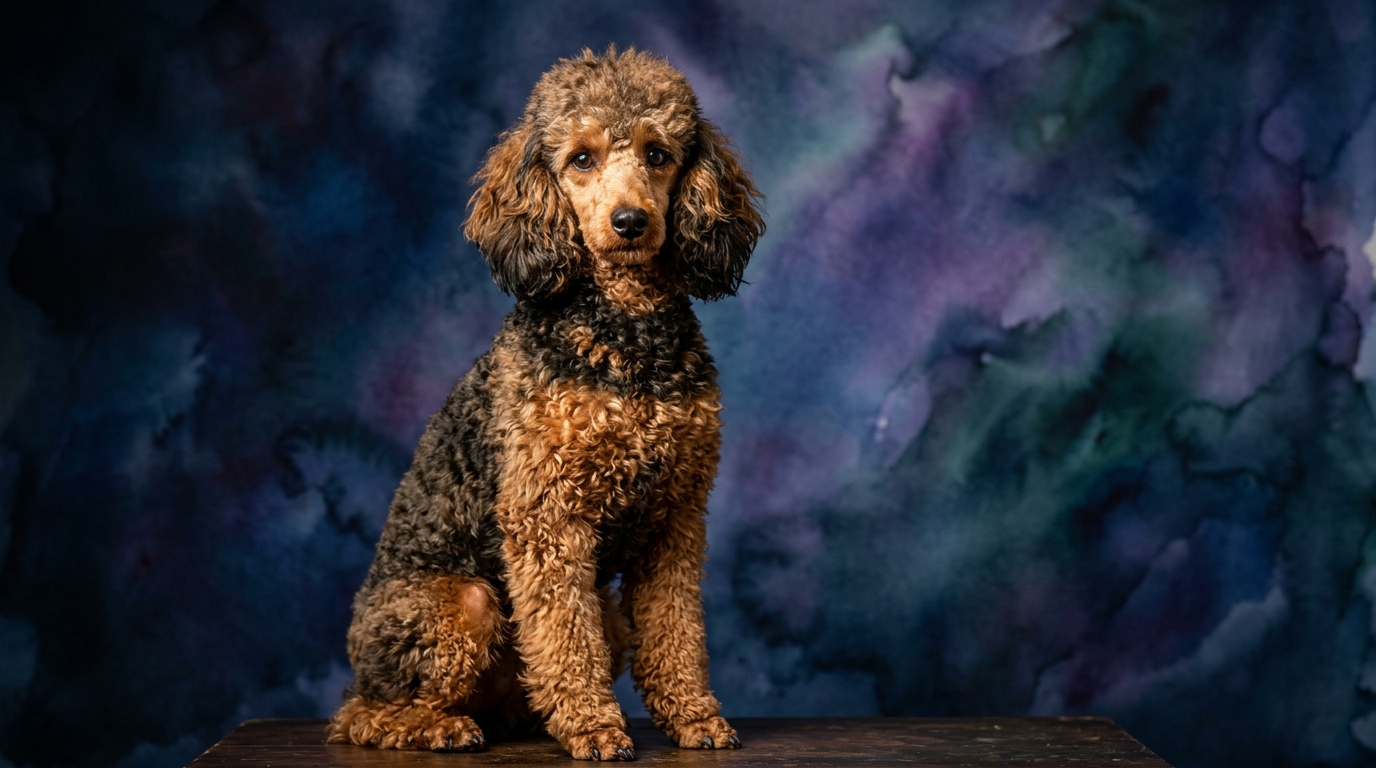
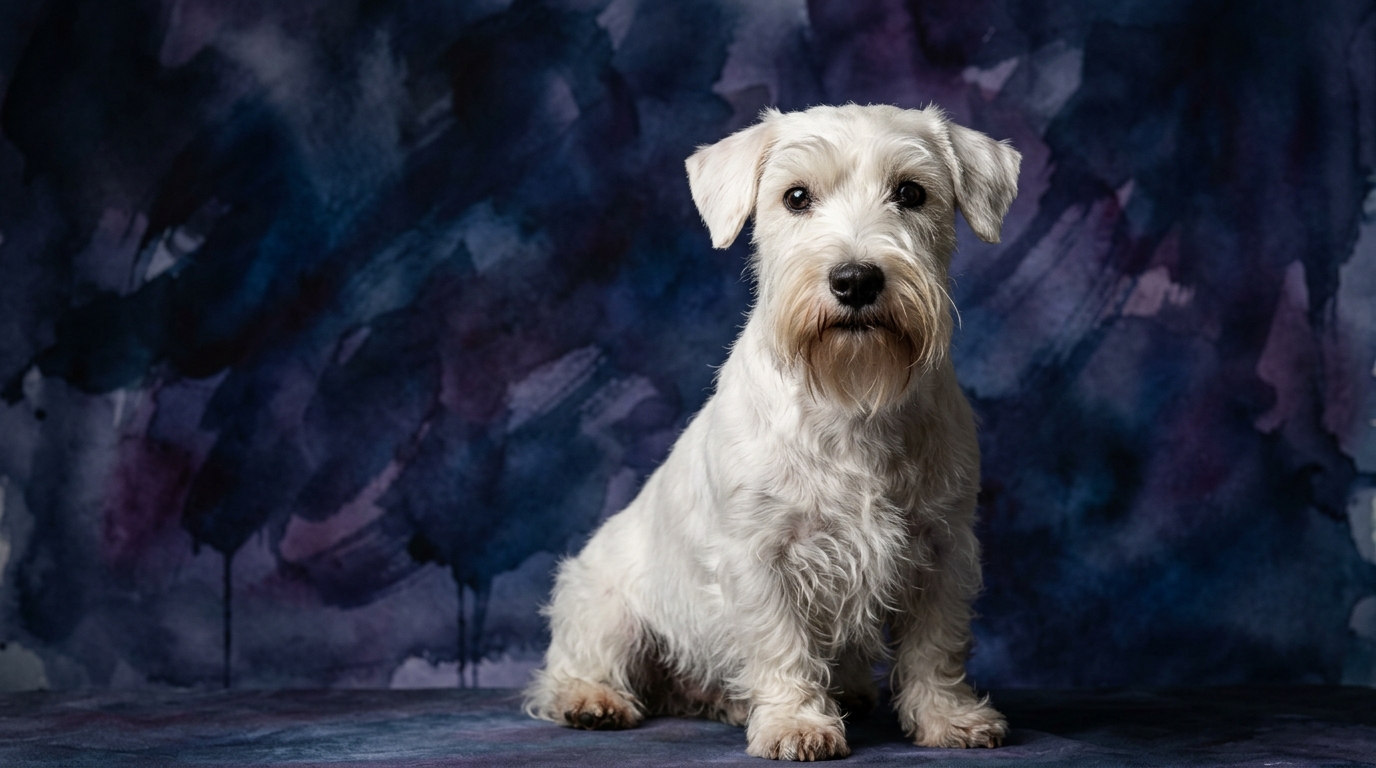
Side-by-Side IQ Profile: Poodle vs. Sealyham
The Cosmic Pet Pet IQ Lab employs five key dimensions to evaluate canine intelligence, offering a granular perspective beyond general labels. Here's how the Standard Poodle and Sealyham Terrier measure up.
Poodle (Standard): This breed consistently ranks high in canine cognition, holding Coren's #2 spot for working and obedience intelligence. Its Problem Solving is rated 5/5, indicating a remarkable capacity for independent thought, analyzing novel situations, and devising effective solutions without direct human instruction, adept at navigating complex environments. Training Speed is also 5/5, signifying rapid acquisition of new commands and behaviors, often requiring few repetitions; they grasp concepts quickly and reliably apply learned tasks. Social Intelligence scores 5/5, demonstrating a profound understanding of human cues, emotions, and social structures, highly attuned to their environment and intentions, facilitating strong bonds and cooperation. Instinctive Drive, at 4/5, means they possess a significant drive for engagement, often manifesting as a desire to retrieve, participate in activities, or work alongside humans, typically channeled into productive tasks. Finally, Memory is 5/5, an outstanding ability to retain learned information, commands, and experiences over extended periods, recalling complex sequences and past interactions with remarkable accuracy.
Sealyham Terrier: This Terrier, while not Coren-ranked, presents a distinct cognitive profile. Its Problem Solving is rated 3/5, indicating a moderate capacity for independent thought; they solve practical problems, especially terrier-related ones, but may need more trial-and-error or human guidance for abstract tasks. Training Speed is 3/5, implying a moderate pace of learning new commands, requiring more patience, repetition, and consistent motivation compared to breeds with higher scores. Social Intelligence is 3/5, reflecting a functional understanding of human cues and social dynamics, though perhaps less nuanced or immediately responsive, forming bonds but exhibiting a more independent streak. Instinctive Drive stands at 3/5, a moderate but focused drive, primarily rooted in their terrier heritage for digging, scenting, and pursuing small prey; this drive is present but generally manageable. Memory also scores 3/5, representing a functional memory for learned behaviors and routines, remembering commands but potentially less precision with complex sequences or less frequently reinforced information.
Where the Standard Poodle Wins Cognitively
The Standard Poodle's cognitive profile consistently demonstrates superior adaptability and abstract reasoning. Their 5/5 Problem Solving score means they excel at navigating novel situations, such as figuring out intricate puzzle toys or devising strategies to open latches, often with minimal prior exposure. This capacity for independent reasoning makes them adept at problem-solving beyond simple learned behaviors.
Their perfect 5/5 in Training Speed and Memory means they acquire and retain complex multi-step commands with remarkable efficiency. This translates to an ability to learn advanced obedience routines, participate in intricate dog sports like agility or rally, and even grasp concepts beyond basic commands, such as differentiating objects by name. The Standard Poodle's 5/5 Social Intelligence allows for an unparalleled attunement to human emotional states and subtle cues, making them highly responsive companions capable of anticipating needs or adjusting their behavior based on perceived human intentions. This facilitates a fluid, cooperative partnership in diverse settings.
Where the Sealyham Terrier Wins Cognitively
While the Sealyham Terrier's scores are consistently moderate, their cognitive profile offers distinct advantages, particularly in situations where independent tenacity and focused instinctive application are valued. Their 3/5 Instinctive Drive, while lower than some terriers, is channeled effectively into tasks requiring determination, such as scent tracking or persistent exploration of their environment, without overwhelming intensity.
Their moderate Problem Solving (3/5) is often applied practically, enabling them to ingeniously work through physical obstacles, like finding a way under a fence or extracting a hidden toy, driven by their inherent curiosity rather than abstract reasoning. This practical problem-solving is resilient and purpose-driven. The Sealyham's 3/5 Social Intelligence can translate into a charming self-sufficiency, meaning they are less prone to separation anxiety or excessive dependency. They form strong bonds but retain an independent spirit, which can be a "win" for owners seeking a companion that is affectionate but also comfortable in its own company.
Which Is Easier to Train and Why
The Standard Poodle is unequivocally easier to train, a direct consequence of its 5/5 Training Speed, 5/5 Problem Solving, and 5/5 Memory. They grasp new commands in very few repetitions, often understanding the concept behind a cue rather than just rote memorization. Their high social intelligence means they are eager to please and highly attuned to human feedback, making them exceptionally biddable. They readily generalize learned behaviors to new environments and remember them long-term, accelerating progress in everything from basic manners to advanced competitive disciplines.
Conversely, the Sealyham Terrier, with its 3/5 scores across Training Speed, Problem Solving, and Memory, requires a more patient and consistent approach. While capable of learning, they may take more repetitions to solidify new behaviors and can exhibit a characteristic terrier independence. Their instinctive drive, while moderate, can sometimes override immediate obedience, especially if a captivating scent or potential "prey" distraction is present. Training a Sealyham often involves finding creative ways to motivate them and making the learning process engaging to counter their more self-directed nature.
Which Suits Active Owners vs. Relaxed Owners
Standard Poodles, with their robust 4/5 Instinctive Drive and 5/5 Problem Solving, thrive with active owners who can provide consistent mental and physical engagement. Their cognitive capacity demands stimulation, making them ideal for individuals interested in dog sports like agility, obedience, or scent work, or those who enjoy regular, varied outdoor adventures. A Poodle's mind needs to be challenged as much as its body, meaning a relaxed owner who neglects this could inadvertently foster boredom-related behaviors.
Sealyham Terriers, with their more moderate 3/5 Instinctive Drive and overall cognitive profile, can suit both active and moderately relaxed owners, provided their core terrier needs are met. While they enjoy walks, playtime, and opportunities to sniff and explore, their energy levels are generally less demanding than a Standard Poodle's. A Sealyham's "active" needs lean more towards focused engagement, like short bursts of play or scent games, rather than extensive, high-impact exercise. Relaxed owners who appreciate a dog with an independent streak and are committed to consistent, engaging training sessions rather than constant activity can find a wonderful match.
The Verdict
Opt for a Standard Poodle if you seek a highly biddable, intellectually versatile companion eager for complex training, dog sports, and deep, cooperative interaction. Their cognitive prowess means they thrive on consistent mental engagement and excel in structured learning environments.
Select a Sealyham Terrier if you appreciate an independent spirit, a moderate activity level, and a practical problem-solver with a charming tenacity, and are prepared for a training journey that values consistency and engaging motivation.
🧠 Find Your Pet's IQ Score
Our Pet IQ Lab assessment covers 25+ tests across 5 cognitive dimensions — personalized to your breed.
Take the Full IQ Test →Frequently Asked Questions
Do Sealyham Terriers get bored easily if not mentally stimulated?
While not as overtly demanding as a Standard Poodle, a Sealyham Terrier benefits significantly from mental engagement. Without opportunities to explore, scent, or solve simple problems, their moderate instinctive drive can lead to boredom behaviors like excessive digging or barking.
Can a Standard Poodle adapt to a quiet home, despite its high IQ scores?
A Standard Poodle can adapt to a quiet home, but their high cognitive needs persist. Even in a calm environment, they require consistent mental challenges through puzzle toys, training sessions, or interactive games to prevent understimulation and ensure their well-being.
Is the Sealyham Terrier's lower social intelligence a disadvantage for family life?
The Sealyham Terrier's moderate social intelligence is not inherently a disadvantage for family life; rather, it suggests a more self-sufficient nature. They form strong bonds but might be less overtly demonstrative or attuned to subtle human cues than a Poodle, making them excellent companions for families who appreciate a dog with a bit more independence.