
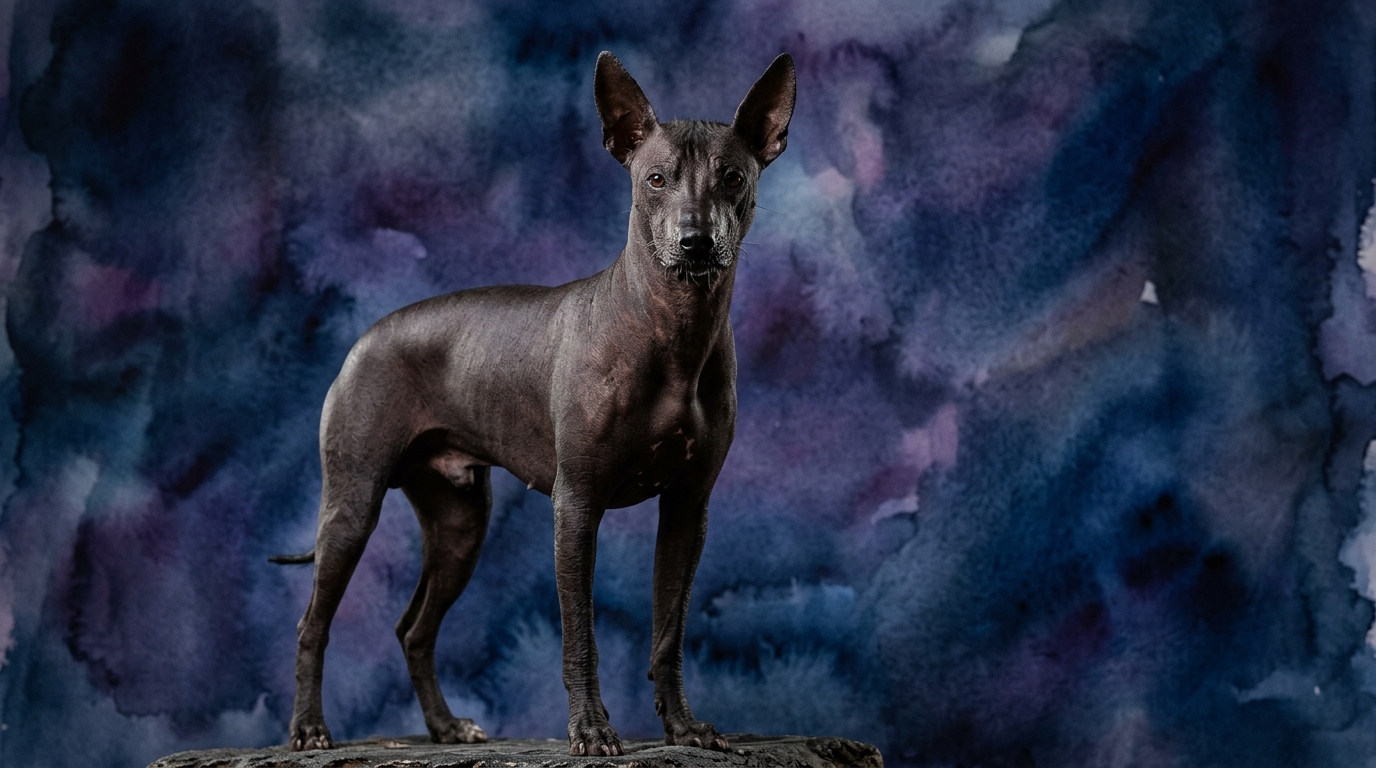
Side-by-Side Cognitive Profiles: Decoding Identical Scores
Despite their vastly different appearances and historical roles, both the Boerboel and the Xoloitzcuintli register a 3/5 in Problem Solving within The Cosmic Pet IQ Lab. For the Boerboel, this often translates into a strategic assessment of their territory, figuring out how to circumvent obstacles to patrol boundaries, or understanding the most direct route to intercede a perceived threat. Their solutions are often robust and direct, leveraging their physical presence and determination. The Xolo, conversely, might apply this 3/5 to navigating complex home environments with quiet agility, finding optimal comfort spots, or subtly influencing their human companions for attention, demonstrating a more nuanced, observational approach.
In Training Speed, both breeds also score 3/5. The Boerboel, a breed bred for serious protection, absorbs commands efficiently but may require significant consistency and firm, fair leadership to overcome their inherent independence and guardian impulses. Their learning speed is good, but their application of commands can be conditional on their assessment of the situation's safety or necessity. The Xoloitzcuintli, while equally capable of learning at this pace, often requires a more gentle and patient approach. Their sensitive nature means they thrive on positive reinforcement and clear communication, potentially shutting down if training methods are harsh or inconsistent, making trust a crucial component of their learning curve.
Social Intelligence for both breeds is also rated at 3/5, yet its expression varies significantly. The Boerboel exhibits a social intelligence finely tuned to family dynamics and territorial defense; they are adept at discerning who belongs and who doesn't, often displaying a reserved but acutely observant nature with strangers. Their understanding of social hierarchy within their pack is strong, facilitating their protective role. The Xoloitzcuintli's social intelligence, while equally discerning, is often focused inwards on their immediate human family, forming deep, almost intuitive bonds. They are masters at reading the subtle moods and emotions of their chosen people, often appearing aloof or indifferent to outsiders as a protective mechanism for their inner circle.
The Instinctive Drive score of 3/5 for both breeds further highlights their divergent evolutionary paths. The Boerboel's drive is overwhelmingly channeled into guardianship: a potent territoriality, an unwavering vigilance, and a readiness to protect their family and property. This instinct manifests as a constant, low-level awareness of their surroundings and a strong impulse to act when perceived threats arise. The Xoloitzcuintli, with its ancient lineage, displays a more primal, self-preservationist drive. This can include a strong prey drive for small animals, an innate wariness of the unknown, and a deep-seated need for comfort and warmth, reflecting their historical role as companions and survivalists in varied environments.
Finally, Memory, at 3/5 for both, underpins their capacity for learning and adaptation. The Boerboel demonstrates a robust memory for past interactions, routes, and established boundaries, which directly supports their complex protective duties and reinforces their understanding of their domain. This memory aids in recognizing repetitive patterns and potential threats. The Xoloitzcuintli likewise retains training well and remembers specific routines, people, and comfort zones. This strong memory contributes to their adaptability within a consistent home environment and allows them to form lasting associations, both positive and negative, with people and experiences.
Where the Boerboel's Cognition Shines
The Boerboel's cognitive strengths are intrinsically linked to its formidable guardian role. Their problem-solving and instinctive drive, while numerically similar to the Xolo, are applied with a distinct strategic depth in matters of security. They excel at assessing complex environmental threats, discerning true dangers from benign occurrences, and formulating effective, often physically assertive, responses. This breed's social intelligence, though selective, is exceptionally effective in identifying intruders and protecting their family unit, demonstrating a keen understanding of their 'pack' and its vulnerabilities that few other breeds match. Their memory for boundaries and past incidents further sharpens their protective acumen, allowing them to anticipate and preempt potential issues.
Where the Xoloitzcuintli's Cognition Excels
The Xoloitzcuintli's cognitive brilliance lies in its nuanced social and emotional intelligence, particularly within its chosen human family. Their ability to read subtle human cues and respond with profound empathy forges an incredibly deep bond, making them masters of emotional companionship. Their problem-solving, rather than focusing on overt physical solutions, often involves clever ways to achieve comfort, warmth, or attention, demonstrating a keen observational wit. This ancient breed's instinctive drive, rooted in survival and self-preservation, contributes to a resilient and adaptable cognitive makeup, allowing them to thrive in various domestic settings while maintaining a unique, independent spirit.
Training Dynamics: Boerboel vs. Xoloitzcuintli
While both breeds share a 3/5 Training Speed, the practicalities of training diverge significantly due to their inherent temperaments and physical attributes. The Boerboel, with its immense size, strength, and potent guardian instincts, demands an owner who can provide unwavering consistency, clear leadership, and extensive early socialization. Their independent nature means they often weigh commands against their own assessment of a situation, requiring a trainer who understands how to channel their drives rather than simply suppress them. Training a Boerboel is a commitment to managing a powerful, protective animal, where consistency and respect for their intellect are paramount.
The Xoloitzcuintli, conversely, presents a different set of training considerations. Their sensitivity means they are highly responsive to their environment and human emotions, making harsh training methods counterproductive; such approaches can cause them to withdraw and become difficult to engage. They thrive on positive reinforcement, patience, and building a deep foundation of trust. While they possess an independent streak, their smaller size and less overwhelming physical presence can make them seem 'easier' to manage than a Boerboel for the average owner, provided their unique sensitivity is understood and respected. The challenge with a Xolo often lies in nurturing their confidence and ensuring they feel secure enough to engage fully in the training process.
Lifestyle Match: Active vs. Relaxed Owners
For owners seeking an active, engaged companion with a significant 'job,' the Boerboel is a clear choice. This breed requires substantial physical exercise to maintain its powerful physique and robust mental stimulation to channel its strong working drives. They are not dogs content with minimal activity; they thrive on structured engagement, training, and having a defined role, often involving guarding or protection. Their inherent vigilance means they are always mentally 'on duty,' necessitating an owner who can consistently provide an outlet for this energy and focus.
The Xoloitzcuintli can suit owners ranging from moderately active to more relaxed, provided they understand the breed's need for companionship and consistent mental engagement. While they enjoy walks and playtime, their exercise needs are generally moderate, and they are equally content to lounge and be close to their family. Their unique skin and temperature regulation mean they are not suited for extensive outdoor exposure, making them primarily indoor companions. They thrive on quiet companionship and mental stimulation through puzzle toys or gentle training, appealing to those who appreciate a devoted, calm presence without the demands of a high-octane working breed.
The Verdict
Choose a Boerboel if you are an experienced, assertive owner seeking a formidable, dedicated guardian who thrives on structured engagement and can handle their immense strength and powerful protective drives.
Choose a Xoloitzcuintli if you appreciate a sensitive, deeply loyal, and ancient companion, valuing a unique, quiet bond and comfortable with a dog that is discerning with affection and requires gentle, consistent guidance.
🧠 Find Your Pet's IQ Score
Our Pet IQ Lab assessment covers 25+ tests across 5 cognitive dimensions — personalized to your breed.
Take the Full IQ Test →Frequently Asked Questions
Do Boerboels and Xolos really have the same intelligence?
Our IQ Lab scores indicate identical cognitive capacities across five key dimensions for both breeds, suggesting a comparable aptitude for learning and processing information. However, their distinct histories and physical forms mean these capacities manifest in very different behavioral expressions and applications.
How does a Boerboel's problem-solving differ from a Xolo's, given the same score?
A Boerboel's problem-solving often involves assessing environmental threats or navigating physical obstacles with strength and persistence, driven by their guardian role. A Xolo's might focus on social navigation within the family or finding optimal comfort, utilizing observation and subtle manipulation rather than overt power.
Is the Xoloitzcuintli's sensitivity a cognitive trait?
While not a direct cognitive dimension, sensitivity heavily influences a Xolo's social intelligence and training speed. Their keen awareness of their environment and human emotions allows for deep bonds but also necessitates a gentle training approach, as they can withdraw if handled too harshly.