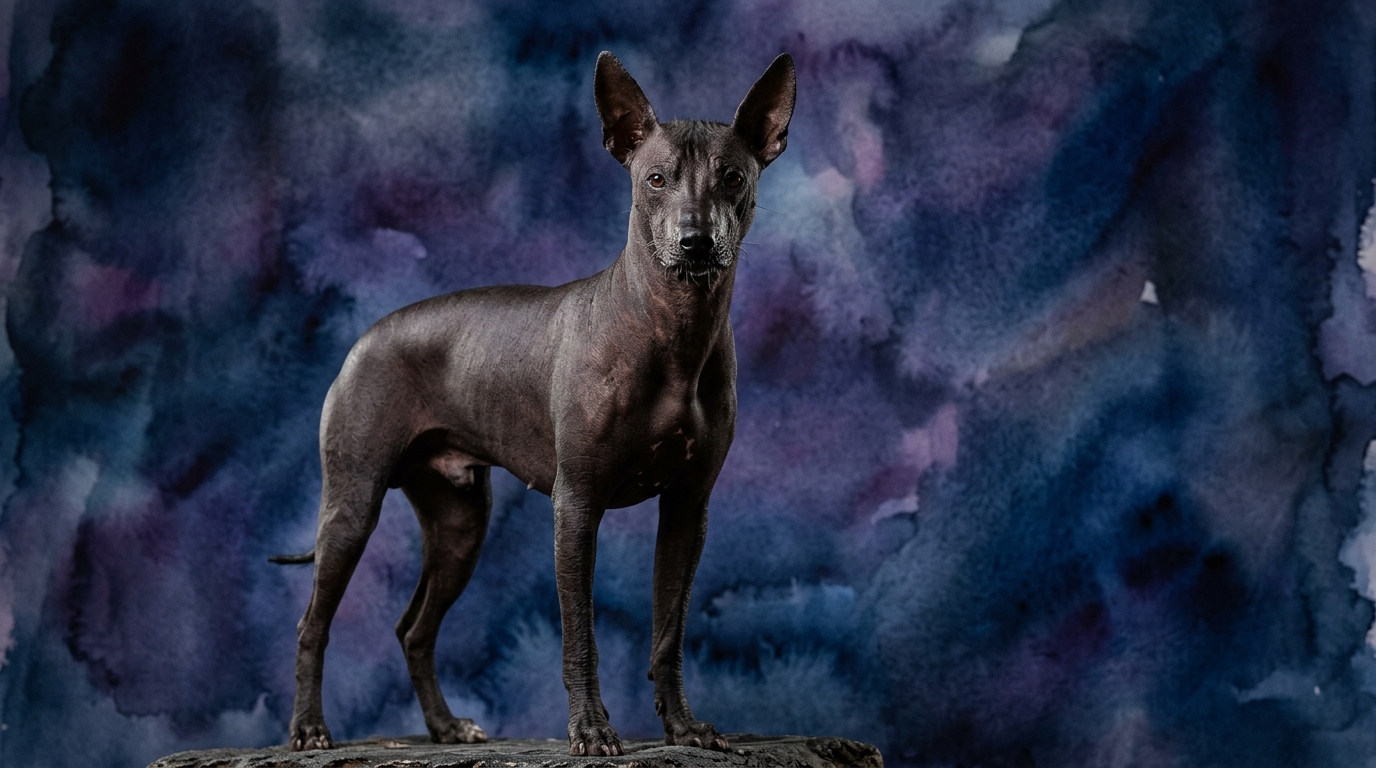
Xoloitzcuintli at a glance
| IQ Rank / Score | 16/25 |
|---|---|
| Trainability | ★★★☆☆ (3/5) |
| Social Intelligence | ★★★★☆ (4/5) |
| Lifespan | 11-14 years |
| Shedding | Low to moderate |
| Exercise Needs | Moderate (30-45 min/day) |
| Origin | Mexico |
The Xoloitzcuintli: An Ancient Mindset Unveiled
Originating from Mexico, the Xoloitzcuintli is a breed that predates modern dog breeding, its lineage traceable back thousands of years. This antiquity has profoundly shaped its intelligence, fostering a cognitive profile rooted in survival, keen observation, and deep social bonds with its chosen family. Unlike many modern breeds bred for specific tasks, the Xolo's intelligence evolved for general self-sufficiency and an intuitive understanding of its environment and pack dynamics.
Their lack of inclusion in Coren's original 138-breed ranking doesn't diminish their mental prowess; rather, it highlights their unique evolutionary path outside Western dog domestication trends. Xolos often display an intelligence that is less about flashy tricks and more about practical wisdom, self-awareness, and an almost psychic attunement to their human companions. They are thoughtful observers, processing information with a quiet intensity before acting.
Unveiling Xolo Cognitive Uniqueness: Ancient Instinctive Acuity & Familial Attunement
The primary angle for the Xoloitzcuintli's intelligence is its **Ancient Instinctive Acuity & Familial Attunement**. This encompasses their highly developed senses, their inherent problem-solving skills for personal comfort and safety, and their profound ability to read and bond with their human family. Xolos possess an almost primal intelligence, honed over millennia, allowing them to navigate complex social cues and environmental challenges with discernment.
They are not outwardly demonstrative in their intelligence like some eager-to-please breeds; instead, their cognitive strengths manifest in subtle ways: an uncanny ability to anticipate their owner's moods, a sophisticated understanding of household routines, and an independent spirit that encourages them to assess situations before relying solely on human direction. Their intelligence is less about command following and more about understanding the 'why' behind actions, leading to a thoughtful and often self-initiated response. This makes them highly intuitive companions, but also can mean they are not always easily swayed by arbitrary commands, preferring to engage their own discerning intellect.
A Glimpse into the Past: Xolo Cognition Through History
A surprising historical fact about the Xoloitzcuintli’s cognition is their revered role in ancient Mesoamerican cultures as **spiritual guides and protectors of the underworld**. They were believed to accompany the souls of the dead on their journey through Mictlan, the Aztec underworld. This profound societal and spiritual role suggests that the Xolo's ancestors possessed an exceptional ability to form deep, empathetic bonds with humans, discerning emotional states and offering a profound sense of companionship and security even in the face of death. This wasn't merely a symbolic belief; it points to a practical recognition by ancient peoples of the Xolo's keen social intelligence and capacity for emotional connection, elevating them far beyond simple pets. Their intelligence was perceived as a bridge between worlds, underscoring their sensitivity and intuitive understanding of human existence.
The Xolo's IQ Profile: A Deeper Dive
**Problem Solving (4/5):** Xolos are resourceful and intelligent problem-solvers, particularly when the solution directly benefits them or ensures their comfort and safety. They excel at figuring out how to open doors, manipulate objects to reach desired items, or navigate complex environments. Their independence often fuels this problem-solving ability, as they are not always waiting for human direction. If a Xolo wants something, they will often figure out a clever way to get it, demonstrating significant cognitive flexibility.
**Training Speed (3/5):** While intelligent, Xolos are not always fast to obey in the traditional sense, earning them a moderate training speed score. They learn quickly but can be highly independent and discerning, sometimes appearing 'stubborn' if they don't see the value in a command or if the training method is harsh or inconsistent. They respond best to positive reinforcement, patience, and understanding, forming strong associations quickly once trust is established. Once they understand 'why' they are doing something and trust their trainer, their learning curve accelerates.
**Social Intelligence (4/5):** Xolos possess exceptional social intelligence, particularly within their immediate family. They are acutely attuned to human emotions, body language, and subtle cues, often anticipating their owner's needs or moods. They are typically reserved and discerning with strangers, taking time to assess new individuals and situations before offering their trust. This isn't aloofness, but rather a display of their intelligence in carefully evaluating social interactions for safety and compatibility, a trait passed down from their ancient guarding instincts.
**Instinctive Drive (4/5):** The Xolo's ancient heritage is strongly reflected in its high instinctive drive. They have keen senses, excellent observational skills, and a natural guarding instinct, making them alert watchdogs. Many Xolos also possess a notable prey drive, which can manifest as an interest in small animals. Their intelligence is heavily influenced by these drives, leading them to be highly aware of their surroundings and responsive to perceived threats or opportunities for ancestral behaviors like hunting or patrolling.
**Memory (4/5):** Xolos have an impressive memory, recalling commands, routines, places, people, and experiences with remarkable clarity. This contributes to their consistency in learned behaviors and their ability to navigate complex social and physical environments. They remember both positive and negative experiences vividly, which influences their future interactions and can make them hesitant in situations where they've had a previous unpleasant encounter, underscoring their sensitivity and thoughtful processing of events.
Training the Xolo: Understanding Their Sensitive Nature
Training a Xolo requires a nuanced approach that respects their independent spirit and sensitive nature. They thrive on consistency, positive reinforcement, and clear communication. Harsh methods are counterproductive and can lead to withdrawal or distrust. Early socialization is crucial to help them develop confidence and good manners with strangers and other animals, channeling their inherent discernment into appropriate interactions. Their intelligence means they learn quickly, but their willingness to perform depends heavily on their relationship with their trainer and the perceived value of the task.
Owners should focus on building a strong, trust-based bond, leveraging the Xolo's natural familial attunement. Incorporate training into daily routines and make it an engaging, rewarding experience. Because they are intelligent observers, Xolos often pick up on cues and routines without explicit training, demonstrating their sophisticated understanding of their world. This breed truly flourishes when treated as an intelligent, thinking individual rather than a mere follower of commands.
The Xolo's Emotional World: Loyalty and Reservedness
The Xolo's emotional intelligence is deeply intertwined with their loyalty. They form exceptionally strong, lifelong bonds with their immediate family, often becoming a shadow to their chosen person. This intense devotion stems from their ancient role as companions and protectors, leading to a deep empathetic connection. They can be highly intuitive to their family's emotional states, often offering comfort or quiet presence when needed, demonstrating a high degree of emotional resonance.
Their reserved nature with strangers is not a sign of aggression or lack of intelligence, but rather a protective instinct and a manifestation of their discerning social intelligence. A well-socialized Xolo will tolerate strangers but rarely seek interaction with them, preferring the company of their trusted inner circle. This selective affection is a hallmark of their breed, reflecting their ancient wisdom in guarding their emotional and physical space.
Living with a Xolo: Harnessing Their Innate Abilities
For Xolo owners, understanding and harnessing their innate abilities leads to a deeply rewarding companionship. Engaging their intelligence through puzzle toys, scent work, and consistent, fair training helps prevent boredom and destructive behaviors. Providing a stable, loving home environment where they feel secure allows their social intelligence to flourish, making them incredibly intuitive and empathetic family members. They are excellent communicators, often using subtle body language and vocalizations to express their needs and observations.
Their medium size belies their intelligence and need for mental stimulation. While they appreciate comfort and warmth, they are also athletic and enjoy activities that challenge both their bodies and minds. Daily walks, opportunities for exploration, and interactive play are essential. Respecting their independent thinking and providing outlets for their problem-solving skills will foster a happy, well-adjusted Xolo who feels understood and valued, living up to their ancient legacy as intelligent, revered companions.
3 At-Home Tests to Measure Your Xoloitzcuintli's IQ
These tests are adapted from peer-reviewed ethology research. No equipment is needed beyond items you have at home. Run each test 5–10 times for reliable results.
The Myth: "Xolos are 'stubborn' or 'difficult to train' due to their ancient, primitive nature."
✅ The truth is that Xolos are highly intelligent and learn quickly, but they require a respectful, positive, and consistent training approach. Their 'independence' is actually a sign of their cognitive strength and self-reliance, not a flaw. Once they trust their handler and understand the 'why' behind a command, they can be remarkably compliant and capable, demonstrating their intelligence through understanding and cooperation rather than reflexive obedience.
Xoloitzcuintli vs. Similar Breeds
🧠 What's Your Dog's IQ Score?
Our full Pet IQ Lab assessment includes 12+ tests across 5 cognitive dimensions, calibrated for Xoloitzcuintlis specifically.
Take the Full IQ Test →Frequently Asked Questions
How smart is a Xoloitzcuintli?
Our Pet IQ Lab framework scores cognition across five dimensions (max 25). The Xoloitzcuintli totals 16/25 — high for a domestic dog. The full article breaks down each dimension with at-home tests.
Are Xoloitzcuintlis easy to train?
Xoloitzcuintlis can learn most cues, but expect to repeat lessons and keep sessions short. They score 3/5 on Training Speed in our breed profile.
Are Xoloitzcuintlis good with children and other pets?
Yes — their Social Intelligence rates 4/5 in our Pet IQ Lab framework. With early socialization and supervised play, most Xoloitzcuintlis integrate well into families with respectful children and other pets.
Do Xoloitzcuintlis need a lot of mental stimulation?
Xoloitzcuintlis benefit from 10-15 minutes of focused enrichment a day: food puzzles, short training drills, or novel toys rotated weekly.
How much exercise does a Xoloitzcuintli need?
Xoloitzcuintlis do well with 20-40 minutes of daily walks and play plus a few short training moments.
How good is a Xoloitzcuintli's memory?
Xoloitzcuintlis score 3/5 on memory. They remember high-value associations well; less-used cues fade without refresher sessions.
What is the typical lifespan of a Xoloitzcuintli?
Expect a lifespan of 11-14 years for a healthy Xoloitzcuintli.
The Xoloitzcuintli stands as a testament to ancient canine intelligence, offering a profound companionship built on mutual respect and understanding. Their discerning minds, deep emotional connections, and instinctive acuity make them truly unique, rewarding those who take the time to appreciate their thoughtful nature. Embracing their ancestral wisdom unlocks a bond unlike any other, celebrating the Xolo as not just a pet, but a revered, intelligent family member.