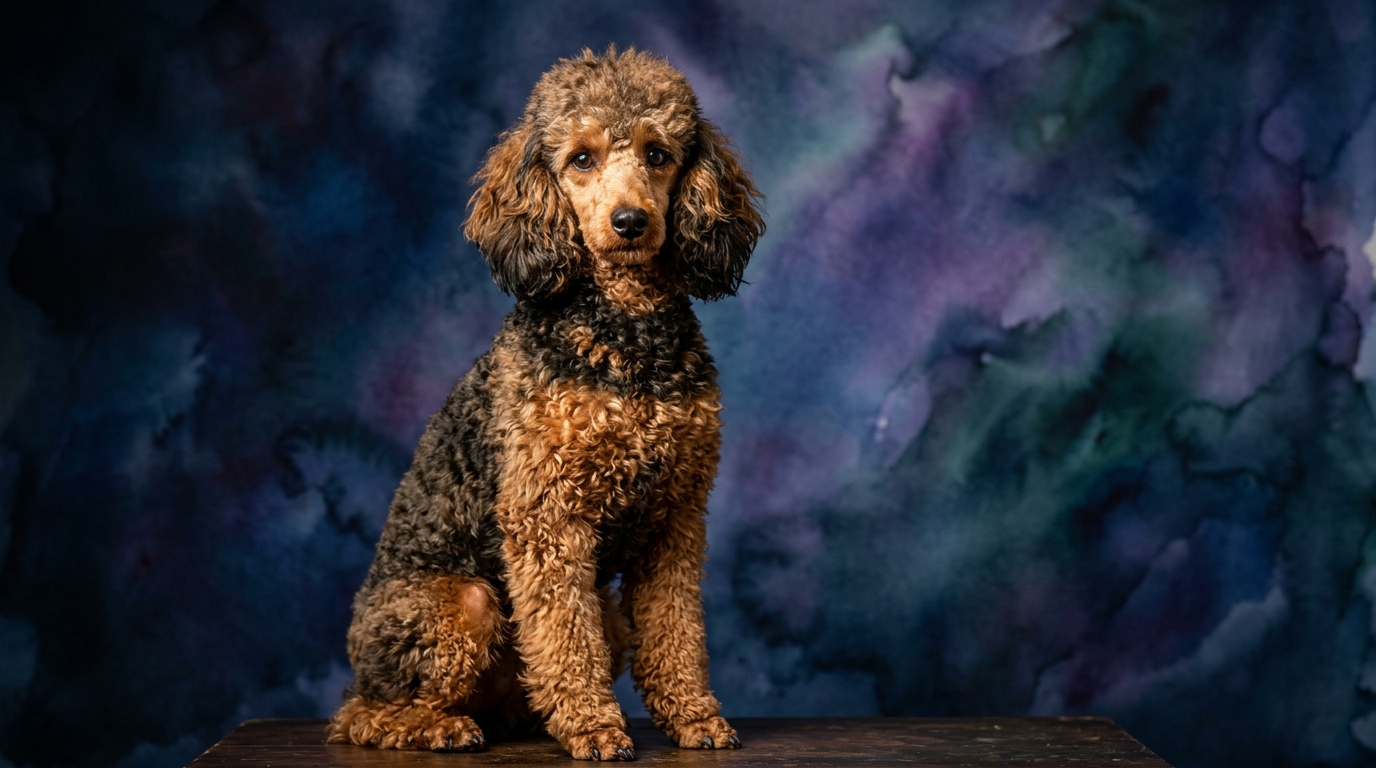
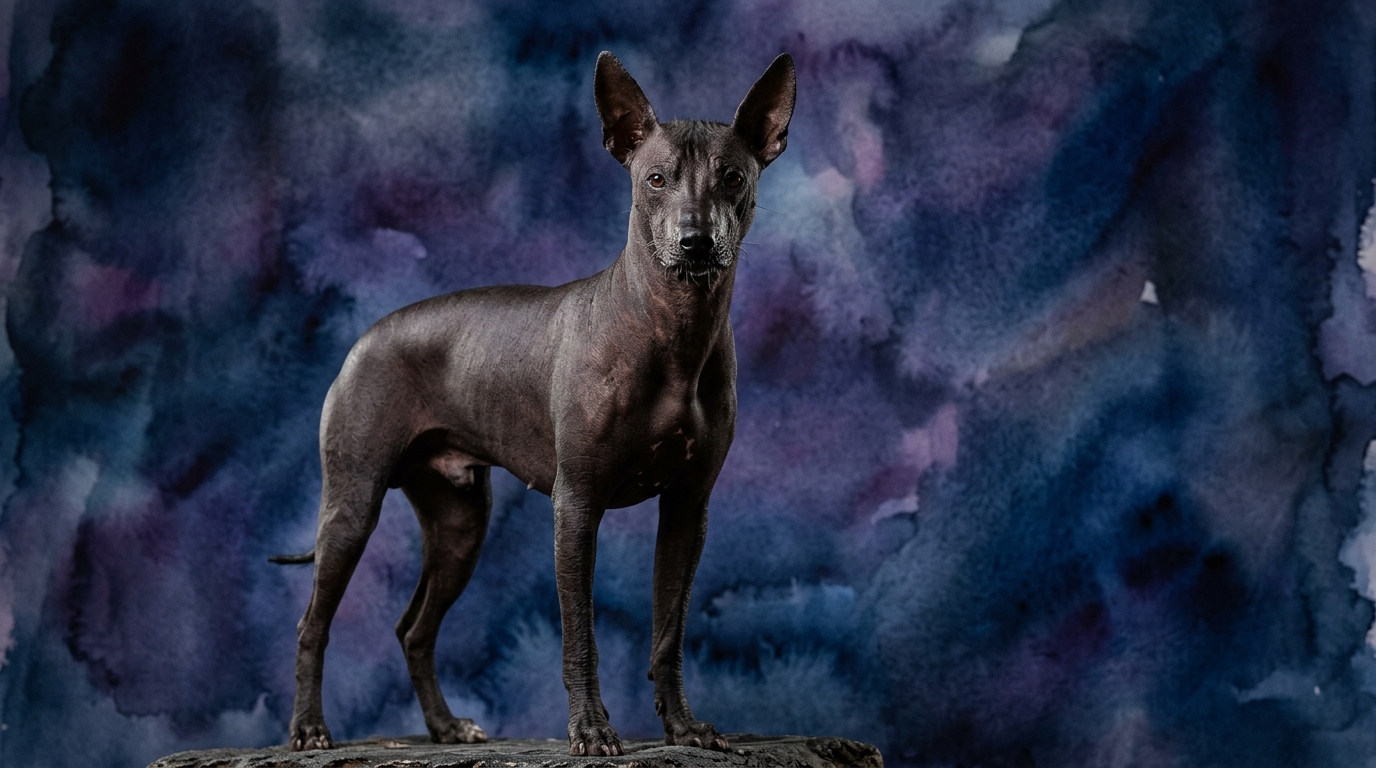
Side-by-Side Cognitive Profile: Poodle vs. Xoloitzcuintli
The Cosmic Pet Pet IQ Lab employs a five-dimensional framework to illuminate the unique cognitive architecture of each breed. For the Standard Poodle, this framework reveals a truly exceptional cognitive profile, earning it a distinguished Coren rank of #2, indicating its profound capacity for understanding and execution. Its Problem Solving is rated 5/5, reflecting an outstanding ability to navigate novel situations, understand complex tasks, and devise creative solutions. Training Speed also stands at a perfect 5/5, signifying a remarkable aptitude for quickly grasping and retaining new commands and behaviors. Social Intelligence, another 5/5, points to a sophisticated understanding of human cues, social dynamics, and an eagerness to engage meaningfully. An Instinctive Drive of 4/5 indicates a robust, but manageable, innate motivation for tasks, often expressed through retrieving or active engagement. Finally, its Memory, rated 5/5, ensures that learned behaviors and established routines are firmly embedded.
In contrast, the Xoloitzcuintli, an ancient breed not assessed by Coren for its obedience and working intelligence, presents a more specialized cognitive blueprint, rated uniformly at 3/5 across all dimensions. Its Problem Solving, at 3/5, suggests a practical capacity to address familiar challenges within its environment, though perhaps less inclination for novel cognitive exploration. Training Speed, also 3/5, indicates that while capable of learning, the Xolo benefits significantly from consistent, patient, and engaging training methods over extended periods. Social Intelligence at 3/5 points to a selective, deeply bonded nature, where their understanding and engagement are primarily directed towards their immediate family, often exhibiting reserve towards strangers. An Instinctive Drive of 3/5 implies a moderate level of innate motivation, typically focused on guarding or companionship within its trusted circle, rather than wide-ranging predatory or working drives. Lastly, its Memory, rated 3/5, supports the retention of important routines and family member recognition, albeit potentially with less detail recall than its Poodle counterpart.
Where the Standard Poodle Excels Cognitively
The Standard Poodle's cognitive strengths manifest across a spectrum of abilities that make it an extraordinarily adaptable and responsive companion. Its perfect 5/5 rating in Problem Solving means these dogs don't just follow instructions; they actively analyze situations. For instance, presented with a complex puzzle feeder, a Standard Poodle is likely to experiment with different mechanisms, recalling previous successes, and quickly master the device, often demonstrating a clear understanding of cause and effect. This attribute extends to navigating new environments or understanding abstract concepts, such as identifying specific objects by name rather than just by scent or location.
The Poodle's 5/5 Training Speed and 5/5 Memory work in powerful synergy, allowing for rapid acquisition and enduring retention of a vast repertoire of commands and behaviors. They can learn multi-step sequences with remarkable efficiency, making them adept at advanced obedience, agility, and even service dog work where precise, consistent execution is paramount. Their profound Social Intelligence (5/5) further amplifies this, as they are exceptionally attuned to human body language, vocal inflections, and emotional states, enabling them to anticipate cues and respond with a nuanced understanding of their handler's intent. This combination of attributes positions the Standard Poodle to excel in roles requiring continuous learning, sophisticated communication, and dynamic adaptation to varying situations.
Where the Xoloitzcuintli's Cognitive Profile Shines
While the Xoloitzcuintli's cognitive scores are uniformly moderate at 3/5, these ratings reflect a particular type of intelligence that is deeply rooted in their ancient lineage and specialized purpose. The Xolo's 3/5 Social Intelligence, for example, translates into a profound, almost singular devotion to its core family unit. Unlike breeds that might seek broad social interaction, Xolos often form intensely loyal bonds with a select few, exhibiting a discerning social radar that prioritizes the safety and well-being of their inner circle. This isn't a lack of understanding, but a focused application of their social cognition, making them exceptional guardians and dedicated companions who are deeply attuned to the nuances of their family's dynamics.
Their 3/5 Instinctive Drive, while lower than the Poodle's, can be a distinct advantage for specific lifestyles. This moderate drive means they are often less prone to extensive wandering, intense prey drive, or overwhelming urges to constantly be "working" in a high-octane sense. Instead, their natural inclinations lean towards watchful companionship and maintaining a secure home environment. This cognitive profile allows them to be content with a stable routine and the presence of their loved ones, without the constant need for novel, high-intensity mental or physical stimulation that breeds with higher drives might demand. Their Problem Solving and Memory, both 3/5, are perfectly adequate for mastering household routines, recognizing familiar faces, and navigating their established territory with confidence and practical efficiency.
Training Aptitude: Poodle vs. Xolo
When it comes to ease of training, the Standard Poodle holds a clear advantage due to its exceptional cognitive architecture. Its 5/5 Training Speed means it grasps new commands and concepts with minimal repetition, often understanding the correlation between a cue and a desired action after just a few attempts. This rapid learning is bolstered by its 5/5 Memory, ensuring that once a behavior is learned, it is retained consistently. Furthermore, the Poodle's 5/5 Social Intelligence makes it highly responsive to human interaction and eager to please, translating into a strong intrinsic motivation for training. Real behavioral differences include a Poodle's tendency to generalize learned behaviors quickly, applying a "sit" command in various locations and with different distractions after initial training. They also often proactively offer behaviors they believe are desired, demonstrating a deep engagement in the learning process.
The Xoloitzcuintli, with its 3/5 Training Speed, requires a more patient, consistent, and reward-based approach. While perfectly capable of learning, Xolos may need more repetitions to solidify a new command, and they might not generalize behaviors as readily to new environments without specific practice in those contexts. Their 3/5 Social Intelligence means they are less universally eager to please; their motivation often stems from the bond with their primary handler and the predictability of the training routine. Real behavioral differences include a Xolo potentially being more selective about who they will readily train for, and they might show a degree of independent thought or "what's in for me?" attitude, requiring handlers to make training exceptionally rewarding and engaging. Consistency is paramount, as lapses can lead to slower progress or the need to re-establish learned behaviors.
Matching Canine Cognition to Owner Lifestyles
The Standard Poodle's cognitive profile aligns beautifully with active, engaged owners who seek a partner for a wide range of activities. Their 4/5 Instinctive Drive means they possess ample energy and motivation for physical exertion, whether it's long hikes, swimming, or competitive dog sports like agility or obedience. Coupled with their 5/5 Problem Solving and Training Speed, they thrive on mental challenges, enjoying puzzle toys, complex trick training, and roles that require intellectual engagement. Owners who enjoy teaching new skills, participating in canine activities, and providing consistent mental stimulation will find the Poodle to be an enthusiastic and capable companion, eager to participate and learn. Their high social intelligence also means they generally enjoy meeting new people and dogs, making them suitable for owners who frequent dog parks or social gatherings.
Conversely, the Xoloitzcuintli's distinct cognitive makeup makes it an excellent match for owners who appreciate a more relaxed, yet deeply bonded, companionship. Their 3/5 Instinctive Drive suggests they are generally content with regular, moderate exercise rather than intense, prolonged activity, though they do enjoy bursts of play. Their lower Social Intelligence means they are often reserved with strangers and prefer the company of their immediate family, making them ideal for owners who prefer a devoted, home-centric dog rather than one that seeks broad social interaction. While they benefit from consistent training, their 3/5 Training Speed and Problem Solving indicate they might not crave constant novel intellectual challenges in the same way a Poodle does. Owners who value a calm, watchful, and intensely loyal companion, who thrives on routine and deep connection within the home, will find the Xoloitzcuintli's independent yet devoted nature perfectly suited to their lifestyle.
The Verdict
Choose the Standard Poodle if you seek a highly adaptable, rapidly learning companion eager for diverse activities, complex training, and profound social engagement.
Opt for the Xoloitzcuintli if you desire a deeply loyal, reserved, and independent companion who thrives on a stable routine and a focused bond with its immediate family.
🧠 Find Your Pet's IQ Score
Our Pet IQ Lab assessment covers 25+ tests across 5 cognitive dimensions — personalized to your breed.
Take the Full IQ Test →Frequently Asked Questions
Does a lower IQ score mean a dog isn't smart?
Absolutely not. IQ scores in our lab measure specific cognitive dimensions, not overall worth or capacity for learning. A lower score often indicates a different cognitive strategy or learning pace, perfectly suited for particular roles or lifestyles.
Can a Xoloitzcuintli be trained for complex tasks like a Poodle?
While a Xoloitzcuintli may take longer and require more consistent, patient methods due to its 3/5 Training Speed, it is certainly capable of learning complex tasks. Their focused memory and problem-solving abilities (both 3/5) mean they can master routines, but might need more specific training across varied environments.
How does the Coren rank relate to these IQ scores?
The Coren rank primarily assesses "working and obedience intelligence" based on how quickly a dog learns new commands and performs them reliably. The Poodle's #2 rank aligns with its 5/5 Training Speed and Problem Solving, while the Xolo's unranked status reflects its distinct, often more independent, cognitive approach that isn't directly measured by Coren's specific criteria.