
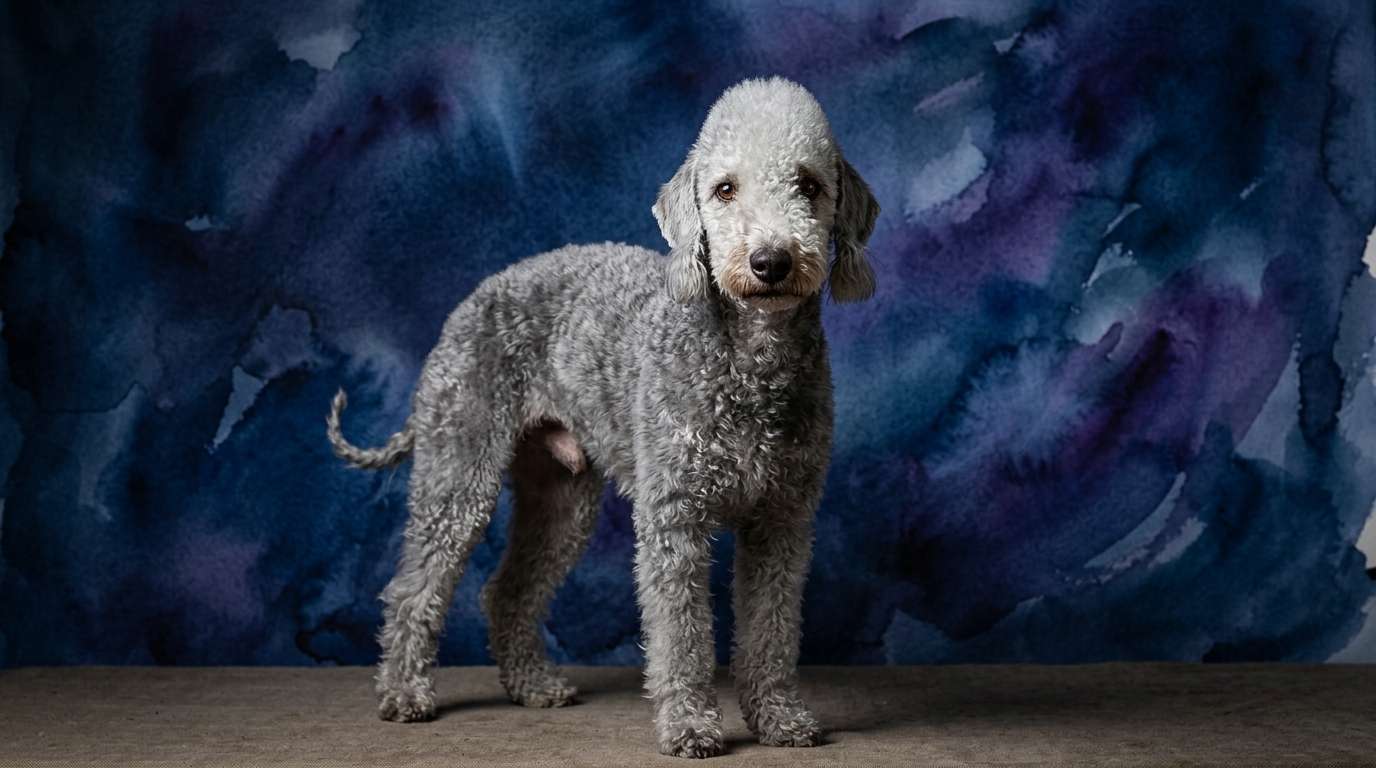
Side-by-Side IQ Profile: Border Collie vs. Bedlington Terrier
The Cosmic Pet Pet IQ Lab employs five key dimensions to evaluate canine intelligence, offering a nuanced understanding of each breed’s mental landscape. Here’s how the Border Collie and Bedlington Terrier measure up:
For the Border Collie, Problem Solving is rated 5/5, indicating an exceptional capacity to analyze complex situations, develop multi-step strategies, and adapt solutions to novel challenges. Training Speed registers 5/5, signifying their remarkable ability to acquire new commands and behaviors with minimal repetitions, driven by an innate eagerness to learn. Social Intelligence stands at 4/5, reflecting their strong attunement to human cues, body language, and emotional states, making them highly cooperative partners in structured tasks. Instinctive Drive scores 5/5, translating their powerful herding instinct into an intense desire for purpose, persistent focus, and an unwavering commitment to completing assignments. Their Memory is also 5/5, demonstrating an outstanding ability to recall intricate sequences of commands, learned behaviors, and spatial information over extended periods.
Conversely, the Bedlington Terrier presents a different cognitive profile. Their Problem Solving is rated 3/5, suggesting they approach challenges with a more direct, terrier-typical persistence rather than intricate strategic planning, often relying on trial and error or established routines. Training Speed is 3/5; while capable of learning, they require more consistent repetition and highly motivating rewards compared to the Border Collie, often taking a more independent stance towards instruction. Social Intelligence is 3/5, meaning they form affectionate bonds and are aware of their family, but their social focus is less on interpreting subtle human directives for complex cooperative work, exhibiting a more independent demeanor. Instinctive Drive registers 3/5, rooted in their historical role as vermin hunters, manifesting as a focused prey drive and determined digging, but typically less pervasive or collaboratively directed than a herding breed’s. Their Memory is 3/5, indicating they retain basic commands and routines effectively, but their recall for long, complex sequences or intricate patterns of behavior is not as pronounced as breeds bred for highly detailed operational tasks.
Where the Border Collie Wins Cognitively
The Border Collie's cognitive prowess shines brightly in scenarios demanding rapid acquisition of skills and intricate problem-solving. Their 5/5 Problem Solving score means they excel at tasks requiring abstract thought, such as navigating complex agility courses or understanding conditional commands like “fetch the red ball, but only if it’s on the mat.” The 5/5 Training Speed allows them to master new skills and sports with unparalleled efficiency, making them ideal candidates for competitive obedience, flyball, or even advanced trick training where novel concepts are introduced frequently. Their 5/5 Memory further reinforces this by enabling them to retain vast repertoires of commands and multi-step routines, making them dependable partners in highly structured and evolving activities.
Where the Bedlington Terrier Wins Cognitively
While their cognitive profile differs significantly from the Border Collie, the Bedlington Terrier’s strengths lie in a distinct sphere of application. Their 3/5 Instinctive Drive, rooted in their terrier heritage, means they possess a determined focus when pursuing a specific goal, such as scent work or exploring an interesting scent trail, without the constant need for human direction seen in working breeds. Their moderate 3/5 Social Intelligence allows them to form strong, affectionate bonds within their family without the intense, sometimes overwhelming, need for constant cooperative engagement that a Border Collie might exhibit. This independent streak can be a cognitive advantage for owners who appreciate a dog capable of entertaining itself or approaching novel situations with a self-reliant curiosity, rather than always seeking human instruction.
Which is Easier to Train and Why
The Border Collie is demonstrably easier to train for a wide array of complex tasks, primarily due to their stellar 5/5 Training Speed and 5/5 Instinctive Drive. They possess an inherent eagerness to work collaboratively with their human partners, absorbing new information quickly and finding immense satisfaction in performing tasks. Their behavioral tendency is to seek direction and engage in purposeful activity, which translates into a highly responsive and adaptable student, often requiring fewer repetitions to solidify new commands.
In contrast, the Bedlington Terrier, with a 3/5 Training Speed and a more independent 3/5 Instinctive Drive, requires a different training approach. While intelligent and capable of learning, their terrier nature means they are often more self-directed, less inclined to repeat actions without clear motivation, and may require more patience, creativity, and high-value rewards to maintain engagement and solidify new behaviors. Training a Bedlington often means finding what truly motivates them and making the process fun, rather than relying solely on their innate desire to please.
Which Suits Active Owners vs. Relaxed Owners
The Border Collie is unequivocally suited for active owners who can provide consistent, high-level mental stimulation and physical exercise. Their 5/5 Instinctive Drive and 5/5 Problem Solving necessitate daily engagement through activities like advanced obedience, agility, herding, or long, varied walks incorporating training challenges. An owner who understands and can channel this intense drive through structured work will find an unparalleled partner, but neglecting these needs can lead to behavioral challenges.
Conversely, the Bedlington Terrier is better suited for owners who appreciate a more relaxed, yet still engaged, companion. While they benefit from regular walks and play, their moderate 3/5 Instinctive Drive means they don't demand the same relentless work ethic. They are content with consistent interaction and mental enrichment through puzzle toys or shorter training sessions, making them a good fit for individuals or families seeking a charming companion without the intensity of a working breed. They thrive in environments where their independent spirit is understood and gently guided.
The Verdict
Choose a Border Collie if you are an active, dedicated owner seeking a highly cooperative partner for advanced training, dog sports, or a working role, prepared to channel their intense cognitive drive daily.
Opt for a Bedlington Terrier if you appreciate a charming, independent companion with moderate training needs, a good balance of activity and relaxation, and a distinct terrier personality.
🧠 Find Your Pet's IQ Score
Our Pet IQ Lab assessment covers 25+ tests across 5 cognitive dimensions — personalized to your breed.
Take the Full IQ Test →Frequently Asked Questions
Do Bedlington Terriers get bored easily if not mentally stimulated?
Like all dogs, Bedlington Terriers benefit from mental enrichment, but their moderate 3/5 problem-solving and drive mean they don't typically require the same intense, constant stimulation as a Border Collie. They enjoy puzzle toys, short training sessions, and varied walks to keep their minds engaged, preventing boredom without overwhelming demands.
How does the Border Collie's social intelligence impact their family life?
With a 4/5 social intelligence, Border Collies are highly attuned to their human family members, often anticipating needs and understanding subtle cues. This makes them deeply bonded and cooperative, though their focus on interaction is often tied to purposeful activity, meaning they thrive when given a 'job' within the family structure.
Is a Bedlington Terrier a good choice for a first-time dog owner?
A Bedlington Terrier can be a good choice for a first-time owner who understands and appreciates the terrier temperament. Their moderate training speed and independent nature mean consistency and patience are key, but their less intense demands compared to a working breed can be more manageable for someone new to dog ownership.