
Side-by-Side IQ Profile: Border Collie
The Border Collie, holding a Coren rank of #1, showcases an exceptional cognitive makeup. Their Problem Solving is rated 5/5, indicating an outstanding ability to dissect novel situations and devise solutions independently, often demonstrating foresight and strategic thinking in complex tasks. This capacity allows them to learn through observation and apply past experiences to new challenges with remarkable ease.
Their Training Speed is also 5/5, meaning they absorb new commands and routines with astonishing rapidity, often grasping concepts in just a few repetitions. This quick assimilation stems from an acute focus and eagerness to engage in structured learning, making them highly receptive students. Social Intelligence stands at 4/5; while deeply attuned to their handler's cues and intentions, their social acumen can be more focused on their primary human bond, potentially displaying a reserved demeanor with strangers or other animals. They interpret subtle human body language with precision.
Instinctive Drive is a profound 5/5, manifesting as an intensely potent urge to gather, control, and manipulate movement, whether it's livestock, children, or even inanimate objects. This drive is a powerful motivator, demanding consistent outlets. Finally, their Memory is 5/5, reflecting an outstanding recall for commands, routines, and experiences, enabling them to retain a vast repertoire of learned behaviors over extended periods and perform complex sequences reliably.
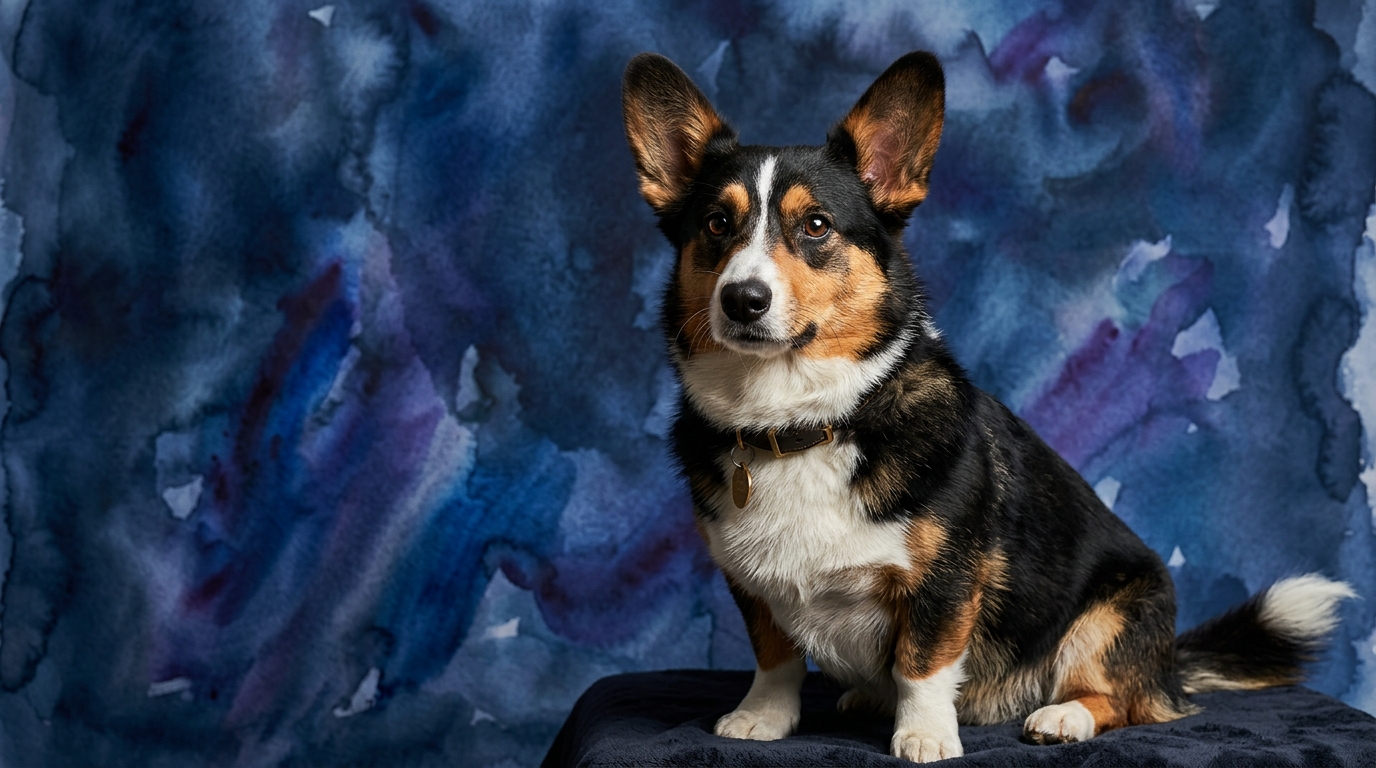
Side-by-Side IQ Profile: Cardigan Welsh Corgi
The Cardigan Welsh Corgi, with a Coren rank of #26, presents a robust and tenacious cognitive profile. Their Problem Solving is rated 4/5; these dogs approach problems with cleverness and persistence, often finding creative, albeit sometimes independent, solutions. They are adept at navigating obstacles and figuring out how to achieve desired outcomes, even if it takes a bit more sustained effort.
With a Training Speed of 4/5, Cardigan Welsh Corgis learn commands and new tasks effectively, though they may require more consistent repetition and positive reinforcement than a Border Collie. Their learning is steady and enduring once a concept is grasped, building a solid foundation of understanding. Their Social Intelligence is 3/5; Cardigans are generally sociable and adaptable, forming strong bonds with their families and often displaying a friendly, outgoing nature. While they read human emotions well within their established social circle, their responses to unfamiliar situations or individuals might be more direct or less nuanced.
Their Instinctive Drive is 3/5; their herding background is evident in their tendency to 'heel' or chase, but this drive is typically less intense and more manageable than in some dedicated herding breeds. It often manifests as a desire to keep their 'flock' (family) together. Their Memory is 4/5, indicating good recall for commands, people, and routines, allowing them to reliably retain a significant number of cues and adapt well to consistent schedules.
Where Border Collie Wins Cognitively
The Border Collie's cognitive strengths are particularly evident in their unmatched capacity for rapid assimilation of information and complex problem-solving. Their 5/5 score in Training Speed means they can internalize novel commands and intricate sequences with astonishing efficiency, often requiring minimal repetitions. This isn't just about speed; it's about a deep cognitive grasp of causality and consequence, allowing them to quickly generalize learned principles to new scenarios.
Their 5/5 Problem Solving ability allows them to not just follow instructions but to anticipate, strategize, and adapt to changing conditions independently. For instance, when presented with a new agility course, a Border Collie might quickly map out the most efficient path, even if it deviates slightly from the handler's initial direction, demonstrating self-directed cognitive processing. This capacity for independent thought, coupled with a 5/5 Memory, enables them to recall vast repertoires of behaviors and apply them flexibly, making them exceptionally adept at intricate, multi-stage tasks.
Where Cardigan Welsh Corgi Wins Cognitively
The Cardigan Welsh Corgi's cognitive profile reveals a distinct strength in tenacious problem-solving, coupled with a robust independence. While their Problem Solving is rated 4/5, suggesting they might not always be as lightning-fast as a Border Collie, their approach is often characterized by a determined persistence. They possess a cognitive resilience that allows them to explore various solutions to a puzzle, not giving up easily, which can be a significant advantage in situations requiring sustained effort rather than immediate insight.
Furthermore, their 3/5 Instinctive Drive, when compared to the Border Collie's 5/5, can be a cognitive 'win' in many companion settings. This moderated drive means they are less prone to the intense, obsessive herding behaviors that demand constant management, allowing their cognitive energy to be directed more broadly. This enables their 3/5 Social Intelligence to manifest as a more adaptable and less demanding engagement with their human family, fostering a balanced companionship where their cleverness is applied to daily interactions rather than solely to controlling movement. Their 4/5 Memory ensures they reliably recall these learned social rules and routines.
Which Is Easier to Train and Why
The Border Collie is often perceived as easier to train in terms of raw speed and complexity of commands they can learn. Their 5/5 Training Speed means they pick up new cues almost instantly, and their 5/5 Problem Solving allows them to chain behaviors and understand abstract concepts quickly. However, this ease comes with a caveat: their profound 5/5 Instinctive Drive requires equally profound mental and physical engagement. Without consistent, challenging training and activity, this drive can manifest as undesirable behaviors like obsessive herding of people, shadow chasing, or destructive tendencies born of boredom. They are not 'easy' in the sense of being low-maintenance.
The Cardigan Welsh Corgi, with a 4/5 Training Speed, requires more repetition and patience, but their training can be more straightforward for many owners due to their lower (3/5) Instinctive Drive. They are willing learners, but their independent nature means they might test boundaries or require more convincing before fully committing to a command. Their herding drive, while present, is typically expressed less intensely, perhaps as a gentle nudge or a desire to keep the family together, rather than a relentless pursuit. This means that while individual training sessions might be longer, the overall management of their cognitive needs in a pet environment can be less demanding than a Border Collie's.
Which Suits Active Owners vs. Relaxed Owners
Active owners who thrive on mental and physical engagement will find an ideal match in the Border Collie. Their 5/5 Problem Solving and 5/5 Instinctive Drive demand an owner prepared to dedicate significant time to advanced training, dog sports (like agility, obedience, flyball), or real-world herding. These dogs need a 'job', and an owner who can consistently provide complex cognitive challenges and extensive physical exercise will find them incredibly rewarding and well-adjusted. Without this, their cognitive prowess can become a source of frustration and behavioral issues, highlighting the critical link between their intelligence and their need for purpose.
Owners seeking a companion with a robust cognitive capacity but less intense demands will find the Cardigan Welsh Corgi a better fit. While still requiring regular exercise and mental stimulation, their 4/5 Problem Solving and 3/5 Instinctive Drive mean they are generally content with daily walks, puzzle toys, and consistent training sessions that reinforce good manners and basic commands. They appreciate engagement and learning but do not typically require the same level of extreme mental and physical output as a Border Collie, making them suitable for owners who lead an active lifestyle but perhaps aren't aiming for competitive dog sports.
The Verdict
Opt for a Border Collie if you are an experienced, highly active owner committed to providing daily, structured mental challenges and extensive physical outlets for a dog whose cognitive capacity is truly exceptional and demands a 'job'.
Select a Cardigan Welsh Corgi if you seek a clever, tenacious companion who enjoys learning and activity, but whose cognitive demands are more moderate and adaptable to a family lifestyle with consistent, engaging, but not extreme, mental and physical stimulation.
🧠 Find Your Pet's IQ Score
Our Pet IQ Lab assessment covers 25+ tests across 5 cognitive dimensions — personalized to your breed.
Take the Full IQ Test →Frequently Asked Questions
Do Border Collies get bored easily?
Yes, their exceptional Problem Solving (5/5) and high Instinctive Drive (5/5) mean Border Collies require constant mental engagement; without it, they can quickly become bored, leading to destructive or obsessive behaviors.
Are Cardigan Welsh Corgis good for first-time dog owners?
With their 4/5 Training Speed and 3/5 Instinctive Drive, Cardigan Welsh Corgis can be suitable for committed first-time owners who are prepared for consistent training and socialization, as their independent streak requires a firm yet gentle hand.
How do their herding instincts differ in a home environment?
A Border Collie's 5/5 Instinctive Drive often manifests as intense attempts to control movement, potentially nipping heels or circling family members; a Cardigan's 3/5 drive is typically less forceful, often expressed as a desire to keep the 'flock' together with less assertive tactics.