
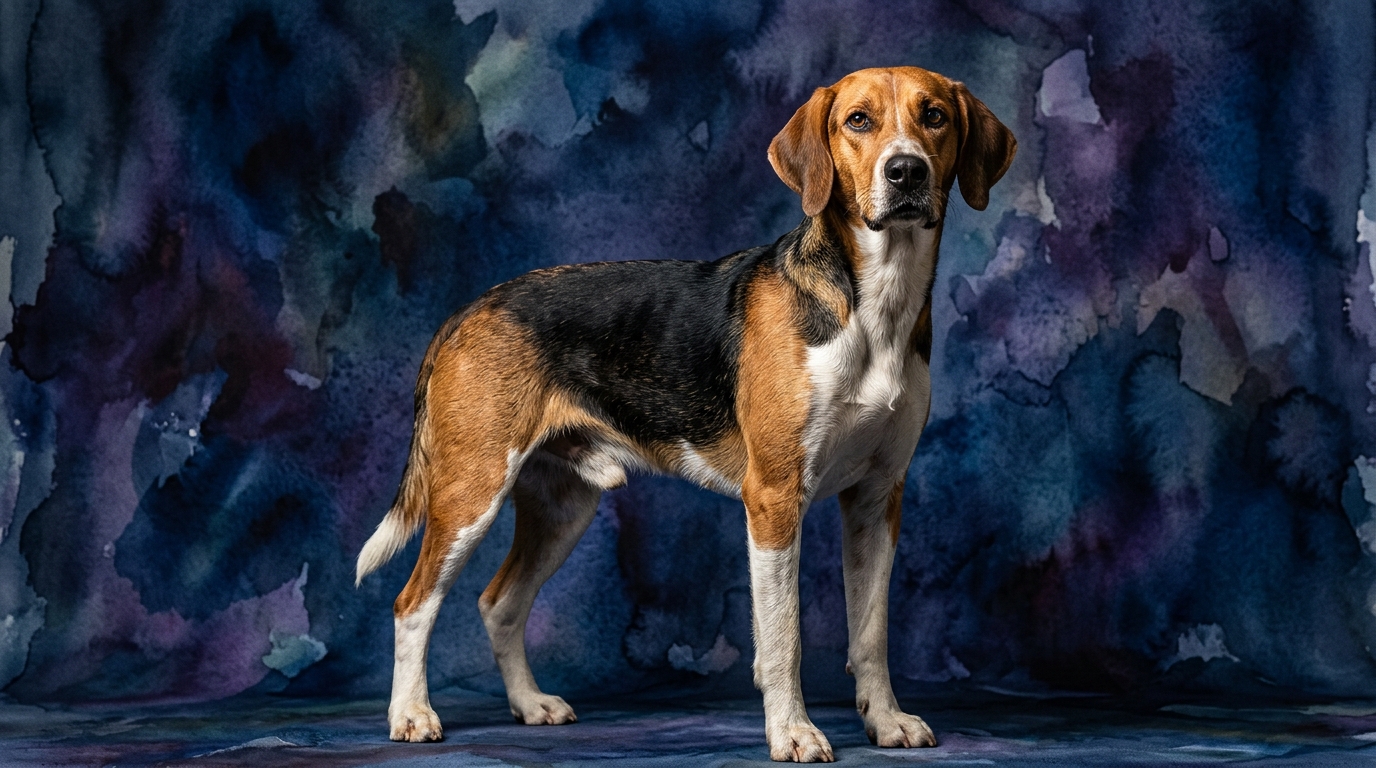
Side-by-Side IQ Profile: Herding Precision vs. Scent-Driven Pursuit
The Border Collie, a canine luminary in the herding world, consistently demonstrates a mind built for complex, dynamic tasks. Our Pet IQ Lab scores reveal a remarkable aptitude across the board: Problem Solving 5/5, Training Speed 5/5, Social Intelligence 4/5, Instinctive Drive 5/5, and Memory 5/5. This profile paints a picture of a dog that not only comprehends but also anticipates and reacts with precision, driven by a powerful desire to manage and control.
In stark contrast, the English Foxhound, a steadfast member of the hound group, exhibits a cognitive framework optimized for endurance and singular focus on a scent trail. Their IQ scores reflect this specialized design: Problem Solving 3/5, Training Speed 3/5, Social Intelligence 3/5, Instinctive Drive 3/5, and Memory 3/5. This does not imply a lack of mental capacity, but rather a mind that prioritizes specific sensory input and persistent, often independent, action over human-directed complexity. Their cognitive strengths are deeply rooted in their ancestral purpose, guiding them through hours of scent-tracking over varied terrains.
Where the Border Collie Leads Cognitively
The Border Collie's cognitive strengths are most apparent in their exceptional Problem Solving (5/5) and Memory (5/5) capabilities. This breed can rapidly analyze novel situations, devise solutions, and recall intricate command sequences with impressive accuracy. For instance, a Border Collie might quickly learn to open complex latches, navigate elaborate agility courses by remembering extensive routines, or adapt their herding strategy to unpredictable livestock movements. Their superior training speed (5/5) is a direct consequence of this rapid processing and retention, allowing them to acquire new behaviors and cues almost immediately, often after just a few repetitions. Furthermore, their social intelligence (4/5) is finely tuned for interpreting human cues, enabling a deep, collaborative partnership essential for their herding work. They excel at understanding subtle body language, vocal inflections, and anticipating their handler's next instruction, making them highly responsive partners in intricate tasks that require constant communication and adjustment.
Where the English Foxhound Excels Cognitively
While the English Foxhound's cognitive scores are not as high in the categories typically associated with human-centric problem-solving, their strengths lie in a different, equally impressive domain: unwavering focus and endurance-based instinctive drive (3/5). Their Problem Solving (3/5) is geared towards intricate scent discrimination and trail following, a complex task that requires immense concentration and the ability to filter out extraneous sensory information. They excel at deciphering subtle scent patterns and making independent decisions based on olfactory data, demonstrating a robust form of practical problem-solving within their specialized field. Their Memory (3/5) is particularly potent for retaining scent trails, allowing them to pick up a cold scent hours later or differentiate between multiple overlapping tracks with remarkable accuracy. This specialized memory is crucial for their work, underpinning their ability to persist on a quest for extended periods. Their social intelligence (3/5) is oriented towards pack dynamics, fostering cooperation within a group of hounds rather than intricate human-dog communication, making them adept at working alongside their canine peers in a coordinated effort.
Training Dynamics: Precision vs. Persistence
Training a Border Collie often feels like teaching a highly engaged student; their 5/5 Training Speed means they absorb new commands and concepts with astonishing rapidity. They thrive on mental challenges and intricate sequences, requiring consistent engagement to prevent boredom. However, their high instinctive drive (5/5) means that without appropriate outlets, they can channel their mental energy into self-directed, often undesirable, behaviors like obsessive chasing or herding household members. They need an owner who can consistently provide structure and purposeful work, channeling their intense mental capacity into productive tasks. Their eagerness to please and interpret human cues makes them exceptionally responsive to positive reinforcement and clear communication.
Conversely, training an English Foxhound demands patience and an understanding of their deep-seated hound instincts. Their 3/5 Training Speed indicates that new commands may require more repetition and consistency to fully embed. Their instinctive drive (3/5) is powerfully focused on scent, meaning that once they catch a compelling aroma, their hearing and attention to human commands can effectively switch off. This single-mindedness requires owners to develop strong recall cues and engage them in environments where distractions are manageable, or to integrate scent work into their training to leverage their natural inclinations. Their motivation is often less about pleasing a human and more about satisfying their inherent drive to track, requiring reward systems that align with these powerful instincts.
Suitability for Active vs. Relaxed Lifestyles
A Border Collie is unequivocally suited for active owners who relish mental engagement as much as physical exertion. Their 5/5 instinctive drive and boundless energy necessitate a lifestyle that offers daily challenges, whether through advanced obedience, agility, flyball, herding, or complex puzzle solving. A relaxed owner who cannot commit to hours of structured activity and mental stimulation will likely find themselves with a restless, potentially destructive, and certainly unfulfilled companion. These dogs thrive when they have a 'job' to do, and their cognitive prowess demands an owner who can continuously provide that purpose.
The English Foxhound, while possessing considerable stamina for their specialized work, is better suited for owners who understand and respect their independent nature and specific exercise needs. While they require significant physical exercise, particularly opportunities to run and engage their powerful sense of smell, they are not typically seeking the constant, intricate mental collaboration that a Border Collie demands. A relaxed owner in this context means someone who can provide consistent, long walks or runs, secure areas for off-leash exploration, and perhaps structured scent games, but who doesn't expect a dog that needs to be 'on' for complex tasks all day. Their contentment often comes from satisfying their primal urge to explore and track, rather than mastering human-devised puzzles.
The Verdict: Choosing Your Canine Companion
The Verdict
Choose a Border Collie if you are an experienced, active owner eager for a highly collaborative partner, prepared to dedicate significant time daily to advanced training, intricate mental games, and consistent physical exercise.
Opt for an English Foxhound if you appreciate an independent, scent-driven companion, capable of long, focused expeditions, and are prepared for consistent, patient training tailored to their strong instinctive drives.
🧠 Find Your Pet's IQ Score
Our Pet IQ Lab assessment covers 25+ tests across 5 cognitive dimensions — personalized to your breed.
Take the Full IQ Test →Frequently Asked Questions
Can an English Foxhound be a good family dog despite its lower social intelligence score?
Yes, an English Foxhound can be a loyal family dog, especially if raised with consistent socialization. Their 3/5 social intelligence score primarily reflects their independence and focus on pack dynamics, not a lack of affection for their human family, but they might not seek constant human interaction like some breeds.
Do Border Collies ever 'switch off' their intense mental drive?
Border Collies rarely 'switch off' entirely; their 5/5 instinctive drive and problem-solving mind are always active, observing and analyzing. They require structured downtime and training to learn to relax, but their innate mental energy remains high, necessitating consistent engagement to prevent boredom and destructive behaviors.
How does the memory difference impact daily life for these breeds?
A Border Collie's 5/5 memory means they quickly recall commands and routines, making training efficient and complex tasks manageable. An English Foxhound's 3/5 memory, while excellent for scent trails, means they may require more repetition for general obedience, but once learned, their ingrained behaviors are often very reliable, especially if tied to their natural instincts.