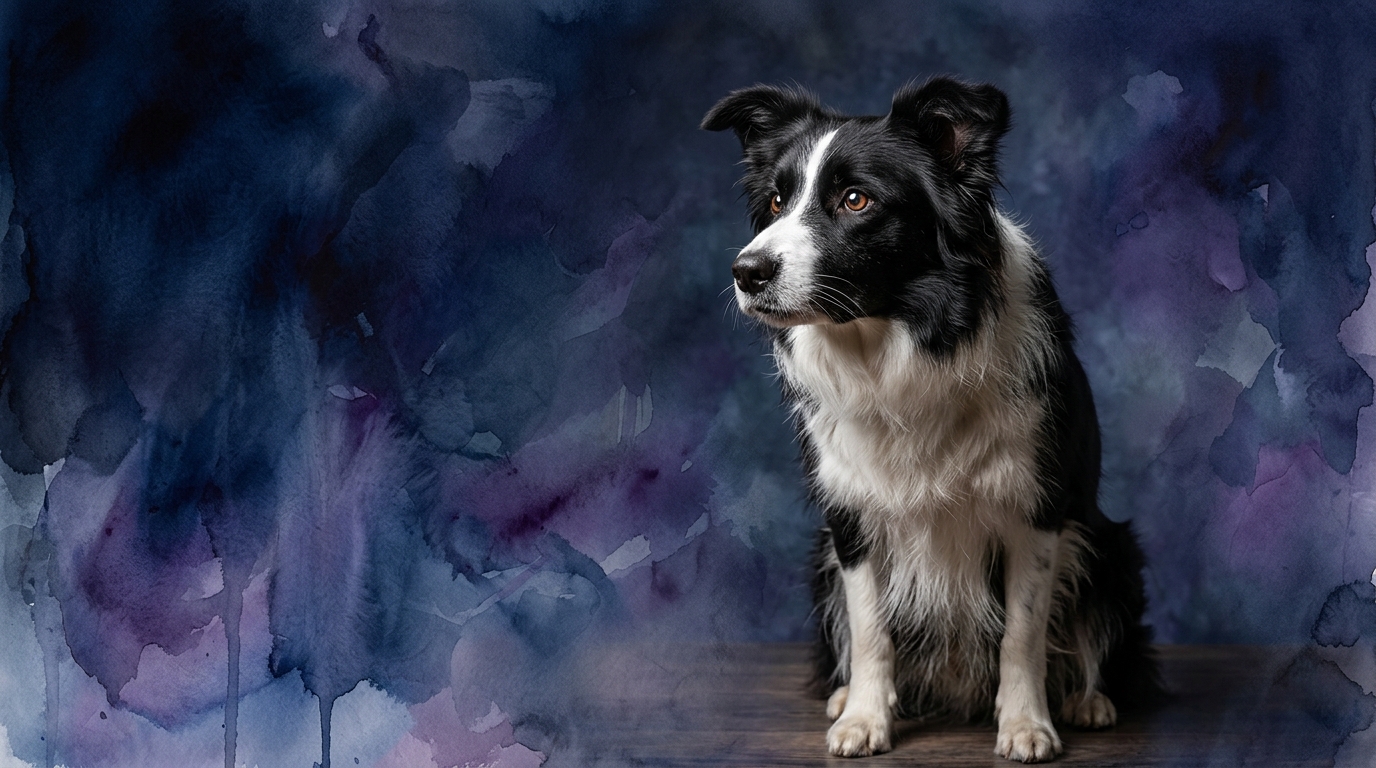
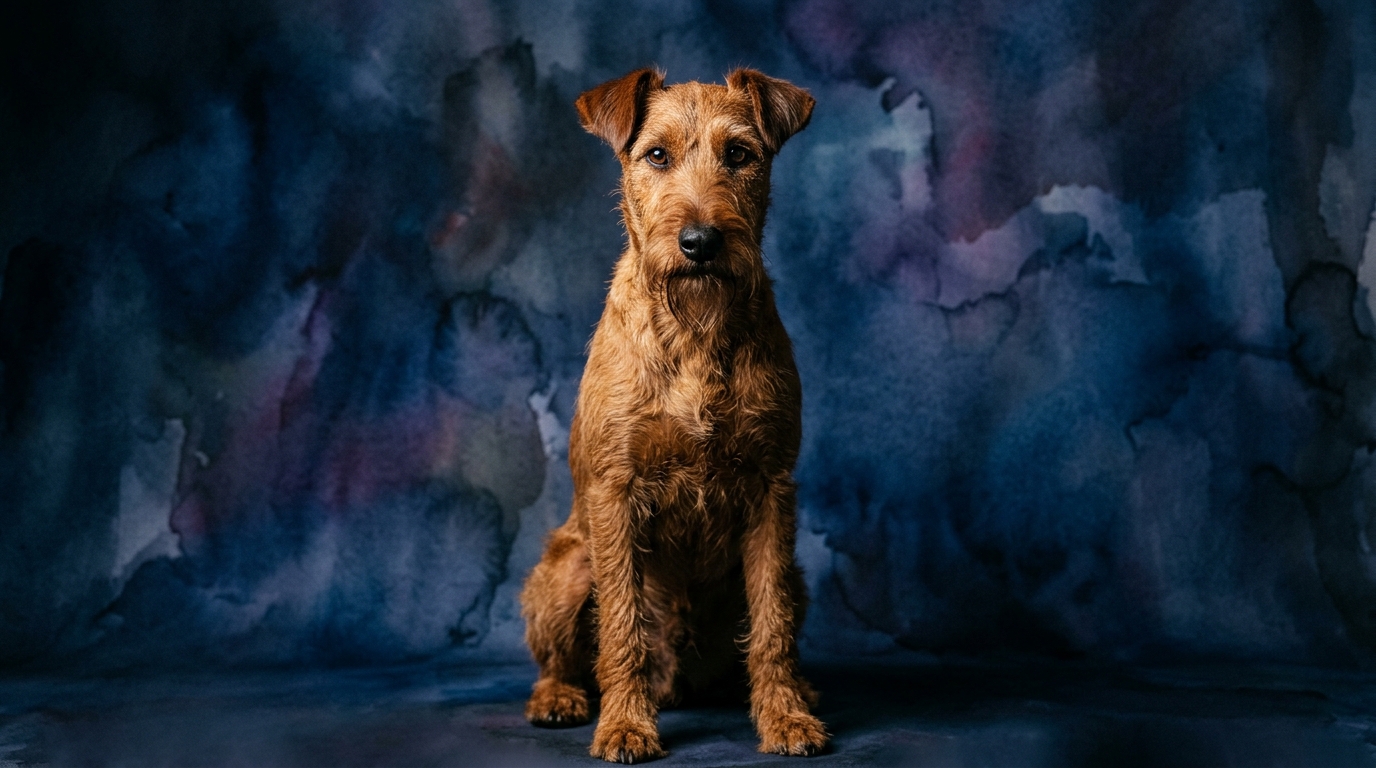
Side-by-Side IQ Profile: Border Collie vs. Irish Terrier
The Cosmic Pet Pet IQ Lab employs a five-dimensional framework to assess canine cognitive abilities, providing a granular view of each breed's mental landscape. Let's examine how the Border Collie and Irish Terrier stack up across these specific measures.
For the Border Collie, often recognized for its working proficiency, Problem Solving registers a robust 5/5. This reflects an exceptional capacity for complex, multi-step tasks, strategic thinking, and the ability to adapt learned concepts to novel situations. Training Speed also hits a perfect 5/5, indicating rapid assimilation of new commands, understanding of abstract concepts, and an eagerness to engage in cooperative learning. Social Intelligence stands at 4/5, demonstrating a keen awareness of human cues, intentions, and subtle emotional states, essential for their partnership in herding, though their focus remains heavily task-oriented. Instictive Drive is a commanding 5/5, manifesting as an intense, directed herding instinct that encompasses gathering, driving, and controlling movement with precision. Finally, Memory scores 5/5, showcasing an impressive retention of command vocabulary, complex sequences, and spatial awareness, crucial for recalling intricate routines and navigating dynamic environments.
The Irish Terrier presents a distinct cognitive profile, reflecting its heritage as a tenacious, independent vermin hunter. Its Problem Solving score is 3/5, indicating a practical, often trial-and-error approach to immediate, tangible challenges, particularly those involving independent pursuit or navigating physical obstacles. Training Speed is rated 3/5, suggesting that while they are capable of learning, they often require more consistent repetition, patient reinforcement, and compelling motivation tailored to their independent spirit. Social Intelligence sits at 3/5, demonstrating an understanding of basic human communication but often prioritizing their own agenda or independent exploration over subtle social nuances. Instictive Drive is 3/5, characterized by a strong, self-directed prey drive for small game, digging, and territorial assertiveness, rather than the cooperative, directed drive of a herding breed. Memory is also 3/5, showing retention for practical routines, learned boundaries, and specific commands, though perhaps not the extensive vocabulary or complex sequences a Border Collie might master.
Where the Border Collie Wins Cognitively
The Border Collie's cognitive strengths lie in its unparalleled ability to process and act upon complex information, particularly in dynamic, real-time scenarios. Their 5/5 Problem Solving isn't just about figuring things out; it's about forming strategies, predicting outcomes, and adapting on the fly. For instance, they excel at learning and executing intricate agility courses, where a single misstep can cost points, or managing a flock of sheep across varied terrain, responding to subtle shifts in animal behavior and handler commands simultaneously. This breed demonstrates a profound capacity for 'meta-learning,' understanding the *process* of learning itself, allowing them to generalize concepts rapidly from one context to another, like applying a 'stay' command learned indoors to a chaotic outdoor environment. Their 5/5 Training Speed is a direct result of this cognitive flexibility and an innate desire to understand and comply, making them exceptionally receptive to advanced obedience, trick training, and specialized working roles where precision and consistency are paramount.
Where the Irish Terrier Wins Cognitively
While not scoring as high in traditional 'trainability' metrics, the Irish Terrier possesses a unique cognitive toolkit perfectly suited to its original purpose. Its 3/5 Problem Solving, though lower, translates into an exceptional tenacity and resourcefulness when faced with a self-assigned task, such as locating and pursuing a rodent deep within a burrow. They demonstrate a singular focus, often filtering out environmental distractions that might deter a more biddable breed, relying on their independent judgment rather than awaiting human direction. This breed excels in practical, goal-oriented cognitive tasks where persistence and self-reliance are prized. Their 3/5 Instinctive Drive, while less cooperative, means they are masters of independent action, capable of making quick decisions in the field without constant human input. This 'street smarts' approach to problem-solving, prioritizing immediate, tangible results over abstract compliance, showcases a different but equally valuable form of canine cognition, reflecting their heritage as robust, self-sufficient hunters.
Which is Easier to Train and Why
Based on their cognitive profiles, the Border Collie is unequivocally easier to train for most conventional obedience and advanced tasks. Their 5/5 Training Speed, coupled with a 5/5 Problem Solving ability and a 4/5 Social Intelligence, means they actively seek to understand commands, quickly grasp new concepts, and are eager to cooperate with their human partners. They thrive on mental stimulation and the challenge of learning, often anticipating cues and offering behaviors to earn reinforcement. Their exceptional memory ensures that once a concept is learned, it is retained, allowing for rapid progression through training levels. Behavioral differences, such as their intense focus on the handler and desire to work in tandem, naturally align with structured training methodologies.
Conversely, the Irish Terrier presents a more significant training challenge due to its independent nature, reflected in its 3/5 scores across Problem Solving, Training Speed, and Social Intelligence. While capable of learning, they often require more patience, creativity in motivation, and a deeper understanding of their 'what's in it for me?' attitude. Their instinctive drive, geared towards self-directed hunting and exploration, means they may weigh the perceived value of a command against their own immediate interests. Training an Irish Terrier often involves more repetition, making lessons engaging, and establishing clear, consistent boundaries. Their problem-solving abilities might be applied to finding loopholes or testing boundaries if not properly managed, requiring a trainer who appreciates their spirit and can channel it productively.
Suitability for Active vs. Relaxed Owners
For owners with an active lifestyle and a desire for deep cognitive engagement, the Border Collie is an ideal match. This breed thrives with individuals who can provide consistent, varied mental and physical challenges, such as participation in dog sports like agility, obedience, flyball, or even real-world herding. Their high instinctive drive and problem-solving acumen demand a daily routine that includes not just physical exercise but structured mental work, advanced trick training, and puzzle-solving. An owner who understands and can fulfill their need for a 'job' will find an incredibly cooperative and fulfilling canine partner, but failing to provide this mental outlet can lead to boredom-induced behaviors like excessive herding of people or destructive tendencies.
The Irish Terrier, while still requiring regular exercise to manage its terrier energy, is better suited for owners who appreciate a bold, independent companion and are prepared for a different kind of engagement. They are not dogs that demand constant structured mental work in the same way a Border Collie does, but they do require secure boundaries and consistent, patient foundational training. Owners should be prepared for their strong prey drive and territorial instincts, managing them with secure fencing and leash discipline. They can enjoy walks, interactive play sessions, and companionship, often content with shorter bursts of activity interspersed with more downtime, provided their exercise needs are met. This breed suits an owner who values a dog with a robust personality and a self-reliant spirit, rather than one seeking a highly biddable, constant work partner.
The Verdict
Choose the Border Collie if you are an owner dedicated to advanced training, competitive dog sports, or a working role, seeking a deeply cooperative and mentally engaged canine partner.
Opt for the Irish Terrier if you appreciate a bold, independent companion, are prepared for consistent foundational training, and enjoy a dog with a robust personality that thrives on practical engagement and secure boundaries.
🧠 Find Your Pet's IQ Score
Our Pet IQ Lab assessment covers 25+ tests across 5 cognitive dimensions — personalized to your breed.
Take the Full IQ Test →Frequently Asked Questions
Can an Irish Terrier perform complex obedience tasks?
Yes, with dedicated and patient training, an Irish Terrier can certainly learn complex obedience. Their independent nature means they may require more creative motivation and repetition than a Border Collie, but their tenacity can lead to impressive results once they understand and commit to a task.
Do Border Collies always need a job?
Border Collies thrive on having a 'job' or purpose, which often translates to structured mental and physical engagement. Without sufficient outlets for their high cognitive and instinctive drives, they may develop undesirable coping behaviors like excessive herding of people or objects, or destructive tendencies born from boredom.
How does 'instinctive drive' differ between the two breeds?
The Border Collie's instinctive drive is primarily for herding, involving controlled pursuit, gathering, and managing livestock with intense focus and biddability. The Irish Terrier's drive is geared towards independent hunting and dispatching vermin, characterized by tenacious pursuit, digging, and often a more self-directed approach without constant human instruction.