
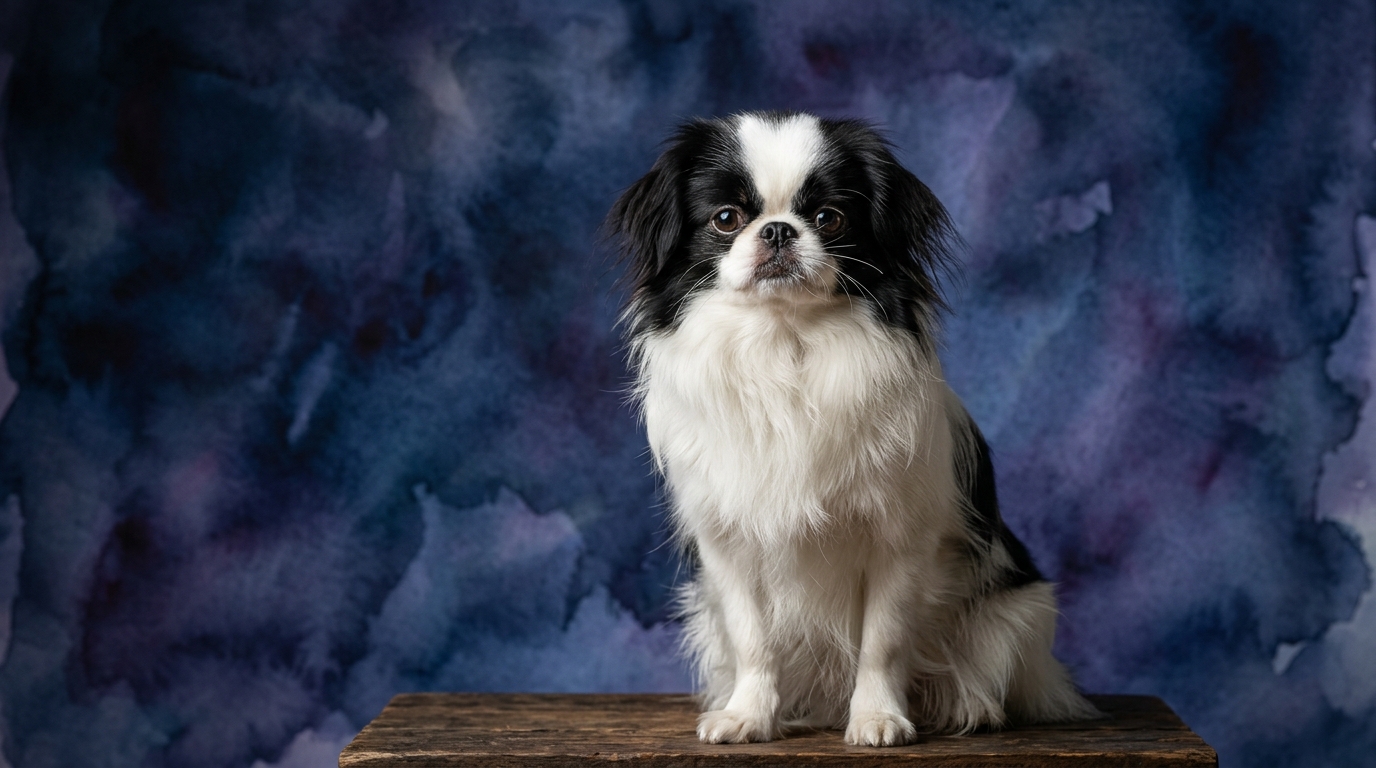
Side-by-Side IQ Profile: Border Collie vs. Japanese Chin
**Border Collie:** This herding specialist, a consistent frontrunner in canine cognitive studies, showcases a remarkable aptitude across several dimensions. Its **Problem Solving (5/5)** is characterized by an exceptional capacity for analytical thought, quickly assessing complex situations and devising novel solutions, often anticipating outcomes. **Training Speed (5/5)** is outstanding, as they absorb new commands and routines with remarkable rapidity, often grasping concepts in just a few repetitions. Their **Social Intelligence (4/5)**, while intensely focused on their primary handler, involves a nuanced understanding of human cues and intentions, interpreting subtle body language and vocal tones. A powerful, innate **Instinctive Drive (5/5)** to herd is central to their cognitive makeup, manifesting as an intense desire to gather, control, and organize. Finally, their **Memory (5/5)** is outstanding, allowing them to retain vast repertoires of commands, routines, and experiences over long periods, effectively underpinning their complex problem-solving and rapid training.
**Japanese Chin:** This charming toy breed presents a cognitive profile geared towards companionship and gentle interaction, rather than complex tasks. Its **Problem Solving (3/5)** shows a moderate ability to navigate novel situations, capable of learning routines and solving straightforward puzzles, approaching challenges with a discerning, sometimes cautious, curiosity. **Training Speed (3/5)** is steady and deliberate, requiring consistent and patient repetition to solidify new commands; their learning style is less about rapid absorption and more about gradual understanding. For **Social Intelligence (3/5)**, Japanese Chins excel at forming deep, affectionate bonds with their inner circle, displaying a sensitive awareness of their owners' moods and preferences, often acting as intuitive companions. Their primary **Instinctive Drive (3/5)** is companionship, manifesting as a desire for comfort, close proximity to their people, and gentle interaction, typically expressed in a subdued manner without specialized focus. Lastly, their **Memory (3/5)** is functional for established routines, familiar faces, and beloved locations, recalling pleasant experiences and learned commands reliably, contributing to their consistent and predictable companion behavior.
Where the Border Collie Wins Cognitively
The Border Collie’s cognitive edge is most pronounced in areas demanding active mental engagement and strategic thinking. Their Problem Solving score of 5/5 means they don't just react to stimuli; they analyze, plan, and execute multi-step solutions, whether it's navigating an agility course or figuring out how to open a child-proof gate. This contrasts with the Japanese Chin’s more observational problem-solving approach. Furthermore, the Border Collie's 5/5 for Training Speed is a direct reflection of their neurological architecture, allowing them to form strong associations and generalize learned behaviors across different contexts almost instantaneously. This isn't merely obedience; it's a profound ability to synthesize information and apply it efficiently. Their superior Memory (5/5) ensures these complex learned behaviors and solutions are retained with remarkable permanence, enabling them to build an extensive repertoire of skills over their lifetime, far exceeding the Chin's more moderate recall for daily routines.
Where the Japanese Chin's Cognitive Style Shines
While the Japanese Chin's cognitive profile doesn't include 5/5 scores, its particular blend of traits offers distinct advantages for specific lifestyles. The Chin's more moderate Instinctive Drive (3/5) means they are less compelled by an overwhelming internal need to work or manage their environment. This translates into a dog that is naturally content with a less structured daily routine, free from the constant mental pressure to find a “job.” Their Social Intelligence (3/5), while not as broadly applicable as the Border Collie's, is exquisitely tuned for intimate companionship, allowing them to be deeply empathetic and sensitive to their immediate human family's emotional state without requiring extensive intellectual stimulation for bonding. This nuanced social understanding, focused on quiet attunement rather than task-oriented interaction, allows them to excel as calm, comforting presences, a cognitive strength often overlooked in assessments prioritizing active problem-solving. Their lower training speed and problem-solving, while not “wins” in a competitive sense, mean they are less likely to outsmart their owners or become restless from under-stimulation, making them cognitively “easier” to live with for those who prefer a less demanding canine mind.
Which is Easier to Train and Why
The Border Collie, with its 5/5 Training Speed and 5/5 Problem Solving, is undeniably easier to train in terms of raw aptitude and speed of acquisition. Their innate desire to work and please, driven by a 5/5 Instinctive Drive, means they actively seek instruction and derive satisfaction from mastering tasks. They quickly grasp complex sequences, understand abstract concepts like “left” and “right” in a directional sense, and can generalize commands to new environments with minimal effort. Their 5/5 Memory ensures that once a command is learned, it is retained long-term, reducing the need for constant review. In contrast, the Japanese Chin, with 3/5 across these same categories, requires a more patient, gentle, and repetitive approach. Their training journey is about building consistent habits through positive reinforcement rather than rapid intellectual breakthroughs. While they are willing to learn, their attention span for formal sessions may be shorter, and their motivation is more rooted in comfort and connection than in the inherent joy of problem-solving or working. Owners will find the Chin responsive to gentle guidance, but expecting the same pace or complexity as a Border Collie would be unrealistic and frustrating for both parties.
Cognitive Profiles for Active vs. Relaxed Owners
The cognitive makeup of the Border Collie makes it an ideal match for active owners who thrive on engagement and purpose. Their 5/5 Instinctive Drive, coupled with exceptional Problem Solving and Training Speed, means they require significant mental and physical exertion daily. An owner who enjoys dog sports like agility, obedience, flyball, or even complex trick training will find an eager and capable partner in a Border Collie. Without outlets for their robust cognitive abilities and strong drives, these dogs can become restless, channeling their problem-solving skills into less desirable behaviors, like inventing their own “herding” games with family members or furniture. Conversely, the Japanese Chin's cognitive profile aligns perfectly with relaxed owners seeking a devoted, low-key companion. Their moderate Instinctive Drive (3/5) means they are content with shorter, leisurely walks and indoor play, without the constant need for a “job.” Their Social Intelligence (3/5) is geared towards quiet companionship, making them excellent lap dogs who are deeply attuned to their owner's presence without demanding constant interactive games or complex mental challenges. Their lower problem-solving and training speed mean they are less likely to become bored or destructive from under-stimulation, making them a harmonious fit for a calmer household rhythm.
The Verdict
Select a Border Collie if you are an experienced owner prepared to dedicate substantial time daily to intricate training, dog sports, and providing consistent mental challenges for a highly driven, task-oriented canine partner.
Opt for a Japanese Chin if you seek a gentle, sensitive companion content with a relaxed lifestyle, moderate exercise, and a strong emphasis on quiet, affectionate bonding without the need for intense intellectual demands.
🧠 Find Your Pet's IQ Score
Our Pet IQ Lab assessment covers 25+ tests across 5 cognitive dimensions — personalized to your breed.
Take the Full IQ Test →Frequently Asked Questions
Does a Japanese Chin need mental stimulation?
Yes, all dogs benefit from mental engagement, but for a Japanese Chin, this typically involves gentle puzzle toys, short training sessions for basic manners, or interactive play that reinforces their bond with you. Their needs are less about complex problem-solving and more about varied, positive interaction.
Can a Border Collie live in an apartment?
A Border Collie can adapt to apartment living if their owners are committed to providing extensive daily outdoor exercise, structured training, and consistent mental challenges. Without a yard, the responsibility for fulfilling their intense physical and cognitive needs falls entirely on the owner through dedicated outings and activities.
Is a Border Collie prone to behavioral issues if not properly stimulated?
Yes, a Border Collie's high problem-solving ability, intense instinctive drive, and need for purpose mean that without adequate physical and mental stimulation, they can develop undesirable behaviors. This might include excessive barking, destructive chewing, obsessive herding of people or objects, or anxiety stemming from boredom.