
Side-by-Side IQ Profile: Herding Genius vs. Companion Savvy
The Cosmic Pet Pet IQ Lab employs a multi-faceted approach to assess canine intelligence, moving beyond simple obedience to encompass a dog’s overall cognitive toolkit. For the Border Collie, a breed synonymous with strategic thinking and swift learning, its profile reflects a mind built for complex tasks. Problem Solving scores a perfect 5/5, indicating an exceptional capacity to navigate novel situations and devise solutions. Training Speed also sits at 5/5, highlighting their rapid acquisition of new commands and concepts. Their Social Intelligence, at 4/5, shows strong cooperative abilities within a working context, while an Instinctive Drive of 5/5 underscores their innate desire to herd and perform. Rounding out their profile, a Memory score of 5/5 demonstrates their ability to retain extensive information and complex sequences over time.
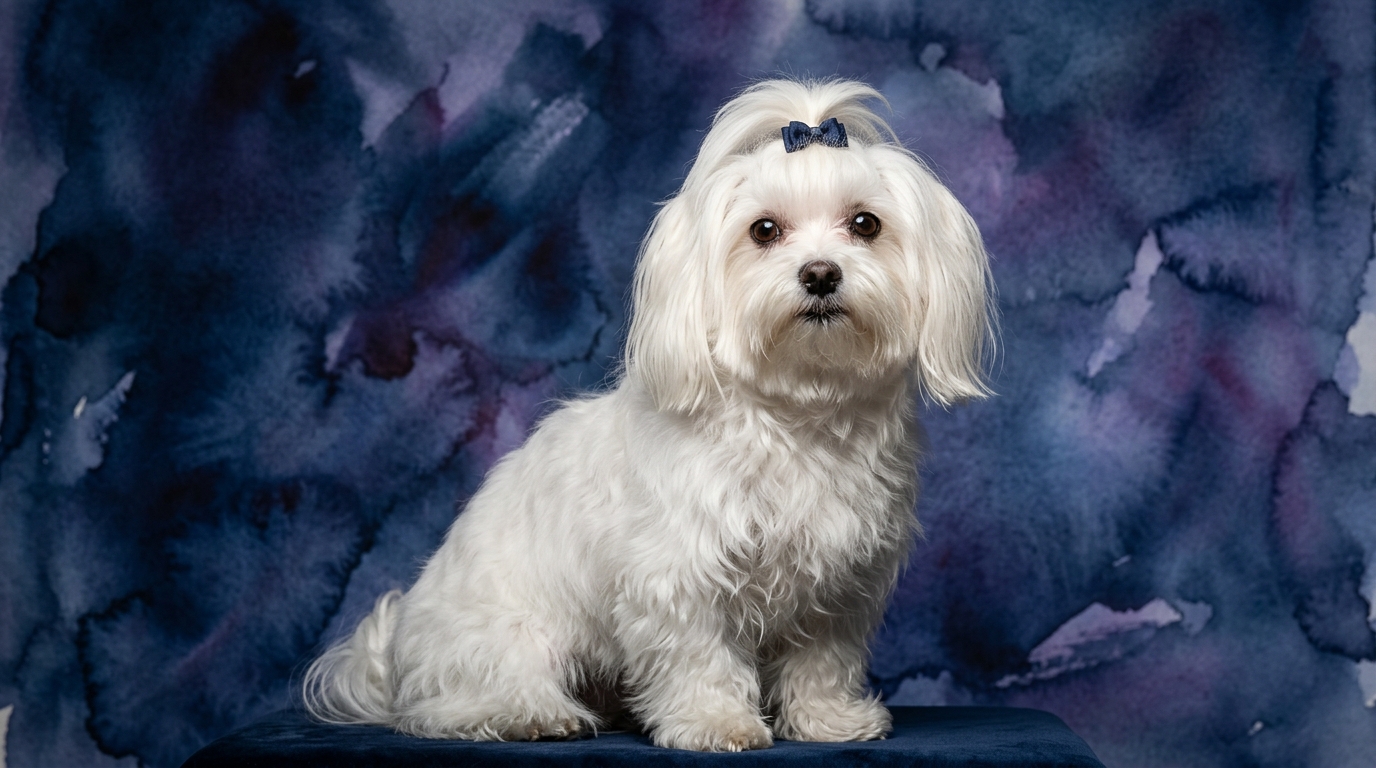
In contrast, the Maltese, bred primarily for companionship, presents a different yet equally valuable cognitive blueprint. Their Problem Solving is rated at 3/5, suggesting a moderate ability to tackle new challenges, often relying on human cues or established routines. Training Speed, at 3/5, indicates they learn at a steady pace, though perhaps not with the same lightning-fast grasp as a Border Collie. Where the Maltese truly shines is in Social Intelligence, earning a 5/5; this reflects their profound capacity for emotional connection, empathy, and nuanced communication with their human companions. Their Instinctive Drive is a lower 2/5, as their historical role did not require strong independent working behaviors. Finally, their Memory at 3/5 means they retain information adequately for daily life and bonding, but perhaps not for vast repertoires of complex tasks.
Where the Border Collie Leads Cognitively
The Border Collie's cognitive strengths are deeply rooted in its heritage as a herding dog, demanding a nuanced blend of foresight, strategy, and rapid execution. Their 5/5 Problem Solving isn't just about figuring out puzzle toys; it extends to understanding complex environmental dynamics, like anticipating livestock movement or finding the most efficient path through an obstacle course. This breed excels at multi-step commands and intricate sequences, often demonstrating an ability to generalize learned concepts to new, similar situations without explicit re-training. Their Training Speed (5/5) means they don't just learn quickly, they often learn by observation, picking up cues from handlers or even other dogs. This rapid assimilation of information, coupled with their perfect 5/5 Memory, allows them to build an expansive vocabulary of commands and behaviors, remembering them accurately even after long periods. Furthermore, their 5/5 Instinctive Drive translates into an unwavering focus and persistence on tasks, making them relentless in pursuing a goal, whether it's herding sheep or mastering an agility course, a cognitive persistence rarely matched by other breeds.
Where the Maltese Excels Cognitively
The Maltese's cognitive brilliance lies in its mastery of social interaction and emotional attunement, a specialized intelligence perfectly suited for its role as a devoted companion. Their 5/5 Social Intelligence means they possess an exceptional ability to read human emotions, intentions, and subtle body language. They can often anticipate their owner's needs or mood, offering comfort or initiating play with remarkable precision. This isn't just about being affectionate; it's a deep cognitive understanding of the human-animal bond. While their Problem Solving might be moderate, their social acumen allows them to navigate human environments effectively by eliciting cooperation and affection. They might not solve a complex puzzle box independently, but they are adept at communicating their desires to their human, effectively "solving" the problem of getting what they need through social engagement. Their cognitive strength is in fostering profound emotional connections, making them highly responsive to praise and gentle interaction, which forms the bedrock of their learning and behavior within a family unit.
Training Dynamics: Border Collie's Drive vs. Maltese's Charm
Training a Border Collie is often a rewarding experience due to their exceptional 5/5 Training Speed and high eagerness to engage. They thrive on mental stimulation and respond enthusiastically to new challenges. Their strong Instinctive Drive means they possess an innate desire to work and please, making them highly motivated by tasks and praise. However, this same drive, if not channeled appropriately, can lead to behavioral challenges such as herding children, nipping at heels, or excessive barking if under-stimulated. They require a consistent, engaging training regimen from puppyhood to harness their cognitive power productively, turning their problem-solving skills towards desired behaviors rather than self-employment. For instance, a Border Collie might quickly learn a 10-step obedience routine and perform it flawlessly, eager for the next instruction.
The Maltese, with a 3/5 Training Speed, learns at a more moderate pace, often requiring more repetition and patience. Their primary motivators are typically social rewards like affection and attention, rather than the intrinsic satisfaction of a complex task. While they can certainly be trained to a high degree of obedience, their lower Instinctive Drive means they are less likely to seek out work or complex problem-solving on their own. Challenges like house-training, common in many toy breeds, often require consistent positive reinforcement and a structured routine, as their smaller bladders and lower drive for outdoor elimination can make the process longer. A Maltese might learn to sit and stay reliably for a treat and a cuddle, but might not show the same sustained focus on learning a multi-stage trick without significant social encouragement.
Owner Lifestyles: Active Engagement vs. Relaxed Companionship
The cognitive profile of the Border Collie dictates a lifestyle of active engagement and purposeful activity. Owners best suited for this breed are those who can provide extensive mental and physical stimulation daily. This includes participation in dog sports like agility, obedience, flyball, or even actual herding. Their high Problem Solving and Instinctive Drive mean they require a 'job' to feel fulfilled, and without it, their considerable intelligence can lead to destructive behaviors or anxiety. They thrive in environments where they can learn new commands, solve puzzles, and have ample space to run and exercise, making them ideal for individuals or families committed to an active, structured routine and ongoing training.
Conversely, the Maltese is an ideal companion for owners seeking a more relaxed, intimate relationship. Their exceptional 5/5 Social Intelligence makes them perfect for those who desire a devoted lap dog, content with indoor play, short walks, and extensive cuddle time. While they still benefit from basic training and socialization, their lower Instinctive Drive and moderate Problem Solving mean they do not demand the same intensity of mental or physical exercise as a Border Collie. They are well-suited for apartment living, seniors, or individuals who prefer a quieter, more domestic lifestyle, valuing emotional connection and close proximity over high-octane activities. Their cognitive strengths truly shine in a home where their ability to bond and provide comfort is cherished.
The Verdict: Choosing Your Canine Companion
The Verdict
Choose a Border Collie if you are an active, committed owner prepared to dedicate significant time to advanced training, mental enrichment, and vigorous physical exercise, seeking a canine partner for sports or demanding tasks.
Opt for a Maltese if you desire a devoted, affectionate companion that thrives on close human interaction and emotional bonding, fitting seamlessly into a more relaxed, indoor-oriented lifestyle with moderate activity requirements.
🧠 Find Your Pet's IQ Score
Our Pet IQ Lab assessment covers 25+ tests across 5 cognitive dimensions — personalized to your breed.
Take the Full IQ Test →Frequently Asked Questions
Does a Maltese require less training than a Border Collie?
A Maltese generally requires less intensive and complex training than a Border Collie, primarily due to their moderate training speed and lower instinctive drive. While basic obedience and house-training are essential for both, a Border Collie demands ongoing advanced mental challenges to prevent behavioral issues, whereas a Maltese is more content with consistent foundational training and social interaction.
Can a Border Collie be a good family pet?
Yes, a Border Collie can be an excellent family pet, provided the family understands and commits to meeting its significant cognitive and physical needs. They thrive when given a 'job' and consistent engagement, which can include participation in dog sports, extensive training, or active play with family members. Without adequate stimulation, their high drive and problem-solving abilities can manifest as unwanted behaviors.
Is the Maltese's lower problem-solving score a disadvantage?
The Maltese's moderate problem-solving score is not a disadvantage but rather a reflection of its specialized cognitive strengths, which are centered on social intelligence and companionship. While they may not excel at complex independent tasks, their exceptional ability to read and connect with humans makes them highly adaptable and valuable in their role as devoted companions, fulfilling their purpose perfectly.