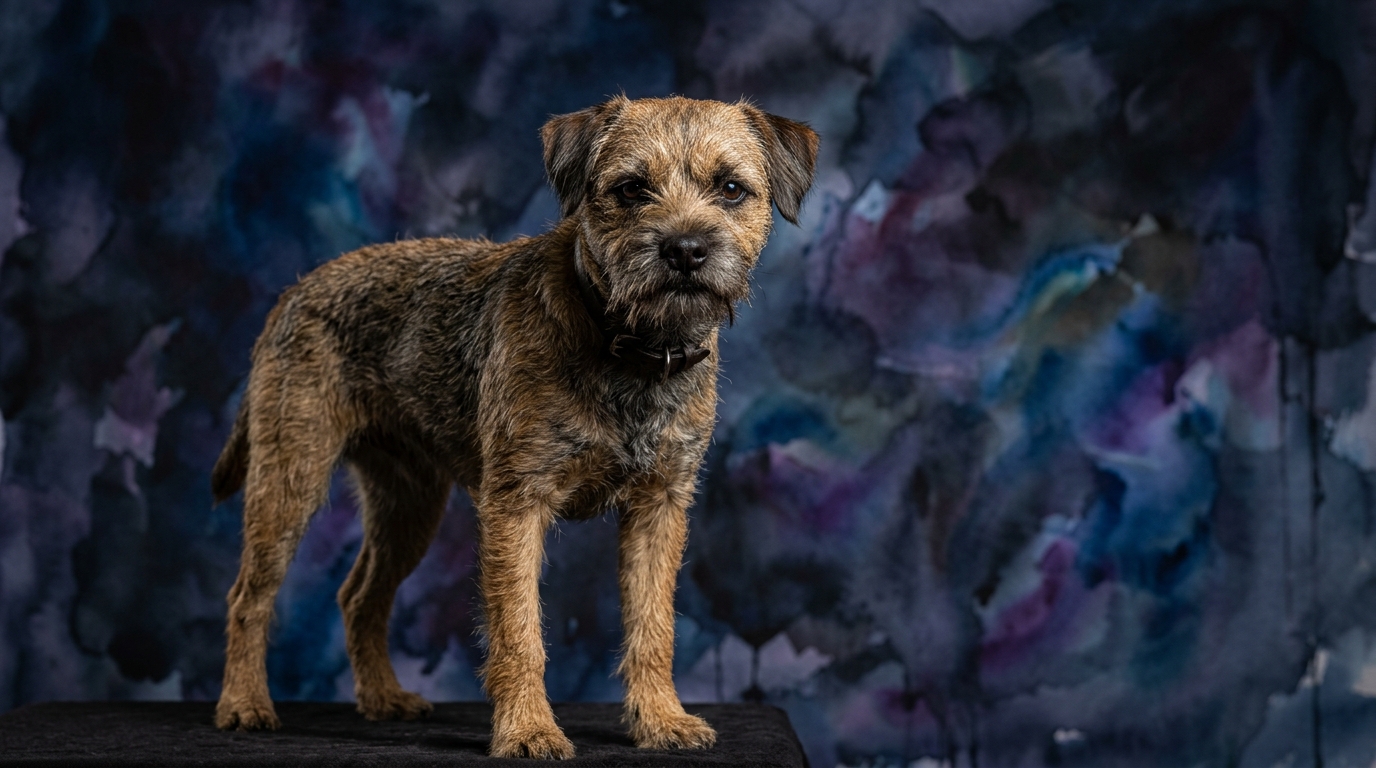

Side-by-Side IQ Profile: Diving into Canine Minds
The Cosmic Pet Pet IQ Lab evaluates canine intelligence across five critical dimensions: Problem Solving, Training Speed, Social Intelligence, Instinctive Drive, and Memory. These metrics offer a granular view beyond generic notions of 'smartness,' revealing how a breed processes information and interacts with its environment.
The Border Terrier, acknowledged by its Coren rank of #30, presents a robust cognitive profile. It scores 4/5 in Problem Solving, indicating a breed adept at navigating complex situations, figuring out puzzles, and adapting to novel challenges with a thoughtful, investigative approach. Its Training Speed also stands at a strong 4/5, suggesting a quick grasp of new commands and routines, often requiring fewer repetitions to solidify learning. In terms of Social Intelligence, the Border Terrier earns a 3/5, demonstrating a moderate capacity for understanding human cues and intentions, capable of forming strong bonds but perhaps not always seeking constant validation. Its Instinctive Drive is rated 3/5, reflecting a balanced, but still present, urge to hunt, dig, or chase, typical of its terrier heritage. Finally, the Border Terrier's Memory is impressive at 4/5, allowing it to retain learned behaviors, past experiences, and familiar routes with considerable ease.
The Manchester Terrier, while not Coren-ranked, possesses a consistent and well-rounded cognitive architecture. It scores 3/5 across all five dimensions: Problem Solving, Training Speed, Social Intelligence, Instinctive Drive, and Memory. A 3/5 in Problem Solving indicates a practical intelligence; this breed can resolve common challenges and learn from experience, though perhaps without the same inventive flair as a higher-scoring counterpart. Its 3/5 Training Speed means it learns at a steady pace, benefiting from clear, consistent instruction and positive reinforcement. A Social Intelligence score of 3/5 suggests the Manchester Terrier is capable of good rapport with its family, understanding emotional nuances and responding to social cues, making it a responsive companion. With an Instinctive Drive of 3/5, its terrier instincts are present but often manageable, less overtly intense than some other terrier breeds. Lastly, its 3/5 Memory indicates it reliably remembers routines, commands, and experiences, offering a predictable and stable companion.
Where the Border Terrier Wins Cognitively
The Border Terrier’s higher scores in Problem Solving (4/5 vs. 3/5) and Memory (4/5 vs. 3/5) give it a distinct cognitive edge in specific areas. A Border Terrier’s superior problem-solving abilities mean it is more likely to independently strategize its way out of confinement, such as figuring out how to open a gate or unlatch a crate. This cognitive flexibility also translates to a greater aptitude for complex interactive toys or scent work, where it can methodically work through layers of challenge. Owners might observe a Border Terrier actively experimenting with different approaches when faced with a barrier, rather than simply giving up or resorting to brute force.
Furthermore, its elevated Memory score (4/5) implies a Border Terrier will retain learned behaviors and commands over longer periods, even with less frequent reinforcement. This means skills acquired in puppyhood are more likely to persist into adulthood without extensive review, and it will remember routes taken on walks or the location of hidden toys with surprising accuracy. This robust memory also contributes to its ability to generalize learned behaviors to new contexts more readily, making it an adaptable and reliable learner in various environments. The Border Terrier's cognitive profile suggests a dog that not only learns quickly but also retains that learning efficiently, making training efforts potentially more enduring.
Where the Manchester Terrier Offers Unique Cognitive Advantages
While the Manchester Terrier may not numerically outscore the Border Terrier in specific cognitive dimensions, its consistent 3/5 across the board presents a unique set of cognitive advantages for certain owners and lifestyles. This balanced cognitive profile means the Manchester Terrier is less prone to extreme tendencies that might accompany higher scores in certain areas. For example, its 3/5 in Problem Solving suggests it’s intelligent enough to learn and adapt but perhaps less likely to become an "escape artist" or to constantly outwit its human companions with complex schemes, which can be a cognitive challenge for some owners.
The Manchester Terrier's moderate Instinctive Drive (3/5, matching the Border Terrier) also means its natural terrier behaviors—like chasing small animals or digging—are present but often more manageable and predictable than in breeds with higher drives. This balanced cognitive makeup translates into a dog that is generally less demanding in terms of constant mental stimulation to prevent destructive boredom, yet still capable of engaging in a variety of activities. Its consistent scores across all dimensions suggest a reliable and predictable cognitive temperament, offering a steady and less cognitively "intense" companionship experience compared to a dog that might excel dramatically in one area but present challenges in another.
Which is Easier to Train and Why
When it comes to ease of training, the Border Terrier holds a distinct advantage, primarily due to its 4/5 Training Speed compared to the Manchester Terrier's 3/5. A Border Terrier's higher training speed means it typically picks up new commands and routines with fewer repetitions. This translates into quicker initial learning phases for basic obedience, trick training, or even more advanced canine sports. Owners of Border Terriers often report that their dogs seem to "get it" faster, making training sessions feel more productive and rewarding in a shorter timeframe. This isn't to say the Manchester Terrier is difficult to train, but rather that it will likely require a more patient, consistent approach with slightly more repetition to solidify new behaviors.
The behavioral differences stemming from these scores are evident in practice. A Border Terrier might learn to "stay" after just a few short sessions, demonstrating a rapid understanding of the concept and the desired action. Conversely, a Manchester Terrier, while certainly capable of mastering "stay," might need several more sessions, with clear cues and consistent reinforcement, to achieve the same level of reliability. Both breeds respond well to positive reinforcement, but the Border Terrier's cognitive architecture allows for a faster uptake, potentially making the initial training journey feel smoother and less protracted for the owner who values rapid progress.
Which Suits Active Owners vs. Relaxed Owners
The cognitive profiles of both breeds offer insights into their suitability for different owner lifestyles. The Border Terrier, with its 4/5 in Problem Solving and Memory, alongside a 3/5 Instinctive Drive, generally suits an active owner who enjoys engaging their dog in mentally stimulating activities. Its quick learning and excellent memory mean it thrives on varied training, puzzle toys, and activities like agility or earthdog trials where it can apply its cognitive agility. An owner who enjoys teaching new tricks, exploring different hiking trails, or participating in dog sports will find the Border Terrier a willing and capable partner, eager to use its sharp mind. While its Instinctive Drive is moderate, it still requires outlets for its natural terrier inclinations, suggesting an owner prepared to manage its chase drive in certain environments.
The Manchester Terrier, with its balanced 3/5 across all categories, is well-suited for owners seeking a consistent and moderately active companion. While it appreciates regular exercise and mental engagement, its overall cognitive demands are less intense than a breed with higher problem-solving or memory scores. This makes it a good fit for owners who enjoy daily walks, some basic training, and cuddle time, but perhaps aren't looking for a dog that constantly needs to be challenged with complex tasks. Its moderate Instinctive Drive means it's still a terrier, but its focused energy can often be satisfied with structured play and consistent routines. A Manchester Terrier can adapt to slightly more relaxed home environments, provided its basic needs for companionship and activity are met, without constantly pushing the boundaries of its cognitive environment.
The Verdict
Choose the Border Terrier if you’re an active individual or family seeking a mentally agile companion eager to learn quickly, tackle complex challenges, and retain vast amounts of information for varied activities. Its robust problem-solving and memory make it an engaging partner for dog sports, advanced training, or an adventurous lifestyle that values a sharp, quick-witted canine.
Opt for the Manchester Terrier if you appreciate a consistently balanced and predictable cognitive temperament, preferring a companion that learns steadily and adapts reliably without presenting extreme cognitive demands. Its moderate scores across all dimensions make it an excellent choice for owners seeking a devoted, manageable terrier who thrives on routine, companionship, and moderate engagement.
🧠 Find Your Pet's IQ Score
Our Pet IQ Lab assessment covers 25+ tests across 5 cognitive dimensions — personalized to your breed.
Take the Full IQ Test →Frequently Asked Questions
Does the Border Terrier's higher problem-solving score make it harder to manage?
A Border Terrier's 4/5 problem-solving ability means it can be quite resourceful, potentially figuring out how to open doors or escape yards if not adequately stimulated or secured. This requires owners to be proactive in providing mental enrichment and securing their environment.
Is the Manchester Terrier a good choice for first-time dog owners?
The Manchester Terrier's consistent 3/5 scores across all cognitive dimensions make it a relatively predictable and manageable breed, which can be a good fit for dedicated first-time owners willing to commit to consistent, positive training. Its moderate demands avoid some of the cognitive challenges presented by more extreme profiles.
How do their instinctive drives compare in daily life?
Both breeds share a 3/5 instinctive drive, meaning both have a noticeable prey drive for small animals and a natural inclination to dig. However, the Border Terrier's higher problem-solving might lead it to more creatively pursue these instincts, whereas the Manchester Terrier's drive is likely expressed more predictably within its environment.