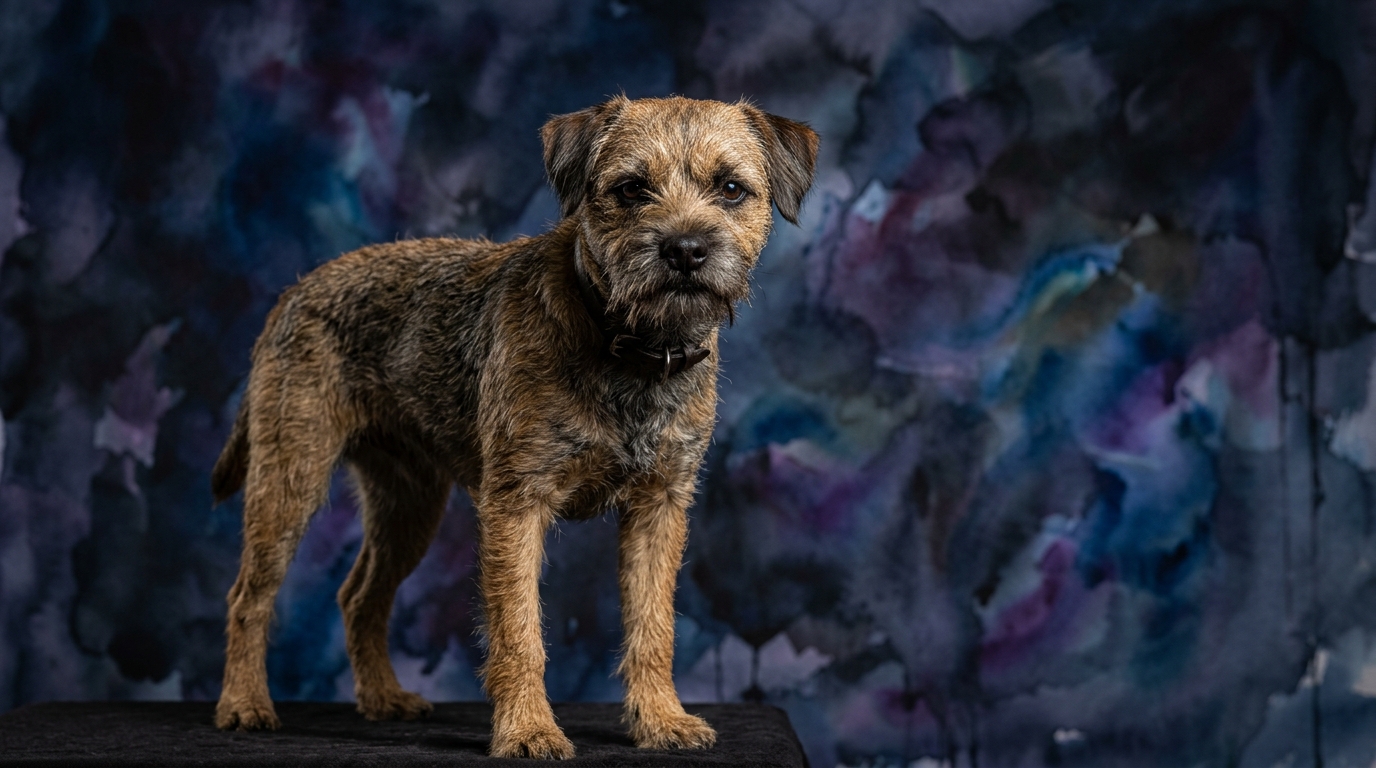
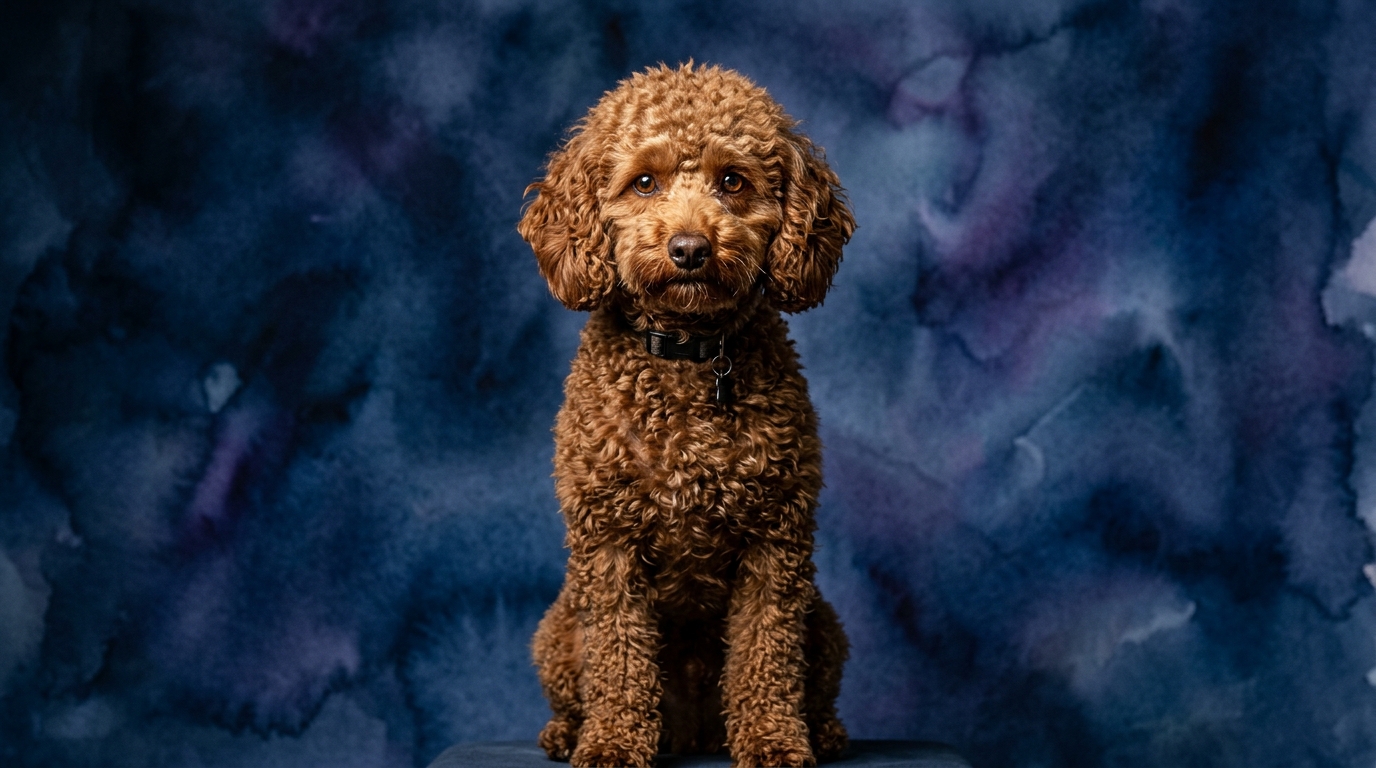
Side-by-Side IQ Profile: Border Terrier vs. Miniature Poodle
The Cosmic Pet Pet IQ Lab provides a unique lens to compare the cognitive blueprints of the Border Terrier and Miniature Poodle. Their Coren ranks immediately highlight a distinction: the Miniature Poodle stands at an impressive #2, signifying exceptional working and obedience intelligence, while the Border Terrier, at #30, demonstrates a competent and trainable mind with a different cognitive approach. Examining the five specific IQ dimensions reveals these nuances.
In problem-solving, the Miniature Poodle scores a perfect 5/5, quickly analyzing novel situations and deducing solutions with remarkable adaptability. The Border Terrier, with a strong 4/5, excels through tenacious persistence and practical application, often relying on its keen senses and determination to overcome obstacles rather than abstract reasoning. Training speed also sees the Miniature Poodle at a 5/5, absorbing new commands and complex sequences with minimal repetitions due to its focus and eagerness to please. The Border Terrier, scoring 4/5, learns readily but its independent streak may require more engaging motivation and a slightly more patient approach for consistent execution.
Both breeds share a social intelligence score of 3/5, indicating a moderate ability to interpret human cues and integrate into family dynamics, understanding basic social structures without exceptional intuitive empathy. For instinctive drive, both again score 3/5. In the Border Terrier, this manifests as a strong prey drive and an urge to explore and dig, reflecting its hunting origins. For the Miniature Poodle, this moderate drive is often channeled into a desire for engagement, play, and participation with its human companions. Finally, memory is a standout for the Miniature Poodle at 5/5, allowing it to recall an extensive array of commands and routines with impressive accuracy. The Border Terrier's 4/5 memory is robust for practical information like routes, established routines, and environmental specifics, crucial for its historical role as a self-sufficient working dog. This side-by-side view illustrates not a hierarchy, but a fascinating divergence in cognitive specialization.
Where the Border Terrier Wins Cognitively
The Border Terrier's cognitive strengths shine particularly in scenarios demanding independent thought and sustained effort against adversity. Its 4/5 problem-solving score, while slightly lower than the Poodle's, is characterized by a tenacious approach; a Border Terrier isn't easily deterred by initial failures and will persistently work through an obstacle, making it adept at complex scent work or navigating varied terrains without constant human direction. Their 4/5 memory is less about rote obedience and more about practical recall for locations, routines, and the intricacies of their environment, a vital trait for a dog historically navigating rugged landscapes. This breed excels when given a job that requires self-reliance and grit, retaining information pertinent to its 'mission' with impressive accuracy over time.
Where the Miniature Poodle Wins Cognitively
The Miniature Poodle's cognitive advantages are evident in its remarkable capacity for rapid acquisition and retention of information. Scoring a perfect 5/5 in both problem-solving and training speed, the Poodle quickly grasps new concepts and complex command sequences, often demonstrating an uncanny ability to generalize learned behaviors to new contexts. Its 5/5 memory is a cornerstone of this prowess, allowing it to recall an extensive repertoire of cues, tricks, and routines with minimal prompting, making it a star pupil in obedience, agility, and even canine freestyle. This breed thrives on mental engagement, swiftly deciphering puzzles and anticipating patterns, which translates into an animal that often seems to be 'one step ahead' in its understanding of human intentions and environmental cues.
Which is Easier to Train and Why
When evaluating ease of training, the Miniature Poodle generally presents a smoother path for most owners, primarily due to its perfect 5/5 scores in both problem-solving and training speed. Poodles exhibit an eagerness to please and a remarkable ability to connect human cues with desired actions quickly, often requiring fewer repetitions to solidify a new command. Their cognitive flexibility allows them to adapt to diverse training methods and environments with grace, making them highly responsive to positive reinforcement and eager participants in structured learning. In contrast, the Border Terrier, while boasting a strong 4/5 in training speed, often brings a characteristic terrier independence to the learning process. Their instinctive drive, while moderate at 3/5, can be channeled into focused tasks, but their inherent self-reliance means they might question commands or prioritize an interesting scent over immediate compliance. Training a Border Terrier requires a patient, consistent, and often creative approach, utilizing their natural curiosity and desire to work rather than expecting unquestioning obedience. For instance, teaching a recall might be quicker with a Poodle due to its focus on the handler, whereas a Border Terrier might need more compelling motivation to disengage from a stimulating outdoor pursuit.
Which Suits Active Owners vs. Relaxed Owners
The choice between a Border Terrier and a Miniature Poodle largely depends on an owner's lifestyle and their preferred level and type of engagement. Active owners who relish outdoor adventures, structured tasks, and a dog with a robust, independent spirit will find a wonderful companion in the Border Terrier. Its moderate instinctive drive (3/5) combined with its tenacity and practical problem-solving (4/5) makes it ideal for activities like earthdog trials, scent work, or long hikes where it can utilize its natural instincts and sturdy build. These dogs thrive on having a 'job' and appreciate an owner who understands their working heritage and provides outlets for their curiosity and physical energy. They are not content to be mere couch potatoes and require consistent mental and physical stimulation to prevent boredom-driven behaviors.
Conversely, the Miniature Poodle, with its superior problem-solving (5/5) and training speed (5/5), adapts beautifully to a wide array of lifestyles, making it suitable for both highly active owners and those seeking a more adaptable, though still mentally engaged, companion. While they possess a moderate instinctive drive (3/5), it often manifests as a desire for interaction and participation in human activities rather than an independent pursuit. Poodles excel in dog sports like agility, obedience, and rally, where their quick learning and memory are significant assets, appealing to owners who enjoy structured training and competitive events. They can also thrive with less intensely active owners who commit to daily walks and provide ample mental stimulation through puzzle toys, trick training, and consistent interaction, demonstrating a remarkable ability to adjust their energy levels to their family's routine, provided their minds are kept busy. Their social intelligence (3/5) means they appreciate being an integral part of family life, making them versatile companions for various home environments.
The Verdict
Choose a Border Terrier if you admire a dog with independent spirit, tenacious problem-solving for practical tasks, and a desire for engaging outdoor adventures that tap into its working heritage. This breed thrives with owners who appreciate its grit and can provide consistent, stimulating outlets for its keen mind and physical energy.
Opt for a Miniature Poodle if you seek a highly adaptable, rapidly learning companion eager for structured training, complex mental challenges, and close interaction across a variety of activities. Its exceptional cognitive abilities make it a joy to train and a versatile partner for a range of lifestyles, from competitive sports to devoted companionship.
🧠 Find Your Pet's IQ Score
Our Pet IQ Lab assessment covers 25+ tests across 5 cognitive dimensions — personalized to your breed.
Take the Full IQ Test →Frequently Asked Questions
Are Border Terriers truly stubborn, or is it a misunderstanding of their intelligence?
Border Terriers are not stubborn in the sense of being unintelligent; rather, their independence stems from their working heritage, where self-reliance was crucial. Their cognitive profile shows strong problem-solving and memory, but their tendency to prioritize their instincts or an interesting scent over a command is a characteristic of their independent spirit, not a lack of understanding. Effective training involves channeling this drive and making compliance more rewarding than self-directed action.
How does a Miniature Poodle's superior memory impact daily life and training?
A Miniature Poodle's exceptional 5/5 memory means they retain commands, routines, and learned behaviors with remarkable consistency. This translates into quicker mastery of new skills, reliable recall, and predictable behavior once trained. For daily life, it means fewer reminders for house rules or cues, and for training, it allows for progression to more complex sequences and advanced sports without constantly revisiting basics, making them highly efficient learners.
Which breed is generally better suited for first-time dog owners?
While both breeds can be wonderful companions, the Miniature Poodle's higher training speed and adaptability often make it a more forgiving choice for first-time dog owners. Their eagerness to learn and responsiveness can build confidence in new trainers. A Border Terrier's independent nature and strong drives might pose more challenges for an inexperienced owner who is not prepared for consistent, creative, and patient training to manage their specific terrier traits.