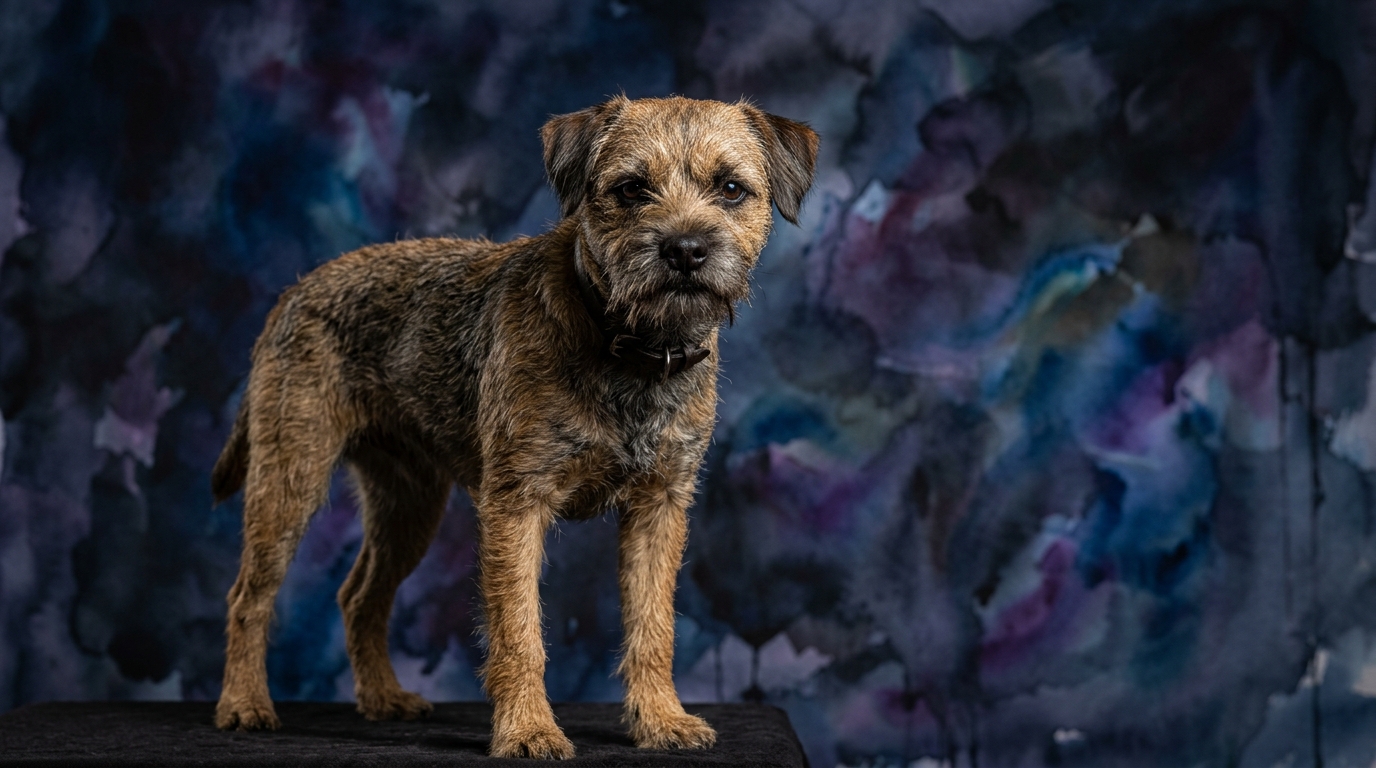
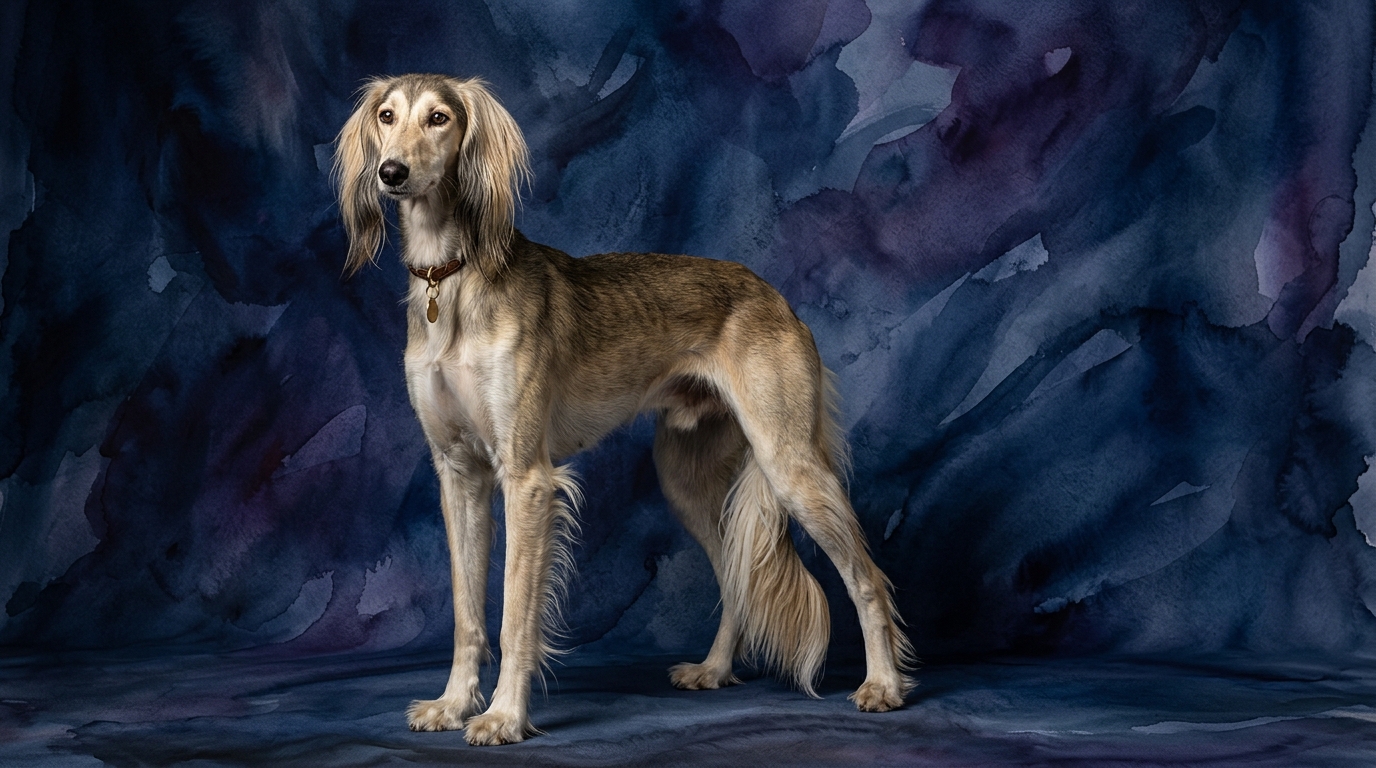
Side-by-Side IQ Profile: Border Terrier vs. Saluki
The Cosmic Pet Pet IQ Lab assesses canine intelligence across five key dimensions, providing a granular view of each breed’s cognitive makeup. For the Border Terrier, a breed with a Coren rank of #30, its profile reflects a working dog's tenacity and adaptability. Its Problem Solving is rated 4/5, indicating a strong capacity for independent thought and overcoming obstacles with strategic persistence. Training Speed also scores 4/5, suggesting a quick grasp of new commands and a responsiveness to structured learning environments. Social Intelligence is 3/5, meaning they can navigate social cues adequately but might not always be the most effusive communicators, while their Instinctive Drive is 3/5, reflecting a manageable but present prey drive tied to their historical role. Finally, their Memory is 4/5, allowing them to retain learned behaviors and routines with notable consistency.
In contrast, the Saluki, a breed not traditionally included in Coren’s ranking, presents a cognitive profile shaped by its ancient sighthound heritage, focusing on independent action and keen observation. Their Problem Solving capability is rated 3/5, indicating they can resolve challenges, but often prefer direct action over complex manipulation. Training Speed is also 3/5, meaning they are capable of learning, but their independent spirit often means a slower, more deliberate training process. Social Intelligence stands at 3/5, suggesting they are observant and discerning in their interactions but tend to be reserved rather than overtly gregarious. Their Instinctive Drive, at 3/5, highlights a powerful, ancient urge to chase, a core part of their being. Memory is also 3/5, showing they remember lessons and experiences, but their recall might be selective, especially when their instincts are engaged.
Where the Border Terrier Excels Cognitively
The Border Terrier truly shines in areas demanding active engagement and collaborative problem-solving, as evidenced by its 4/5 scores in Problem Solving, Training Speed, and Memory. Their higher Problem Solving score means they are more likely to independently figure out how to open a gate or retrieve a toy from a tight spot, demonstrating a persistent and inventive approach to challenges. This cognitive nimbleness makes them excellent candidates for puzzle toys and trick training, where they can apply their mental energy constructively. Their Coren rank of #30 underscores this general aptitude for obedience and adaptive learning.
Furthermore, the Border Terrier’s superior Training Speed (4/5) indicates a greater willingness and capacity to absorb and respond to new commands quickly. This isn't just about rote memorization; it's about connecting actions with consequences and understanding human cues with remarkable efficiency. Paired with their 4/5 Memory, Border Terriers retain these lessons over time, making them consistent performers once a behavior is established. This combination of quick learning and strong recall positions them as highly receptive to consistent guidance and varied mental exercises.
Unique Cognitive Strengths of the Saluki
While the Saluki's scores are consistently 3/5, their cognitive profile represents a distinct type of intelligence, deeply rooted in their sighthound lineage. Their Problem Solving at 3/5, while lower than the Border Terrier, manifests as an ability to make swift, independent decisions in dynamic, open environments, such as during a chase. This isn't about manipulating objects; it's about rapid assessment of movement, distance, and trajectory, crucial for their historical role as hunters.
The Saluki's Social Intelligence at 3/5, combined with their reserved nature, indicates a perceptive rather than overtly interactive cognitive style. They are observant of their surroundings and people, often forming deep, quiet bonds with their chosen family members, discerning nuances in human behavior without needing constant validation. Their Instinctive Drive, also 3/5, is a sophisticated, ancient form of intelligence focused on sight-based pursuit. This drive isn't a flaw; it's a highly refined cognitive program that dictates their actions in response to visual stimuli, demanding incredible focus and precision in their movements, showcasing a different but equally compelling form of cognitive specialization.
Training Dynamics: Which is Easier to Guide?
When it comes to ease of training, the Border Terrier generally presents a more straightforward path. Their Training Speed of 4/5 and Problem Solving of 4/5 mean they are typically eager to engage with their handlers, quickly grasp new concepts, and enjoy the mental stimulation that training provides. They often respond well to positive reinforcement methods and thrive on consistency, viewing training sessions as a collaborative effort. Their terrier tenacity, usually directed at prey, can be channeled effectively into learning tasks, making them persistent students who enjoy mastering new skills.
The Saluki, with its 3/5 Training Speed and inherent independence, offers a different training experience. While they are certainly capable of learning, their sighthound nature means they often need to understand the 'why' behind a command or may choose to prioritize their own motivations, especially if a compelling visual stimulus (like a squirrel) presents itself. Training a Saluki requires immense patience, understanding of their independent spirit, and a focus on building a strong, trusting relationship. They respond best to gentle, consistent methods, often learning through observation and subtle cues rather than forceful repetition, reflecting their discerning Social Intelligence (3/5) and strong Instinctive Drive (3/5) which can override other considerations.
Matching Canine Minds to Lifestyles: Active vs. Relaxed Owners
For owners with an active lifestyle, both breeds require engagement, though in different forms. The Border Terrier, despite its compact size, possesses a surprising amount of energy and a keen mind. Owners who enjoy varied activities like hiking, agility, earthdog trials, or consistent obedience training will find a Border Terrier to be an enthusiastic and capable partner. Their cognitive needs for problem-solving and learning mean they thrive when given regular mental challenges alongside physical exercise, making them suitable for active owners who also enjoy dedicated training time.
The Saluki, while appearing serene indoors, has an undeniable need for bursts of high-speed running. Owners who can provide access to large, securely fenced areas where a Saluki can gallop freely will best meet their physical and cognitive requirements. Their independent nature and focus on visual stimuli mean they are not ideal for off-leash walks in unfenced areas unless extremely well-trained and conditioned. For more relaxed owners, neither breed is a true 'couch potato' in the sense of requiring minimal interaction. However, a Saluki might be perceived as more 'relaxed' indoors due to its quiet demeanor, provided its exercise needs are met with intense, focused bursts of activity rather than constant low-level engagement like a terrier. A Border Terrier, conversely, will seek out mental engagement more consistently, even if it's just observing household activities or solving a puzzle toy.
The Verdict
Choose a Border Terrier if you seek a mentally agile companion eager to engage in collaborative problem-solving and consistent training, thriving on varied mental tasks and a strong partnership.
Opt for a Saluki if you appreciate a more independent, graceful companion whose cognitive strengths lie in keen observation and autonomous decision-making, particularly in open-field pursuits requiring bursts of intense speed.
🧠 Find Your Pet's IQ Score
Our Pet IQ Lab assessment covers 25+ tests across 5 cognitive dimensions — personalized to your breed.
Take the Full IQ Test →Frequently Asked Questions
Do Border Terriers need a lot of mental stimulation?
Yes, Border Terriers, with their 4/5 Problem Solving and 4/5 Memory, require consistent mental stimulation to prevent boredom. Puzzle toys, training sessions, and varied activities are crucial for their cognitive well-being.
Are Salukis good with other pets?
Salukis can coexist peacefully with other pets, especially if raised together, but their 3/5 Instinctive Drive means caution is needed with smaller, fast-moving animals due to their strong prey drive. Introductions should be managed carefully and always supervised.
How does a Saluki's 'instinctive drive' impact its daily life?
A Saluki's 3/5 Instinctive Drive translates into a powerful urge to chase anything that moves quickly, making secure containment paramount. This drive dictates their need for safe, open spaces to run and can influence their focus during training if a visual stimulus appears.