
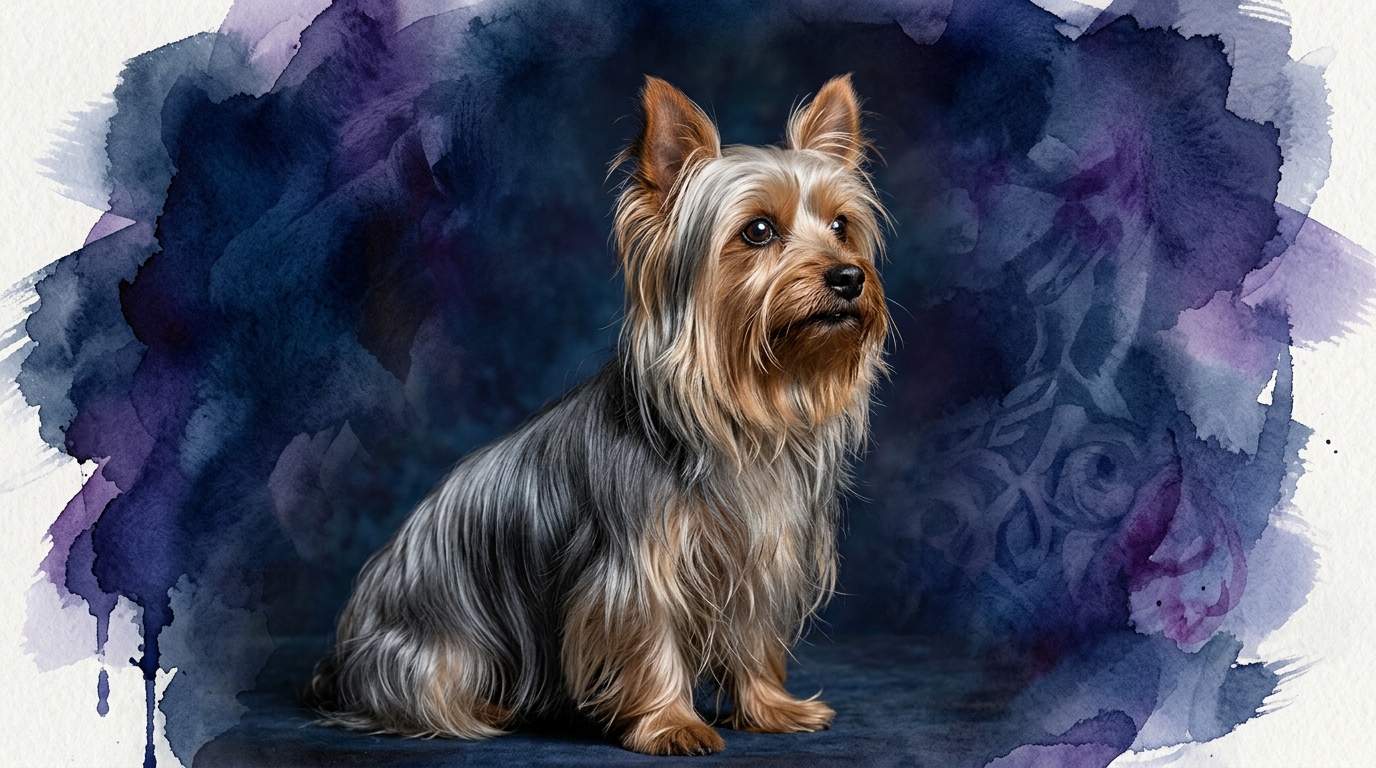
Side-by-Side IQ Profile: Border Terrier vs. Silky Terrier
At The Cosmic Pet Pet IQ Lab, we evaluate cognitive abilities across five key dimensions. For the Border Terrier, we observe a Problem Solving score of 4/5, indicating a strong capacity for independent thought and figuring out complex situations, often associated with their historical role in vermin control requiring quick decision-making. Their Training Speed is also 4/5, exhibiting a readiness to learn new commands and routines with efficiency, reflecting good receptiveness to instruction. Social Intelligence stands at 3/5, meaning they possess a moderate understanding of social cues and interactions, capable of forming bonds but often maintaining a degree of independence. An Instinctive Drive of 3/5 shows a balanced level of innate behaviors like chasing or digging, which are present but generally manageable. Finally, their Memory is strong at 4/5, as they hold information well over time, recalling learned behaviors, routes, and experiences, contributing to consistent performance in tasks.
The Silky Terrier presents a slightly different cognitive picture with consistent scores across the board. Their Problem Solving is 3/5, displaying a competent ability to navigate new situations, though they might rely more on learned responses or owner guidance compared to more independent problem-solvers. Training Speed also comes in at 3/5; they learn at a steady pace, requiring consistent and engaging methods to solidify new commands, reflecting a generally cooperative but sometimes independent spirit. Similar to the Border Terrier, their Social Intelligence is 3/5, indicating a moderate grasp of social dynamics, capable of bonding closely with their family and interacting politely with familiar individuals, though sometimes reserved with strangers. Their Instinctive Drive is likewise 3/5, possessing a similar level of innate behaviors to the Border Terrier, manifesting in occasional chasing or digging tendencies, manageable with appropriate outlets. Lastly, their Memory is 3/5, retaining information adequately and capable of remembering commands and routines, but potentially requiring more frequent refreshers for less frequently practiced skills.
Where the Border Terrier Wins Cognitively
The Border Terrier’s cognitive profile showcases a distinct advantage in areas demanding independent thought and robust recall. Their Problem Solving score of 4/5, compared to the Silky Terrier's 3/5, reflects a deeper capacity for analytical thinking and navigating novel challenges without constant human intervention. This trait stems from their heritage as working dogs, tasked with independent hunting and problem-solving in challenging terrains. They are adept at figuring out how to access desired objects, bypass obstacles, or even outsmart small prey, demonstrating a proactive approach to their environment.
Furthermore, their Memory score of 4/5, again surpassing the Silky Terrier's 3/5, means Border Terriers tend to solidify learned information more rapidly and retain it over longer periods. This translates into quicker mastery of complex command sequences and a reliable recall of previous experiences, whether it's the location of a hidden toy or the boundaries of a familiar walk. Their robust memory aids in building upon past successes, making their learning curve generally steeper for intricate tasks. This combination of superior problem-solving and memory means a Border Terrier is often more equipped to adapt to complex routines or learn multi-step commands efficiently.
Where the Silky Terrier Wins Cognitively
While the Silky Terrier may not boast the same independent problem-solving or memory scores as the Border Terrier, their cognitive strengths lie in different, yet equally valuable, domains. The Silky Terrier's moderate scores across the board (3/5 for Problem Solving, Training Speed, Social Intelligence, Instinctive Drive, and Memory) suggest a balanced and adaptable cognitive makeup, making them less prone to the intense single-mindedness sometimes seen in highly driven working breeds. Their consistent performance in social intelligence (3/5) indicates a stable capacity for forming strong, affectionate bonds with their human companions, often displaying a nuanced understanding of family dynamics.
The balanced instinctive drive (3/5) means that while they possess typical terrier tenacity, it's often expressed in a more contained manner compared to some of their working terrier cousins. This can make their inherent urges, such as chasing or digging, somewhat more predictable and manageable in a domestic setting, requiring less intensive redirection. Their cognitive balance allows them to be highly attuned to their human companions without being overly reliant or overly independent, fostering a cooperative learning environment where engagement and affection play a significant role. This balanced approach across cognitive dimensions can be a distinct advantage for owners seeking a companion whose intellectual engagement is more focused on interaction and less on independent exploration or challenging boundaries.
Which is Easier to Train and Why
Based on their respective IQ profiles, the Border Terrier generally presents as the easier breed to train, primarily due to their higher Training Speed (4/5) and superior Memory (4/5). Their quick grasp of new concepts means they can pick up commands and routines with fewer repetitions. For instance, teaching a Border Terrier a “stay” command might take fewer sessions to solidify, and they are more likely to perform it reliably even after a break. Their strong memory ensures that once a behavior is learned, it is retained effectively, reducing the need for constant refreshers. This translates into a more efficient training process, particularly for obedience or agility work where complex sequences are involved.
In contrast, the Silky Terrier, with a Training Speed of 3/5 and Memory of 3/5, requires a more patient and consistent approach. While certainly trainable, they may need more frequent and shorter training sessions to absorb and retain new information. For example, a Silky Terrier might need more consistent practice with recall in varied environments before it becomes a truly reliable behavior. Their training benefits immensely from positive reinforcement and making learning feel like a game, rather than a chore. They possess the capacity to learn but might take a slightly longer path to mastery, and owners should be prepared for ongoing reinforcement to ensure behaviors remain sharp. The Border Terrier's cognitive make-up lends itself to quicker acquisition and retention, making the initial training phases feel more straightforward and potentially less time-consuming for the owner.
Which Suits Active Owners vs. Relaxed Owners
For active owners seeking a canine partner with robust mental and physical stamina, the Border Terrier is often the more suitable choice. Their higher Problem Solving (4/5) and Memory (4/5) scores, combined with their historical role as tenacious working dogs, mean they thrive on mental stimulation and physical activity. They excel in dog sports like agility, earthdog trials, or scent work, where their independent thinking and strong recall are assets. An active owner who enjoys hiking, long walks, or engaging in structured training games will find the Border Terrier eager to participate and mentally fulfilled. A lack of sufficient engagement can lead to a Border Terrier inventing their own “problems” to solve, which might manifest as digging or excessive curiosity.
Conversely, for more relaxed owners who appreciate a companion that is content with moderate activity and enjoys cuddles on the couch, the Silky Terrier often fits the bill better. While they are certainly energetic and enjoy play, their cognitive profile, with consistent 3/5 scores across dimensions, suggests a slightly less intense demand for constant mental challenges. They are happy with daily walks, interactive play sessions, and being an integral part of family life. Their balanced instinctive drive is less likely to lead to overwhelming behavioral challenges if their exercise routine is consistent but not extreme. A relaxed owner will find the Silky Terrier a charming and affectionate companion who appreciates a comfortable home environment and consistent, gentle engagement without the need for high-octane intellectual pursuits.
The Verdict
Choose a Border Terrier if you seek a cognitively robust companion eager for independent problem-solving, rapid training, and reliable memory retention in active pursuits. They thrive with owners who provide consistent mental and physical challenges, perhaps engaging in dog sports or extensive outdoor activities.
Opt for a Silky Terrier if you prefer a balanced, affectionate companion whose cognitive engagement centers more on family interaction and moderate activity. They are well-suited for owners who appreciate a steady learning pace and a loyal presence in a comfortable home environment.
🧠 Find Your Pet's IQ Score
Our Pet IQ Lab assessment covers 25+ tests across 5 cognitive dimensions — personalized to your breed.
Take the Full IQ Test →Frequently Asked Questions
Are Border Terriers good for first-time dog owners?
Border Terriers can be suitable for first-time owners who are prepared for their independent nature and need for consistent training and mental stimulation. Their quick learning ability is a plus, but their terrier tenacity requires a firm yet fair approach to guidance.
Do Silky Terriers bark a lot?
Silky Terriers can be prone to barking, particularly if not properly socialized or if left alone for extended periods, as they are alert and protective of their home. Consistent training focused on appropriate vocalization and providing sufficient mental enrichment can help manage this trait.
How much exercise does each breed need?
Border Terriers require at least an hour of vigorous exercise daily, often enjoying varied activities like hiking or structured play to satisfy their working drive. Silky Terriers need moderate daily exercise, typically 30-45 minutes of walks and playtime, keeping them engaged and preventing boredom.