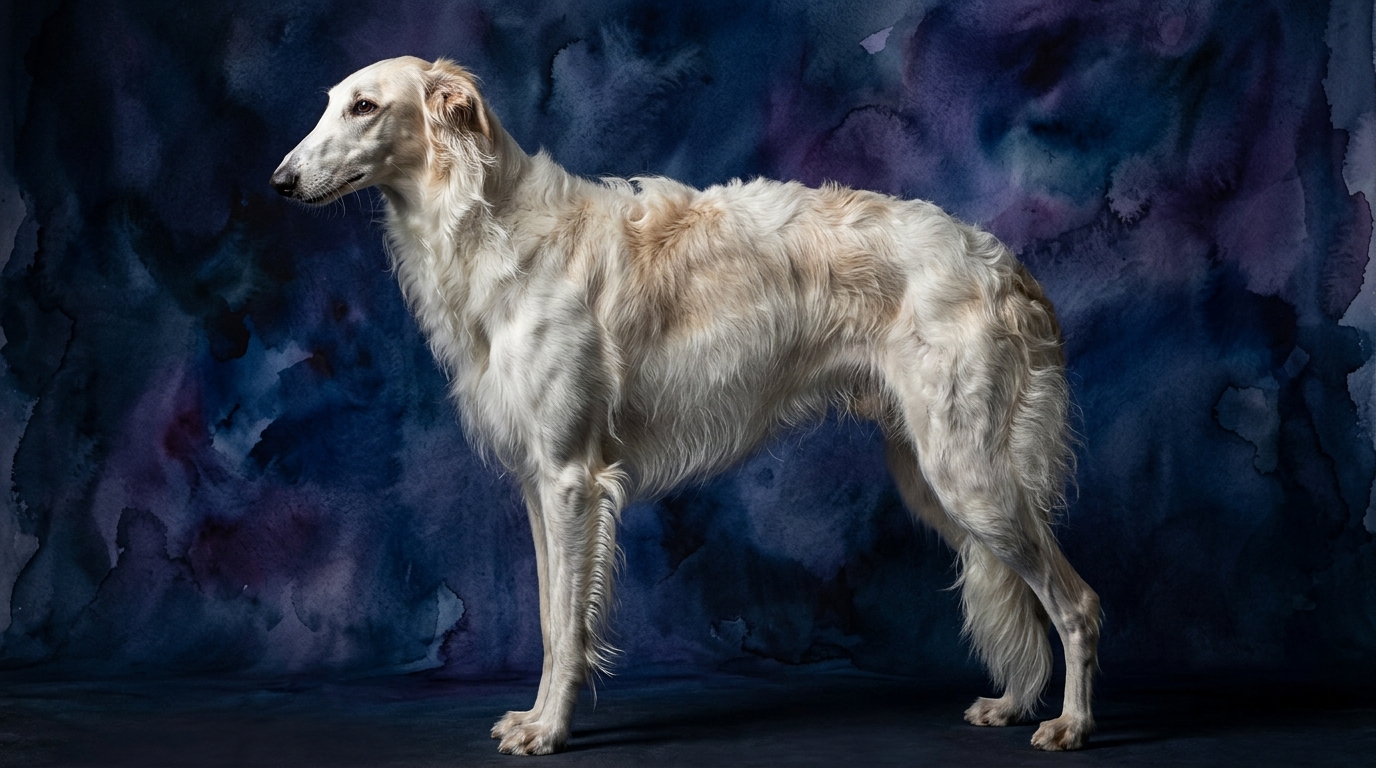
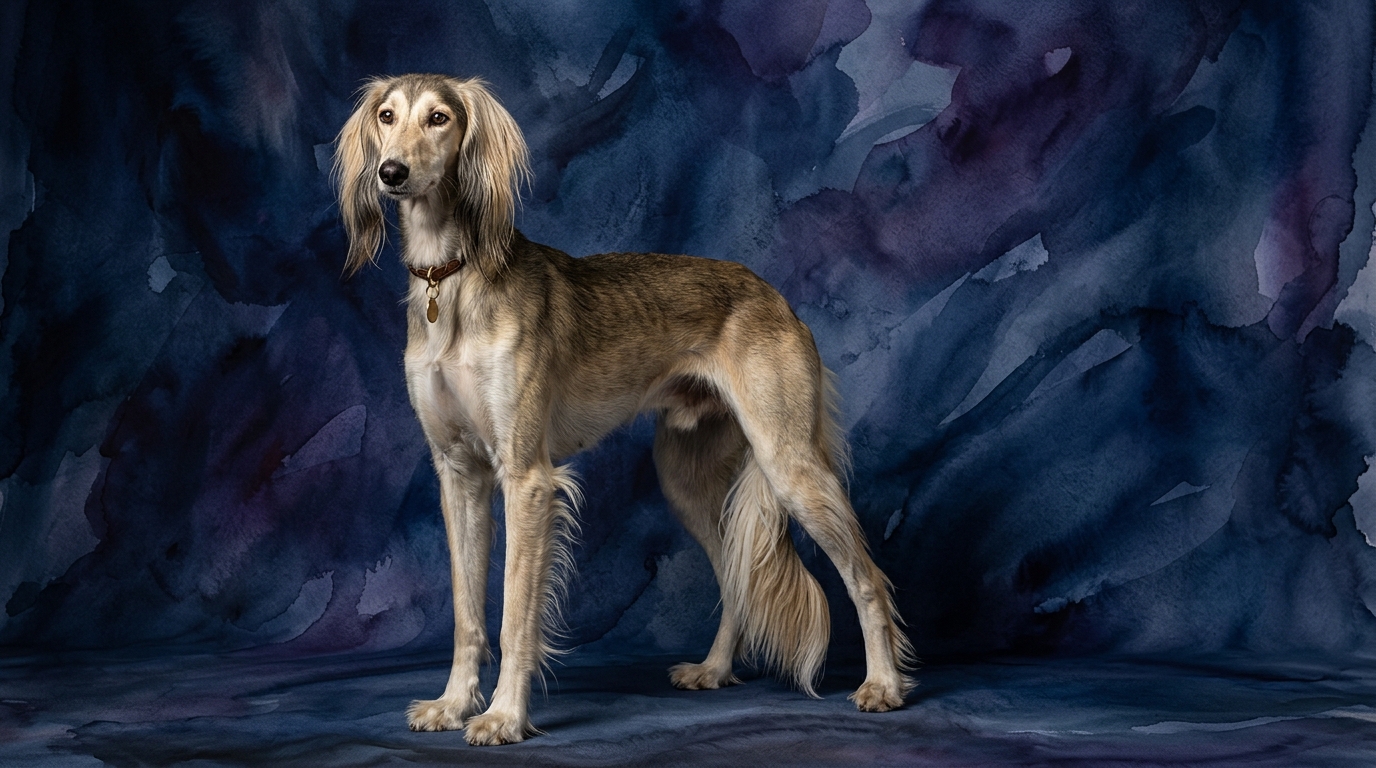
Side-by-Side IQ Profile: Borzoi vs. Saluki
At The Cosmic Pet Pet IQ Lab, we evaluate canine intelligence across five key dimensions. While both the Borzoi and Saluki score a balanced 3/5 in each category, understanding their specific historical contexts allows us to appreciate the nuanced ways these scores manifest in their daily lives and cognitive approaches.
**Borzoi (Coren Rank #75):**
**Problem Solving 3/5:** Borzoi exhibit moderate problem-solving, preferring independent assessment over immediate human reliance. Their hunting heritage for large game fostered self-reliance, meaning they apply their own logic, often in unexpected ways, reflecting independent thought.
**Training Speed 3/5:** Training a Borzoi demands patience for their dignified, often aloof nature. They grasp commands moderately, but willingness to perform depends on perceived value. Repetitive drills bore them, necessitating varied, engaging methods respecting their spirit.
**Social Intelligence 3/5:** Borzoi display moderate social acumen, typically reserved with strangers and selective in canine friendships. Their social intelligence is about discerning observation, navigating dynamics with quiet, watchful grace.
**Instinctive Drive 3/5:** With strong sighthound instinct, Borzoi's drive centers on pursuit. Their role in hunting wolves means a powerful urge to chase distant, fast-moving objects, requiring careful management around small animals.
**Memory 3/5:** Borzoi demonstrate moderate memory, recalling commands, routines, and experiences. They retain what they deem important, particularly concerning environment and comfort, contributing to consistent behavior.
**Saluki (Not Coren-Ranked):**
**Problem Solving 3/5:** Salukis approach problem-solving with independent resourcefulness and sensitivity, honed by desert origins. They devise their own solutions to environmental puzzles, focusing on practical outcomes rather than abstract tasks, reflecting innate adaptability.
**Training Speed 3/5:** Salukis learn moderately, but training is influenced by sensitivity and occasional stubbornness. They respond best to gentle, positive reinforcement, easily shutting down if harsh. Cooperative hunting implies learning capacity when their spirit is engaged.
**Social Intelligence 3/5:** Salukis exhibit moderate social intelligence, forming deep bonds with chosen humans while remaining reserved or aloof with others. Sensitive to owner moods, they prefer calm environments, their acumen focusing on perceptive understanding of their immediate circle.
**Instinctive Drive 3/5:** As an ancient sighthound, Saluki possesses profound pursuit drive. Bred for agile desert game, their focus on movement is intense and immediate, making off-leash excursions challenging due to this deeply ingrained inclination.
**Memory 3/5:** Salukis possess moderate memory for routines, commands, and experiences. They recall specific locations, past training cues, and environmental nuances, serving their hunting heritage by remembering effective grounds, aiding adaptability.
Where the Borzoi Wins Cognitively
While both breeds share a 3/5 across all IQ dimensions, the Borzoi's historical role in hunting formidable, large prey like wolves suggests a cognitive edge in tasks requiring sustained, independent decision-making over vast, open territories. Their problem-solving might lean towards strategic assessment of a larger “battlefield” rather than the quick, agile responses needed for smaller game. This could manifest as a slightly more deliberate, calculating approach to novel situations, where they weigh options before committing, a trait valuable when facing a dangerous quarry. Their memory might be particularly adept at recalling the topography of large hunting grounds and the strategic movements of large animals, allowing for a more 'big picture' cognitive mapping of their environment.
Where the Saluki Wins Cognitively
The Saluki's cognitive strengths, though numerically identical, are finely tuned for different challenges. Their heritage of pursuing swift, agile desert game like gazelles implies a superior cognitive processing speed for reacting to rapid, unpredictable movements and maintaining focus on a single, fast-moving target over long distances. This might translate into a heightened visual acuity and an unparalleled ability to concentrate on minute details within a dynamic environment, making their instinctive drive exceptionally precise. Their social intelligence, while reserved, may include a subtle sensitivity to their handler's non-verbal cues, developed through centuries of cooperative hunting where silent communication was paramount for success in the desert.
Training Dynamics: Borzoi vs. Saluki
Neither the Borzoi nor the Saluki can be categorized as 'easy' to train in the conventional sense, given their sighthound independence, but their challenges differ. The Borzoi, with its dignified and somewhat stoic nature, might be more amenable to a consistent routine once it understands the purpose, provided the training is engaging and respectful. They respond well to a calm, confident handler who doesn't resort to harsh methods, but their independent streak means they’ll often choose to comply only if they deem it worthwhile.
The Saluki, on the other hand, presents a different training dynamic due to its profound sensitivity and often more pronounced aloofness. They can be easily bored by repetition and may shut down if training isn't gentle and consistently positive. Their intense prey drive, coupled with their sensitivity, often makes recall particularly challenging; once a Saluki locks onto a moving target, their ancient instincts override almost all learned commands. Therefore, while both demand patience, the Saluki's unique blend of sensitivity and single-minded focus on prey often requires a more nuanced, understanding, and persistent training approach from their human companion.
Lifestyle Match: Active vs. Relaxed Owners
Both Borzoi and Saluki demand owners committed to fulfilling their substantial exercise needs, making neither truly suitable for a 'relaxed' owner in terms of physical activity. However, the type of activity and their post-exercise demeanor differ. Borzoi require intense bursts of speed – a secure, large area for a full-throttle gallop is essential. After their exhilarating run, they typically transform into calm, dignified house companions, often content to lounge gracefully for hours. This makes them suitable for active owners who can provide dedicated, high-energy outdoor sessions but appreciate a quiet, serene presence indoors.
The Saluki, bred for endurance over vast desert expanses, often requires more sustained, long-distance running to feel truly satisfied. Their energy levels can be higher and more persistent, and if not adequately exercised, they may exhibit restlessness or anxiety indoors. While they too enjoy lounging, their need for continuous physical engagement can be more demanding. Therefore, owners who enjoy long, vigorous runs or have access to extensive, safe spaces for sustained exercise might find the Saluki a better fit, accepting that their companion might also be more prone to restlessness.
The Verdict
If you appreciate a dignified, somewhat reserved companion that offers bursts of exhilarating speed outdoors followed by serene, quiet presence indoors, the Borzoi will be a profoundly rewarding choice.
If your lifestyle allows for consistent, extensive high-endurance exercise and you are prepared for a sensitive, often aloof companion whose ancient hunting instincts are deeply ingrained, the Saluki will connect with you on a truly unique and profound level.
🧠 Find Your Pet's IQ Score
Our Pet IQ Lab assessment covers 25+ tests across 5 cognitive dimensions — personalized to your breed.
Take the Full IQ Test →Frequently Asked Questions
Are Borzoi difficult to motivate during training due to their independence?
Borzoi can indeed be perceived as difficult to motivate, not out of stubbornness, but due to their independent nature and a strong sense of self-preservation that makes them question the value of repetitive tasks. Engaging their intelligence with variety and positive reinforcement, rather than force, is key to successful training.
Do Salukis require significant mental stimulation beyond physical exercise?
While Salukis need extensive physical exercise, their mental stimulation needs are often met through observing their environment and engaging their keen senses, particularly their sight. Complex puzzle toys or advanced obedience aren't typically their forte; rather, they thrive on opportunities to survey their surroundings and engage their natural instincts in a safe manner.
How do the prey drives of Borzoi and Saluki manifest differently in a home environment?
Both breeds possess a powerful prey drive, but it can manifest subtly differently. A Borzoi's drive might be triggered by larger, distant movements, leading to a sudden, explosive chase. A Saluki's drive, honed for agile desert prey, can be incredibly intense and focused on smaller, faster-moving objects, making them particularly adept at spotting and pursuing even the slightest movement, demanding vigilant supervision around other small animals.