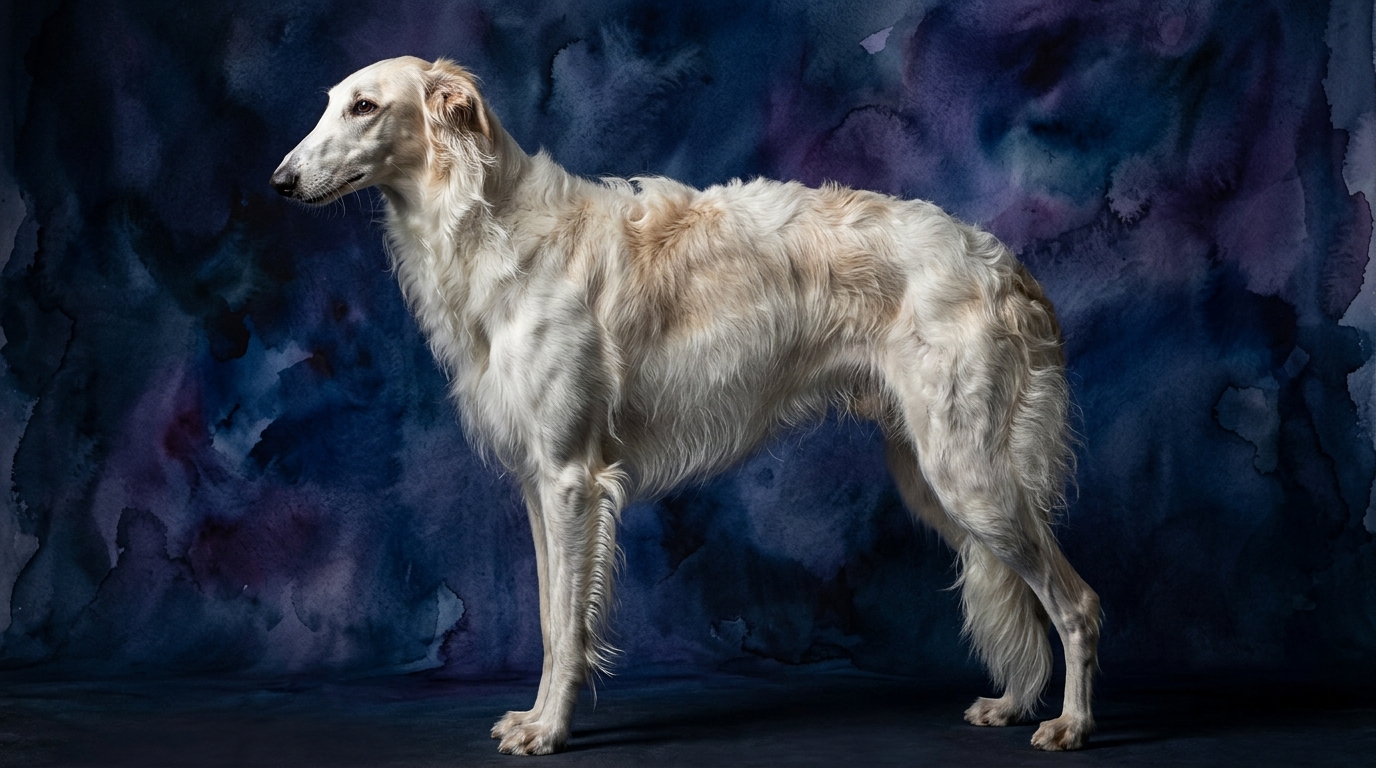
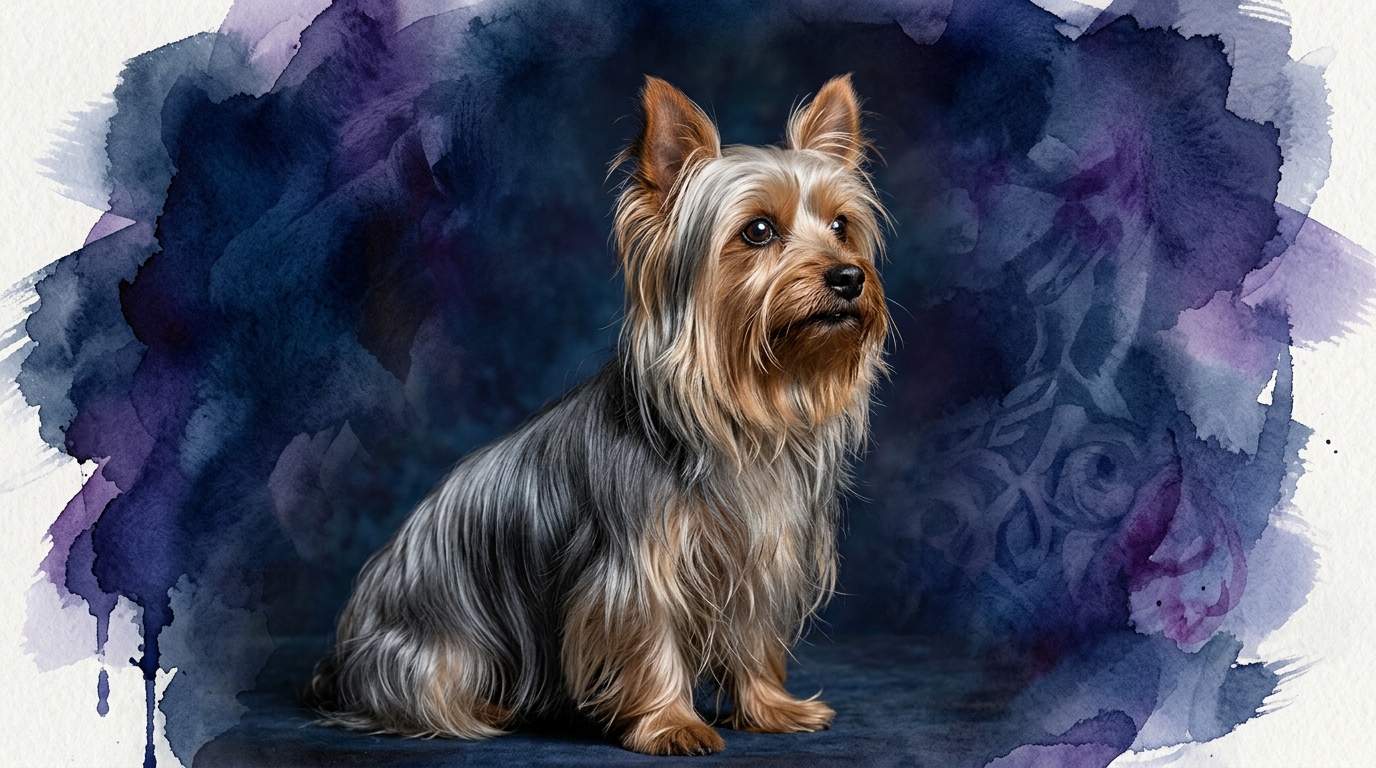
Side-by-Side IQ Profile: Borzoi vs. Silky Terrier
Despite both breeds registering a 3/5 across our five intelligence dimensions, the practical application of these cognitive strengths is deeply rooted in their breed origins and intended purposes. Understanding these nuances helps us appreciate their individual mental landscapes.
The Borzoi, a sighthound ranked #75 by Coren, exhibits a dignified yet independent intelligence:
Problem Solving (3/5): The Borzoi exhibits a practical, independent problem-solving approach, often focused on efficiency for a desired outcome, particularly those related to their ancestral role in sight-hunting. They are not easily flustered by complex tasks but prefer to find direct, often elegant, solutions, sometimes surprising owners with their cleverness in navigating obstacles to reach a comfortable spot or secure a desired item. Their mental process is often one of calm assessment followed by decisive action.
Training Speed (3/5): Learning for a Borzoi is a deliberate process; they absorb commands steadily but require consistency, clear communication, and a compelling 'why' behind the action. Their inherent hound independence means they are less driven by eager-to-please instincts and more by logical consequence and positive reinforcement, making rote obedience a patient endeavor. They will cooperate if they understand the benefit, but rarely with blind enthusiasm.
Social Intelligence (3/5): Borzoi possess a nuanced social awareness, keenly observing their human companions and household dynamics without necessarily seeking constant, overt interaction. They understand subtle cues and emotional states, responding with quiet empathy, a gentle nudge, or a dignified withdrawal. They are adept at discerning who is receptive to their affections and when to maintain a respectful distance, showcasing a refined understanding of social boundaries.
Instinctive Drive (3/5): Their strong sighthound heritage fuels a powerful prey drive, manifesting as an intense focus on movement and a lightning-fast pursuit instinct for anything resembling small game. This inherent drive also translates into a natural understanding of their environment, making them adept at navigating open spaces, identifying optimal vantage points, and tracking visual stimuli over considerable distances.
Memory (3/5): Borzoi have a robust memory for routines, locations, and experiences, both positive and negative. They recall learned commands and expectations reliably over time, but also retain vivid memories of exciting chase opportunities or perceived injustices. This long-term retention means consistency in training and a positive environment are crucial for fostering desirable behaviors.
The Silky Terrier, a spirited Toy breed not evaluated by Coren, demonstrates a tenacious and clever intelligence:
Problem Solving (3/5): The Silky Terrier approaches problem-solving with a tenacious, often mischievous spirit, adept at figuring out how to access forbidden areas, manipulate puzzle toys, or achieve their desired outcome through cleverness and persistence. Their solutions are often quick, ingenious, and driven by an insatiable curiosity and strong self-interest, such as finding the quickest route to a treat or a cozy lap.
Training Speed (3/5): Silky Terriers are quick learners, picking up commands and tricks with enthusiasm when motivated by engaging methods, high-value rewards, and a sense of fun. However, their independent terrier spirit means training requires consistent, firm, and positive guidance to channel their sharp minds and overcome their inherent stubbornness, ensuring compliance rather than mere understanding or fleeting interest.
Social Intelligence (3/5): These small terriers are highly attuned to their family's emotions and social structures, often using their understanding to charm, cajole, or even subtly manipulate their way into preferred positions, whether it's on the sofa or in an owner's arms. They excel at reading human moods and reacting accordingly, making them adept at navigating complex social interactions within their household to get their needs met.
Instinctive Drive (3/5): The Silky Terrier's instinctive drive is rooted deeply in its vermin-hunting ancestry, manifesting as a keen interest in small, scurrying objects and a propensity for digging, barking, and energetic exploration. This drive fuels their intense focus during play and provides a strong motivation for engaging in interactive activities that mimic hunting behaviors, such as chasing a toy or exploring new scents.
Memory (3/5): Silky Terriers possess an excellent memory for commands, routines, and the locations of favored toys or treats. They quickly recall which behaviors earn rewards and which lead to undesirable consequences, making consistent training crucial to reinforce positive patterns over ingrained terrier tendencies, and they rarely forget a perceived slight or a rewarding experience.
Where the Borzoi Wins Cognitively
While both breeds score 3/5 across the board, the Borzoi often demonstrates a cognitive advantage in tasks requiring sustained, independent focus over long distances or periods, reflecting their sighthound heritage. Their problem-solving, though rated equally, leans towards strategic observation and patient execution, particularly when their strong sighthound instincts are engaged. For example, a Borzoi might excel at navigating a complex, winding lure course over a vast field, relying on their memory for terrain and their innate drive to follow a distant visual cue, a task requiring a different kind of mental mapping and endurance than a terrier’s close-quarters focus. Their calm demeanor, once motivated by a clear objective, allows for a deep concentration that might be less characteristic of the more excitable Silky Terrier, enabling them to process environmental information with a quiet intensity that aids in grander-scale problem-solving and long-term planning related to their pursuits.
Where the Silky Terrier Wins Cognitively
Conversely, the Silky Terrier shines in cognitive areas demanding quick bursts of ingenuity, close-range problem-solving, and a tenacious approach to manipulation. Their 3/5 problem-solving often manifests as cleverness in navigating tight spaces, meticulously unlocking puzzle toys with persistent effort, or outsmarting perceived barriers to reach a desired object or person. Where a Borzoi might calmly assess a wide-open field, a Silky Terrier would diligently investigate every nook and cranny of a room, using their dexterity and sharp wits to uncover hidden treats or escape a playpen. Their social intelligence, though rated similarly, can be more overtly manipulative and charming, allowing them to quickly learn which specific behaviors (like a well-timed head tilt) elicit desired responses from their human companions, a skill often honed through constant interaction and a desire to be at the center of attention within the family unit.
Which Is Easier to Train and Why
Determining which breed is "easier" to train, given their identical 3/5 training speed scores, depends heavily on the owner's approach and training goals. The Borzoi, with its independent hound nature, requires patient, consistent, and reward-based methods; they learn steadily but are not typically driven by an overwhelming desire to please. Their training often feels like a partnership where you must convince them of the value of the task, rather than a master-student dynamic, and their memory ensures they retain what they've learned, but also remember if a command felt arbitrary. The Silky Terrier, while quick to grasp concepts, brings a terrier's characteristic tenacity and a tendency to prioritize their own agenda. They respond well to engaging, varied training sessions that keep their sharp minds stimulated, but their energetic and sometimes stubborn personality means consistency is paramount to prevent them from reverting to self-serving behaviors. While both breeds can achieve high levels of obedience, the Silky Terrier might appear "easier" in quick trick learning due to its eagerness and agility, but the Borzoi might offer more reliable long-term compliance once a command's value is established, provided the distractions of their prey drive are managed.
Which Suits Active Owners vs. Relaxed Owners
The choice between a Borzoi and a Silky Terrier significantly hinges on an owner's lifestyle. Borzoi, despite their moments of explosive speed and need for secure, large spaces to run, are largely calm and dignified indoors, often content to lounge gracefully for hours. They suit owners who appreciate a quiet, independent companion but are also committed to providing regular, safe opportunities for them to express their sighthound athleticism, perhaps through lure coursing or long, leashed walks. They are not typically demanding of constant interaction. In contrast, the Silky Terrier thrives with active owners who enjoy a constant companion eager for engagement. Their energetic, curious nature demands regular mental and physical stimulation, including daily walks, interactive play, and puzzle toys, to prevent boredom and destructive behaviors. They are far more "hands-on" dogs, preferring to be involved in household activities and often seeking attention, making them ideal for individuals or families who want a lively, engaged, and portable companion.
The Verdict
Choose the Borzoi if you seek a calm, elegant companion who values quiet companionship and independent thought, provided you can satisfy their need for occasional, intense bursts of physical activity in a safe environment.
Opt for the Silky Terrier if you desire a spirited, tenacious, and highly engaged companion who thrives on constant interaction and activity, and you are prepared to manage their bold terrier personality with consistent training.
🧠 Find Your Pet's IQ Score
Our Pet IQ Lab assessment covers 25+ tests across 5 cognitive dimensions — personalized to your breed.
Take the Full IQ Test →Frequently Asked Questions
Are Borzoi difficult to train due to their independence?
Borzoi are not inherently difficult, but their independence means training requires patience, positive reinforcement, and understanding their motivations. They learn consistently but are not eager-to-please, so clear communication and making tasks rewarding are key to success.
Do Silky Terriers bark a lot because of their instincts?
Yes, Silky Terriers can be prone to barking due to their terrier instincts for alerting and chasing small prey. Consistent training from a young age can help manage this tendency, but their vocal nature is a characteristic trait.
Can a Borzoi and a Silky Terrier coexist peacefully in the same home?
Coexistence is possible, but requires careful introduction and management, primarily due to the Borzoi's strong prey drive towards small, fast-moving objects. The Borzoi would need to be thoroughly socialized and trained to understand the Silky Terrier as a housemate, not prey, and supervision is always recommended.