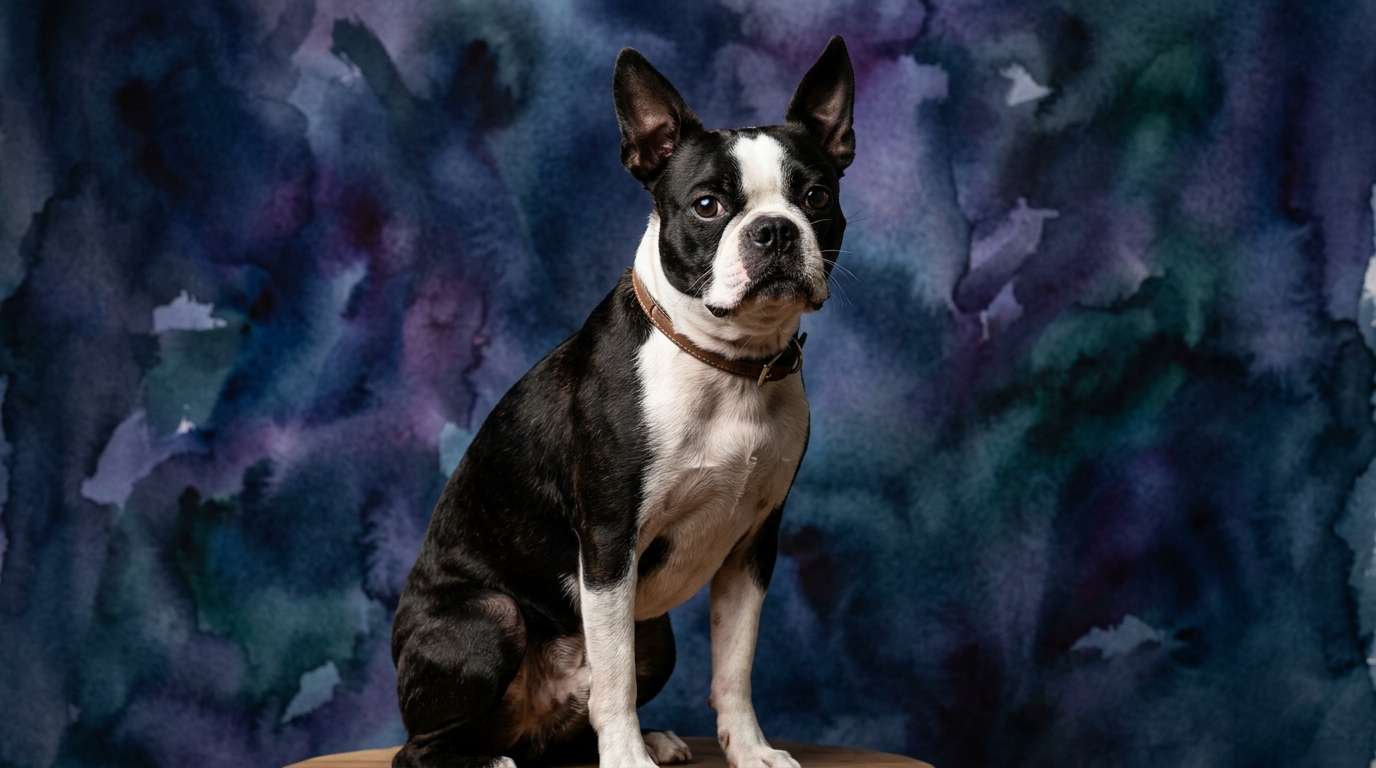

Side-by-Side: Decoding Their IQ Profiles
At The Cosmic Pet Pet IQ Lab, we delve into five core dimensions of canine intelligence to provide a nuanced understanding of each breed. While the American Staffordshire Terrier holds a slightly higher Coren rank at #48 compared to the Boston Terrier’s #54, these rankings offer a general overview, and a deeper look at their individual cognitive scores reveals distinct strengths.
The Boston Terrier’s IQ Profile:
Problem Solving (3/5): These spirited companions demonstrate a moderate capacity for navigating challenges. They can typically figure out basic puzzle toys or simple obstacles, but might not independently devise intricate solutions to complex environmental problems, often relying on observation and learned associations rather than abstract reasoning.
Training Speed (3/5): Boston Terriers learn new commands at an average pace, requiring consistent, positive reinforcement methods. Repetition and clear communication are key to solidifying their understanding, as they absorb information steadily rather than with immediate flashes of insight.
Social Intelligence (4/5): A significant strength, their social intelligence means they are highly attuned to human emotions, body language, and subtle cues. They thrive on interaction, often seeking to please and adapting remarkably well to various social situations, making them excellent family members.
Instinctive Drive (2/5): Compared to many terrier breeds, Bostons possess a relatively low instinctive drive. This translates to less pronounced urges for hunting, digging, or persistent independent exploration, making them generally more focused on companionship within the home environment.
Memory (3/5): Bostons retain learned behaviors and routines reasonably well over time. They typically remember commands and house rules, though less frequently practiced skills might require occasional refreshers to maintain fluency.
The American Staffordshire Terrier’s IQ Profile:
Problem Solving (3/5): AmStaffs show a capable level of problem-solving, demonstrating tenacity when faced with a challenge. They can work through moderate puzzles and strategize to reach a desired object, often employing a determined trial-and-error approach rather than immediate intuitive leaps.
Training Speed (3/5): Similar to Bostons, AmStaffs learn commands at an average rate. Their training benefits from clear, confident, and consistent instruction, as they respond best to a leader who provides structure and fairness, internalizing lessons over time.
Social Intelligence (3/5): While generally affectionate with their families, AmStaffs possess a moderate level of social intelligence. They understand human intentions and can form strong bonds, but might be less overtly expressive or subtly responsive to nuanced social cues compared to breeds scoring higher in this dimension, often prioritizing actions over subtle emotions.
Instinctive Drive (3/5): This breed exhibits a moderate instinctive drive, rooted in its heritage for tenacity and strength. This can manifest as a degree of prey drive, a strong desire to guard, or persistent focus on a task, requiring appropriate outlets and management.
Memory (4/5): A key cognitive asset, AmStaffs boast a strong memory. They retain learned commands, routines, and experiences for extended periods, making training stick well. This also means they vividly recall both positive and negative interactions, emphasizing the importance of fair and consistent treatment.
Where the Boston Terrier Cognitively Shines
The Boston Terrier's standout cognitive advantage lies in its exceptional social intelligence, scoring a notable 4 out of 5. This isn't merely about being friendly; it reflects a deep capacity to interpret human emotions, body language, and vocal inflections with remarkable accuracy. A Boston might preemptively offer comfort when sensing distress or intuitively understand a subtle shift in tone, making them extraordinarily empathetic companions. Their strong desire to be close and participate in family life stems from this profound social awareness, often leading them to adapt seamlessly to new people and environments, provided they feel secure and integrated into the family unit. This acute social perception allows them to anticipate needs and react to subtle cues, fostering an almost intuitive bond with their human counterparts.
Where the American Staffordshire Terrier Cognitively Excels
The American Staffordshire Terrier showcases a distinct cognitive edge in its robust memory, earning a 4 out of 5. This superior recall means that once a command or routine is ingrained, it tends to stick with remarkable tenacity, often requiring fewer refreshers than some other breeds. Their memory extends beyond mere commands, encompassing experiences, both positive and negative, which underscores the critical importance of early positive reinforcement and consistent, fair interactions to build trust and good habits. Furthermore, their slightly higher instinctive drive (3/5) contributes to a focused persistence, allowing them to remain dedicated to a task or objective once engaged. This combination of strong memory and drive can make them highly proficient in structured activities, able to recall complex sequences and apply themselves with determination.
Ease of Training: Understanding Behavioral Nuances
When considering ease of training, both breeds share a respectable 3 out of 5 for training speed, indicating they absorb new information at an average pace. However, the *experience* of training differs significantly due to their other cognitive profiles, particularly their social intelligence and instinctive drives. The Boston Terrier, with its superior social intelligence (4/5) and lower instinctive drive (2/5), often presents as easier to train for the average owner. Their strong desire to please and keen ability to read human cues means they are frequently more receptive to instruction and highly motivated by positive interaction and praise. They are less likely to be distracted by overwhelming external stimuli or their own internal urges, making them generally more cooperative and eager participants in a training session, often working *with* their handler rather than independently.
Conversely, while the American Staffordshire Terrier also learns efficiently, its training can demand a more assertive, consistent, and structured approach. Their strong memory (4/5) ensures commands stick, but their moderate instinctive drive (3/5) and slightly less pronounced social intelligence (3/5) mean they can be more independent thinkers, sometimes testing boundaries or requiring a clear 'why' for an action. An AmStaff might question the 'why' or demonstrate a stubborn streak, requiring a handler who can provide firm, fair, and patient leadership without resorting to harsh methods, lest their excellent memory retain negative associations. Therefore, while both are highly capable of learning, the Boston Terrier's inherent people-pleasing nature and lower internal distractions often translate to a smoother, less challenging training journey for a novice or less experienced dog owner.
Matching Breeds to Lifestyles: Active vs. Relaxed Owners
The choice between these two breeds, particularly concerning owner lifestyle, hinges significantly on their underlying drives and social needs. For the more relaxed owner seeking a devoted, adaptable companion who doesn't demand intense daily activity, the Boston Terrier often shines. Their lower instinctive drive (2/5) means they are generally content with moderate exercise—daily walks, indoor play, and mental puzzles—and are less prone to destructive behaviors born from unfulfilled physical or mental energy. Their high social intelligence makes them ideal couch companions, perfectly happy to observe and participate in quiet family life, soaking up affection and connection, and thriving on the emotional rhythm of their household.
On the other hand, the American Staffordshire Terrier is a better match for active owners who relish structured engagement and robust physical activity. With a moderate instinctive drive (3/5) and a strong, enduring build, AmStaffs thrive on regular, vigorous exercise, whether it's long hikes, agility, obedience sports, or challenging interactive games that engage both body and mind. Their excellent memory and problem-solving abilities (3/5) also mean they benefit immensely from consistent mental stimulation and ongoing training, making them ideal partners for owners committed to an active lifestyle and dedicated to channeling their drives productively. Without adequate outlets for their energy and intellect, an AmStaff might channel their drives into less desirable behaviors, whereas a Boston is generally more forgiving of a less demanding routine, preferring companionship over constant exertion.
The Verdict
Choose a Boston Terrier if you desire an emotionally attuned, relatively low-maintenance companion who thrives on close human connection and gentle social engagement.
Opt for an American Staffordshire Terrier if you are an active, consistent owner prepared to channel their robust memory and moderate drives into structured training, sports, and regular, engaging physical activity.
🧠 Find Your Pet's IQ Score
Our Pet IQ Lab assessment covers 25+ tests across 5 cognitive dimensions — personalized to your breed.
Take the Full IQ Test →Frequently Asked Questions
Are Boston Terriers good at learning tricks?
Yes, with their 3/5 problem-solving and 4/5 social intelligence, Boston Terriers are quite capable of learning a variety of tricks. Their desire to please and keen attention to their owner's cues make them receptive and often enthusiastic participants in trick training sessions.
Do American Staffordshire Terriers have a strong prey drive?
American Staffordshire Terriers have a moderate instinctive drive (3/5), which can include a degree of prey drive, though it varies by individual. Early socialization and consistent training are crucial to manage and redirect these instincts, especially around smaller animals or in environments with wildlife.
Which breed adapts better to apartment living?
The Boston Terrier generally adapts better to apartment living due to its lower instinctive drive (2/5) and moderate exercise requirements. While an American Staffordshire Terrier can live in an apartment, their moderate instinctive drive (3/5) and need for more vigorous physical and mental stimulation mean they require a much more committed owner to ensure their needs are met daily.