
Side-by-side IQ profile: Boston Terrier vs. Belgian Tervuren Cognition
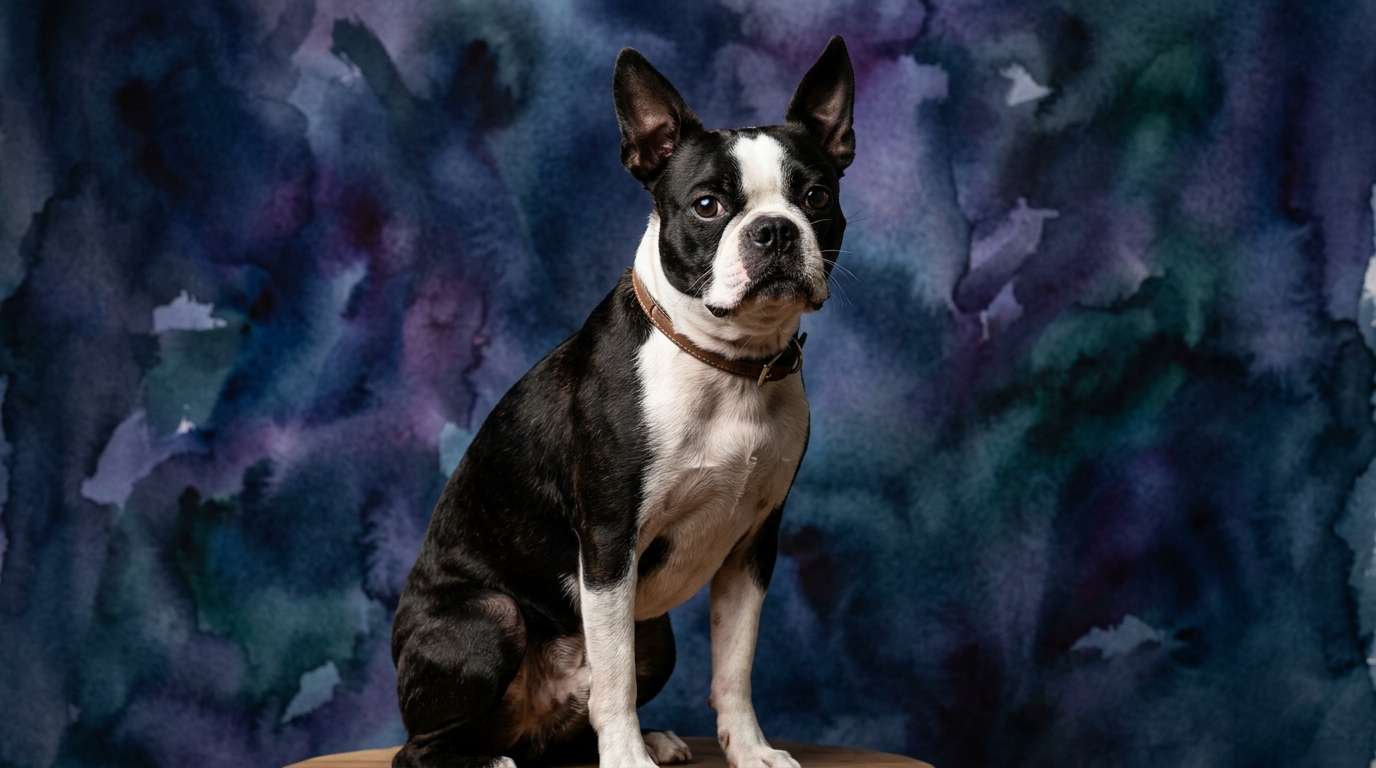
The Boston Terrier, classified in the Non-Sporting group and ranking #54 on the Coren scale, presents a cognitive profile optimized for companionship. Their Problem Solving is rated 3/5, meaning they are adept at navigating familiar routines but often require guidance for novel or complex puzzles, relying more on established patterns. Training Speed is 3/5; they respond well to consistent positive reinforcement, picking up basic commands at a moderate pace, eager to please but needing repetition for complexity. Social Intelligence stands at 4/5, as they excel at reading human cues and adapting behavior to social situations, highly attuned to family dynamics and seeking interaction. Their Instinctive Drive is 2/5, possessing a relatively low inherent drive for traditional working tasks, preferring companionship over independent pursuit of objectives. Memory is 3/5, capable of retaining commands and routines effectively, especially those consistently reinforced, forming strong associations within their environment.
In contrast, the Belgian Tervuren, a Herding breed ranking #14 on the Coren scale, showcases a cognitive design built for demanding work. Their Problem Solving is an exceptional 5/5, demonstrating analytical skills and ingenuity, quickly assessing and resolving complex issues, often independently devising solutions. Training Speed is also 5/5; they learn new commands and complex sequences with remarkable speed, grasping concepts after few repetitions due to high focus and eagerness to work. Social Intelligence is 3/5; they form strong bonds but their social intelligence is geared towards understanding hierarchy and working relationships, observant yet less overtly emotional. Instinctive Drive is 3/5, possessing a moderate to strong inherent drive for activity and purpose, rooted in herding heritage, seeking a “job” to do. Memory is 5/5, exhibiting outstanding recall for commands, routines, and experiences, remembering intricate sequences and past events with precision.
Where the Boston Terrier Excels Cognitively
The Boston Terrier's primary cognitive strength lies in its exceptional social intelligence (4/5). These dogs are masters at reading human body language and emotional states, allowing them to adapt their behavior for harmonious household dynamics. They intuitively understand when to be playful, offer comfort, or observe quietly, making them highly responsive and emotionally attuned companions. This adeptness at social calibration ensures seamless integration into family life, often anticipating owner needs. Their moderate problem-solving (3/5) and memory (3/5) are perfectly suited to navigating a domestic environment where social interactions are paramount. Their lower instinctive drive (2/5) channels mental energy primarily into these social bonds, making them deeply focused on human relationships.
Where the Belgian Tervuren Excels Cognitively
The Belgian Tervuren shines with superior problem-solving (5/5) and rapid training speed (5/5). These dogs are built for intricate tasks, quickly analyzing complex situations and formulating effective strategies independently. Their cognitive architecture processes information rapidly, making connections and understanding multi-step commands with remarkable efficiency. This translates into excellence in advanced obedience, agility, and detection work, where independent thought and quick reactions are essential. Their outstanding memory (5/5) allows retention of vast information, from long command sequences to complex environments, ensuring skills are not easily forgotten. While their social intelligence (3/5) is more functional, focused on partnership within a working context, it supports precise execution of directives. Their moderate instinctive drive (3/5) provides necessary motivation for challenging activities.
Training Ease: Boston Terrier vs. Belgian Tervuren
Regarding training ease, the Belgian Tervuren generally offers a more straightforward path for experienced handlers due to its exceptional training speed (5/5) and problem-solving (5/5). They grasp new concepts quickly, requiring fewer repetitions, and are eager for structured learning, progressing rapidly through advanced tasks. However, their moderate instinctive drive (3/5) and need for mental stimulation mean "easy" often implies consistent, challenging training to prevent boredom. For the Boston Terrier, training speed is moderate (3/5). Eager to please, they respond well to positive reinforcement for basic manners. Their high social intelligence (4/5) motivates them through human interaction. While complex commands take longer, their lower instinctive drive (2/5) means less conflict from independent decision-making. Essentially, the Boston Terrier is easier for a companion lifestyle, while the Tervuren excels in complex, high-level work with a dedicated trainer.
Owner Suitability: Active vs. Relaxed Lifestyles
These breeds’ cognitive profiles distinctly align with different owner lifestyles. The Boston Terrier, with its higher social intelligence (4/5) and lower instinctive drive (2/5), suits relaxed owners prioritizing companionship. Their moderate energy needs and preference for close human interaction make them content with shorter walks, playtime, and extensive cuddle sessions. They thrive when their primary “job” is being a beloved family member, offering emotional support. Conversely, the Belgian Tervuren, with superior problem-solving (5/5), rapid training speed (5/5), and moderate instinctive drive (3/5), requires highly active, dedicated owners. These dogs need consistent mental and physical challenges to prevent boredom. They flourish with dog sports, hiking, or structured jobs that engage their sharp minds. An owner committing significant time to training, exercise, and mental stimulation will find a highly capable partner.
The Verdict
Choose a Boston Terrier if you seek a highly socially attuned companion, content with moderate activity and focused on emotional connection within a family setting. They thrive on companionship and gentle routines, valuing human presence above all.
Opt for a Belgian Tervuren if you are an experienced, active owner eager to engage in advanced training and provide consistent mental and physical challenges for a sharp, driven working dog. They excel with a purposeful role and structured activity.
🧠 Find Your Pet's IQ Score
Our Pet IQ Lab assessment covers 25+ tests across 5 cognitive dimensions — personalized to your breed.
Take the Full IQ Test →Frequently Asked Questions
Do Boston Terriers and Belgian Tervurens need similar levels of mental stimulation?
No, their mental stimulation needs differ significantly. Boston Terriers are satisfied with moderate mental engagement through daily routines and social interaction. Belgian Tervurens, conversely, require extensive and consistent mental challenges like puzzle toys, advanced training, or dog sports to prevent boredom and maintain cognitive health.
How does social intelligence impact daily life for these breeds?
For a Boston Terrier, high social intelligence means they are exceptionally perceptive of human emotions and social cues, making them intuitive and adaptable family companions. For a Belgian Tervuren, their social intelligence is more geared towards understanding working partnerships and commands, contributing to their efficacy in task-oriented roles.
Can a first-time dog owner manage a Belgian Tervuren's intelligence?
While a Belgian Tervuren's cognitive abilities are impressive, their intense need for mental engagement and structured activity can be challenging for a first-time owner. They require consistent, experienced guidance to channel their cognitive drive productively, making them generally better suited for those with previous dog ownership and training experience.