
Side-by-Side Cognitive Profiles: Boston Terrier vs. Chinese Crested
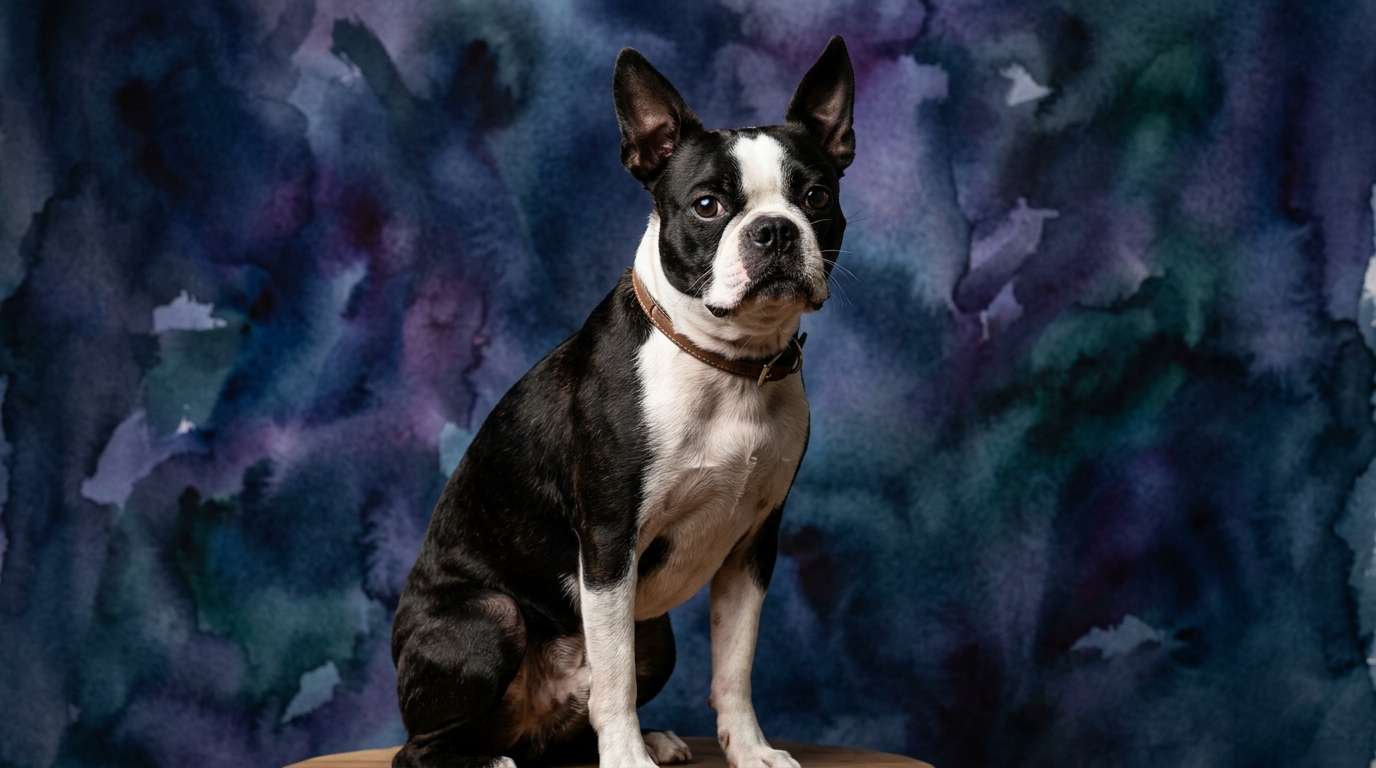
The Boston Terrier, a proud Non-Sporting Group member and Coren #54, presents a compelling cognitive profile. Their Problem Solving (3/5) indicates a competent ability to navigate moderate mental challenges, such as retrieving a hidden toy. Training Speed (3/5) suggests they learn new commands at a steady, reliable pace. Where the Boston Terrier truly shines is in Social Intelligence (4/5); they are profoundly attuned to human emotions and social cues, making them exceptionally empathetic. Their Instinctive Drive (2/5) is modest, meaning a low prey drive focused on human interaction. Memory (3/5) ensures they retain learned behaviors effectively.
In contrast, the delicate Chinese Crested, a captivating Toy Group member (not Coren-ranked), offers a distinct cognitive blueprint. Their Problem Solving (3/5) mirrors the Boston Terrier, demonstrating equal capacity for tackling puzzles. Training Speed (3/5) indicates they learn new commands with consistent effort. The Chinese Crested’s Social Intelligence (3/5) forms deep bonds with primary caregivers but might exhibit more reserved behavior around strangers. Their Instinctive Drive (3/5) is slightly higher, suggesting a moderate inclination towards natural canine behaviors like chasing. Memory (3/5) is solid, allowing them to recall training and remember familiar people and places with ease.
Where the Boston Terrier Cognitively Excels
The Boston Terrier’s undeniable cognitive strength lies in its superior Social Intelligence, scoring a notable 4/5 compared to the Chinese Crested’s 3/5. This signifies a profound capacity to understand and respond to human social cues. A Boston Terrier can often anticipate its owner’s mood, reacting with comfort during distress or playful energy during joy. They excel at reading subtle shifts in tone of voice, facial expressions, and body language, making them exceptionally intuitive companions. This heightened social awareness means they integrate seamlessly into family dynamics, quickly learning household rules by observing and adapting to the social environment. They thrive on interaction and reciprocate affection with an understanding that feels almost human. This makes them particularly adept at forming deep, empathetic bonds, often acting as emotional barometers for their households. Their strong desire to be involved and to please stems directly from this advanced social cognition, making them highly responsive to verbal praise and positive social reinforcement.
Where the Chinese Crested Cognitively Shines
While both breeds exhibit similar problem-solving and training speeds, the Chinese Crested edges out the Boston Terrier in one specific cognitive area: Instinctive Drive, scoring 3/5 compared to the Boston’s 2/5. This slightly elevated drive means the Chinese Crested retains a more pronounced connection to innate canine behaviors, such as curiosity, exploration, and perhaps a gentle inclination to chase. While not a hunting breed, this drive can manifest as a greater enjoyment for scent-based games, light agility, or even a more independent approach to exploring their immediate surroundings. They might be more inclined to follow a scent trail in the yard or engage in playful pursuit of a toy, tapping into a natural dog instinct with more enthusiasm than the typically human-centric Boston. This isn't about being 'wilder,' but rather about a slightly more robust internal motivation for engaging with the physical world through their senses and movement, potentially making them more engaged in activities that allow for a bit more self-directed engagement, alongside their cherished human companionship.
Trainability: Nuances Beyond the Score
When evaluating trainability, both the Boston Terrier and Chinese Crested share a Training Speed score of 3/5. However, the Boston Terrier often *appears* easier to train, primarily due to its superior Social Intelligence (4/5). Boston Terriers possess an inherent eagerness to please and a remarkable ability to read their owner's intentions and emotions. They are highly motivated by positive social reinforcement – a happy tone of voice, a gentle stroke, or enthusiastic praise – which makes them very responsive during training sessions. Their strong desire for human companionship means they are often focused on the trainer, eager to understand what is expected of them and to earn approval. This attentiveness and social awareness translate into quicker comprehension of cues and consistent performance. In contrast, while equally capable of learning, the Chinese Crested's Social Intelligence of 3/5, combined with its slightly higher Instinctive Drive, might necessitate a more patient and nuanced approach. They can be sensitive and may become easily discouraged by harsh tones or inconsistency. Their independence, a common trait in some Toy breeds, means they might require more intrinsic motivation or a stronger reward system to maintain focus. While they learn, their learning might be punctuated by moments of self-directed exploration or a need for reassurance, making the training process feel less fluid than with a Boston Terrier.
Matching Canine Cognition to Owner Lifestyles
The choice between a Boston Terrier and a Chinese Crested also hinges on an owner’s lifestyle and energy levels. The Boston Terrier, with its adaptable nature and moderate energy, is an excellent fit for owners who desire a companion deeply integrated into their daily life, whether active or relaxed. They enjoy brisk walks, playtime, and some dog sports, but are equally content to curl up on the sofa. Their high social intelligence means they thrive on being included in family activities, adapting readily to various routines. They are well-suited for owners who want an engaged, interactive dog for both outdoor adventures and indoor relaxation, provided they receive consistent mental and physical stimulation. The Chinese Crested, while often perceived as delicate, is not entirely sedentary. They enjoy short bursts of play and can be surprisingly agile, suitable for owners who appreciate lighter activities like short walks, indoor games, or even participation in dog sports on a smaller scale. However, their potentially greater sensitivity and preference for a secure, predictable environment might make them a better match for more relaxed owners or those in quieter households. They form incredibly strong bonds with their primary caregivers and often prefer close, intimate companionship, making them ideal lap dogs. Owners who cherish a devoted, often sensitive, and uniquely charming companion, and who can provide consistent, gentle training and a secure home, will find a wonderful partner in the Chinese Crested.
The Verdict
Choose the Boston Terrier if you seek an exceptionally socially aware and adaptable companion, deeply attuned to family life and eager to participate in daily routines, offering a robust blend of playfulness and affection.
Opt for the Chinese Crested if you appreciate a uniquely charming and often sensitive companion, capable of forming deep, intimate bonds, and are prepared to provide consistent, gentle training in a secure, loving environment.
🧠 Find Your Pet's IQ Score
Our Pet IQ Lab assessment covers 25+ tests across 5 cognitive dimensions — personalized to your breed.
Take the Full IQ Test →Frequently Asked Questions
Are Boston Terriers generally good with children?
Boston Terriers, with their high social intelligence and adaptable nature, are often excellent with well-behaved children. Their desire for companionship and playful spirit make them patient and engaging family members, provided interactions are supervised.
Do Chinese Crested dogs require a lot of grooming despite their often hairless appearance?
Yes, both hairless and 'Powderpuff' Chinese Crested varieties require specific grooming. Hairless dogs need skin care to prevent sunburn and dryness, while Powderpuffs have a soft double coat that needs regular brushing to prevent mats.
Which breed is more prone to separation anxiety?
Both breeds, being highly companion-oriented, can develop separation anxiety if not properly socialized and trained for alone time. However, the Boston Terrier's higher social intelligence might make them slightly more prone to distress if their need for constant human interaction is unmet.