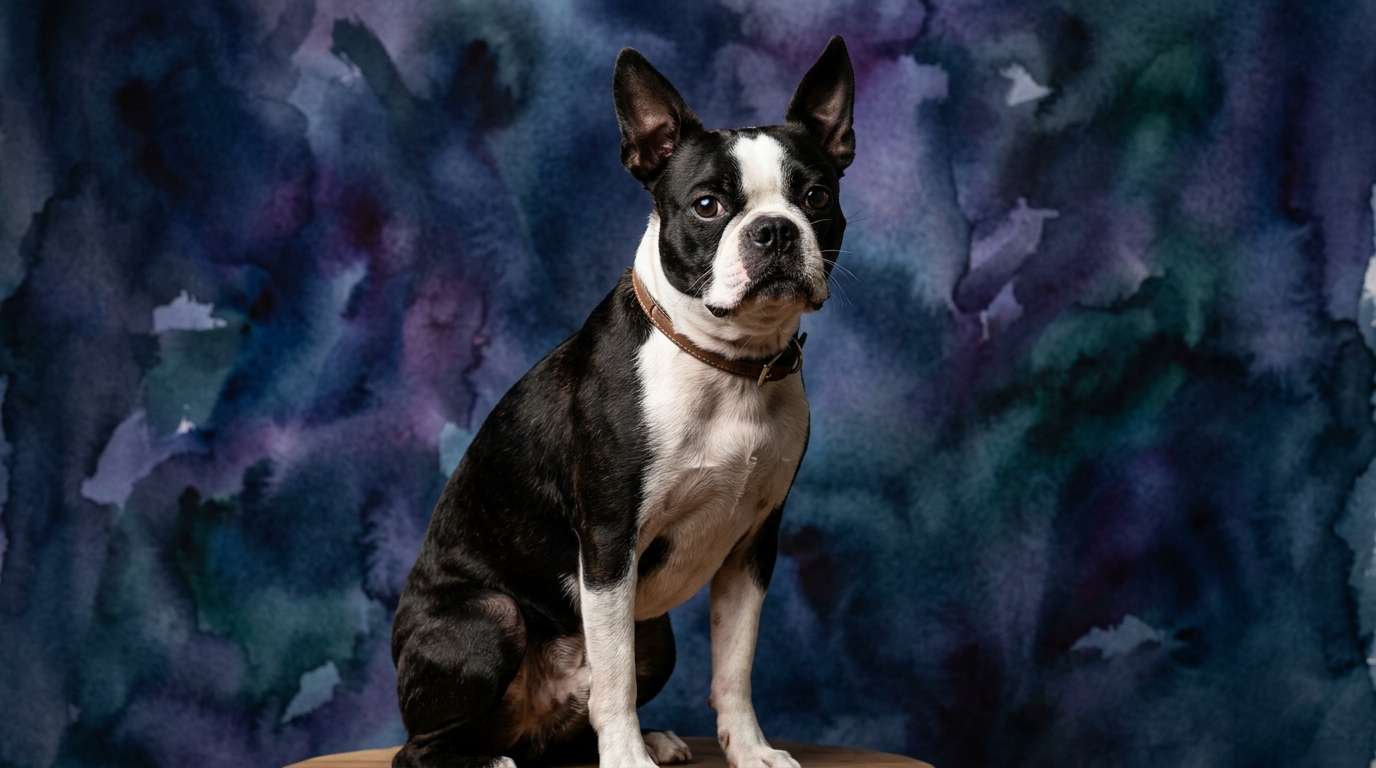
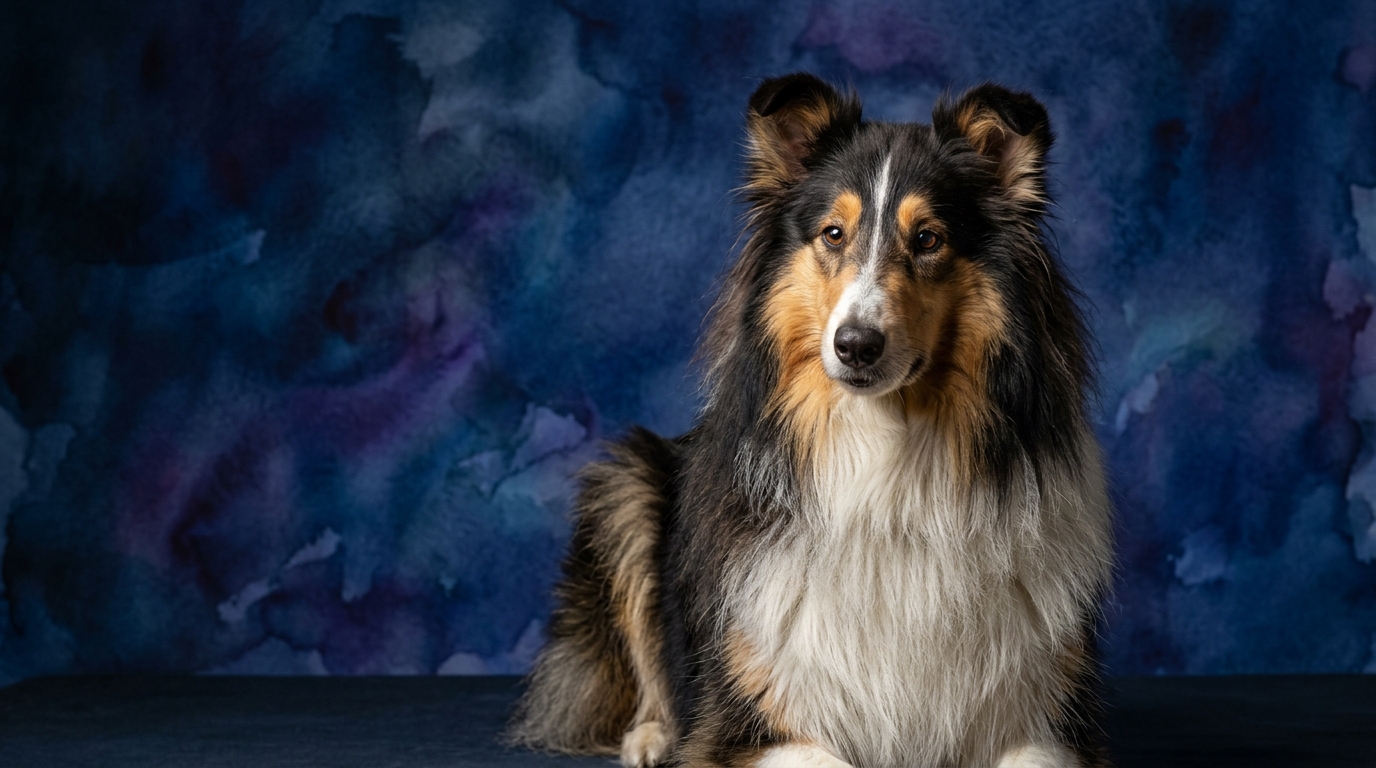
Side-by-Side Cognitive Profiles: Boston Terrier vs. Collie (Rough)
The Boston Terrier, positioned at Coren rank #54, showcases a balanced yet distinct cognitive profile. Their problem-solving ability scores 3/5, suggesting they can navigate moderate cognitive challenges but might not independently devise complex solutions. Training speed is also 3/5, indicating a steady learning pace requiring consistent, positive reinforcement. Where they truly shine is in social intelligence, scoring an impressive 4/5, reflecting a keen ability to interpret human cues and integrate into family dynamics. Their instinctive drive is 2/5, meaning they possess a lower inherent urge for traditional canine work, while memory is a solid 3/5, allowing them to recall learned behaviors and routines effectively.
In contrast, the Collie (Rough), holding a much higher Coren rank at #16, presents a profile geared towards advanced cognitive function and practical application. Their problem-solving ability is strong at 4/5, indicating a capacity for understanding and resolving intricate situations. Training speed is also 4/5, meaning they grasp new commands and concepts with remarkable efficiency. While their social intelligence is 3/5, still respectable, it is their memory that truly stands out at a perfect 5/5, suggesting an extraordinary capacity for retention of complex sequences and long-term recall. Their instinctive drive is 3/5, a moderate level that supports their historical role in herding and working tasks, providing a consistent motivation for engagement.
Where the Boston Terrier Excels Cognitively
The Boston Terrier's standout cognitive strength lies in its social intelligence, rated 4/5. This isn't merely about being friendly; it reflects a sophisticated capacity for reading and responding to human emotional states and social cues. A Boston Terrier is often exceptionally attuned to its owner's mood, capable of offering comfort or engaging in play based on subtle signals. This makes them particularly adept at forming deep, empathetic bonds within a family unit, making them excellent companions for individuals who value a dog that integrates seamlessly into their daily emotional landscape. Their ability to understand social dynamics allows them to navigate various household situations and interactions with relative ease, often demonstrating a cooperative spirit in shared living spaces. This social perceptiveness can also make them intuitive therapy or emotional support animals, where responsiveness to human needs is paramount.
Where the Collie (Rough) Demonstrates Superior Cognitive Abilities
The Collie (Rough) truly shines in areas demanding structured thought and retention, particularly in problem-solving (4/5), training speed (4/5), and an exceptional memory (5/5). Their higher problem-solving score means they are more likely to figure out how to open a gate or retrieve a hidden toy through logical deduction rather than trial and error. This capability extends to complex tasks and multi-step routines. Coupled with a rapid training speed, Collies can learn an extensive repertoire of commands and behaviors quickly, making them proficient in obedience, agility, and other canine sports. Their perfect 5/5 memory score is a critical asset, enabling them to recall intricate sequences, long-ago learned commands, and even specific locations or scents with remarkable accuracy and duration. This allows them to build upon a vast foundation of knowledge, performing reliably even after long breaks. Their moderate instinctive drive further fuels their willingness to engage in mentally stimulating activities, making them eager participants in learning and working roles.
Training Ease: Unpacking Behavioral Differences
When it comes to training, the Collie (Rough) generally presents an easier and more rewarding experience for those seeking advanced obedience or complex task learning. Their superior training speed (4/5), problem-solving ability (4/5), and unparalleled memory (5/5) mean they grasp new concepts quickly, retain them for extended periods, and can apply learned principles to new situations. This allows for rapid progression through training levels and the mastery of intricate commands, often requiring fewer repetitions. Their moderate instinctive drive (3/5) also provides a consistent internal motivation to engage and work alongside their handler, making them eager participants in structured activities and performance sports.
The Boston Terrier, with its 3/5 scores in both training speed and memory, will require more consistent repetition and patience. While their social intelligence (4/5) makes them eager to please and responsive to their owner's emotional cues, their moderate problem-solving capacity (3/5) means they might not generalize learned behaviors as readily or independently figure out solutions to novel challenges. This means training needs to be clear, consistent, and broken down into smaller, manageable steps. While they can achieve a high level of obedience, the journey might be slower and more focused on foundational commands rather than complex, multi-stage tasks. Owners should rely on their Boston Terrier's desire for connection to motivate training, leveraging positive reinforcement and making it a bonding experience.
Matching Cognitive Profiles with Owner Lifestyles
For owners with an active lifestyle, particularly those interested in dog sports, advanced training, or working roles, the Collie (Rough) is often the more suitable choice. Their exceptional memory, rapid training speed, and strong problem-solving skills mean they thrive on mental engagement and structured activities. They require consistent intellectual challenge to prevent boredom and channel their inherent drive. An owner who can provide daily opportunities for learning, puzzle-solving, or participation in activities like agility, herding, or competitive obedience will find a highly cooperative and fulfilled companion in a Collie.
Conversely, the Boston Terrier is an excellent match for more relaxed owners who prioritize companionship and social interaction over intensive training regimens or working tasks. Their high social intelligence makes them content with being a central part of family life, often happy with moderate exercise and ample opportunities for affectionate interaction. While they benefit from training, their cognitive profile suggests they are less demanding in terms of constant mental stimulation. An owner who appreciates a dog that is attuned to their emotional state and enjoys a more laid-back, companion-focused relationship will find the Boston Terrier's cognitive strengths align perfectly with their lifestyle.
The Verdict: When to Choose Each Breed
The Verdict
Choose a Boston Terrier if you seek a highly socially intelligent companion, deeply attuned to family dynamics and content with a moderate level of mental engagement, fitting seamlessly into a relaxed household.
Opt for a Collie (Rough) if you desire a cognitively advanced partner for complex training, dog sports, or a working role, capable of rapid learning and exceptional memory retention, thriving in an active, mentally stimulating environment.
🧠 Find Your Pet's IQ Score
Our Pet IQ Lab assessment covers 25+ tests across 5 cognitive dimensions — personalized to your breed.
Take the Full IQ Test →Frequently Asked Questions
Do Boston Terriers get bored easily?
Boston Terriers have a moderate need for mental stimulation. While they enjoy play and interaction, their lower instinctive drive and problem-solving scores mean they are less prone to boredom from lack of complex tasks compared to some working breeds. Regular walks and interactive play are usually sufficient.
Are Rough Collies suitable for first-time dog owners?
Rough Collies can be suitable for first-time owners who are prepared to dedicate time to their training and mental stimulation. Their high training speed and desire to please make them responsive students, but their cognitive needs require consistent engagement to prevent frustration or undesirable behaviors.
Which breed is better with children?
Both breeds can be good with children, but in different ways. Boston Terriers' high social intelligence makes them naturally adaptable and gentle in family settings. Rough Collies' empathetic nature and desire to be part of the family also make them excellent companions, often showing protective instincts towards children.