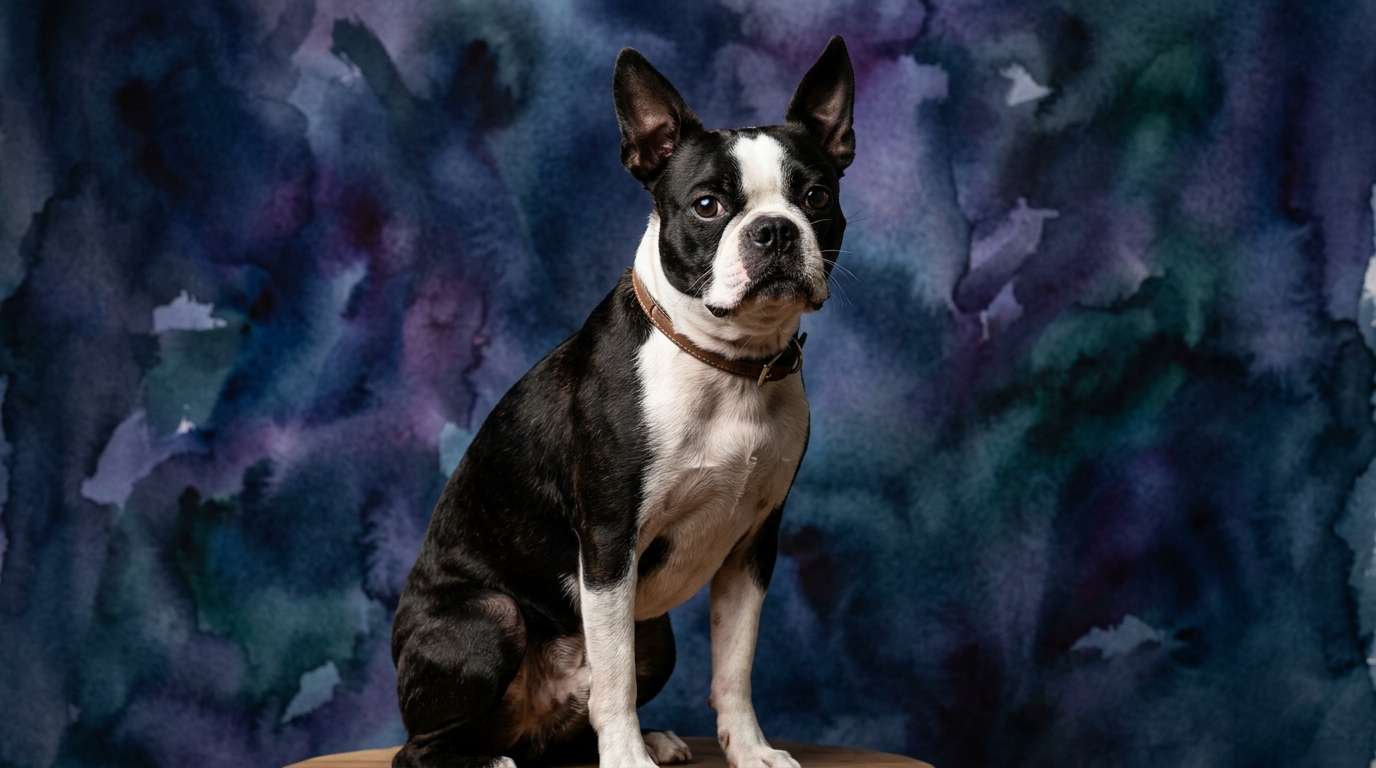

Side-by-Side Cognitive Profiles: Boston Terrier vs Mastiff
Delving into the Cosmic Pet Pet IQ Lab data, we see that while both the Boston Terrier (Non-Sporting group, Coren rank #54) and the Mastiff (Working group, Coren rank #72) share some common ground in their cognitive scores, their individual strengths paint very different pictures. Coren's ranking generally reflects a breed's working and obedience intelligence, suggesting the Boston Terrier might grasp new commands or tasks slightly quicker in a general sense, but our granular IQ dimensions reveal the specifics.
The **Boston Terrier** exhibits a Problem Solving score of 3/5, indicating a moderate ability to figure out everyday puzzles or navigate new situations with some independent thought. Their Training Speed is also 3/5, meaning they learn new commands at a steady, consistent pace. Where they truly shine is in Social Intelligence, scoring an impressive 4/5, making them highly attuned to human emotions and social cues. Their Instinctive Drive is lower at 2/5, reflecting less innate inclination for traditional working roles, and their Memory stands at 3/5, allowing for good retention of learned behaviors.
The **Mastiff**, in comparison, shows a Problem Solving score of 3/5, similar to the Boston Terrier, suggesting a comparable capacity for deliberate thought when faced with challenges. Their Training Speed also rates 3/5, indicating they learn at a steady, methodical rate. Their Social Intelligence is 3/5, signifying a strong bond with their immediate family, though perhaps less overt in their expression compared to more socially effusive breeds. Notably, their Instinctive Drive is 3/5, reflecting a moderate, inherent inclination towards guarding and protection, a hallmark of their working heritage. Their Memory is 3/5, allowing them to recall routines and past experiences reliably.
Where the Boston Terrier Excels Cognitively
The Boston Terrier's clear cognitive advantage lies in its superior Social Intelligence (4/5 compared to the Mastiff's 3/5). This isn't merely about friendliness; it signifies an exceptional ability to perceive and interpret human emotions, body language, and vocal tones. A Boston Terrier is often quick to notice a change in your mood, offering comfort or initiating play based on subtle cues, showcasing a profound empathy and connection. This heightened social awareness makes them incredibly responsive companions, often seeming to 'read your mind' in social contexts.
Furthermore, their moderate Problem Solving (3/5) combined with their social acumen often translates into an agile curiosity about their immediate environment, particularly in social settings. They are often more outwardly engaged with new people and novel situations, processing social interactions with a quicker, more adaptable approach. This makes them adept at navigating varied social landscapes, from busy parks to quiet family gatherings, integrating smoothly due to their perceptive nature.
Where the Mastiff Shows Cognitive Strength
The Mastiff's primary cognitive strength is rooted in its higher Instinctive Drive (3/5 versus the Boston Terrier's 2/5). This isn't just a physical trait; it's a deeply ingrained cognitive program that governs their natural inclination towards vigilance and protection. Their minds are inherently wired for a sense of responsibility over their territory and family, leading to calm, deliberate observation and a measured response to perceived anomalies. This drive is a complex interplay of spatial awareness, threat assessment, and a profound sense of duty, guiding their watchful demeanor.
While both breeds share a 3/5 in Problem Solving, the Mastiff's approach is often characterized by a more measured and sustained cognitive effort. Their typically calm and deliberate temperament allows them to process challenges thoughtfully, rather than reacting impulsively. This can manifest as patiently observing a situation, weighing potential outcomes before acting, a trait often beneficial in guardian roles where hasty decisions are undesirable. Their cognitive process in problem-solving often prioritizes thoroughness and composure.
Ease of Training: Nuances Beyond Speed
When considering ease of training, both the Boston Terrier and Mastiff share a Training Speed score of 3/5, suggesting they learn new commands at a comparable pace. However, the *process* of training can feel quite different due to their distinct social intelligence and instinctive drives. The Boston Terrier's higher Social Intelligence (4/5) and innate desire to engage with humans make them highly motivated by positive reinforcement, praise, and interactive training sessions. They often thrive on being the center of attention and can pick up cues quickly due to their attentiveness to their handler's reactions. While their terrier zest might occasionally lead to playful distractions or a stubborn streak, their eagerness to please generally makes training an engaging experience, and their smaller size makes them physically easier to manage.
The Mastiff, with a Social Intelligence score of 3/5, is deeply loyal but may be less swayed by effusive praise alone. They respond best to calm, consistent, and respectful training that establishes clear expectations and leadership. Their deliberate nature means they might take a moment longer to process a command before executing it, but once a behavior is learned, it is often retained reliably. Their Instinctive Drive (3/5) can be effectively channeled into training for boundary awareness or calm vigilance, but requires a patient handler who understands their methodical approach. Their sheer size also means physical management during training is a significant factor, requiring a confident and capable owner.
Matching Breeds to Lifestyles: Active vs. Relaxed Owners
The cognitive profiles of the Boston Terrier and Mastiff lend themselves to different owner lifestyles. The Boston Terrier, with its high Social Intelligence and moderate problem-solving abilities, thrives with owners who enjoy interactive engagement and can provide consistent companionship. They are curious and adaptable, benefiting from regular walks, engaging play sessions, and being included in family outings. They are not necessarily high-endurance athletes, but they require mental stimulation and social interaction to flourish, making them ideal for owners who are present, enjoy teaching new tricks, and appreciate a dog that is deeply involved in daily family life. They adapt well to various social settings, eager to participate.
The Mastiff, conversely, is best suited for owners who appreciate a calm, watchful presence and are prepared for a large, powerful companion. While they enjoy a daily walk to stretch their massive limbs, they are not high-energy dogs seeking constant activity. Their cognitive strengths lie in quiet observation, loyalty, and a deep, protective bond with their family, making them excellent companions for relaxed owners who provide a stable, predictable home environment. They require owners who understand their deliberate nature and can provide consistent, calm leadership, channeling their protective instincts appropriately without encouraging aggression. They are content with quiet companionship and a watchful role within the home, rather than constant play or adventure.
The Verdict
Choose the Boston Terrier if you seek an emotionally perceptive, engaging companion who thrives on social interaction and moderate activity, fitting well into dynamic household environments.
Opt for the Mastiff if you appreciate a serene, loyal guardian with a deep sense of family responsibility, capable of quiet companionship and requiring a calm, consistent home environment.
🧠 Find Your Pet's IQ Score
Our Pet IQ Lab assessment covers 25+ tests across 5 cognitive dimensions — personalized to your breed.
Take the Full IQ Test →Frequently Asked Questions
Are Boston Terriers good with children?
Yes, their high social intelligence and generally affectionate nature often make them excellent family dogs, adapting well to the dynamics of a household with children. They tend to be patient and enjoy being part of family activities, though supervision is always advised with any dog and child.
Do Mastiffs need a lot of exercise?
Mastiffs do not require extensive, high-impact exercise; moderate daily walks and yard time are usually sufficient to keep them healthy. Over-exercising them, especially when young, can be detrimental to their large joints, so a balanced approach is key.
Which breed is better for apartment living?
The Boston Terrier is generally better suited for apartment living due to their compact size and moderate exercise needs, as long as they receive adequate daily walks and mental engagement. While Mastiffs are calm indoors, their sheer size makes them less practical for smaller living spaces and they benefit from more room to stretch out.