
Side-by-Side Cognitive Profiles
To understand the unique mental landscapes of the Boston Terrier and the Neapolitan Mastiff, The Cosmic Pet Pet IQ Lab employs a five-dimensional framework for cognitive assessment. This allows us to move beyond generalizations and pinpoint specific strengths and areas for development in each breed.
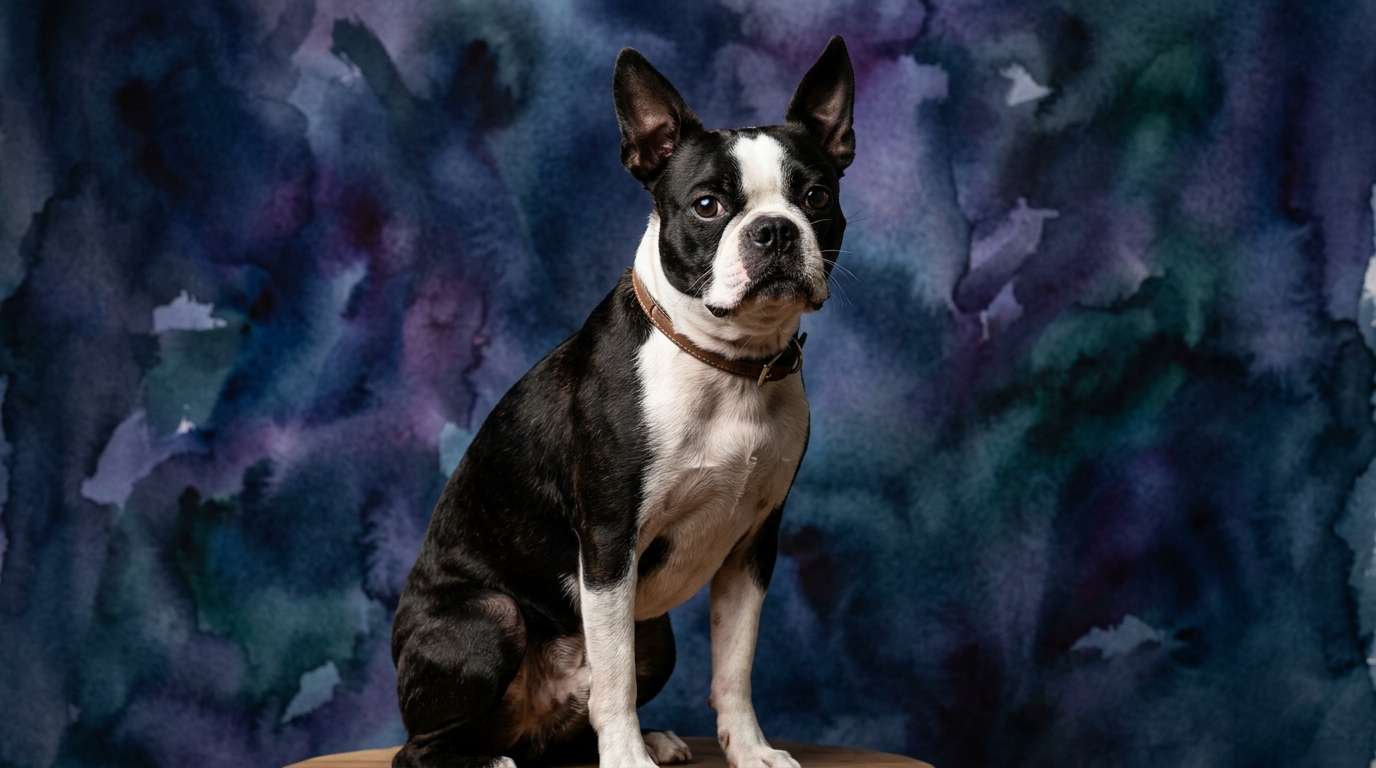
The Boston Terrier, a non-sporting breed ranked #54 by Coren, demonstrates a balanced cognitive profile with particular strengths in social interaction. Their Problem Solving is rated at 3/5, indicating a moderate capacity to navigate novel situations and figure out solutions. Training Speed also scores 3/5, suggesting they learn commands and routines at a steady, reliable pace. Where they truly shine is in Social Intelligence, earning a 4/5; this means they are highly attuned to human emotions and social cues, often eager to engage and respond to their companions. Their Instinctive Drive is lower at 2/5, implying less inclination towards independent hunting or guarding behaviors, making them generally more focused on their human family. Memory for the Boston Terrier is 3/5, indicating a solid ability to retain learned information and experiences.
The Neapolitan Mastiff, a working breed without a specific Coren rank, presents a cognitive profile that, at first glance, appears quite similar to the Boston Terrier's across several dimensions, yet their application of these traits differs significantly due to their working heritage. Their Problem Solving is rated 3/5, reflecting a moderate ability to adapt and resolve challenges, often applied to assessing their environment. Training Speed also stands at 3/5, meaning they are capable learners, though their motivation might be rooted in different factors. Social Intelligence for the Neapolitan Mastiff is 3/5, showing an awareness of social dynamics, often expressed through a more reserved and discerning demeanor rather than overt enthusiasm. Their Instinctive Drive is moderate at 3/5, commonly manifesting as a strong protective instinct towards their family and territory. Memory for the Neapolitan Mastiff is 3/5, allowing them to recall commands and remember past interactions consistently.
Where the Boston Terrier Excels Cognitively
The Boston Terrier's primary cognitive advantage lies in its superior Social Intelligence, scoring 4/5 compared to the Neapolitan Mastiff's 3/5. This heightened social awareness means they are exceptionally adept at reading human emotions and intentions, fostering a deeper, more intuitive bond with their owners. This makes them highly cooperative companions, often seeking to engage in shared activities and readily responding to human cues, which can translate into an eagerness to please during daily interactions.
Another cognitive strength for the Boston Terrier is their lower Instinctive Drive, rated at 2/5. While a strong drive can be beneficial in working roles, a lower drive in a companion animal means they are less likely to be distracted by independent urges such as chasing small animals or patrolling territory without direction. Their focus is predominantly on their human companions rather than external stimuli, making them generally more manageable and adaptable in various domestic and urban environments. This reduced drive contributes to their overall placid nature indoors.
Where the Neapolitan Mastiff Demonstrates Cognitive Strengths
The Neapolitan Mastiff's cognitive strengths, while not always reflected in numerically higher scores across the board, are deeply rooted in their working breed heritage and manifest in distinct ways. Their Instinctive Drive, rated at 3/5, represents a significant cognitive asset when applied to their traditional role. This moderate drive often manifests as a powerful protective instinct, fueling their ability to be vigilant and discerning guardians. This requires a specific cognitive processing of their environment for potential threats, such as identifying unfamiliar individuals or changes in their territory, a skill refined through generations of selective breeding.
Furthermore, while their Problem Solving is rated similarly to the Boston Terrier's, the Mastiff's application of this ability is often tied to their protective nature. They employ their cognitive faculties to assess and manage their family's safety and understand boundaries, showcasing a different yet equally valid application of cognitive function. Their memory (3/5) also supports this, allowing them to consistently recall who belongs and who doesn't, contributing to their steadfast guardianship.
Trainability: A Tale of Two Temperaments
Both the Boston Terrier and the Neapolitan Mastiff share a similar rating for Training Speed (3/5) and Problem Solving (3/5), suggesting that both breeds are capable of learning new commands and routines at a moderate pace. However, the 'ease' of training is significantly influenced by their differing social intelligence and instinctive drives.
The Boston Terrier's superior Social Intelligence (4/5) and lower Instinctive Drive (2/5) generally make them more receptive to training. They are often highly motivated by human approval and interaction, making them responsive to positive reinforcement and eager to cooperate. This social attunement means they value human attention during training sessions, and their reduced inclination for independent pursuits allows them to focus more intently on commands and routines. Their desire to please their human companions often translates into a more straightforward and enjoyable training experience.
The Neapolitan Mastiff, while possessing comparable training speed, presents a different dynamic. Their moderate Instinctive Drive (3/5) means they can be more independent or focused on their surroundings, requiring a trainer to be particularly engaging and consistent. Their Social Intelligence (3/5) is expressed through a more reserved demeanor, meaning trainers must earn their trust and tap into their natural protective loyalty to encourage willing participation, rather than just expecting immediate compliance. Training a Mastiff demands patience, firm consistency, and a deep understanding of their unique motivations, often leveraging their bond and protective nature rather than pure eagerness to please.
Matching Breeds to Owner Lifestyles
When considering a companion, aligning a dog's cognitive and behavioral traits with an owner's lifestyle is crucial for a harmonious relationship. The Boston Terrier and Neapolitan Mastiff appeal to very different types of owners.
The Boston Terrier, with its moderate energy levels and high social intelligence, is an adaptable companion. They enjoy engaging in daily walks and playful sessions but are equally content to cuddle on the couch. Their strong desire for human interaction means they thrive in households where they are integrated into daily family life, participating in activities both indoors and out. They suit owners who appreciate an interactive, affectionate companion for a variety of daily routines, from active outings to relaxed evenings at home. Their manageable size and lower instinctive drive make them excellent choices for first-time dog owners or those living in apartments.
The Neapolitan Mastiff, despite its imposing size, is not typically a high-energy dog, but its sheer mass and moderate instinctive drive demand specific considerations. They suit experienced, patient owners who understand the need for consistent structure, early and ongoing socialization, and confident leadership. While they don't require intense daily exercise, they do need secure, calm surroundings and a strong, consistent bond with their family. Their preference for a relaxed household environment, combined with their protective instincts, means they are well-suited to owners who lead a steady lifestyle, can provide ample space, and are prepared to manage a large, discerning guardian. They are not ideal for owners seeking a highly demonstrative or overtly playful companion, but rather a loyal, majestic, and subtle presence.
The Verdict
Select a Boston Terrier if you seek a highly socially interactive companion that is generally adaptable to various living situations and thrives on shared activities and close human connection.
Opt for a Neapolitan Mastiff if you are an experienced owner prepared for a large, protective companion who values a calm, structured home environment and can appreciate subtle social cues.
🧠 Find Your Pet's IQ Score
Our Pet IQ Lab assessment covers 25+ tests across 5 cognitive dimensions — personalized to your breed.
Take the Full IQ Test →Frequently Asked Questions
Does the Boston Terrier's lower instinctive drive mean it's less responsive to its environment?
Not at all; it means their attention is often more directed towards their human companions rather than independent exploration or chasing, making them generally easier to manage in various settings and more focused on interaction.
How does the Neapolitan Mastiff's moderate instinctive drive impact its training?
Their moderate drive means they can be motivated to learn but might require more consistent and patient training that taps into their natural protective instincts and desire for a strong, respectful bond with their handler, rather than just playful encouragement.
Given similar problem-solving scores, are both breeds equally good at learning tricks?
While both can learn tricks, the Boston Terrier's higher social intelligence might make them more enthusiastic and eager participants in trick training due to their strong desire to interact and please their human companions, often finding joy in the shared activity itself.