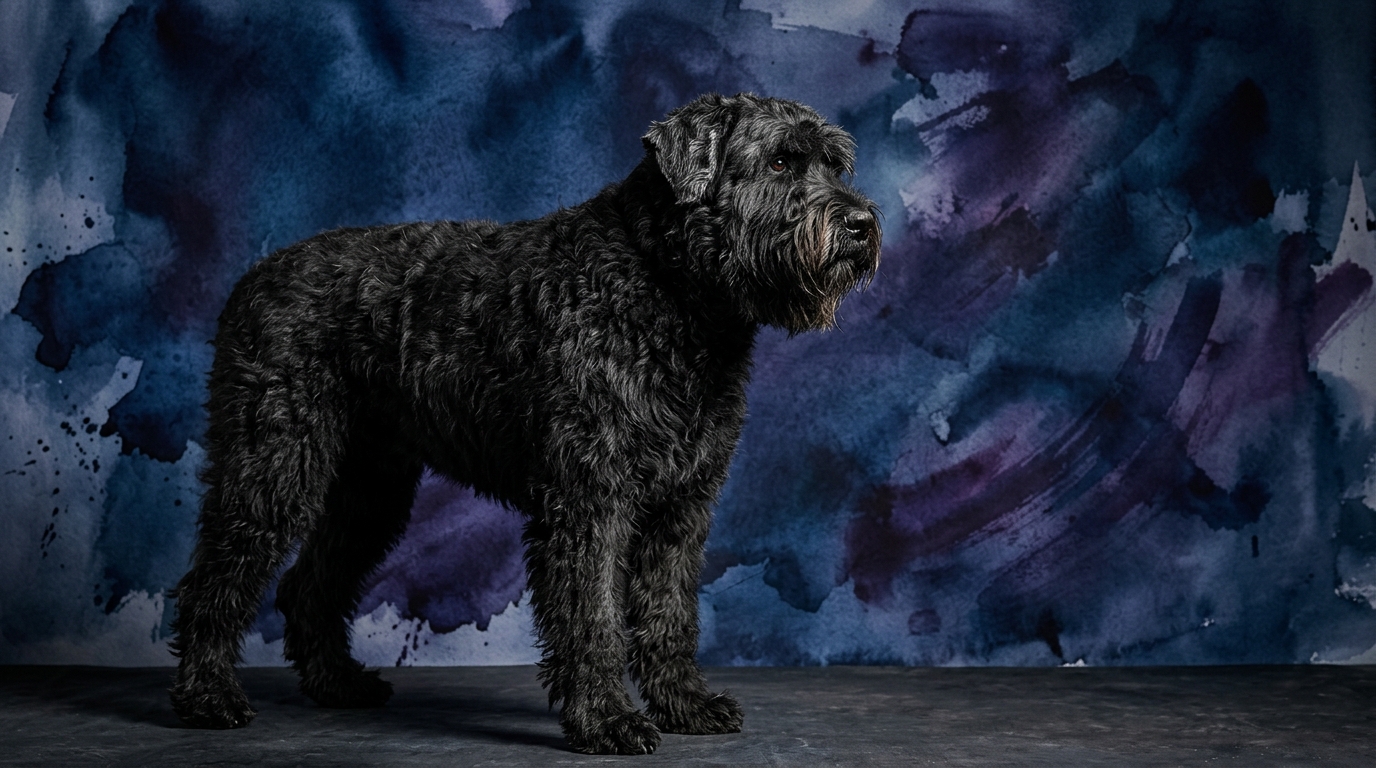

IQ Profile: Bouvier des Flandres
The Bouvier des Flandres, a robust herding dog, exhibits a practical problem-solving ability rated at 3 out of 5. This translates to a capacity for independent thought when faced with complex tasks, such as maneuvering a flock or adapting to unexpected environmental changes. They can devise strategies involving subtle positioning and calculated movements to achieve their goals, learning from experience to refine their methods.
With a training speed score of 3 out of 5, Bouviers demonstrate a steady, deliberate learning curve. They absorb commands and routines effectively, particularly when training is consistent, fair, and harnesses their natural desire to work alongside their handler. While not the fastest to grasp new concepts in a single session, their retention is strong, building a reliable foundation over time, ensuring thorough understanding.
Their social intelligence, also rated 3 out of 5, is finely tuned to group dynamics, a crucial trait for a herding breed. A Bouvier can interpret human body language and vocal cues with nuance, understanding their role within the family unit and responding appropriately. This extends to discerning the mood of livestock or the intent of strangers, allowing them to adjust their behavior from gentle guidance to watchful vigilance.
The Bouvier's instinctive drive, scoring 3 out of 5, is predominantly channeled into their herding heritage. This manifests as a strong compulsion to gather, control, and protect, whether it be livestock, family members, or even objects. This drive fuels their work ethic and gives them purpose, requiring appropriate outlets to prevent misdirection, such as attempting to 'herd' children or other pets.
A memory score of 3 out of 5 means the Bouvier possesses a solid recall for learned behaviors, specific locations, and past interactions. They remember training sequences, routes taken on walks, and the faces of people they've encountered. This reliable memory aids significantly in maintaining consistent behavior and allows them to build upon past experiences, contributing to their dependable nature.
IQ Profile: Boerboel
The Boerboel, a formidable South African working and guarding breed, shares a problem-solving capacity of 3 out of 5. For the Boerboel, this often involves assessing potential threats or navigating complex environments to fulfill their protective duties. They can independently evaluate situations, determining the most effective way to respond to perceived dangers or secure their territory, demonstrating a practical, results-oriented approach.
With a training speed score of 3 out of 5, the Boerboel learns at a steady pace, exhibiting a readiness to absorb commands that align with their protective instincts and desire for a clear leadership structure. They require consistent, firm, and fair training, responding best to methods that establish the owner as a confident leader. Once a task is learned, it is typically retained with great reliability, making them a steadfast companion for dedicated trainers.
The Boerboel's social intelligence, also at 3 out of 5, is acutely geared towards discernment and protection. They are highly adept at reading intentions, particularly those of strangers, and can distinguish between a welcomed guest and a potential threat. Within their family unit, they demonstrate a keen awareness of social hierarchies and the emotional states of their trusted humans, offering comfort or vigilance.
The Boerboel's instinctive drive, scoring 3 out of 5, is overwhelmingly rooted in their protective and territorial nature. This powerful drive compels them to guard their family and property with unwavering dedication, influencing their vigilance and readiness to act when a threat is perceived. This inherent purpose requires diligent socialization and consistent training from an early age to ensure appropriate channeling.
A memory score of 3 out of 5 means the Boerboel possesses a robust recall for significant events, established routines, and the identities of individuals. They remember who belongs and who doesn't, the boundaries of their territory, and specific commands learned. This strong memory is vital for their role as a guardian, allowing them to consistently apply learned behaviors and recognize familiar patterns or deviations.
Where Bouvier des Flandres Wins Cognitively
Despite identical numerical IQ scores, the Bouvier des Flandres often demonstrates a nuanced cognitive edge in tasks requiring collaborative problem-solving and adaptable, fluid intelligence within a working partnership. Their herding background has ingrained a capacity for reading and reacting to dynamic situations, such as anticipating flock movement or adjusting strategy based on handler cues. This makes them adept at activities like advanced obedience or agility, where precise, real-time adjustments and a strong desire to work *with* their human are paramount.
Furthermore, their social intelligence, while rated 3/5, is geared towards a more interactive and responsive partnership. A Bouvier typically seeks to understand and fulfill their handler's expectations, making them responsive to subtle guidance. This collaborative inclination means they excel in environments where the 'problem' is solved together, with the dog taking cues and contributing actively rather than acting purely on independent judgment. Their memory might manifest in a stronger recall for complex, multi-step routines that involve handler interaction, crucial for intricate herding patterns.
Where Boerboel Wins Cognitively
The Boerboel, while sharing the same numerical IQ scores, excels in cognitive areas demanding independent judgment, unwavering vigilance, and a resolute focus on protection. Their problem-solving (3/5) is often applied to assessing and mitigating potential threats, a skill honed over generations of guarding. This involves a unique ability to 'read' situations and individuals, discerning genuine danger from benign presence, often without direct command. They possess an inherent strategic mindset for territorial defense, evaluating angles and potential weak points.
Their social intelligence (3/5), while capable of deep family bonds, is acutely developed for discerning intentions, particularly those of outsiders. This allows them to act as discerning sentinels, making independent decisions about who is permitted into their space. The Boerboel's instinctive drive (3/5) for protection is a powerful cognitive engine, influencing their memory to retain information about past threats or suspicious individuals with remarkable tenacity. This breed's cognitive strengths lie in their self-assured, decisive approach to guarding, requiring less direct instruction in critical moments.
Which is Easier to Train and Why
Determining which breed is 'easier' to train when both score 3/5 in training speed hinges on the owner's approach and desired outcome, reflecting their differing behavioral predispositions. The Bouvier des Flandres, with its herding heritage, often possesses a strong desire to collaborate and please its handler. While they require patience and consistency due to their moderate training speed, their inherent drive to work *with* a human partner can make the training process feel more cooperative. They respond well to positive reinforcement and appreciate clear, consistent direction, often seeing training as a shared activity.
Conversely, the Boerboel's training journey, while equally capable (3/5 training speed), is often characterized by a need for a confident, consistent leader who understands their independent and protective nature. Their cognitive focus is on discerning threats and securing their family, meaning they may question commands that don't align with their perceived duty or if they sense a lack of conviction from their handler. Training a Boerboel requires establishing unwavering trust and respect, emphasizing leadership and boundaries from an early age, ensuring their immense strength and drive are channeled positively.
Which Suits Active Owners vs. Relaxed Owners
Neither the Bouvier des Flandres nor the Boerboel are well-suited for truly 'relaxed' or sedentary owners, as both possess significant physical and mental needs stemming from their working backgrounds. However, their specific requirements diverge. The Bouvier des Flandres is an ideal match for active owners who enjoy engaging in structured activities like dog sports, long hikes, or farm work. Their herding drive and desire for partnership mean they thrive on having a 'job' and participating actively in family life, requiring consistent mental stimulation alongside vigorous exercise.
The Boerboel, while also requiring regular exercise, often suits owners whose 'activity' is more centered around consistent training, boundary setting, and perhaps a structured, protective role for their dog. Their need for early and extensive socialization, combined with ongoing leadership, requires an owner who is proactive and committed to managing a powerful, territorial breed. They are not necessarily looking for endless fetch games but rather purposeful walks, clear routines, and a secure environment where they can fulfill their guardian role; this is far from a 'relaxed' ownership experience.
The Verdict
Select the Bouvier des Flandres if you seek a collaborative, intelligent working partner for activities like dog sports, farm work, or an active family life, and are prepared for consistent training that nurtures their desire to work alongside you.
Opt for the Boerboel if you require a discerning, powerful guardian and are committed to extensive early socialization, consistent leadership, and robust training to channel their protective instincts effectively.
🧠 Find Your Pet's IQ Score
Our Pet IQ Lab assessment covers 25+ tests across 5 cognitive dimensions — personalized to your breed.
Take the Full IQ Test →Frequently Asked Questions
Do Bouvier des Flandres and Boerboel puppies show their cognitive traits early?
Yes, even as puppies, the core instinctive drives and learning styles begin to emerge. Bouvier puppies often show curiosity about movement and a desire to engage, while Boerboel puppies may exhibit early signs of vigilance and a need for clear boundaries. Early socialization and consistent training are critical for both to shape these developing cognitive patterns positively.
How does a 3/5 problem-solving score manifest differently in these two breeds?
For the Bouvier des Flandres, a 3/5 problem-solving score often means they excel at tasks requiring adaptability and strategy within a collaborative context, like figuring out complex agility courses or herding patterns. The Boerboel, with the same score, typically applies its problem-solving to assessing and responding to environmental cues related to protection and territorial integrity, making independent judgments about perceived threats.
Given their similar IQ scores, what's the biggest differentiator for potential owners?
The most significant differentiator, despite identical IQ scores, lies in their primary instinctive drives: the Bouvier's drive to herd and collaborate versus the Boerboel's drive to guard and protect. This fundamental difference shapes their motivation, their approach to training, and their suitability for various household dynamics and owner lifestyles, requiring owners to align with these inherent purposes.